Alexei Navalny's widow Yulia has vowed to continue his work to fight for a "free Russia"
Her voice sometimes shaking with grief and anger, Ms Navalnaya asked viewers to stand alongside her and "share the fury and hate for those who dared to kill our future".
She also accused the authorities of hiding her husband's body.
Navalny's death in prison was announced on 16 February.
The prison authorities at the Siberian penal colony he was being held in said he collapsed following a walk and never regained consciousness.
Navalny's body has not yet been released to his family, despite his mother and lawyer travelling to the remote penal colony where he was being held as soon as news of his death broke.
Attempts to locate the body have repeatedly been shut down by the prison mortuary and local authorities.
On Monday, the Kremlin said an investigation into Navalny's death was ongoing and that there were "no results" as of yet.
Later, Navalny's spokewoman Kira Yarmysh said that investigators told Navalny's mother they would not hand over the body for two weeks while they conduct a "chemical analysis".
In her video message, Ms Navalnaya said she believed the authorities were waiting for traces of the deadly nerve agent Novichok to disappear from Navalny's body.
Navalny, who was the Russian opposition's most significant leader for the last decade, had been serving a 19-year sentence on charges many viewed as politically motivated.
Now, Ms Navalnaya - who previously mostly shied away from the spotlight - indicated she might be ready to continue her husband's political fight for change in Russia.
"Three days ago, Vladimir Putin killed my husband Alexei Navalny. Putin killed the father of my children. Putin took away the most important thing I had. The person who was closest to me and whom I loved most," she said in her video message.
She promised to "continue to fight for our country" and added: "We need to use every opportunity - to fight against the war, against corruption, against injustice. To fight for fair elections and freedom of speech. To fight to take our country back. Russia - free, peaceful, happy - the beautiful Russia of the future, of which my husband dreamed so much."
In the video, Ms Navalnaya also said she knew "exactly why Putin killed Alexei three days ago" and promised to release the information "soon".
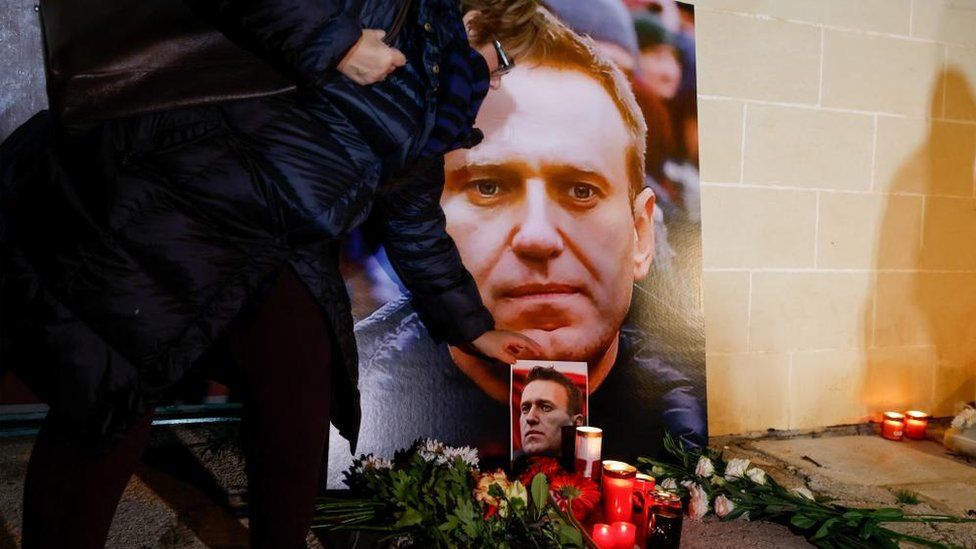
IMAGE SOURCE,REUTERSImage caption,Makeshift memorials to Alexei Navalny have appeared across Europe
Western leaders have put the blame for Navalny's death squarely on President Putin.
Responding to questions from reporters on Monday, President Joe Biden said: "The fact of the matter is: Putin is responsible, whether he ordered it or he is responsible for the circumstances he put that man in. And... it's a reflection of who he is. And it just cannot be tolerated."
During a press conference on Monday, EU foreign policy chief Josep Borrell said he believed her husband "was slowly murdered in a Russian jail by Putin's regime".
Both the EU and the US have said they are considering new sanctions on Russia following Navalny's death.
Germany, Sweden, Finland, Norway and France said they were summoning the Russian ambassadors in their capitals.
Kremlin spokesman Dmitry Peskov said comments by Western politicians in regards to Navalny's death were "arrogant" and "unacceptable".
Russian prison authorities said at the weekend that Navalny had suffered "sudden death syndrome".
Hundreds of people in more than 30 cities across Russia were detained at the weekend for attending makeshift memorials to Navalny.
In Moscow, 20 people were sentenced to various amounts of prison time - ranging from one day to nine days - and two people were fined 10,000 rubles (£85). n.
A Write Time Reviewed by The Screenwriting Struggle
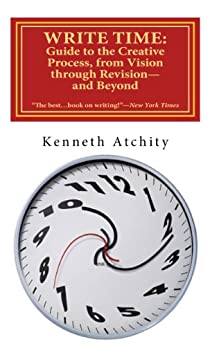
REVIEW: WRITE TIME: GUIDE TO THE CREATIVE PROCESS BY KENNETH ATCHITY
I’ve reviewed many books about the writing process, from the broad and overarching to the highly specialized, focused on a singular step of the journey. I’ve read the greats’ musings on everything from formulating the idea, to plotting it out, to emphasizing the emotional element, to remedies for writer’s block. Each is great in its own right, but what if I want a mentor to really make it personal, get in my head, delve into the intricacies of my own unique process, troubleshoot my pet neuroses that seem to chronically hold me back from reaching what I know to be my true potential, and clue me in on how to harness and optimize the writer’s most precious resource; time. Simple request, right? Simple for Kenneth Atchity, author of Write Time: Guide to the Creative Process, from Vision through Revision – and Beyond.
This book reads like a writer’s counseling session (the constructive kind), in every sense of that term; from cold hard business prudence strategies to processing deep-seated self-defeating thoughts. It grabs you from the Author’s Note which, as with any great forward or introduction, does more than just preview what’s to come. Dr. Atchity‘s credibility is firmly established here. He lets us know that 1) he feels our pain, and understands what we’re going through as creative souls who want to be professional artists, and 2) he’s been around the block enough times to know how to get us to where we want to be.
Once we get rolling, Atchity dispenses with the BS right out of the gate and lets us know that, while writing might be based on intuition and creative passions, it’s a craft and a discipline that must be honed through a rigorous and deliberate regimen. But here’s the good news – he’s going to take you by the hand and lead you through the process of establishing a productive and rewarding routine, and he’s going to leverage your own psychology to do it, turning your debilitating issues and hangups to your advantage. The book takes a deep dive into the human mind, points out how its natural workings must be considered, accommodated, and manipulated to develop habits and tricks to make your mental apparatus work for you instead of against you in achieving your creative goals, and some of his strategies will really surprise you!
Atchity provides an intriguing illustration of the interplay between parts of the brain that activates the motive power of creation. Just as conflict is the foundation of story, so it’s also the spark that sets your creative will into motion – this is the conflict between your rational faculties (which he nicknames the Continent of Reason) and your free-wheeling intuition (dubbed the Islands of Consciousness). The original quirky ideas of the islands are translated into the comprehensible and relatable language of the Continent through the intermediary function he calls the Managing Editor. Getting a grasp on these dynamics allows us to work toward striking a balance between “tricking” our brains into action and riding the wave of their natural functioning to channel our mental energy into our writing. Sound intriguing? That’s just the beginning!
As the title indicates, Write Time charts a detailed path to writing success, leaving no stone unturned, from initial dream all the way to polished product. It’s a comprehensive guide to the creative, technical, business, and personal aspects of the craft. Sound too rigid and formulaic for your taste? What if I told you it entails A LOT of variation at the numerous stages, and more than a few mandated vacations? The aim isn’t that you match a prescribed workflow to the letter. It’s to show you a proven real-world model and leave you to dovetail what’s useful with your own strengths, fill in any gaps in your process, make adjustments, and replace what’s not working for you. This section is all about establishing a writing agenda that your mind is geared to stick to and thrive on, and how to not become a statistic who perpetually and eternally has a “work in progress.”
Of course, one of the main threads of the book is the teaching of time management. It’ll show that you don’t really lack the time to achieve your writing goals. The time is there, you’re just not coordinating your cognitive resources in such a way to generate the necessary output within that time. Maintaining a reasonable perspective on the work/ time relationship is paramount. There are methods of mindset, planning, strategy, prioritizing, and step-by-step exercises to optimize your available chunks of time (even if you have to steal them). This chapter alone is worth the price of the book.
From there the writing process begins, and we’re off to the races. Here’s what’s in store as you make your way through Write Time:
- Approaching drafting and revision
- Style – how it comes about, and its rightful place in the writer’s hierarchy of values (pretty low, but valuable)
- A sample step by step process of creating a nonfiction book, explaining the reasons for the order, actions, and method at each waypoint; with an accompanying comparison to fiction writing
- The most important elements of fiction, and how to pack your story with maximum drama by tapping into your intuition to find its natural shape and structure (which has nothing to do with chronology)
- What your main priority should be to succeed in writing (Hint: It’s not using big words and feeling clever)
- A lengthy chapter on getting your book published. Don’t make the mistake of dismissing and skipping this one as irrelevant to the plight of a screenwriter. There’s a wealth of information here about…
- Dealing with gatekeepers with respect and professionalism (in person and through correspondence such as query letters and emails)
- Legal forms and contracts for deal-making
- Handling rejection, and the higher pressure situation of handling acceptance
- Seeking representation, consulting attorneys
- Customizing your workspace.
- The importance of understanding mythology for shaping and clarifying your story, with a striking illustration of how a film can go astray due to the inconsistent retelling of a myth.
- Methods and tricks for getting in touch with your subconscious through dreamwork and other avenues, along with some brilliant case studies of psychological techniques employed by writers having story problems, that’ll leave you inspired and cracking up.
- Overcoming psychological traumas of the past by channeling them into our writing and bridging the gap between conscious and unconscious.
- Some nice practical nitty-gritty stuff on screenwriting – character development, structure, twists, layers of effective storytelling; all through the prism of the key questions on the minds of the producers/ executives evaluating and vetting your work for production and/ or broadcast.
- The card system revisited, with workflow tips distinguishing the processes of novels vs. screenplays.
- Insights about revising (keep a particular eye out for the “conflict or cut” rule), and how many revisions are enough.
- The crucial golden Hollywood skill of pitching and how it must not be overlooked in one’s pursuit of a screenwriting career, with a really fun illustration of the pitch-to-production process (it involves a relay race).
- A baker’s dozen of straightforward rules for breaking into Hollywood; covering the personal, psychological, mindset, business, and more.
- A critical therapeutic chapter on Recapturing Creativity – what to do when your motivation to create (inevitably) wanes. A veritable troubleshooting manual for the writer’s perspective. Something to be revisited any time you feel you’ve lost your way.
- He closes with an amazing collection of his favorite quotes from great figures to leave the reader feeling inspired, encouraged, and motivated to carry on with the struggle.
Overall, Write Time amounts to a rather economical mentoring session with a writing sage who’s been there, done that, and wants us to get there too. It’s a premium blend of tough love, advice, encouragement, clarification, and delusion-busting. It approaches the needs of the writer from every angle and gives us what we’re yearning for, whatever that may be. For the writer at any stage of the game looking for guidance, this one is not to be missed.
Story Merchant Books -E-Deal! $.99 Today on Amazon!
A Write Time: Guide to the Creative Process, from Vision through Revision—and Beyond
In this foundational guide to the writer’s mind and productivity used by thousands of writers worldwide since its original publication...called by the New York Times "the best...book on writing," Dr. Atchity shows how the detailed steps of the creative process interface with the writer’s greatest asset, time, to provide both creative success and peace of mind.
Film Courage : Character Development Is About These 3 Things
Professional coaching tips to help you figure out point of view, structure, and master all the elements of story. Learn more www.thewriterslifeline.com
A Very Special Interview: Shades of Love and Ken Atchity with Amanda Reyes! Happy Valentine's Day
LISTEN HERE
Made for TV Mayhem Show » podcast
Unearthing great television... one program at a time
This podcast is dedicated to made for television movies and other forms of classic TV! Brought to you by Amanda Reyes (Made for TV Mayhem), Daniel R. Budnik (Bleeding Skull: A 1980s Trash Horror Odyssey), and Nathan Johnson (The Hysteria Continues), plus a few special guests who appear from time to time. With reviews, retrospectives and more, this podcast is your best source for classic television love!
Dr. Mother Love chats with Dr. Ken Atchity
Ken Atchity Discusses Author James Pierre's Gambino: The Rise on David Meltzer's Office Hours
Story Merchant Author's Gangbuster's Crime Novel To Be Produced in New Deal That Sees Director George Gallo and "Green Book" Co-Writer Nick Vallelonga Attached.
Will There Be a Meg 3?
In order for The Meg to be Jason Statham's biggest ongoing franchise, Meg 3 has to happen, with many fans wondering if it is coming. While Meg 3 isn't confirmed yet, it seems like the film will happen, as the box office success of the previous two films means that a third movie is likely to continue this trend. Director Ben Wheatley has commented that there is still a lot to explore in the universe of The Meg, meaning that he is eager to continue the franchise. Meg 2: The Trench is still fairly new, but word on a third The Meg film could come in the near future.
Why The Meg Is A Perfect Franchise For Jason Statham
Meg 2: The Trench's box office success sets up the possibility that The Meg could be Jason Statham's biggest franchise, which is a good thing. The Meg franchise is actually perfect for Jason Statham, with it being exactly what the actor needs in his career. The Meg is a highly profitable action franchise in which Jason Statham is the sole star, with him being plastered all over every trailer and poster. The Meg is big, dumb, and fun, meaning that a litany of sequels could be released without hurting the little prestige that The Meg franchise has.
Jason Statham is a key part of several other franchises, but he isn't the star of any of his biggest ongoing series. Jason Statham is only one of many stars in the Fast & Furious franchise, with him not being nearly as prominent as Vin Diesel. Even in the spinoff Fast & Furious Presents: Hobbs & Shaw, The Rock was the main character while Jason Statham played second fiddle to him. Statham is also part of The Expendables franchise, where again he is merely a part of the ensemble cast led by Sylvester Stallone. Statham is at home in The Meg, with it being his sole star vehicle.