

Showing posts with label entertainment. Show all posts
Showing posts with label entertainment. Show all posts
Queer Filmmaker Nicole Conn Delivers COMING OUT FOR LOVE First U.S. Dating Competition Show For Queer Women


Matt Atchity Joins SoCal Approach to Head Up New Media and Entertainment Division

January 17, 2023, Los Angeles – SoCal Approach Marketing and Consulting Group today announced the appointment of Matt Atchity to lead their newly established media and entertainment division. The last five years have created massive changes in consumer behavior related to how they search for, access, and consume entertainment content. As we enter a new year, SoCal Approach is poised to bring their data-driven approach to help content creators, studios, and distributors develop precision marketing strategies and maximize their opportunity for engagement with the audiences they hope to reach.
Atchity’s background includes being the long-time Editor-in-Chief of Rotten Tomatoes, GM of Moviefone and Head of Programming at TYT Network (the largest online news network in the world for millennials). He will lead the team applying SoCal Approach’s suite of solutions to help the entertainment industry understand the environment through consumer measurement and insights, audience targeting, marketing strategy, segmentation, content marketing, branding, and new program development.
“Matt was at the helm in establishing Rotten Tomatoes as the industry standard for film and TV reaction and the quality of entertainment content,” said George Owens, President of SoCal Approach. “Our clients desperately need those insights as they attempt to harness the complicated matrix of modern media, and Matt’s experience will greatly benefit producers, filmmakers, studios, streaming services, and content creators seeking to understand their audiences and set content direction.”
Atchity has hosted and produced videos, radio shows, and podcasts related to various aspects of the entertainment industry, and brings decades of experience inside the entertainment industry, helping define the way we use insights and measurement into the world we know today. His experience across media channels will create value at a time where content creation has been revolutionized and the definition of entertainment and how we consume it continues to evolve.
“The entertainment industry landscape is evolving faster than ever, as both audiences and creatives discover new platforms while simultaneously reevaluating their relationships with traditional entities,” said Atchity. “I’m very excited to join the SoCal Approach team and work with creators to find the best ways to reach their audiences.”
About SoCal Approach Marketing and Consulting Group
SoCal Approach Marketing and Consulting Group is a full-service marketing and research agency founded to measure and deliver data-driven market insights businesses can use to understand and reach their target audiences. For additional information on SoCal Approach, visit www.socalapproach.com.
In Conversation with Hollywood Film producer, Author, Literary Agent & Screenwriter — Ken Atchity.
The Entertainment Engine weekly podcast is providing helpful tips and information on navigating the entertainment industry across; Music, Film & TV for new bands, artists, actors, songwriters, and creatives.
With more than fifty years’ experience in the publishing world and over thirty years in entertainment, Dr. Ken Atchity (PhD Yale) has been called a “story merchant”—writer, professor, editor, producer, and literary manager. He’s launched hundreds of books and films, including New York Times bestsellers and Emmy-nominated documentaries, making over 200 films and television deals-with every broadcaster and every studio in Hollywood, and many independent film companies as well, including; HBO, Universal, CBS, Walt Disney, Warner Brothers, Paramount, NBC, Discovery, Regency, and Fox 2000 Pictures.
More at The Entertainment Engine
Nicole Conn Launches 'Nicole Conn Films Global (Ncfg)' A Global Destination Hub Dedicated To Showcasing Content For, By And About … Queer Women
Award-winning filmmaker Nicole Conn is announcing the launch of NICOLE CONN FILMS GLOBAL (NCFG), the first ever global destination hub for all-things queer women media content.
Kicking off on June NCFG’s mission is to provide a digital space where artists, creators and financial investors can come together to create, network and build partnerships to develop new entertainment projects.
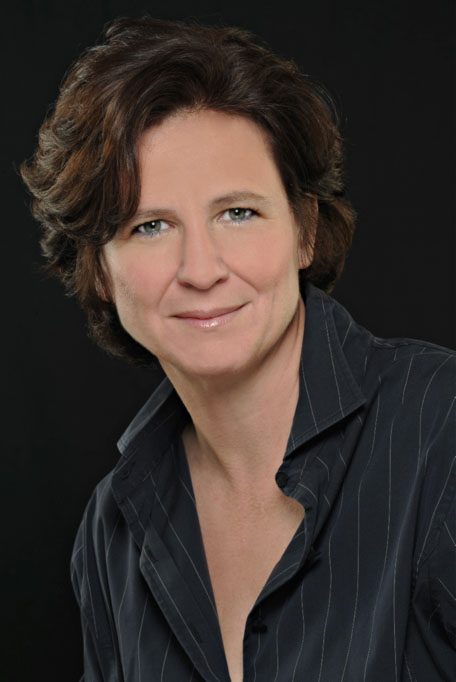 Keeping women’s cinema alive, Nicole Conn Films Global is an international group dedicated to the funding and supporting of women’s narrative features as well as other queer content; documentaries, webisodes, etc. in the 21st Century.
While Hollywood has successfully released more queer-centric films the lack of women/lesbian representation is still a problem. NCFG is committed to producing quality and entertaining Feature Films, Documentaries and TV/Web Series made By, For & About Women and their complex lives.
Through its unique funding model, NCGF aims to keep Women’s Lesbian Cinema alive and thriving, always building its library as well as inviting Membership Artists to be involved with films, specialized event & funding screenings or exhibitions.
“NCFG’s concept is about rallying leaders in our LGBTQ+ entertainment community to work and collaborate together, “says Nicole Conn.
The philosophy behind the unique Hybrid Funding model is about affordability. It’s designed so that queer women can look at their own particular circumstances and contribute something that is completely painless for them financially while also generating the opportunity to be involved in a real way that contributes to their own artistic dreams and visions.
Women from all over the globe will be able to submit their own scripts or other lesbian content so that NCFG can help pool resources as well as set up and connect projects to the right producing entities. There are only 3 criteria that must be met: 1) It’s made By, For & About Queer Women; 2) It’s quality & entertaining; and 3) It has not been seen before.
Further, we are looking for diversity. “Same Rights. Same Fight. NCGF is determined to support all marginalized groups that suffer from inequality, prejudice, and discrimination, and to raise and amplify all the colorful and diverse voices that make up our LGBTQ+ community. NCGF stands in solidarity with all who seek racial equality and justice, affirming that All Black Lives Matter.”
Putting passion into action, CONN is proud to be an active community collaborator teaming up with some of the top LGBTQ players in Arts & Entertainment including OML, Tello Films, LesFlicks, Outtake Voices, Sallyanne Monti and Nicole’s Creative Producing Partner, Lissa Forehan, to name a few.
These groundbreaking pioneers in the LGBTQ entertainment industry are dedicated to advancing professional achievement for lesbians working in all areas of film, video, and other screen-based media to help promote and raise queer women visibility in films/TV & on the web, whether in front and/or behind the camera.
“At OML collaboration has always been in our DNA,” comments Shirin Papillon – Owner/Founder OneMoreLesbian.com “We pride ourselves on having turned the majority of our competitors into collaborators and partners. We believe this is the spirit of Nicole Conn Films Global – that we; filmmakers, content creators, curators, distributors, publishers, etc., will be stronger together.”
Nicole Conn has been an inspiration and an example for all filmmakers to follow your passion and tell your stories. Her films were the entre for most of the community who was so hungry for films when there were few and far between. We are so excited to combine forces to grow this genre!” says Christin Baker, TELLO FILMS, whom Nicole Conn Films is teaming up with to co-produce “The Lesbian Dating Show.”
A pioneering filmmaker and an iconic figure in the LGBTQ community, Nicole Conn is known not only for having paved the way for lesbian-themed cinema with her cult classic, “Claire of the Moon” but for her acclaimed features “Elena Undone” (which boasts the longest screen kiss in cinema history), “A Perfect Ending,” and “little man”, but also for opening the door for queer female filmmakers.
Read more

AEI ALLY CRAIG PERRY STARTS CHATROOM FOR FINAL DESTINATION
 "Bloody Disgusting just opened up a new social group dedicated to discussing the Final Destination films, the best part is they have Producer Craig Perry on board to moderate! He's produced all 4 films including the upcoming The Final Destination and will be posting under the username wretchedmonkey. Craig will answer your questions and talk about the film with the BD community. Join the Final Destination Group and start posting! You can discuss the films, add images, and the group shows up in your profile as well."
THINKING INSIDE THE BOX: WRITING FOR THE HOLLYWOOD MOVIE MARKET [via David Angsten]
Heroic Hollywood: Thinking Inside the Box
by Russ Dvonch
In this post, I want to give some advice to beginning screenwriters who are having difficulty finishing — or even starting — their first screenplay. I’ve been mulling over what to say for several weeks now, trying to come up with some inspirational words of advice to motivate you into achieving your goal. After much thought and deep-dish contemplation, I’ve boiled my advice down to this:
If you want to write for Hollywood, think like a
hack writer and stick to the Hollywood Formula.
How’s that for inspiring rhetoric?
Now, most “creative” types (that is, people who don’t actually have a job writing for Hollywood) will tell you that adhering to a formula is a bad thing because it stifles creativity.
But in the hands of a writer who knows what he is doing and why he is doing it, the standard Hollywood Formula allows the creation of inventive, daring and inspiring movies and the occasional masterpiece. Whether adhering to these principles results in hackwork or a classic movie depends entirely on the gifts of the writer doing the work and the skillfulness he brings to thinking inside the box of the Hollywood Formula.

Think Hollywood. Think inside the box.
It’s a craft I learned through trial and error. Some people pick it up faster than others because they have an intuitive feel for what needs to be done. But many people don’t quite see what is needed, or why.
That’s what this post is for. First, to convince you that sticking to the Hollywood Formula is a good thing and, second, to give you an example of how it works. Quite frankly, I wish someone had told me this stuff when I was just getting started. I think it would have helped me, so maybe it will help you. Here goes.
A man’s got to know his limitations. – Inspector Harry Callahan
To write screenplays for Hollywood, you’ve got to think small.
After all, you’ve only got about 120 pages (or less!) to tell your story. Compared to a novel, that’s not a lot of room to create a fully-formed narrative.
If you’re a beginning screenwriter, however, it appears just the opposite. The task ahead feels overwhelming, and the blank page on your computer screen seems a bleak and disheartening void. How will you ever fill an entire stack of HP Premium 24 lb. Inkjet? You’ve got plenty of ideas, sure, but weaving all those threads together into a colorful and compelling storyline for 120 pages seems an impossible task. You’ve only just begun, and already you feel like Nicholson after 6 weeks in the Overlook Hotel.

If the road ahead seems endless, the problem is you’re thinking too big. You’ve got to think small. A man’s got to know his limitations if he’s going to write for Hollywood.
Learning to limit yourself is the key. Screenplay writing requires understanding the generalparticular limitations of the story you want to tell, then artfully echoing these limitations throughout the movie. limitations of the Hollywood movie, wisely choosing the
In feature films, creativity springs from thinking inside the box of these limitations.
“The Box” is actually a collection of boxes that are the central structural and thematic reference points for creating your movie. If you choose them with intelligence and purpose, everything you need will be found within them. If you dare to gaze outside these boxes…well,”to a dark place this line of thought will take us.” Just ask Jack.
The first set of boxes are already in place for you. They are the structural boxes that are inherent in the Hollywood movie; in other words, the standard Hollywood Formula. The formula boxes provide the fundamental boundaries of your screenplay and guide you toward the choices you will make. This is the stuff that producers, directors, stars and studios are looking for. When they pick up your script, they expect to see these boxes because this is what Hollywood makes, 90% of the time.
The second set of boxes are the ones that you create specifically for your screenplay. They also will guide you to the choices you’ll make. And when the producers, directors, stars and studios pick up your screenplay, they want to be knocked out by the intelligence, emotional depth and cinematic versatility in your selection of these boxes. These are the boxes that lift the Hollywood Formula out of banality and bromide. They stir the creative impulses inside the above-the-line types, and inspire them to utter those magic words: Yeah…I want to make this!
And the reassuring, wonderful secret of these boxes is: you don’t need a lot of them. A few boxes for characterization, a few boxes for types of scenes to write, a few boxes for specific thematic elements — before you know it, you’ve got what you need to fill up the screenplay.
The final step is repeating and connecting the contents of all your boxes throughout the movie. The boxes may be few in number, but a screenwriter can keep pulling new things out of them all the time, scene after scene. This echoing effect reinforces all that came before and all that will appear afterwards.
Echoing creates threads and connections that tie the film together in a satisfying way. The audience is searching for these patterns. The audience wants these patterns because this is the way people understand the world.
Human comprehension is formed by identifying and integrating the information we receive. So we look at each piece of data and categorize it, making it fit into the scheme of things we already know. This is how we comprehend data — by weaving it into patterns that make sense to us.
When the audience discovers these patterns in your storyline, their connection with the movie clicks. If you select the right boxes — boxes that echo with significant emotional and intellectual meaning for the audience — then you are giving your audience exactly what they crave. The movie comes to life, vibrating with excitement and inspiration.
It is these threads, connections and patterns that fill up your film, not a multitude of disparate ideas. Everything a screenwriter does is compacted and then linked to other elements of the screenplay as much as possible.
The emotional and intellectual weight of your movie is achieved — not by how broad your vision is — but by how skillfully you can weave just a few simple concepts into a satisfying whole. Movies are about density.
And you achieve density by keeping your thoughts focused on the boxes of your film and echoing their contents, again and again and again. If you let your mind wander beyond these limitations, it is likely you will lose the thread of your storyline, and the creative motor of your movie will sputter and die.
That’s the secret behind working with limitations — they actually free your creativity. If you find it impossible to begin your screenplay, or if you keep hitting writer’s block, most likely the trouble is that you have not limited the choices available to you.
When the screenwriter is faced with unlimited choices, there’s no compelling reason to choose one thing over another. You get stuck. There’s a paralysis of decision-making, and that means the death of the creative process. After all, the creative process – no mater how mysterious and ineffable it may be – always boils down to an explicit decision by the artist. “I choose this idea over that idea.”
When you limit yourself, you’ll find it much easier to make a creative decision. And when you limit yourself to the boxes of the Hollywood Formula, you’ll find it much easier to make the right creative decision.
Now, this advice may seem counter-intuitive. All your life you’ve been taught that creativity lies in thinking outside the box. Creative thinking became synonymous with looking beyond the conceptual framework of the problem. In other words, the opposite of “hackwork,” which simply follows a formula.
This may work well in other areas, but if you want to write for Hollywood, hackwork is called for. Paradoxically, creative thinking begins with embracing the conceptual framework of Hollywood movie-making and finding your inspiration within it.
I say “paradoxically” because creativity is not often associated with limitations and a narrowing of focus. Instead, the creative process is often pictured as a wide-ranging, freewheeling daydream where the mind wanders over a landscape of unlimited possibilities until inspiration strikes and the right idea suddenly appears before you, fully formed, and you simply snag it out of the air. Kinda like this…

Wheee! Creativity!
When it comes to Hollywood movie-making, however, the creative process is the exact opposite. Writing the Hollywood screenplay is a narrowly focused search within the boxes of the Hollywood Formula and the particular boxes of your screenplay. No daydreaming is allowed and wandering is a punishable offense. (The punishment being either an uncompleted screenplay or a screenplay nobody wants to buy.)
The creativity of screenwriting lies in figuring out how to expand and reinforce the few ideas found inside the boxes that make up your movie.
Again, you may rebel at this idea because it sounds too limiting. But the box is deceptive this way. Every well-chosen box is much bigger than it appears from the outside.
If you pick a good box and open it up to reveal its contents, you’d see that a single idea rests inside, but that idea is reflected and refracted endlessly into the same idea seen from many different angles. Kinda like this…

Inside the Box. No smoke…all mirrors.
Each box has only a single idea, but it is echoed in as many ways as possible throughout the film, intersecting with and enhancing the other boxes in your movie. In this way, you deepen and expand each idea to the max, creating patterns and density to your story that the audience responds to. Kinda like this…

Goldfinger is one of my favorite movies, and it’s a great example of how thinking inside the box leads to creative thinking. Here’s a look at how the authors of Goldfinger deliberately set up the echoes and patterns in their storyline, bringing density and completeness to their film.
As with the others movies in the 007 series, Goldfinger has several boxes that are particular to Bond films — the Megalomaniac Villain Box, the Playboy-era “Bond Women” Box, the “Clever Quip after a Kill” Box, and so on. But I’m going to focus on the box most associated with this movie in particular — the Gold Box.
(Throughout the following I speak of the screenwriters as making all the decisions, but the primary source material is, of course, the book by Ian Fleming.)
Even before you enter the theater, the movie poster entices you by pulling its creative inspiration out of the various boxes that make up the film.
The graphic artist who created the poster above had every color imaginable at his disposal, every scene in the movie to pick from and all the words in the English language to create this advertisement. Why did he choose these particular colors, images and text?
Because he limited his thinking to inside the Boxes of the film. He deliberately focused his thoughts on the structural and thematic elements found in the movie, which guided his creative decisions.
The first box he chose was the Gold Box. With black as his base, and white as his highlight, he limited his color palette to hues suggestive of gold — a deep, rich orange and bright yellow . And he chose the golden girl as his primary image of the poster. Visually, the poster is all about gold.
For scenes in the movie, he again limited his choices by looking inside the Bond Boxes associated with the 007 series — Connery himself, violence and sex. By limiting himself to the boxes strongly associated with Bond pictures, he created a poster that captured the essence of this Bond movie.
The meaning of the text – EVERYTHING HE TOUCHES TURNS TO EXCITEMENT – is also an obvious allusion to gold, as well as a comment on a Box to be expected in a Bond film.
In sum, the artist’s limited color palette and limited Bond boxes in no way compromised the effectiveness of his poster. Quite the opposite, they pointed him towards the right artistic decisions.
At this point, you may be thinking, “Well, yeah…what else was he going to do? It’s a James Bond movie about a villain obsessed with gold.”
Exactly.
Just as it seems obvious that the graphic designer would make these choices, it should be just as obvious to you what choices to make in your own screenplay.
If it is not obvious what your screenplay choices should be, it’s because you have no boxes, or you aren’t looking inside them, or your boxes are poorly chosen.
When the screenwriters of the film wrote FADE IN: the first thing they reminded themselves was: This is a James Bond movie about a villain obsessed with gold. Everything else in the screenplay flowed from that.
The movie itself begins with a self-contained sequence full of Bond Boxes as 007 completes a mission in a Latin American country. But the Gold Box soon appears, providing inspiration for an unforgettable credit sequence and equally unforgettable theme song.
One of the points I want to emphasize is that creative screenwriting requires connecting and echoing the contents of one box with the contents of other boxes within the film. The title sequence does just that, brilliantly.

In the Goldfinger title sequence, scenes from the movie (featuring the hero, the villain, sex, explosions and gunplay) are projected onto a beautiful, semi-naked golden girl. Here we have the Gold Box intersecting with the Sex and Violence Boxes associated with Bond films in general, and the character Boxes of this film in particular. Gold, sex, violence, hero and villain all work together in this sequence to reinforce the themes of the film. The result is one of the most famous title sequences in movie history…a brilliant visual example of how one box can be made to intersect and reinforce the other boxes of your film.
All this time, of course, Shirley Bassey is belting out the lyrics of the title song.
Golden words he will pour in your ear
But his lies can’t disguise what you fear
For a golden girl knows when he’s kissed her
It’s the kiss of death from Mister
Goldfinger
Pretty girl beware of this heart of gold
This heart is cold
He loves only gold
Bassey sings of sex, death and gold — the major boxes of the film are all echoed and reinforced in the lyrics of the title song.
Do you sense a pattern here?
After the gold-themed credits, the plot of the movie is set in motion as CIA agent Felix Leiter delivers a message to Bond from M.

Bond is assigned to observe Auric Goldfinger.
The name “Goldfinger,” of course, evokes the story of King Midas, the legendary figure who’s finger-touch turned everything into gold.
Even Goldfinger’s first name “Auric” is a term pertaining to both gold metal and its color. So even something as simple as deciding what to name the villain is solved by looking inside the Gold Box.
 And when we get our first glimpse of the villain, he’s decked out in gold — gold shirt, gold ring, gold watch. Even his hair — what’s left of it — is gold.

With a golden-haired girl as his hired help…

…who dies as the daughter of Midas died, with a touch that turned her to gold.

The naked, golden body of Jill Masterson is one of the most famous images in the whole Bond series.
Why? Because of its Supreme Boxiness.
First, the image of the dead, nearly naked golden girl is found inside many of the boxes that make up the Hollywood Formula:
- it heightens conflict between the two main characters
- it personalizes the conflict
- it establishes that the stakes of the struggle as life and death
- it reveals Goldfinger’s character traits, in this case, cruel indifference and morbid humor
Second, it’s found inside many of the boxes that make up a James Bond picture in particular:
- a woman that Bond makes love to gets killed
- unusual death
- as much sex and nakedness as PG13 will allow
- an over-the-top villain with a streak of megalomania
Third, it’s found inside a box that is particular to this movie:
- The Gold Box
The gold motif doesn’t stop with Masterson’s death, of course. Gold figures directly into the plot.
 In a dinner meeting at the Bank of England (holder of Great Britain’s gold reserves), Bond is briefed on his mission by M and others. Goldfinger is smuggling the precious metal out of England. Bond’s assignment is to find out how.

Bond is given a bar of gold as bait.
Gold, it seems, is an integral part of the plot…there’s be no Goldfinger without it. With gold front and center in the picture, it’s no wonder that gold is chosen as the story’s primary thematic image. Which provides us with another lesson: your particular boxes must reflect the major themes of the movie.
The next time we see Goldfinger, he is again dressed in golden hues on the links of St. Marks. It seems that movie’s costume designer is always looking inside the Gold Box, too.
 Bond has wrangled his way into a golf match with the villain. James pretends to have gold to sell and, to get Auric’s attention, Bond drops the bar of gold at the man’s feet during the match, just as he’s about to putt.

Bond’s gesture is mischievously designed to break Goldfinger’s concentration.
And now, a terrific, telling moment from the screenplay authors.
 Goldfinger eyes the gleaming ingot, but refrains from saying anything. Auric is certainly aware that Bond’s gesture is a bold attempt to rattle him and get his attention at the same time. Goldfinger attempts to act cool…but we see something in the covetous squint of he eye. He says nothing and with the bar beside the hole, Goldfinger calmly lines
up a short putt that should drop easily into the cup.

But his putt misses the hole, and it veers off to the right, towards the glittering metal.
Wow! The Gold Box has now been used to establish an important personality trait for the antagonist. Despite his attempt to be cool and in control, the sudden appearance of gold has rattled the man, indicating its significance to him. It’s a clue to the man’s character. The lust for gold has made the villain wealthy and powerful, but it may also be a weakness.
They screenplay authors follow up on this idea, in Goldfinger’s own words:
This is gold, Mr. Bond. All my life, I’ve been in love with its colour, its brilliance, its divine heaviness. I welcome any enterprise that will increase my stock, which is considerable.
The gold, indeed, turns out to be a weakness. Goldfinger plays Bond for the gold bar. It allows Bond to get close to Goldfinger and bug the villain’s Rolls Royce with a homing device, which starts the beginning of Goldfinger’s downfall.
Note that even the color of the villain’s auto echoes Goldfinger’s obsession.
 The color of the Rolls makes it fit inside the Gold Box of the movie. But a good screenwriter knows that the quest for patterns and density requires that the writer attempt to place each part of the movie into as many boxes as possible in as many ways as possible.
Such is the case with the Rolls Royce. It turns out that Goldfinger is smuggling his gold out in the body of the Rolls, right under the noses of the authorities. Bond discovers this when he tails the Rolls to Goldfinger’s metal processing plant in Switzerland. The Rolls is not only a golden hue and a symbol of Goldfinger’s wealth, it’s a plot device. This kind of triple-duty is exactly what screenwriters are looking for to bring density to the film and tie different elements together.
 Inside the plant, Goldfinger removes the gold from his Rolls and ships it off to the highest bidder. A legitimate bullion dealer, Goldfinger has a metallurgical installation, which uses an industrial laser to cut the metal.
 The laser also makes a great torture/killing device for Bond.

One of the boxes of a James Bond movie is to have 007 in physical jeopardy at the hands of the villain. (Parodied so well in the first Austin Powers picture as “an easily escapable situation involving an overly elaborate and exotic death.”)
The scene of Bond lying on a plate of gold while a laser threatens to cut him in two is another brilliant intersection of boxes — The Gold Box and the Physical Jeopardy Box. It’s also a modern, updated version of the “girl chained to a buzz saw” cliche from old-time melodramas.
 Bond is spared death and awakens to find himself held prisoner in Goldfinger’s private plane. The set and costume designers continue to plunder the Gold Box. The plane’s interior is trimmed with gold, and the stewardess is, too. Even the silverware isn’t silver — it’s gold!
 Another Bond Girl, a…ahem…golden-haired Pussy. Who leads…

…another clutch of golden-haired Bond Girls, wearing uniforms accented with gold.
OK…so you’re a megalomaniac villain obsessed with gold. What would you plan for your greatest criminal enterprise?

Break into Fort Knox, of course. Goldfinger reveals his plan, which comes straight out of the Gold Box.
But first, a change of clothes into something a little more golden-hued.
 Even the color of his mint julep compliments the color of his cuff links and ostentatiously displayed gold ring.
 Eventually, the film moves towards the actual break-in of Fort Knox, an iconic location symbolizing America’s most conspicuous concentration of gold.

Do you think the art director stayed up nights worrying what color to paint the knock-out gas bottles?
Neither do I.
That’s one of the points I’m hoping to get across with all this. Once you decide on a box, you’ve also decided many other things about the film.
Page after page, you find that the plot points, character traits, locations, action sequences, and other things your film needs have already been set up for you by the boxes of your film. Whether it’s something minor that only the art director would worry about (”What color for the bottles?”) or something important that elegantly solves a script problem, the answer you’re looking for will be found inside your boxes.
Like this one, below:

If you’re writing about a Bond villain plotting to break into Fort Knox, you need a big, splashy way for him to bust inside. If you were alive in the mid 60s, you’d know that a giant laser is just the thing. Lasers, having only been invented a few years before, were considered exotic hi-tech in those days.
But what about basic storyline credibility? How would Goldfinger acquire such a machine without drawing attention to himself? You want him to use something over the top because he’s an over the top villain, but you need to establish some sense of reality behind the outlandishness.
This can often be accomplished by simply setting things up beforehand. Lay the groundwork for it, and it becomes more believable. Especially if the groundwork involves a major box of your film.
Which makes me think…haven’t we seen that laser before?

Right! It’s the industrial laser that was used to threaten Bond in Goldfinger’s gold processing plant.
This is exactly type of thread and connection that the screenwriter is looking for. Industrial lasers cut gold. As owner of a metallurgic plant, it makes sense that Goldfinger would have one and it would not draw attention from authorities. The laser is also tied to the plot point of how Goldfinger smuggles his gold. Thus, Bond’s method of torture is tied to the villain’s gold obsession and the plot of the movie. And finally, the laser is tied to Goldfinger’s plot to break into Fort Knox. Setting up the laser at the beginning of the film establishes the credibility of using the machine later on. All these screenplay problems were solved by simply looking inside the Gold Box.
Gold is stored in vaults, so the production designer came up with a giant vault door to rival Jack Benny’s for the entrance to the Fort Knox storage bays.

Production designer Ken Adam was told to limit his thinking when creating the Fort Knox stage. The producers gave him the assignment to design a “cathedral of gold.” Do you think that limitation to look inside the Gold Box helped or hurt his creative thinking? The result is below.

I still get chills every time the gleaming, modernistic gold vault is revealed on screen in its full glory. What a fantastic set!

Heaps of gold are stacked within the room. And as Hitchcock said, “I make it a rule to exploit elements that are connected with a character or a location; I would feel that I’d be remiss if I hadn’t made maximum use of those elements.” Which is another way of saying, look inside your boxes for inspiration in every aspect of your movie.
For Hitchcock, that means photographer Jimmy Stewart defends himself with flashbulbs against the villain in Rear Window. For Goldfinger, that means James Bond defending himself by heaving bars of gold against OddJob as they battle hand-to-hand inside Fort Knox.

The screenwriters used Hitchcock’s dictim by exploiting things that are connected to both character and location!It also means attempting to use the gold bricks to smash open the lock to a ticking atom bomb.

Bond, of course, saves the day. And as 007 wings his way back home, Goldfinger manages to make a final threatening appearance.

Hmmm. I thought The Man with the Golden Gun starred Roger Moore? Oh well, never waste a good symbol. I imagine the bullets are made of gold, too.

And at the end of it all, a final wave goodbye from a Bond Girl dressed in gold galore.
Alright, let’s review all the ways in which the creators of the movie – limited by thinking inside the Gold Box — decided on various elements of their screenplay.
The Gold Box inspired decisions about marketing, theme music, title design, credit sequence, set design, set dressing, character names, costuming, hairstyling, props, dialogue, character traits, innumerable plot points (such as playing the golf match for gold, smuggling the gold out through the Rolls Royce, breaking into Fort Knox, fighting Odd Job, etc.) an innumerable links to various other Bond Boxes (death, sex, villains, etc.)
I’m sure I’m missing something. Oh, yeah, I just remembered…the putter in Goldfinger’s golf match is made of gold, too. What else am I missing? I’m sure you’ll tell me in comments.
Traditionally, “hack” has the connotation of a mediocre or disdained writer who sticks to formula thinking.
In recent years, however, the word “hack” has acquired a new meaning: “to program a computer in a clever, virtuosic, and wizardly manner.”
Just as a skilled and knowledgeable programmer uses the same code available to everyone to create something new and exciting, a skilled and knowledgeable screenwriter uses the Hollywood Formula, also available to everyone, to create something new and exciting.
That’s the spirit of hackwork I’m recommending in this post. Goldfinger and countless other films from Hollywood prove it can be done. Bad writing is not a problem caused by the Hollywood Formula. It’s a problem caused by the writer not knowing how to make the Formula work for his picture.
The secret to making the Formula work is to limit yourself to the boxes that make up the Formula and your movie in particular.
OK, but what are the Hollywood Formula Boxes? How do you choose Boxes specific to your screenplay? And how do you know you’ve made the right choice? In my next few posts, I’ll take a detailed look at just those problems as I describe what goes through my mind as I gaze into the Boxes and write a screenplay.
See you then!
CHRIS COLUMBUS’ FIRST INTERVIEW ON RIPLEY’S BELIEVE-IT-OR-NOT!
Director Chris Columbus on why a fantasy version of Ripley will work

Jim Carrey has been attached to play Robert Ripley, the cartoonist at the center of Ripley's Believe It or Not!, through a series of writers and directors. He was not happy with the biographical script to be directed by Tim Burton. Now Chris Columbus is attached to direct a more fantastic version.
"My take on Ripley is to believe it,"
The film began as a biopic written by Scott Alexander and Larry Karaszewski (Man on the Moon, The People vs. Larry Flynt). Now
"We should see a draft in the next few months or so, and then we'll make some sort of decisions,"
Robert Ripley, who died in 1949, presented oddities from his world travels in his comic strip "Ripley's Believe It or Not," as well as in radio and TV shows and other media.
"I think we'll certainly relate to the comic strip a lot in the film,"
Ripley's Believe It or Not is due out in 2011 from


L CANNES FESTIVAL OF FILMS


Though my first official trip to the Cannes Film Festival was filled with business highlights--meeting the folks at Industry-Works and sealing our two-film deal that begins shooting this summer, attending the PGA beach party and meeting Stu Levy on the International Committee, attending the Louisiana Party and catching up with Chris Stelly of the Governor's Office of Film & Television and discussing the progress of Shreveport Studios, saying hello to Ehud Bleiberg and receiving my personal copy of his brilliant film "Adam Resurrected," meeting director Renny Harlin (thanks to an intro by Shreveport Mayor's Office Arlena Acree) and discussing potential projects, running into Emma Korvin who was interning at the Hollywood Reporter, running into AEI client Adria Lang, meeting actress Portia Lipton and her protégé Carol Lee, meeting the Bavarian Film Commissioner Anja Metzger re "Dracula: The Un-Dead," meeting Roy Tijioe and Ricardo Galindez of the Island Film Group to discuss "Surf Lessons," meeting Sam Blan of Stoplight Pictures, meeting Jan Susta of Czech Republic's Barrandov Studios, meeting Ondamax's Eric Mathis re "Hittin' the Bricks," meeting Mark Lester of American World Pictures, visiting Ami and Marcy Artzi and their lovely daughter re "Dracula," meeting Carola Ash via Judy Cairo of Future Films on their yacht re "Dracula"--there was still time for sidewalk cafes and a little enjoyment, including seeing the premiere of Pedro Almodovar's "Broken Embraces"--an outstanding film I highly recommend as one of his best yet.


Close encounters included Monica Bellucci, Jim Carrey, and Brad & Angelina.
Croissants and café consistently good, along with pommes-frites and wi fi availability. High point of culinary experience was the Italian restaurant, Il Viaggio, where we were hosted by Evan Tylor of Industry-Works. More pix to follow.
Subscribe to:
Posts (Atom)