Q & A with Dennis Palumbo
We are delighted to welcome author
Dennis Palumbo to Omnimystery News today.
Dennis
is the author of a mystery series featuring psychologist and Pittsburgh
Police Department consultant Daniel Rinaldi. The fourth book in this
series is
Phantom Limb
(Poisoned Pen Press; September 2014 hardcover, trade paperback,
audiobook and ebook formats) and we recently had the opportunity to talk
with him more about it.
— ♦ —
Omnimystery News: Introduce us to Daniel Rinaldi.

Photo provided courtesy of
Dennis Palumbo
Dennis
Palumbo: My series character is Dr. Daniel Rinaldi, a psychologist and
trauma expert who consults with the Pittsburgh Police. His specialty is
treating the victims of violent crime: those who've survived the
kidnapping, the rape, or home invasion, but still suffer from the
traumatic after-effects. Rinaldi himself suffered such a trauma when his
wife was murdered during a mugging. Though he himself was also shot,
Rinaldi lived and struggled with survivor guilt. Now his mission is to
help others deal with their own trauma symptoms. However, he also
manages to get involved in some of the crimes himself, much to the
consternation of his police colleagues. There have been four books in
the series so far:
Mirror Image,
Fever Dream,
Night Terrors, and the latest,
Phantom Limb.
OMN: How has the characters changed over the course of these four books?
DP:
I've had my characters age and change, and plan to continue to do so.
People get married, fall off the wagon, get romantically involved with
other characters in the series, etc. In fact, if the comments I get from
readers is any indication, they're very interested in the lives of my
supporting characters. Especially that of Noah Frye, a paranoid
schizophrenic who also happens to be my lead character's best friend;
Sgt. Harry Polk, the detective who bumps heads with Daniel Rinaldi
during each case, and Polk's partner, Det. Eleanor Lowrey, with whom
Rinaldi has an on-again/off-again romantic relationship.
OMN: Is Daniel Rinaldi based on anyone you know?
DP: Daniel
Rinaldi bears a remarkable similarity to his author: both are
Italian-American males, born and raised in Pittsburgh, and graduates of
the University of Pittsburgh (the first in their respective families to
go to college). We also share a beard and glasses, the same point of
view about the mental health industry and how to conduct psychotherapy,
and a love of jazz and the Steelers. However, Rinaldi is much cooler,
braver and more resourceful than his author! He's also a former amateur
boxer, another aspect of his character where he and his creator part
company.
OMN: Into which genre would you place this series?
DP: I would call them mystery thrillers, or crime thrillers.
OMN: Tell us something about
Phantom Limb that isn't mentioned in the publisher's synopsis.
DP: Though
the main story concerns a suicidal patient who is kidnapped right
outside Rinaldi's office, the subplot of the novel deals with a returned
Afghan vet who lost a leg to an IED in combat. The younger brother of
Charlene Hines, Noah Frye's girlfriend, the vet suffers from "phantom
limb" syndrome, the sense that his missing limb is still "there." That
it itches sometimes, or feels cold. As the novel progresses, I use the
phantom limb syndrome as a metaphor for the felt sense of loss we all
feel when something or someone is wrenched from our lives. The death of a
loved one, perhaps, or a divorce. That experience we often have after
such a significant loss that the person is still "here." Still walking
the earth. Having lost his wife to murder, and his cop father to
alcoholism, Rinaldi can easily relate to the unhappy vet's experience.
Whether he can help him or not is another matter, especially when it
seems the vet might be linked somehow to the kidnapping.
OMN: You
mentioned that Daniel Rinaldi bears a remarkable similarity to
yourself. How much more of your personal or professional experience have
you included in your books?
DP: Certainly my twenty-seven years
as a therapist in private practice, as well as my training at a
psychiatric clinic, influence my characters: how they relate, the issues
they confront. Especially how Rinaldi works with them as a therapist.
Moreover, my childhood and college years in a heavily-industrial
Pittsburgh serve as a vivid counter-point to contemporary Pittsburgh,
whose steel mills and factories have been replaced by state-of-the-art
technology firms and world-class medical facilities. I don't base my
plots on things that have actually happened to patients (who thankfully
have few cases of murder, bank robbery and kidnapping in their
backgrounds!), though I use what actually transpires emotionally in a
therapy session to inform the way Daniel Rinaldi relates to his
patients. Also, my five years of training with Dr. Robert Stolorow, one
of the nation's leading trauma experts, lends credibility (I hope) to
those aspects of trauma and its treatment that are woven into the
narratives.
OMN: Tell us more about your writing process.
DP: My
writing process is completely open-ended. I neither write outlines nor
character bios. I usually start with a character or situation in mind,
and then just start typing. The truth is, I'd rather write than think!
Of course, this means the first draft takes me down a lot of blind
alleys and into assorted brick walls, but I don't mind. For one thing,
you never know what such a detour will produce: a nice exchange of
dialogue or a vivid description that can make its way into the final
manuscript. For another, even if I write myself into a corner, I always
learn something that informs the rest of the book. Maybe a character
does something surprising that gives me an idea of how to use him or her
in a different manner later in the story. Whatever. This is a dangerous
way to write, I must admit. Sort of a high-wire act without a net. In
fact, I usually don't know who the bad guy is until about halfway
through the book. Then I have to go back and seed in the kinds of
details that make the reveal of his or her identity credible. On the
plus side, I figure that if I'm surprised, the reader will be, too.
OMN: How accurate are you to the setting of Pittsburgh in your books?
DP: I
make every effort to be accurate as to setting. Though I've lived in
Los Angeles for the past 40 years, I still visit Pittsburgh regularly. I
also rely on maps, Google, and my family and friends still living in
the Steel City to help me with certain details. While my memory of the
Pittsburgh I grew up in is vivid and reliable, the new, "gentrified"
Pittsburgh has changed so much that I need these resources to make sure
my depiction of the city as it is now is accurate. But you bring up a
funny point: whenever I hear from Pittsburgh residents about my books,
it's rarely to discuss the plot or the characters. Usually it's to point
out things like, "Hey, you have Rinaldi make a left on Second Avenue.
You can't do that during rush hour!" Or "Nobody crosses the river on the
Fort Pitt Bridge to get to Mt. Washington! What's wrong with you?" It
keeps me humble, that's for sure.
OMN: What is the best advice you've received as an author?
DP: The
best advice I ever got about writing actually came from an acting class
I took, over three decades ago, back when I was a working Hollywood
screenwriter. The teacher was Darryl Hickman, and his advice about
pursuing any kind of show business career was simple but profound: "Keep
giving them YOU, until YOU is what they want." In terms of writing, I
think this means just write what you want, in your voice, in your own
way, about things that interest you. Don't chase trends in writing,
trying to emulate the latest books on the best-seller lists. Just write
from the core of your authentic self, and do your best to get the work
out into the world. If it's your karma, and the stars align, you'll
eventually find your audience. I also very much agree with famed golfer
Ben Hogan, who was asked once, given his great success, if he considered
himself lucky. He answered, "Yes. And the harder I work, the luckier I
get." I think that should be pasted up on every writer's wall, right
above where they write.
OMN: What's next for you?
DP: As
an author, I'm looking forward to writing the fifth book in the Rinaldi
series. One of the pleasures of my writing process, as I mentioned
previously, is how I get to surprise myself as the narrative unfolds. In
other words, I can't wait to see what kind of trouble Daniel Rinaldi is
going to get into next. He and I will find out together! On the
personal front, the big excitement around our house pertains to our
son's first year away at college, three thousand miles from home. Though
our excitement is tempered by that gnawing "empty nest" syndrome that
everyone warned my wife and me about. Luckily, we now have FaceBook,
texts and Skype, and stay in pretty good contact with him. Which means
that, to the relief of my friends and colleagues, I can point to
something positive about all this new technology, instead of continuing
to view it as evidence of the end of Western Civilization. (Though I
think the jury's still out …)
— ♦ —
Dennis
Palumbo, M.A., MFT is a writer and licensed psychotherapist in private
practice, specializing in creative issues. Formerly a Hollywood
screenwriter, Palumbo’s credits include the feature film
My Favorite Year, for which he was nominated for a WGA Award for Best Screenplay. He was also a staff writer for the ABC-TV series
Welcome Back, Kotter,
and has written numerous series episodes and pilots. A graduate of the
University of Pittsburgh and Pepperdine University, he serves on the
faculty of UCLA Extension, where he was named Outstanding Teacher of the
Year.
For more information about the author, please visit his website at
DennisPalumbo.com and his
author page on Goodreads, or find him on
Facebook.
Reposted From Omnimystery News
— ♦ —
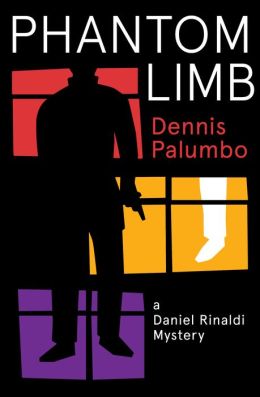
Phantom Limb
Dennis Palumbo
A Daniel Rinaldi Mystery
Psychologist
and Pittsburgh Police Department consultant Daniel Rinaldi has a new
patient. Lisa Harland, a local girl, once made a splash in Playboy and
the dubious side of Hollywood before bottoming out. Back home, down and
out again, she married one of the city's richest and most ruthless
tycoons. Lisa's challenge to Danny is that she intends to commit suicide
by 7:00 PM. His therapist skills may buy some time — but, exiting,
she's kidnapped right outside his office.
Summoned to the Harland
estate, Danny is forced, through a bizarre sequence of events, to be
the bag man on the ransom delivery. This draws him into a deadly
cat-and-mouse game with a brilliant, lethal adversary. Complicating
things is the unhappy Harland family, whose members have dark secrets of
their own along with suspect loyalties, as well as one of Danny's other
patients, a volatile vet whose life may, like Lisa's, be at risk. What
is really at stake here?




 In my new Daniel Rinaldi thriller, Phantom Limb,
one of the main characters is an Afghan vet who lost his leg to an IED
while out on patrol with his unit. Now, stateside, he struggles with a
growing substance abuse problem, as well as some of the predictable
psychological aftereffects of such a life-changing trauma.