"The universe is made of stories, not of atoms."
—Muriel Rukeyser
____________________________
Showing posts with label contemporary romance. Show all posts

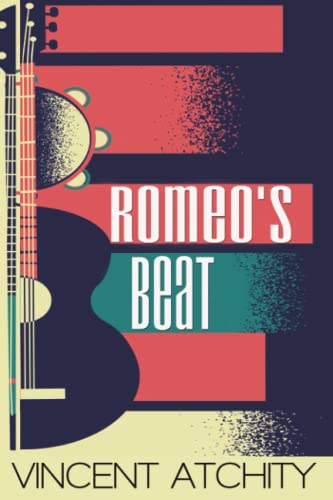
Robert L. Rivenbark, Jr. Reviews Vincent Atchity's Story Merchant Book Romeo's Beat


How delightful to discover in the #MeToo age, when trust between men and women—and romantic love itself—has reached its nadir in our dysfunctional culture, that it’s still possible for an American novelist to write a literary love story that celebrates the eternal bond between man and woman. That’s precisely what Vincent Atchity has achieved with Romeo’s Beat. His novel has a deceptively simple premise—until you let it enfold and lift you into regions rarely explored in contemporary fiction. The points of comparison I can think of in terms of Atchity’s style are Ernest Hemingway (particularly in A Farewell to Arms) and Anaïs Nin (particularly in her Ladders to Fire). But Atchity has his own distinct voice, well-suited to his subject matter, giving his book a rhythm and cadence that make it a prose poem of unsurpassed beauty.


I had the honor of hearing Atchity do a live reading from his novel. During the Q&A afterward, he mentioned that given his responsibilities running a psychological clinic and raising three children with his wife, he had only been able to devote sixteen minutes day to his novel, beginning in 2007. Thankfully, he persisted, and the result is exquisite.

Set in the early 1980s, an era when great rock anthems resounded from FM stations, Romeo’s Beat follows the journeys of Juliet, a beautiful young Kansas botanist possessed of a mystical bond with nature; and Colin, a young singer/lyricist/guitarist who’s postponed recording his first record album in L.A., despite a lucrative recording contract, in a quest to find something enduring in his own music.

Juliet meets Colin while she’s on a solo pilgrimage to Salamanca, Spain, the city of her philosophical hero, Miguel de Unamuno. In her strolls through Salamanca’s cobblestone streets, she returns often to the Calle de Bordodores to see Pablo Serrano’s monumental statue of Unamuno. Yards away is one of her favorite shrines to Mary. Juliet considers her own personal religions to lie “suspended in a continuum between Unamuno and the Virgin Mary.” Unamuno scribed these words: “My religion is to seek for truth in life and life in truth.” Juliet believes this, too. “Even knowing that I shall not find them while I live,” she sadly concludes.

She’s at a crossroads. Having won a scholarship to begin her doctoral studies in botany in a month, she’s also engaged to Brad, a pleasant enough young man who brings solid financial prospects, given his upscale family roots. But Brad operates on a plain of consciousness that can’t begin to approach Juliet’s capacity to blend romantic and sexual passion with mystical intimations that take her into realms of awareness lightyears beyond Brad’s conventionality. She tells herself that she loves Brad, but that affirmation has started to ring hollow. Then she meets Colin in Salamanca, during his stopover on a peripatetic journey through Europe in search of his musical voice. The thunderbolt strikes them both. Juliet is powerfully drawn to this stranger in a way wholly unacceptable to her trajectory in life, so soon to be devoted to study, teaching, and a conventional marriage.

Colin, for his part, is strongly attracted to Juliet as well, but he’s obsessed with his own search, expressed in this reflection while he samples garlic-fried Champiñones mushrooms in a Salamanca tavern: “Colin had learned to cook from his father, and had a deep appreciation for dishes that brought together fundamental elements. The smell of olive oil and garlic had won him over before he’d even realized its source. It had grabbed something inside him that was older than he was, something that was inside everyone, and that would outlast any individual. For lyrics to last, Colin thought, they had to incorporate something as fundamental as olive oil and garlic.”

What follows is an elegantly articulated dance of love that focuses on the internal journeys of the two lovers, as they gradually come to accept that their meeting is going to disrupt their lives and change them both profoundly. The pace of this change unfolds slowly—perhaps too slowly for modern readers (though the novel is a quick read at 144 pages). But despite this minor pacing issue, Atchity does a magnificent job of dramatizing how, as their relationship becomes more intimate, Juliet’s and Colin’s hearts and souls are embroidered together, giving special significance to the Calle de Bordodores (which means “embroiderers”) that Juliet visits so often. From their love grows intimacy, the birth of a daughter, and a tragedy that raises the tale to classical stature.

It’s remarkable how Atchity occupies the minds, hearts, and souls of Juliet and Colin, particularly since we live in an age where writing from the point of view of the “other”—men writing from a feminine point of view, or women writing from a male point of view—is a taboo that often reduces our literature in a way that great writers of previous ages didn’t have to contend with (imagine Shakespeare hesitating to write Romeo and Juliet because he wasn’t a woman). Atchity’s insights are those of a mature artist who’s achieved a measure of wisdom about the eternal truths of life and love. At the end of the novel, I found myself hungering for more of this gifted writer’s work. Highly recommended reading.

Story Merchant E-Book Deal: Romeo's Beat by Vincent Atchity

FREE JUNE 1 - JUNE 6!


How do you make a garden grow?
How do you find a beat that will just go on and on?
How do you find a love that lasts forever?

Juliet Sawyer, renowned botanist, tends a garden that is like none other in the Midwestern suburb where she lives. The envy of her neighbors and of landscape architects all over the world, Juliet hasn’t gotten there without learning some hard lessons—about soil and sunlight, about desire and letting go.

Colin Hogan is a musician on the verge of greatness, and a solo traveler with an imaginary companion. If only he can find the sound that will set him apart from the teeming masses who record songs without ever getting a hit. If only he can find the special someone who can make his world and work come to life.

When Juliet meets Colin, in a quiet cafe on a side street in a faraway city, neither one of them suspects how wide their worlds will become.

Romeo’s Beat is a timeless love story about a woman who is true to herself and to her beliefs about truth, about a man who is a seeker and a listener, and about the unexpected shape of the love that conquers all. It’s a story about the power of love to lead us into an unfamiliar territory of soundscapes and landscapes, the sorrows that come, the joy that endures and permeates all, love that turns the world upside down and sets it straight, love that carries us away from wrong ideas we had about ourselves and puts us in touch with the reality that makes our hearts come alive.


About Vincent Atchity
Vincent Atchity has lived in Spain, Scotland, California, New York, Kansas, and the District of Columbia. He now lives in Colorado with his wife and their three sons


NEW FROM STORY MERCHANT BOOKS


AVAILABLE ON AMAZON


What would you do for a second chance with your first love?


Kenzie Church found true love young and lost it all. Since then, he’s lived a quiet life of deprivation and self-denial. In this poignant romance, he’s offered a second chance with his first love. Will he circle back? And if he does, will Maezie be there waiting?
•••
Hello, my friend. I got a message that you need me.

Maezie’s carefully crafted response to the voice message I’d left had been a classic understatement, for I’ve never stopped needing this woman. And she’d texted me back. Hot damn! Game on.

I don’t linger over the specifics of this spur-of-the-moment intercourse. I get where I’m coming from—fresh from being dumped by my wife of eighteen years who, if I’m being honest, was way too young and finally decided to trade me in for a more age-appropriate model. But I wonder what’s what in Maezie’s world.

My mind unlocks a long-forgotten memory to connect the dots. I’m maybe six years old and messing with a box of kitchen matches in the woods behind my house. My best friend, Mark, and the O’Haro brothers are with me, and we think it’s a good idea to set ablaze the pile of dried leaves we’d grown weary of jumping into. The cute, little glow quickly explodes into a raging fire, and we run away frightened, leaving Mother Nature to solve the problem.

Have I lit another careless fire?

Will I run from the consequences once more?

Instagram review by @LaurensLiteraryLifestyle: “Written in well-thought-out and lyrical prose, this is a story about knowing in your bones who your soulmate is and the obstacles you have to overcome to find your way back to them. ‘I was a boy charged with making the decisions of a man. I failed that man, and I failed you.’ And this is a hopeful story. One filled with missed chances and bad timing but hope that love can triumph over the mistakes of the past.”


Author’s Note:


Circle Back is a very personal story for me, inspired by my first foray into serious romance during my college years where one of the tenets of my fraternity was the saying “A pearl of great price is not obtained merely for the asking.” I have never forgotten that saying or the woman who is my Maizie and who remains that pearl of great price.

In the recent aftermath of being served divorce papers, I was sifting through the remains of my self-worth, and that examination led me back to my college love. She’d encouraged me to keep a journal, which eventually became the framework for Circle Back.
Last year, I was just beginning to settle into the dream of writing historical fiction when my amazing editor, Lisa Cerasoli, seized upon the sample of Circle Back I’d attached in an email as an afterthought. Lisa’s encouragement led to the completion of this vital novel and contributed significantly to my own recovery.

Social media is full of conflict, and much of the content we view on television and in the theater thrives on it, so with Circle Back, I set out to chain together all the beautiful stories of my youthful romance to offer some balance to all the gloom and doom out there. Love can be beautiful, and it can be sustainable. I hope you find this story uplifting and maybe one or more of you will be inspired to circle back for that pearl from your past. Anything’s possible…if you believe.

You’ll see.

FREE This Week From Story Merchant Books: Until Death Do Us Apart by Cade North


Until Death Do Us Apart

By Cade North


A natural disaster, naked fortune telling, a romantic catastrophe, supervillains, and poop on slides--just another week in the life of Sloane Noah. Despite always wanting a boring life, this single parent and hapless college professor finds she’s a lightning rod for the shocking and comically bizarre.

Based on a true story, this darkly hilarious book chronicles one woman’s tale about learning resilience from misfortune and strength from pain. Nature’s splintered wreckage, laughter, and the carcass of love prove to be the key ingredients for becoming her own hero. This dynamic story will resonate with anyone who’s ever fumbled through life’s absurdities and, somehow, still managed to stumble into a bright, new day.


Cade North

As Dr. Cade North carved out a career in academia and successfully raised two children on her own, North survived her own long history of romantic mishaps as well. While living a life packed with unplanned comedy and adventure, Cade developed the ability to turn personal calamities into hilarious tales.

Originally from Richmond, Indiana, North lived in numerous places across the U.S. and traveled throughout the world while getting her education and earlier work experience. Coming full circle, now Cade lives back in Indiana and works as college professor.


Story Merchant E-Book Deal

This week: The Twaesum Aik of Brae MacKenzie (A Romance of Mythic Identity Book 1) by Andrea Aguillard ⁠


Brae MacKenzie, a successful San Francisco painter, is a woman who seems to have it all but who's felt a sense of loss and longing since childhood. Her artistic passion hasn't filled that void, and with the untimely death of her charismatic husband, the old pain resurges.

Brae's father senses his daughter's pain and before she embarks for an exhibit in England he hands her a family heirloom hidden away for years...a letter: "Since you are still among the living, your heart is not broken...follow the map," Brae reads, "to Scotland."

The London exhibit, in its ultra-chic hollowness, prompts Brae into taking and advice of that bewildering letter. She hops a train for Glasgow.

When the train goes through a tunnel and emerges in a forest of "Christmas trees," Brae suddenly feels something. This is her stop; she just knows it.

She met at the station by Damon, a stranger, or perhaps not. He becomes her own personal tour guide to the myths and history of a past she never knew--and to a romance she never dreamed of having.


Love is blooming


Author Headshot

By Alexandra Alter

I cover the literary world and the publishing business.

There’s a boom in romance bookstores. More than 20 of them have sprung up around the United States in the past few years — up from just two in 2020 — and more are on the way.

They have quirky names like the Ripped Bodice, Tropes & Trifles, Love’s Sweet Arrow, and Kiss & Tale. They’re sprinkled across the country, from Alaska to Maine. They’re largely owned and operated by women, and have become vibrant community hubs for romance fans.

As a reporter who covers publishing, I’ve been following the soaring sales for romance, which is by far the top-selling fiction genre. But the arrival of brick-and-mortar romance stores struck me as something new, and surprising.

For a story in The Times, I visited romance stores in South Florida and Brooklyn, and talked to booksellers, publishers and fans of the genre, to find out why romance bookstores are suddenly thriving.

How readers fell for romance

Romance writers and their fans point out that, about a decade ago, there wasn’t much enthusiasm for the genre in independent bookstores. Even though romance has long been a major moneymaker for publishers, the literary world tended to look down on it as frothy and unserious, or worse, as smut.

Rebecca Zanetti told me that after she started publishing paranormal romance in 2011, it was hard for her to book a signing at a store, even though her novels were best sellers.

“Back when I started out, you’d go into a small local bookstore and they might not even have a romance section, and if I said I wrote romance, they weren’t interested,” Zanetti said.

The current romance craze traces to the early days of the pandemic, when millions of people were stuck at home, bored and anxious, and rediscovered their love of reading. Book sales spiked in 2020 and 2021, and romance in particular saw a steep and sustained rise. Its appeal during times of turmoil and uncertainty is obvious: Romance novels offer comfort and escape, and the stories often land on what fans call an “H.E.A.” — a Happily Ever After.

Many who turned to romance during the pandemic seem to have kept up the habit. Print sales of romance books more than doubled in the last few years, from 18 million copies in 2020 to 39 million in 2023.

On her most recent tour, Zanetti had events at three different romance bookstores in Southern California. And she said a new one — called It’s A Love Story — had just opened in her hometown, Hayden, Idaho.

The back of two people’s heads as they browse the lgbtq section of a bookstore.

Looking for love stories. Natalie Keyssar for The New York Times

Judgment-free zones

The new crop of romance bookstores look and feel different from your typical local independent shop. They carry thousands of books in every conceivable romantic subgenre — historical, L.G.B.T.Q., young adult, romantic suspense, supernatural, romantasy, sports-themed romance — and many carry a wide selection of self-published novels that mainstream booksellers don’t stock. Some customers I spoke to said that they loved being able to shop without feeling judged for their tastes, and that booksellers were happy to steer them toward whatever they fancy: secret billionaire romance, B.D.S.M. erotica, Sapphic vampire romance, polyamorous hockey romance.

A lot of the stores have an unabashedly feminine aesthetic. They are heavy on pink and floral motifs, with bright signs and merchandise that riff on familiar romance tropes — enemies to lovers, forced proximity, forbidden love, secret identity, fake relationships. They’ve become hubs for romance fans, not just to buy books but also to gather for book clubs, writing workshops, trivia contests and cheekily themed craft nights.

Melissa Saavedra, owner of Steamy Lit in Deerfield Beach, Fla., said that even though romance sales were soaring, fans and writers still needed dedicated spaces and more recognition from the publishing world.

“Even though it is the best-selling genre in fiction,” Saavedra told me, “we still have to fight tooth and nail for people to respect the genre.”


via The New York Times

A Very Special Interview: Shades of Love and Ken Atchity with Amanda Reyes! Happy Valentine's Day


 LISTEN HERE


Made for TV Mayhem Show » podcast


Unearthing great television... one program at a time

This podcast is dedicated to made for television movies and other forms of classic TV! Brought to you by Amanda Reyes (Made for TV Mayhem), Daniel R. Budnik (Bleeding Skull: A 1980s Trash Horror Odyssey), and Nathan Johnson (The Hysteria Continues), plus a few special guests who appear from time to time. With reviews, retrospectives and more, this podcast is your best source for classic television love!


Story Merchant Books is pleased to announce our first Zoom Book Launch Party for 2022

Story Merchant Books is pleased to announce our first Zoom Book Launch Party for 2022 with our title, Romeo’s Beat by Vincent Atchity, on Wednesday, January 12th 2022!


We want to extend a warm invite to all Story Merchant authors and friends to celebrate with us via Zoom on Wednesday 1/12 at 4pm PST / 7pm EST!

Please see the invite and agenda below and feel free to forward this email to anyone who might want to join!

On the day of the event, click the link below and enter the password to join everyone virtually!


You can order by clicking on this link: Romeo’s Beat


Join Zoom Meeting on January 12th:  https://us02web.zoom.us/j/5977327777?pwd=MFY5TXBJQUxwb1J2ZWhPeTR4WDdsUT09


Time: Jan 12, 2022 04:00 PM Pacific Time (US and Canada)


Meeting ID: 597 732 7777
Passcode: romeo


Naples: Elena Ferrante’s brilliant city

Fans of the writer’s Neapolitan novels are flocking to discover the south Italian city, whose personality is as important to the books as the protagonists.


Check out: 

Second generation Italian-American Lisa Greco is about to receive the reward she's worked her head off for--but she's not sure it's what she wants anymore.

She's always postponed exploring her creativity, and discovering her Neapolitan origins. So she throws the dice, and goes to Naples where she meets a mysterious Japanese-Italian professor of mathematics and itinerant tenor who's in search of his own roots. This leads her to do something she's never done before. She takes his hand as he leads her into the darkest recesses of the ancient excavations that reveal the key to both their identities.


Like many tourists in Naples, I have only ever been there en route to somewhere else. For years the city has had a reputation for being dirty, dangerous and traffic-choked: why on earth would anyone choose to linger? But this has changed. Naples is becoming a destination in its own right, thanks in part to the huge popularity of the enigmatic author Elena Ferrante. And with the city’s rubbish-collection problem solved and new traffic restrictions in the centre, it is looking in better shape than it has done for decades.

Ferrante, who writes under a pseudonym, is the most important literary sensation to have emerged from Italy in a generation. Her quartet of Neapolitan Novels has sold more than 5.5 million copies worldwide. The New York Times observed that enthusiasm for the novels is so intense that it is being described in “epidemiological terms, making the phenomenon sound almost like an infectious disease”. Nor is Ferrante fever likely to cool any time soon: an Italian/American television adaptation of the first book My Brilliant Friend is under way. Filming starts in Naples next spring. The ultimate aim is to adapt all four novels over 32 episodes.

I came late to the books, prompted to pick up the first volume by the outrage around Italian reporter Claudio Gatti’s controversial unmasking of Ferrante’s supposed true identity. Needless to say, I loved My Brilliant Friend and devoured the next three, gripped by Ferrante’s rich portrait of the hard lives and intense friendship of the two protagonists – Elena and Raffaella (who call each other Lenù and Lila) – who grow up in a poor, violent neighbourhood against a background of mafia vendettas and social and political unrest in the 1960s and 70s.

    We stop at a traditional pastry shop like the one run by the Solara brothers for a coffee and a sfogliatella

Naples is as much a character in Ferrante’s writing as Lenù and Lila themselves. Her “dark streets full of dangers, unregulated traffic, broken pavements, giant puddles … clogged sewers” work their way deep into your imagination. So you finish the Neapolitan novels not only with a sigh of regret, but an insistent desire to get to know the city for yourself.

“People began asking hotels and tour operators in the area: ‘How can we find the locations in the novels?’” says Caterina dei Vivo of Progetto Museo, a Naples-based cultural heritage preservation group. “They wanted to see the stradone, the Vomero, the Rettifilo, the Corso Umberto.” Progetto Museo quickly launched a Ferrante tour of the city earlier this year and several others have jumped on board since then.

I decided to combine my tour with a few nights in Sorrento. A picturesque tumble of dark red villas and ochre hotels perched on the edge of the Bay of Naples, the town works as a base not only for visits to the city – about 50 minutes away by boat, or an hour by train – but for the Amalfi coastal path (the “pathway of the gods”), Campania’s hillside towns and the islands of Capri and Ischia, too. Pompeii and Heculaneum are an easy train ride away.

I was met off the boat from Sorrento by the impressively qualified Caterina, a Neapolitan with a PhD in the preservation of cultural heritage. Along with the two others in our group, I was keen to visit the working-class neighborhood where Lenù and Lila grow up: the Rione Luzzatti in the south of the city. Frustratingly, Caterina won’t take us there. Now mainly social housing, it has a reputation for crime and is apparently “too sad and depressing” for us. Instead, we set off into the old city where our first stop was Corso Umberto, known locally as the Rettifilo. This is the main street connecting the rione [administrative district] with the city, where Lenù and Lila first start going out alone with friends – with disastrous consequences one night when the Solara brothers pick a vicious fight with some obnoxious private school boys. It is also home to the bridal shops visited by 16-year-old Lila as she prepared for her lavish wedding to Stefano Carracci. Every window is awash with frothy white lace and rainbow-coloured bridesmaids’ dresses.

We turn left into the university district where Lenù found her first job in a bookshop and Nino, the love of her life, worked as a leftwing lecturer. As in the books, the lecture theatres are daubed with radical slogans – a “lotta dura” [a 60s political slogan, now more associated with football] here, a hammer and sickle there and students hand out revolutionary flyers to passersby. Next stop is Via dei Tribunale, where Lenù attended political meetings with her friends in the Red Brigades. We stop at a traditional pastry shop like the one run by the Solara brothers in the novels for a coffee and a sfogliatella, a shell-shaped pastry which originated in Naples, filled with vanilla, cinnamon and orange-flavoured ricotta.
Naples: what to see, plus the best restaurants, bars and hotels
Read more

The city centre feels wonderfully unmodernised, its dark, narrow streets dripping with faded laundry, lucky bunches of dried red chillies outside every house and shop front. Walls are buried beneath layers of posters, stickers, graffiti and grime. Scooters zoom past, horns blare and truck brakes hiss. I’m struck by the absence of chains, such as Starbucks and McDonald’s. Caterina says the multinationals know they cannot compete with the street food of Naples: fried pizza, potato croquettes, courgette flowers in batter, fried anchovies and fried mozzarella are sold on every corner in brown paper cones – cuoppo – for just a few euros apiece. Pungent Neapolitan coffee likewise.

East of the dead-straight Spaccanapoli which bisects the city centre, giving away its Roman heritage, the streets widen out and the Via Toledo, one of the city’s main shopping streets, leads us out of old Naples. This is where the Solara brothers paraded in their Fiat 1100 during the evening passeggiata in My Brilliant Friend. It runs past the elegant glass dome of the 19th-century Galleria Umberto – where Tom Ripley and Dickie Greenleaf strolled in The Talented Mr Ripley – into the Piazza Trieste e Trento, home of the San Carlo opera house and the Gran Caffè Gambrinus, a Naples institution founded in 1860, which Lenù and her daughters visit with Gigliola in The Story of The Lost Child. The imposing national library, where she researched the city’s history towards the end of the book, is in the same piazza.

From there it is a short walk along the well-heeled Via Chiaia to the elegant Piazza dei Martiri, home to the Solara brothers’ shoe shop, where Lila hung a giant, disfigured wedding photograph of herself in her wedding gown and later conducted an affair with Nino. Staring into the windows of the handsome Salvatore Ferragamo store, you can imagine seeing Lila behind the till, or maybe it’s Alfonso, her closeted gay friend. The city opens up here to the sea and you become aware that you haven’t glimpsed the Mediterranean since morning. As Lenù often reflects, Old Naples keeps its back to the water, brooding and looking inward.

From the Villa Comunale, one of the city’s few green spaces, you can gaze towards Via Tasso, where Lenù rented an apartment while she was with Nino, and also fashionable Vomero, where a teenage Lenù attended an elegant party thrown by her professor and was amazed by her first insight into another, bourgeois world.

We returned to Sorrento exhilarated and completely sold on the concept of getting to know a new place through its literary characters. Where next? Dave Eggers’s San Francisco? Marlon James’s Jamaica? Elizabeth Strout’s Maine? The possibilities are endless.

Read more Lisa O'Kelly