"We read a good novel not in order to know more
people, but in order to know fewer.Instead of the humming swarm of human beings, relatives, customers,
servants, postmen, afternoon callers, tradesmen, strangers who tell us the
time, strangers who remark on the weather, beggars, waiters, and
telegraph-boys--instead of this bewildering human swarm which passes us every
day, fiction asks us to follow one figure (say the postman) consistently through
his ecstasies and agonies. That is what makes one impatient with that type of
pessimistic rebel who is always complaining of the narrowness of his life and
demanding a larger sphere.
Life is too
large for us as it is: we have all too many things to attend to. All true
romance is an attempt to simplify it, to cut it down to plainer and more
pictorial proportions. What dullness there is in our life arises mostly from
its rapidity; people pass us too quickly to show us their interesting side. By
the end of the week we have talked to a hundred bores; whereas, if we had stuck
to one of them, we might have found ourselves talking to a new friend, or a
humorist, or a murderer, or a man who had seen a ghost."
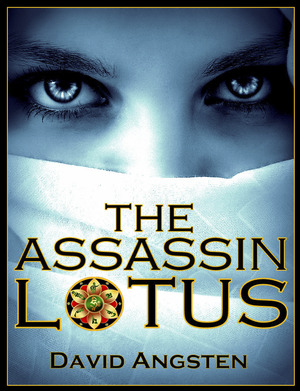
In Angsten’s (Night of the Furies, 2008, etc.) latest thriller, an American living in Italy searches for his brother and the sacred, much-desired lotus before a team of assassins can find them.
Jack Duran’s relatively quiet life as a tour guide in Rome takes a drastic turn when someone tries to kill him. A few someones, actually, who want to know about the lotus flower Jack’s paleoethnobotanist brother, Dan, sent him. Jack doesn’t know why several factions, including the U.S. Diplomatic Security Service, are interested in the lotus, but they’re sure he knows where Dan is. He doesn’t, but with a group of Iranian assassins on his tail, he decides to hunt for his brother, beginning in Turkmenistan. Jack and his brother’s girlfriend, Dutch archaeologist Phoebe Auerbach (with whom Jack was once infatuated), reconnect to track down Dan and the lotus—if they can stay alive long enough. Angsten certainly knows how to kick-start his story: Jack is on a date with mysterious Maya, unaware he’s being followed by at least two unknown parties. Angsten further establishes suspense right away with one assassin in particular, Vanitar, who blames Jack for his brother’s death and is fueled by vengeance. The book is rife with nail-biting tension, as when Jack must duck into an airport restroom before even getting out of Rome, before his and Phoebe’s search takes them inside a dark crypt. The action rarely stops. Jack (and eventually Phoebe) bounces all over Central Asia while traveling by plane, train, boat, and car. He’s also chased by professional killers, hotel security, and police in a variety of places, from a hospital to the desert. Love connections—between Jack and Phoebe as well as Dan and Phoebe—are teased, but Dan, his fate uncertain, isn’t around to ignite potential melodrama. On occasion, Angsten threatens to saturate the plot with detail—the purpose of the lotus, for example, is fairly simple and explained a bit too often—but these discussions among Jack and others are never tedious, since it’s only a matter of time before they’re back to evading murderous baddies.
Angsten hits all the genre highlights—action, suspense, mystery—in this worthwhile thriller.
FREE
New Thriller from David Angsten ~ Nov. 12-14 only!
From
the author of Dark
Gold
and Night of the Furies,
a new epic adventure thriller is available 3 days FREE for your
Kindle or Kindle App.
What secret
might empower a man to overcome all fear?
Jack Duran, a young American travel guide indulging a broken heart in Rome,
never thought the lotus plant he grew from a seed was anything more than
just another pretty flower. But when it draws the attention of an
intriguing Indian businesswoman, men with knives soon arrive wreaking
bloody havoc. The lotus, it turns out, holds a long-coveted secret, a
mystery harking back to the beginnings of Hinduism and Buddhism—and to the
ancient origins of terrorism.
Pursued by a fanatical Islamist assassin, Jack flees in search of the man
who sent the lotus seed, the ethno-botanist Daniel J. Duran—a notorious and
shadowy researcher who happens to be Jack's brother.Together with
Jack’s lost love, the alluring Dutch archaeologist Phoebe Auerbach, Dan has
mysteriously vanished into the sands of Central Asia.
Following their trail along the legendary Silk Road, Jack eludes a fatal
web of ruthless spies and killers, racing against time and his merciless
adversary to uncover a long-lost secret of enlightenment—and battle the
resurgence of an age-old terror.
Order The Assassin Lotus FREE
at the following links:
For more information on David Angsten's books, visit his website DavidAngsten.com,
his blog davidangsten.blogspot.com,
"like" or friend him on Facebook, and follow him on
Twitter @DavidAngsten.
“Thou art a soul in bliss; but I am bound / Upon a wheel of fire, that mine own tears / Do scald like molten lead.” – King Lear
The word “hope” has an oddly positive reputation in our corner of the universe: it is the stuff of greeting cards and political campaigns. But the ancient Greeks knew better.
Hesiod relates the famous myth of “Pandora’s Box,” in which the first woman, Pandora, (much like Eve) unwittingly opens a box (actually, a jar in the original) containing all evils. They escape into the world, save one—hope, which remains for humanity’s possession. Contemporary readers often interpret hope as a boon left to console mankind, although Hesiod makes it clear that only evils were contained in the box, and goes on to deprecate hope later in his poem, referring to it as “empty.” Friedrich Nietzsche provides the best comment: “Zeus did not want man to throw his life away, no matter how much the other evils might torment him, but rather to go on letting himself be tormented anew. To that end, he gives man hope. In truth, it is the most evil of evils because it prolongs man’s torment.” Read More
For a literary culture that fears it is on the brink of total annihilation, we are awfully cavalier about the Great Male Novelists of the last century. It has become popular to denounce those authors, and more particularly to deride the sex scenes in their novels. Even the young male writers who, in the scope of their ambition, would appear to be the heirs apparent have repudiated the aggressive virility of their predecessors.
After reading a sex scene in Philip Roth’s latest novel, “The Humbling,” someone I know threw the book into the trash on a subway platform. It was not exactly feminist rage that motivated her. We have internalized the feminist critique pioneered by Kate Millett in “Sexual Politics” so completely that, as one of my students put it, “we can do the math ourselves.” Instead my acquaintance threw the book away on the grounds that the scene was disgusting, dated, redundant. But why, I kept wondering, did she have to throw it out? Did it perhaps retain a little of the provocative fire its author might have hoped for? Dovetailing with this private and admittedly limited anecdote, there is a punitive, vituperative quality in the published reviews that is always revealing of something larger in the culture, something beyond one aging writer’s failure to produce fine enough sentences. All of which is to say: How is it possible that Philip Roth’s sex scenes are still enraging us?
In the early novels of Roth and his cohort there was in their dirty passages a sense of novelty, of news, of breaking out. Throughout the ’60s, with books like “An American Dream,” “Herzog,” “Rabbit, Run,” “Portnoy’s Complaint” and “Couples,” there was a feeling that their authors were reporting from a new frontier of sexual behavior: adultery, anal sex, oral sex, threesomes — all of it had the thrill of the new, or at least of the newly discussed. When “Couples,” John Updike’s tour de force of extramarital wanderlust set in a small New England town called Tarbox, came out in 1968, a Time magazine cover article declared that “the sexual scenes, and the language that accompanies them, are remarkably explicit, even for this new age of total freedom of expression.”
These novelists were writing about the bedrooms of middle-class life with the thrill of the censors at their backs, with the 1960 obscenity trial over “Lady Chatterley’s Lover” fresh in their minds. They would bring their talent, their analytic insights, their keen writerly observation, to the most intimate, most unspeakable moments, and the exhilaration, the mischief, the crackling energy was in the prose. These young writers — Mailer, Roth, Updike — were taking up the X‑rated subject matter of John O’Hara and Henry Miller, but with a dash of modern journalism splashed in.
In Philip Roth’s phenomenally successful 1969 novel “Portnoy’s Complaint,” the Jewish hero sleeps his way into mainstream America through the narrow loins of a series of crazy harridans and accommodating lovelies. But are the sex scenes meant to be taken seriously? In “The Counterlife,” Roth’s alter ego, the writer Nathan Zuckerman, calls himself a “sexual satirist,” and in that book and others Roth’s sex scenes do manage to be both comic and dirty at the same time: “The sight of the Zipper King’s daughter sitting on the edge of the bathtub with her legs flung apart, wantonly surrendering all 5 feet 9 inches of herself to a vegetable, was as mysterious and compelling a vision as any Zuckerman had ever seen.”
Roth’s explicit passages walk a fine, difficult line between darkness, humor and lust, and somehow the male hero emerges from all the comic clauses breathless, glorified. There is in these scenes rage, revenge and some garden-variety sexism, but they are — in their force, in their gale winds, in their intelligence — charismatic, a celebration of the virility of their bookish, yet oddly irresistible, protagonists. As the best scenes spool forward, they are maddening, beautiful, eloquent and repugnant all at once. One does not have to like Roth, or Zuckerman, or Portnoy, to admire the intensely narrated spectacle of their sexual adventures. Part of the suspense of a Roth passage, the tautness, the brilliance, the bravado in the sentences themselves, the high-wire performance of his prose, is how infuriating and ugly and vain he can be without losing his readers (and then every now and then he actually goes ahead and loses them).
In 1960, the 28-year-old Updike solidified his emerging reputation as the author of eerily beautiful stories with his novel “Rabbit, Run,” about a lanky ex-basketball player turned kitchen utensil salesman, Harry (Rabbit) Angstrom, who runs off from his family, has sex with a plump and promiscuous mistress and comes home to a wife who has drunkenly drowned their newborn baby. A few years later, Norman Mailer told Updike he should get back in the whorehouse and stop worrying about his prose style. But that was Updike’s unnerving gift: to be frank and aestheticizing all at once, to do poetry and whorehouse. In “Couples,” a graphic description of oral sex includes “the floral surfaces of her mouth.” In “Rabbit, Run,” we read of “lovely wobbly bubbles, heavy: perfume between. Taste, salt and sour, swirls back with his own saliva.” The hallmark of Updike’s sex scenes is the mingling of his usual brutal realism with a stepped-up rapture, a harsh scrutiny combined with prettiness. Everything is rose, milky, lilac, and then suddenly it is not.
For Rabbit, as with many Updike characters, sex offers an escape, an alternate life — a reprieve, even, in its finest moments, from mortality. In the Time cover article, Updike describes adultery as an “imaginative quest.” In “Marry Me,” among other books, he expands on the theme that leaving one marriage for another doesn’t resolve our deeper malaise, but he is interested in the motion, in the fantasy, in the impulse toward renewal: it is Rabbit running that he loves. As one of the characters in “Couples” puts it, adultery “is a way of giving yourself adventures. Of getting out in the world and seeking knowledge.”
Saul Bellow shared Updike’s interest in sexual adventuring, in a great, splashy, colorful comic-book war between men and women. Moses Herzog, he writes, “will never understand what women want. What do they want? They eat green salad and drink human blood.” Bellow’s novels are populated with dark, voluptuous, generous, maybe foreign Renatas and Ramonas, who are mistresses; and then there are the wives, shrewish, smart, treacherous, angular. While his sex scenes are generally more gentlemanly than those of Roth et al., he manages to get across something of his tussle with these big, fleshy, larger-than-life ladies: “Ramona had not learned those erotic monkey-shines in a manual, but in adventure, in confusion, and at times probably with a sinking heart, in brutal and often alien embraces.”
In his disordered, sprawling novels, Mailer takes a hopped-up, quasi-religious view of sex, with flights of D. H. Lawrence-inspired mysticism and a special interest in sodomy. In “An American Dream,” he describes a woman’s genitals: “It was no graveyard now, no warehouse, no, more like a chapel now, a modest decent place, but its walls were snug, its odor was green, there was a sweetness in the chapel.”
Mailer’s most controversial obsession is the violence in sex, the urge toward domination in its extreme. A sampling: “I wounded her, I knew it, she thrashed beneath me like a trapped little animal, making not a sound.” “He must subdue her, absorb her, rip her apart and consume her.” It is part of Mailer’s existentialism, his singular, loopy philosophy, that violence is good, natural and healthy, and it is this in his sex scenes that provokes. As in many of Mailer’s ventures, like his famous campaign for mayor of New York, it’s not entirely clear how much he means it and how much is for fun, for the virile show.
It would be too simple to call the explicit interludes of this new literature pornographic, as pornography has one purpose: to arouse. These passages are after several things at once — sadness, titillation, beauty, fear, comedy, disappointment, aspiration. The writers were interested in showing not just the triumphs of sexual conquest, but also its loneliness, its failures of connection. In his unruly defense of sexually explicit male literature in “The Prisoner of Sex,” Mailer wrote: “He has spent his literary life exploring the watershed of sex from that uncharted side which goes by the name of lust and it is an epic work for any man. . . . Lust exhibits all the attributes of junk. It dominates the mind and other habits, it appropriates loyalties, generalizes character, leaches character out, rides on the fuel of almost any emotional gas — whether hatred, affection, curiosity, even the pressures of boredom — yet it is never definable because it can alter to love or be as suddenly sealed from love.”
In the intervening decades, the feminists objected; the public consumed; the novelists themselves were much decorated. And then somewhat to their surprise, the old guard got old. In books like Roth’s “Exit Ghost” and Updike’s “Toward the End of Time,” they began to take up the subject of impotence in various forms. Was it possible that the young literary gods had fallen? Roth wrote in “Zuckerman Unbound”: “Life has its own flippant ideas about how to handle serious fellows like Zuckerman. All you have to do is wait and it teaches you all there is to know about the art of mockery.”
And so we come back to the copy of “The Humbling” in the garbage can on the subway platform. The problem with the sex scenes in Philip Roth’s late work is not that they are pornographic, but that they fail as pornography. One feels that the author’s heart is not in it, that he is just going through the motions; one feels the impatient old master mapping out scenes (dildo, threesome), not writing them. The threesome in “The Humbling” has none of the quirkiness, the energy, the specificity of the threesomes in “Portnoy’s Complaint,” either the one where “the Monkey” eats a banana and gets her name, or the one where they pick up an Italian prostitute who later brings her son, all dressed up in his Sunday best, to see them. In the stripped-down later novels (“Everyman,” “Exit Ghost,” “Indignation”), Roth seems to have dispensed with the detail and idiosyncratic richness of his earlier work. As he writes about old men failing at sex, and raging about failing at sex, we see the old writer failing at writing about sex, which is, of course, a spectacle much more heartbreaking.
At this point, one might be thinking: enter the young men, stage right. But our new batch of young or youngish male novelists are not dreaming up Portnoys or Rabbits. The current sexual style is more childlike; innocence is more fashionable than virility, the cuddle preferable to sex. Prototypical is a scene in Dave Eggers’s road trip novel, “You Shall Know Our Velocity,” where the hero leaves a disco with a woman and she undresses and climbs on top of him, and they just lie there: “Her weight was the ideal weight and I was warm and wanted her to be warm”; or the relationship in Benjamin Kunkel’s “Indecision”: “We were sleeping together brother-sister style and mostly refraining from outright sex.”
Characters in the fiction of the heirs apparent are often repelled or uncomfortable when faced with a sexual situation. In “Infinite Jest,” David Foster Wallace writes: “He had never once had actual intercourse on marijuana. Frankly, the idea repelled him. Two dry mouths bumping at each other, trying to kiss, his self-conscious thoughts twisting around on themselves like a snake on a stick while he bucked and snorted dryly above her.” With another love interest, “his shame at what she might on the other hand perceive as his slimy phallocentric conduct toward her made it easier for him to avoid her, as well.” Gone the familiar swagger, the straightforward artistic reveling in the sexual act itself. In Kunkel’s version: “Maybe I was going to get lucky, something which, I reminded myself, following her up the stairs to our room and giving her ass a good review, wasn’t always a piece of unmixed luck, and shouldn’t automatically be hoped for any more than feared.”
Rather than an interest in conquest or consummation, there is an obsessive fascination with trepidation, and with a convoluted, postfeminist second-guessing. Compare Kunkel’s tentative and guilt-ridden masturbation scene in “Indecision” with Roth’s famous onanistic exuberance with apple cores, liver and candy wrappers in “Portnoy’s Complaint.” Kunkel: “Feeling extremely uncouth, I put my penis away. I might have thrown it away if I could.” Roth also writes about guilt, of course, but a guilt overridden and swept away, joyously subsumed in the sheer energy of taboo smashing: “How insane whipping out my joint like that! Imagine what would have been had I been caught red-handed! Imagine if I had gone ahead.” In other words, one rarely gets the sense in Roth that he would throw away his penis if he could.
The literary possibilities of their own ambivalence are what beguile this new generation, rather than anything that takes place in the bedroom. In Michael Chabon’s “Mysteries of Pittsburgh,” a woman in a green leather miniskirt and no underwear reads aloud from “The Story of O,” and the protagonist says primly, “I refuse to flog you.” Then take the following descriptions from Jonathan Franzen’s novel “The Corrections”: “As a seducer, he was hampered by ambivalence.” “He had, of course, been a lousy, anxious lover.” “He could hardly believe she hadn’t minded his attacks on her, all his pushing and pawing and poking. That she didn’t feel like a piece of meat that he’d been using.” (And of course there are writers like Jonathan Safran Foer who avoid the corruptions of adult sexuality by choosing children and virgins as their protagonists.)
The same crusading feminist critics who objected to Mailer, Bellow, Roth and Updike might be tempted to take this new sensitivity or softness or indifference to sexual adventuring as a sign of progress (Mailer called these critics “the ladies with their fierce ideas.”) But the sexism in the work of the heirs apparent is simply wilier and shrewder and harder to smoke out. What comes to mind is Franzen’s description of one of his female characters in “The Corrections”: “Denise at 32 was still beautiful.” To the esteemed ladies of the movement I would suggest this is not how our great male novelists would write in the feminist utopia.
The younger writers are so self-conscious, so steeped in a certain kind of liberal education, that their characters can’t condone even their own sexual impulses; they are, in short, too cool for sex. Even the mildest display of male aggression is a sign of being overly hopeful, overly earnest or politically untoward. For a character to feel himself, even fleetingly, a conquering hero is somehow passé. More precisely, for a character to attach too much importance to sex, or aspiration to it, to believe that it might be a force that could change things, and possibly for the better, would be hopelessly retrograde. Passivity, a paralyzed sweetness, a deep ambivalence about sexual appetite, are somehow taken as signs of a complex and admirable inner life. These are writers in love with irony, with the literary possibility of self-consciousness so extreme it almost precludes the minimal abandon necessary for the sexual act itself, and in direct rebellion against the Roth, Updike and Bellow their college girlfriends denounced. (Recounting one such denunciation, David Foster Wallace says a friend called Updike “just a penis with a thesaurus”).
This generation of writers is suspicious of what Michael Chabon, in “Wonder Boys,” calls “the artificial hopefulness of sex.” They are good guys, sensitive guys, and if their writing is denuded of a certain carnality, if it lacks a sense of possibility, of expansiveness, of the bewildering, transporting effects of physical love, it is because of a certain cultural shutting down, a deep, almost puritanical disapproval of their literary forebears and the shenanigans they lived through.
In a vitriolic attack on Updike’s “Toward the End of Time,” David Foster Wallace said of the novel’s narrator, Ben Turnbull, that “he persists in the bizarre adolescent idea that getting to have sex with whomever one wants whenever one wants is a cure for ontological despair,” and that Updike himself “makes it plain that he views the narrator’s impotence as catastrophic, as the ultimate symbol of death itself, and he clearly wants us to mourn it as much as Turnbull does. I’m not especially offended by this attitude; I mostly just don’t get it.”
In this same essay, Wallace goes on to attack Updike and, in passing, Roth and Mailer for being narcissists. But does this mean that the new generation of novelists is not narcissistic? I would suspect, narcissism being about as common among male novelists as brown eyes in the general public, that it does not. It means that we are simply witnessing the flowering of a new narcissism: boys too busy gazing at themselves in the mirror to think much about girls, boys lost in the beautiful vanity of “I was warm and wanted her to be warm,” or the noble purity of being just a tiny bit repelled by the crude advances of the desiring world.
After the sweep of the last half-century, our bookshelves look different than they did to the young Kate Millett, drinking her nightly martini in her downtown apartment, shoring up her courage to take great writers to task in “Sexual Politics” for the ways in which their sex scenes demeaned, insulted or oppressed women. These days the revolutionary attitude may be to stop dwelling on the drearier aspects of our more explicit literature. In contrast to their cautious, entangled, ambivalent, endlessly ironic heirs, there is something almost romantic in the old guard’s view of sex: it has a mystery and a power, at least. It makes things happen.
Kate Millett might prefer that Norman Mailer have a different taste in sexual position, or that Bellow’s fragrant ladies bear slightly less resemblance to one another, or that Rabbit not sleep with his daughter-in-law the day he comes home from heart surgery, but there is in these old paperbacks an abiding interest in the sexual connection.
Compared with the new purity, the self-conscious paralysis, the self-regarding ambivalence, Updike’s notion of sex as an “imaginative quest” has a certain vanished grandeur. The fluidity of Updike’s Tarbox, with its boozy volleyball games and adulterous couples copulating alfresco, has disappeared into the Starbucks lattes and minivans of our current suburbs, and our towns and cities are more solid, our marriages safer; we have landed upon a more conservative time. Why, then, should we be bothered by our literary lions’ continuing obsession with sex? Why should it threaten our insistent modern cynicism, our stern belief that sex is no cure for what David Foster Wallace called “ontological despair”? Why don’t we look at these older writers, who want to defeat death with sex, with the same fondness as we do the inventors of the first, failed airplanes, who stood on the tarmac with their unwieldy, impossible machines, and looked up at the sky?
Katie Roiphe teaches in the Cultural Reporting and Criticism program at New York University and is the author of “Uncommon Arrangements: Seven Marriages.”
We know you've been working very hard on your screenplay, but before you go looking for some professional feedback, you might keep in mind the following piece by A History of Violence screenwriter Josh Olson. I will not read your fucking script.
That's simple enough, isn't it? "I will not read your fucking script." What's not clear about that? There's nothing personal about it, nothing loaded, nothing complicated. I simply have no interest in reading your fucking screenplay. None whatsoever.
If that seems unfair, I'll make you a deal. In return for you not asking me to read your fucking script, I will not ask you to wash my fucking car, or take my fucking picture, or represent me in fucking court, or take out my fucking gall bladder, or whatever the fuck it is that you do for a living.
You're a lovely person. Whatever time we've spent together has, I'm sure, been pleasurable for both of us. I quite enjoyed that conversation we once had about structure and theme, and why Sergio Leone is the greatest director who ever lived. Yes, we bonded, and yes, I wish you luck in all your endeavors, and it would thrill me no end to hear that you had sold your screenplay, and that it had been made into the best movie since Godfather Part II.
But I will not read your fucking script.
At this point, you should walk away, firm in your conviction that I'm a dick. But if you're interested in growing as a human being and recognizing that it is, in fact, you who are the dick in this situation, please read on.
Yes. That's right. I called you a dick. Because you created this situation. You put me in this spot where my only option is to acquiesce to your demands or be the bad guy. That, my friend, is the very definition of a dick move.
I was recently cornered by a young man of my barest acquaintance.
I doubt we've exchanged a hundred words. But he's dating someone I know, and he cornered me in the right place at the right time, and asked me to read a two-page synopsis for a script he'd been working on for the last year. He was submitting the synopsis to some contest or program, and wanted to get a professional opinion.
Now, I normally have a standard response to people who ask me to read their scripts, and it's the simple truth: I have two piles next to my bed. One is scripts from good friends, and the other is manuscripts and books and scripts my agents have sent to me that I have to read for work. Every time I pick up a friend's script, I feel guilty that I'm ignoring work. Every time I pick something up from the other pile, I feel guilty that I'm ignoring my friends. If I read yours before any of that, I'd be an awful person.
Most people get that. But sometimes you find yourself in a situation where the guilt factor is really high, or someone plays on a relationship or a perceived obligation, and it's hard to escape without seeming rude. Then, I tell them I'll read it, but if I can put it down after ten pages, I will. They always go for that, because nobody ever believes you can put their script down once you start.
But hell, this was a two page synopsis, and there was no time to go into either song or dance, and it was just easier to take it. How long can two pages take?
Weeks, is the answer.
And this is why I will not read your fucking script.
It rarely takes more than a page to recognize that you're in the presence of someone who can write, but it only takes a sentence to know you're dealing with someone who can't.
(By the way, here's a simple way to find out if you're a writer. If you disagree with that statement, you're not a writer. Because, you see, writers are also readers.)
You may want to allow for the fact that this fellow had never written a synopsis before, but that doesn't excuse the inability to form a decent sentence, or an utter lack of facility with language and structure. The story described was clearly of great importance to him, but he had done nothing to convey its specifics to an impartial reader. What I was handed was, essentially, a barely coherent list of events, some connected, some not so much. Characters wander around aimlessly, do things for no reason, vanish, reappear, get arrested for unnamed crimes, and make wild, life-altering decisions for no reason. Half a paragraph is devoted to describing the smell and texture of a piece of food, but the climactic central event of the film is glossed over in a sentence. The death of the hero is not even mentioned. One sentence describes a scene he's in, the next describes people showing up at his funeral. I could go on, but I won't. This is the sort of thing that would earn you a D minus in any Freshman Comp class.
Which brings us to an ugly truth about many aspiring screenwriters: They think that screenwriting doesn't actually require the ability to write, just the ability to come up with a cool story that would make a cool movie. Screenwriting is widely regarded as the easiest way to break into the movie business, because it doesn't require any kind of training, skill or equipment. Everybody can write, right? And because they believe that, they don't regard working screenwriters with any kind of real respect. They will hand you a piece of inept writing without a second thought, because you do not have to be a writer to be a screenwriter.
So. I read the thing. And it hurt, man. It really hurt. I was dying to find something positive to say, and there was nothing. And the truth is, saying something positive about this thing would be the nastiest, meanest and most dishonest thing I could do. Because here's the thing: not only is it cruel to encourage the hopeless, but you cannot discourage a writer. If someone can talk you out of being a writer, you're not a writer. If I can talk you out of being a writer, I've done you a favor, because now you'll be free to pursue your real talent, whatever that may be. And, for the record, everybody has one. The lucky ones figure out what that is. The unlucky ones keep on writing shitty screenplays and asking me to read them.
To make matters worse, this guy (and his girlfriend) had begged me to be honest with him. He was frustrated by the responses he'd gotten from friends, because he felt they were going easy on him, and he wanted real criticism. They never do, of course. What they want is a few tough notes to give the illusion of honesty, and then some pats on the head. What they want--always--is encouragement, even when they shouldn't get any.
Do you have any idea how hard it is to tell someone that they've spent a year wasting their time? Do you know how much blood and sweat goes into that criticism? Because you want to tell the truth, but you want to make absolutely certain that it comes across honestly and without cruelty. I did more rewrites on that fucking e-mail than I did on my last three studio projects.
My first draft was ridiculous. I started with specific notes, and after a while, found I'd written three pages on the first two paragraphs. That wasn't the right approach. So I tossed it, and by the time I was done, I'd come up with something that was relatively brief, to the point, and considerate as hell. The main point I made was that he'd fallen prey to a fallacy that nails a lot of first timers. He was way more interested in telling his one story than in being a writer. It was like buying all the parts to a car and starting to build it before learning the basics of auto mechanics. You'll learn a lot along the way, I said, but you'll never have a car that runs.
(I should mention that while I was composing my response, he pulled the ultimate amateur move, and sent me an e-mail saying, "If you haven't read it yet, don't! I have a new draft. Read this!" In other words, "The draft I told you was ready for professional input, wasn't actually.")
I advised him that if all he was interested in was this story, he should find a writer and work with him; or, if he really wanted to be a writer, start at the beginning and take some classes, and start studying seriously.
And you know what? I shouldn't have bothered. Because for all the hair I pulled out, for all the weight and seriousness I gave his request for a real, professional critique, his response was a terse "Thanks for your opinion." And, the inevitable fallout--a week later a mutual friend asked me, "What's this dick move I hear you pulled on Whatsisname?"
So now this guy and his girlfriend think I'm an asshole, and the truth of the matter is, the story really ended the moment he handed me the goddamn synopsis. Because if I'd just said "No" then and there, they'd still think I'm an asshole. Only difference is, I wouldn't have had to spend all that time trying to communicate thoughtfully and honestly with someone who just wanted a pat on the head, and, more importantly, I wouldn't have had to read that godawful piece of shit.
You are not owed a read from a professional, even if you think you have an in, and even if you think it's not a huge imposition. It's not your choice to make. This needs to be clear--when you ask a professional for their take on your material, you're not just asking them to take an hour or two out of their life, you're asking them to give you--gratis--the acquired knowledge, insight, and skill of years of work. It is no different than asking your friend the house painter to paint your living room during his off hours.
There's a great story about Pablo Picasso. Some guy told Picasso he'd pay him to draw a picture on a napkin. Picasso whipped out a pen and banged out a sketch, handed it to the guy, and said, "One million dollars, please."
"A million dollars?" the guy exclaimed. "That only took you thirty seconds!"
"Yes," said Picasso. "But it took me fifty years to learn how to draw that in thirty seconds."
Like the cad who asks the professional for a free read, the guy simply didn't have enough respect for the artist to think about what he was asking for. If you think it's only about the time, then ask one of your non-writer friends to read it. Hell, they might even enjoy your script. They might look upon you with a newfound respect. It could even come to pass that they call up a friend in the movie business and help you sell it, and soon, all your dreams will come true. But me?
I will not read your fucking script.
Josh Olson's screenplay for the film A History of Violence was nominated for the Academy Award, the BAFTA, the WGA award and the Edgar. He is also the writer and director of the horror/comedy cult movie Infested, which Empire Magazine named one of the 20 Best Straight to Video Movies ever made. Recently, he has written with the legendary Harlan Ellison, and worked on Halo with Peter Jackson and Neill Blomkamp. He adapted Dennis Lehane's story "Until Gwen," which he will also be directing. He is currently adapting One Shot, one of the best-selling Jack Reacher books for Paramount.
When will we finally emerge from the financial fog of the economic crisis?
Infectious Greed has posted this marvelously metaphoric photo of the city of Vancouver trapped in a temperature inversion. It reminds me of the "cloud-wrapped shores of Hades" encountered by Odysseus on his voyage to the Underworld. We currently find ourselves in a similar foggy hell, a seemingly unnavigable darkness, where "an endless deathful night is spread over its melancholy people." (The Odyssey, T.E. Lawrence)
As I noted in the introduction to my novel Night of the Furies, the dark voyage of Homer's hero is known as the Nekyia, the 'night sea journey.' The Swiss psychologist Carl Jung saw the Nekyia symbolically as a journey into the unconcious--the source of the creative and instinctual forces of life.
Mythologically, the night sea journey motif usually involves being swallowed by a dragon or sea monster. It is also represented by imprisonment or crucifixion, dismemberment or abduction, experiences traditionally weathered by sun-gods and heroes: Gilgamesh, Osiris, Christ, Dante, Odysseus, Aeneas. In the language of the mystics it is the dark night of the soul.
All the night sea journey myths derive from the perceived behavior of the sun, which, in Jung's lyrical image, "sails over the sea like an immortal god who every evening is immersed in the maternal waters and is born anew in the morning. ["Symbols of the Mother and of Rebirth,"CW 5, par. 306.] The sun going down, analogous to the loss of energy in a depression, is the necessary prelude to rebirth. Cleansed in the healing waters (the unconscious), the sun (ego-consciousness) lives again. (NYAAP)
Perhaps our current economic 'depression' is a societal version of this cyclical descent. The economy collapses, business undergoes a painful dismemberment, forcing us all to 'sacrifice'--a collective crucifixion--all as a necessary prelude to rebirth.
I perceive something in the collective soul of man which from time to time secretly needs the catharsis of economic collapse or war, or even both of those grievous things. And I also perceive that, as that secret need grows in the soul, so is it ineluctably met.
...One way or another we get the cathartic catastrophe, the ruthless purge of the shallow motives and inducements we had grown habituated to responding to, and their replacement by certain profounder, more basic incentives: staying alive, fending for those we love, and maybe fighting and even dying for a cause or a country and the half-forgotten principles that define it.
Being forced to face the looming abyss leads to a kind of deepening, a profound reconnection with fundamental truths. Hell may be the very thing we needed all along.
A number of readers have asked where I came up with the name and the history of the fictional island in Night of the Furies. Like the story itself, the island is a mix of mythology and history.
The name of the island was borrowed from Homer. When the hero of the Odyssey is first introduced, he’s been imprisoned for seven years on an island called Ogygia, detained there by his lover, the nymph Calypso, who desires to make him her husband. Through the intervention of the gods, Odysseus is set free and eventually makes his way home to Ithaca.
In the narrative structure of the Odyssey, then, Ogygia forms a kind of fulcrum, a middle point, halfway between his adventures after setting sail from Troy and the final voyage that delivers him home. For this reason—and the obvious parallels of erotic possession—I thought it was the perfect island name for the middle novel of my 'Night-Sea Trilogy.'
The actual history of Ogygia in Furies was based on the tragic history of Chios, a large Greek island off the coast of Turkey.
Chios was conquered by the Persians, the ancient Greeks, the Romans, the Venetians, and for centuries was ruled by the Ottoman Turks. In 1822, during the Greek War of Independence, the Sultan decided to make an example of the island. 82,000 Greek islanders were hanged, butchered, starved or tortured to death. 50,000 Greeks were enslaved and another 23,000 were exiled. Fewer than 2,000 Greek islanders survived.
The Chios massacre outraged Europeans and inspired several paintings by the French artist Eugène Delacroix, including Le Massacre de ScioHERE to enlarge):
in 1824 (click
The church and the monastery I described in Furies were based on the Néa Moní monastery on Chios. It’s actually true that, after sacking the place, the Turks slaughtered most of its 600 monks and set the 800-year-old monastery on fire.
Beyond that, there’s one more connection between the mythical Ogygia and the historical Chios: Chios is believed to be the birthplace of Homer.
Q&A with NIGHT OF THE FURIES’ David Angsten Author: Rod Lott
One of the newest names in adventure thrillers is David Angsten, but we at BOOKGASM think his profile is too low for such a high talent. In DARK GOLD and now the new NIGHT OF THE FURIES, he’s already carved a noticeable chunk into the pop-lit landscape. Here, he discusses the genesis and inspiration of his mythic tales of travel and terror. Continue reading the interview.
After nearly seeing death by sea creature in the waters of Mexico in DARK GOLD, one might think Jack Duran an excellent candidate for permanent homebody status. Yet David Angsten’s NIGHT OF THE FURIES finds the young man once more exploring foreign territory that’s not going to do him a damned bit of good. Continue reading here.
Ancient tragedy "The Bacchae" inspires harrowing contemporary thriller, NIGHT OF THE FURIES
Los Angeles author David Angsten (http://www.davidangsten.com) has followed up his best-selling Mexican treasure-hunt adventure, DARK GOLD, with a sequel set in the Greek isles, called NIGHT OF THE FURIES (Thomas Dunne Books). The contemporary story is loosely based on "The Bacchae" of Euripides, the classic Greek tragedy of madness and horror. Angsten is a screenwriter and video director, and a senior story analyst for Atchity Entertainment International. "...an instant author to watch." Rod Lott, Bookgasm "…a stylish, intelligent writer…" Publisher's Weekly
Los Angeles, CA (PRWEB) - PUBLICATION DATE: Oct. 14th
"Fast, furious, sexy, and unique, David Angsten's NIGHT OF THE FURIES turns a tour of the Greek Isles into a gripping story of ancient history and bloody retribution. This book demands to be read in one sitting." --James Rollins, New York Times bestselling author of The Last Oracle
We think of ourselves as more rational and enlightened than those ancient believers in the gods and myths. But the truth is we're just as susceptible to irrationality and hysteria as the civilized women of Athens and Delphi, who once a year danced themselves into madness on the slopes on Mount Parnassus.
In Angsten's exhilirating new thriller, wandering hero Jack Duran is off to the Greek Isles with his wild and woolly brother Dan, and Dan's alluring girlfriend Phoebe, a young Dutch archeologist. The trio uncover a mysterious, ancient cult of Dionysus, and an orgy of sex and violence ensues.
"There are incidents in The Bacchae that are as shocking today as they were 2500 years ago, when Euripides wrote the play." Angsten says he hesitated to recreate the more outrageous scenes. "But finally, it was irresistible, because deep down, you know they're true."
According to the author, the socially-sanctioned madness of the ancient Bacchus cults are still visible in much of our contemporary world, from college binge-drinking and Burning Man raves to the mob hysteria of the recent cartoon-protests in Pakistan and Indonesia. The "Dionysian impulse," as Angsten calls it, is alive and thriving in the modern world. "We think of ourselves as more rational and enlightened than those ancient believers in the gods and myths. But the truth is we're just as susceptible to irrationality and hysteria as the civilized women of Athens and Delphi, who once a year danced themselves into madness on the slopes on Mount Parnassus."
The author says many of the classic Greek tragedies were shaped like a cinematic thriller. "My favorite scene in Aeschylus's Oresteia is set in the Temple of Apollo at Delphi. The bloody-minded Furies are slowly awakening after having been cast into a spell by Apollo. The hero, Orestes, tries to escape before they arise to tear him apart. As the women slowly awaken, they moan and hum a tune in unison, searching for the scent of his blood. At the play's premiere, in 458 B.C., this scene struck so much fear into the audience, that a pregnant woman named Neaira suffered a miscarriage and died on the spot."
A former film and video director, Angsten created a sensational two-minute trailer for the book that's getting a lot of attention--and not just from writers and readers, but from Hollywood producers as well. The mystery, the romance, the excitement of FURIES seems tailor-made for the movies. See the trailer and judge for yourself at Angsten's website, http://www.davidangsten.com.
Praise for David Angsten's debut novel, DARK GOLD:
Like Benchley's Jaws, David Angsten's debut will once again chase swimmers out of the water. Fraught with shivering suspense and a hauntingly eerie atmosphere, Dark Gold grips with feverish intensity. As literate as it is frightening. Read it with both a silver cross and a speargun at your side. --James Rollins, New York Times bestselling author of Black Order and The Last Oracle
What's hidden inside [this book will make your eyes widen. --David Morrell, New York Times bestselling author of Creepers and Scavenger
[A pastiche of Crichton, Lovecraft, Jules Verne, and Robinson Crusoe. --Entertainment Weekly
…a page-turner that will take readers back to the days when a good book meant you stayed up all night under the covers with a flashlight . . . Screenwriter Angsten's tall tale is for grown-up boys who lust for swashbuckling literary adventure set in tropical climes. Extra batteries for that flashlight are recommended. --Publisher's Weekly
DARK GOLD marks an awfully polished debut, making Angsten an instant author to watch. --Rod Lott, Bookgasm
I sat down with Angsten's thriller in the afternoon, and I was still reading at 2 A.M. DARK GOLD builds to a frantic and explosive climax. --Royce Buckingham, author of DEMON KEEPER
…taut and well-crafted. I couldn't put it down. --John Scott Shepherd, author of Henry's List of Wrongs and The Dead Father's Guide to Sex & Marriage; screenwriter, Joe Somebody and Life or Something Like It
Sunken treasure, exotic locations, adventure and intrigue on the high seas, and a dark and disturbing undercurrent of mystery that H. P. Lovecraft himself would have been proud of, are all key ingredients of David Angsten's first-class rollercoaster-ride-of-a-novel. --Nick Redfern, author of Three Men Seeking Monsters.
Thrills and chills . . . sunken gold, black magic, sea monsters, a beautiful Brazilian in a bikini--what more could you want from a summer thriller? --Kirkus Reviews
NIGHT OF THE FURIES By David Angsten Fiction • Hardcover 320 pages • $24.95 ISBN: 0-312-37370-8 Publication: October 2008 Thomas Dunne Books




 The church and the monastery I described in Furies were based on the


