

Showing posts with label Realms of Gold. Show all posts
Showing posts with label Realms of Gold. Show all posts


Story Merchant Client Terry Stanfill's Realms Of Gold Kirkus Review

Stanfill’s (The Blood Remembers, 2001) novel follows an unlikely pair of lovers as they piece together an ancient puzzle that will shed light on an age-old mystery.
In 1953, an archaeological team working in Vix, a small town in the Burgundy region of France, found the 2,500-year-old tomb of a woman some claim to have been a Celtic princess. The burial site, surprisingly well preserved, housed both the woman’s body and a treasure of immeasurable value that included a perfectly intact krater (a ritual wine vessel) likely cast in Southern Italy. While the groundbreaking find revealed much, it left many questions unanswered: Who was this mysterious woman? Why was she entombed with such treasure? And what was the origin of the foreign urn? These questions—which still vex experts today—drive Stanfill’s scintillating tale of intellectual discovery and budding romance.
In contemporary Venice, Bianca Evans Caldwell—an American author—crosses paths with archaeologist Giovanni de Serlo at a wedding and immediately falls for the suave, confident Italian. But neither suspect that this chance meeting would send them both on a continent-spanning adventure that will help solve the mysteries of the Vix krater and the sleeping princess, all the while delivering surprising new insights into the mythology of England and France. Stanfill’s narrative initially feels ornate, but it morphs into a lively, precise plot. The author pours her estimable learning into this, her fourth novel, and she’s equally comfortable writing about the nuances of ancient art, the links between myth and history, and the nooks and crannies of modern-day Italy. And though her book seems by turns a travel guide or an archaeology textbook, its details only add verisimilitude to a satisfyingly complex story of love, learning and intrigue in Europe.
An erudite thriller that recalls Brown’s Robert Langdon series—only smarter.
Museum at Chatillon Features Terry Stanfills "Realms of Gold"

Amis du Musée du Pays
Châtillonnais
Trésor de Vix
No oo1 Lettre aux Amis du Musée Automne 2014
Fédération
Française des Sociétés
d’Amis
de Musée (FFSAM)
Notre
association est adhérente à la FFSAM à l’instar de quelque 290 autres
sociétés d’amis de Musée. En plus de son rôle d’interlocuteur des Pouvoirs Publics,
la fédération est un organe de promotion des Sociétés d’Amis et par voie de
conséquence des musées, une source de contacts et une occasion d’échanges
d’expériences. C’est ainsi qu’un article sur l’AMPC est paru dans le dernier
numéro de la revue de la FSAMM. Par ailleurs nous sommes entrain d’établir
des relations avec nos collègues de Bourgogne en vue de donner un second
souffle au groupement régional (Bourgogne) des sociétés d’amis de musée.
Affaire à suivre.
|
Un roman autour de la Dame de Vix :
Les
royaumes dorés par Terry Stanfill.
La
Dame de Vix a inspiré un roman original écrit par une Américaine résidant en
Californie, Terry Stanfill. A
l’occasion d’une visite touristique de la région, cette écrivaine eut un
véritable coup de cœur pour la Dame de Vix et tout ce qui l’entoure.
L’ouvrage
"Les royaumes dorés" en Anglais "Realms of Gold " imagine les
circonstances dans lesquelles le vase de Vix est arrivé dans notre
Châtillonnais. Naturellement, c’est une fiction : elle met en scènes
divers évènements et protagonistes réels ou imaginaires. Les versions
françaises et anglaises sont en vente à la boutique du Musée (15€).
|
---------------------------------------------------------------------------------------------------------------------------
Contacts : Président Robert Fries
Tél :03 80 93 14 42
Secrétariat : 06 36 60 92
78 courriel ampc.tresordevix@gmail.com
Permanence les jeudis de 9h. à 12h. (sur rendez-vous)
Terry Stanfill (Realms of Gold) Featured in Le Chatillon Ai et L'Auxois
BURGUNDY, France October 24, 2013

Four Star Review For Story Merchant's Realms of Gold by Terry Stanfill : "This book should be read and re-read and put in a special place on your shelf."
REALMS OF GOLD by Terry Stanfill
RITUAL TO ROMANCE
by Terry Stanfill

REVIEW:
The book REALMS OF GOLD has a little of everything. Suspense, mystery and romance all in one. Lots of detail which makes the story more interesting. Giovanni Di Serlo and Bianca Caldwell are both at a wedding in Italy.and they realize they have so much in common. Bianca writes for an art magazine and Giovanni is an archaeologist working secretly in Puglia. He thought her as just a plain woman. She was quite taken with him.
The author takes you into the real character. Their hearts and minds of Giovanni and Bianca as they journey through Europe REALMS OF GOLD follows a 2500 year old mystery. This book is full of historical information and lots of surprises. Slowly a romance develops. This journey through time takes the reader to Celtic Vix Burgundy, France and south of Italy. The author takes images from long ago and blends in romance. It has so much to take in. If you find the ancient world fascinating, this is the book for you. The book is wonderfully written and researched. This book should be read and re-read and put in a special place on your shelf. The book should be read by everyone. It's a good read and educational also.
OVERVIEW: (FROM SHELFARI)
In 1953 archaeologists near Châtillon-sur-Seine, France discovered a massive bronze krater in the grave of a Celtic woman. Although the Krater was discovered in Burgundy, it was cast in Southern Italy circa 510 B.C. and made its way to Vix, a village at the foot Mont Lassois, once Latisco, an important Celtic trading citadel. Bianca Evans Caldwell, a writer for a New York art magazine, came upon the Krater accidentally and becomes obsessed with the great vessel and with the princess-priestess buried with it. Since then, Bianca has returned to the museum in Châtillon-sur-Seine six times to admire the Krater of Vix.
It is July, 2007, and Bianca finds herself in Venice for a family wedding, where she meets Giovanni de Serlo, an Italian archaeologist. Neither Bianca nor Giovanni wanted to attend the wedding but they both felt a family obligation to be there and soon become friends. After the weekend Bianca returns to New York City, Giovanni to Puglia, where he is working on an excavation.
When Bianca enters her apartment she finds it has been ransacked, although nothing seems to have been stolen. She finds a strange symbol written on a scrap of paper in her kitchen, and learns that it might be a Mafia warning. After more frightening and puzzling occurrences Bianca decides she must leave New York. She flees to Italy to visit Giovanni, who had promised to drive her to Calabria to see the site of the no longer existing Sybaris, in ancient times a city notorious for its wealth and luxurious living. At Sybaris, Giovanni shows her his secret find in an old farmhouse, a discovery which startles Bianca.
Giovanni and Bianca learn that they might now be in danger if they remain, and decide that they will make the journey from Sybaris to Burgundy, following the ancient route of the Krater.
As the story unfolds Bianca begins to write about the Krater, how, why and with whom it made its journey from the south of Italy to be buried in the earth of Vix.
When they arrive in Châtillon-sur-Seine they learn of yet another remarkable recent discovery atop Mont Lassois. Bianca's intuitive conclusion of what the Krater meant to the ancient Celts, and its connection and significance to Arthurian legend bonds the two together in a romance that could just be forever.
Story Merchant Client Terry Stanfill Signs Her Novel Realms of Gold in Exeter Chapel

The Chapel, Exeter College, Oxford--tapestry is by Burne-Jones-William Morris , both had been students at Exeter College
Tome Tender Reviews Terry Stanfill's Realms of Gold
Realms of Gold by Terry Stanfill

by Terry Stanfill
My rating: 4 of 5 stars
Terry Stanfill’s Realms of Gold is part suspense, part mystery, and part romance all in one book, so pay attention to the details, and trust me, realms of Gold is full of rich detail! Giovanni Di Serlo and Bianca Caldwell meet at a wedding in Italy, discovering how much they have in common. He is an Italian archeologist working on a secret dig in Puglia, Italy while she writes articles for an art magazine, getting her inspiration from dreams and visions-a gift passed down through the generations. Bianca is immediately smitten with Giovanni, who is reluctant to share more than a polite cup of coffee with this plain woman. Their common ground is the beauty of history and its many mysteries waiting to be uncovered. When Bianca’s dreams and visions of a woman named Zatoria cause her to contact Giovanni after they have each returned to their own lives, they begin a journey together that leads them on a path that connects the Vix Krater, an ancient bronze vessel to the legend of King Arthur and the Holy Grail. As these two become more involved in ancient history, they begin a romantic journey of their own that binds their hearts as well as their minds.
Terry Stanfill takes us into the hearts and minds of these two people as they travel Europe on a quest through time unlocking the doors of history in this character driven novel. Her writing is dreamlike, with rich scenes, and intense emotional tension. The pace is relaxed and slowly pulls us through on soft waves of well-written prose. As history unfolds, it is plain to see that Terry Stanfill has done her homework in creating this well-crafted tale, making it an intriguing historical read and an unconventional romance with a taste of mystery and quiet adventure.
Larry Wilson: Books they'd like to find under the tree

Why?
They contain the world's best stories, and they are a lot better looking - in the hand, on the bookshelf - than a Kindle file.
First, you could get a jump on Pasadena's 11th One City, One Story community read in March with Karen Thompson Walker's fabulous "The Age of Miracles." The novel is set in North County San Diego in a time much like the present, except that the Earth's rotation has dramatically slowed. The days are longer, and so are the nights. It's either about the environmental havoc that ensues - beached whales, high tides - or the ordinary havoc of being a teenage girl like our heroine Julia. Both amount to the same. I loved this story.
The romance readers in your family, and the Italophiles, want San Marinan Terry Stanfill's second novel "Realms of Gold," set in opulent Venice and ancient Celtic Burgundy - those Celts were everywhere - among Americans and Italian-Americans. As in Lian Dolan's "Helen of Pasadena," the hunk is an archaelogist, apparently the sexiest grove of academe. You'll learn tons about the Bronze Age, the Iron Age, Jason and the Argonauts, mythic Avalon and a millenia-old mystery.
Read more: http://www.pasadenastarnews.com/news/ci_22235125/larry-wilson-books-theyd-like-find-under-tree?source=rss#ixzz2GHeCdvoL
Realms of Gold: Ritual to Romance Reviewed By Ruth Ann Hixson for Bookpleasures.com
Realms of Gold by Terry Stanfill is a novel in which the author cleverly weaves two plots together. It begins in 1953 with the discovery of major archeological find at a dig in Vix, Burgundy, France. The team digging at the site discover the burial site of a queen or priestess. Among her grave goods is a large bronze cauldron called the Vix Krater.
The first plot involves Italian archeological professor, Giovani Di Serlo, and an antiquities writer for an American magazine, Bianca Caldwell, who meet in Venice as guests invited to a wedding. His cousin is marrying her cousin
The second plot begins in the mountains near the Black Sea. Volcanic eruptions force the people to move west. They are forced to move farther west as the fresh water lake becomes inundated by salt water from the Mediterranean Sea.
Giovanni does not particularly like Bianca. She is not pretty and her clothes are sloppy, her shoes worn down. However, she possesses two things that attracts him: her great-grandmother's diary and a propensity toward visions and dreams.
Bianca returns to New York to find her apartment ransacked but nothing seems to be missing. Except the painting her great-grandmother did of the Campanile in Venice. Then she finds the painting in her raincoat pocket. She had taken it to Venice with her without realizing it.
She returns to her work of writing for a magazine about antiques.
Excerpt: At 32nd and Madison, she turns east...As she nears the corner of Third Avenue, she sees a man in a long black cape standing at the stoplight. Pulled down over his face is a slouch hat like an old fashioned Borsalino.The hat hides his eyes and nose. A muffler covers his chin and mouth. He seems faceless. He reminds her of the man in the old Sandeman Sherry ads. Or of the description of the black cloaked man in Nina's diary. She shivers. And not from the cold.
As she crosses Third Avenue, she thinks she hears his tread behind her; her legs take longer strides towards Grace's. But before she pushes open the door, she turns around. He's across the street, his head bent. Then he disappears around the corner....
Is the figure in the black cape a vision, a phantom from Nina's diary lodged in her mind like a bullet in her brain? Or has she been followed by a flesh and blood man?
....Just after she's gone to bed around one in the morning, she hears the doorbell ring. She won't answer it. Officer De Vita might have been right. Maybe someone is after her--or something in her apartment. The bell rings four more times. If she had a panic button, she would push it. Without turning on the lights, she tiptoes to the door and waits the until the ringing stops. After a few long minutes she peers through the peephole. Nothing. Moving to the window, she sees the back of a man in a black cape crossing the street. Now she's convinced that her visions are crossing over into reality. She grabs the phone. Six hours difference. In Italy that means seven in the morning. She dials Giovanni's cell phone and leaves a message. She's coming.
She hastily packs her bags and books a flight. Before she leaves New York she goes to Bloomingdales for makeup lessons and new clothes. Giovonni meets her in Naples.
From Naples they travel south through Italy. He shows her a drawing on an ancient workshop wall. She recognizes as the Vix Krater. They decide to follow the route the krater would have taken from Sybaris, a destroyed but one time famous trading center, on the southern coast of Italy. Certain that the krater was cast near that city, they set out to follow the route that could have taken it to central France.
The author cleverly twists the threads of the two plots until they can be knotted together in Vix, France. Bianca reveals to Giovanni the visions she has had about the queen with whom the krater was buried. Her name was Zatoria she tells him. She insists the krater was the Grail. She declares that King Arthur was the Roman General Riothamus.
They visit a dig on the top of a hill and the leader of the archeology team tells them that he thinks he has found Camelot. He also tells her that the Avallon in Arthur's legend is at the town of Avallon, France. "There is no Avallon in England," he says.
Reviewed by Ruth Ann Hixson
Reviewer
Ruth Ann Hixson: Ruth has been an avid reader since she first learned
to read. When she was forty-two, she went to college to become a
journalist. She started out as an assistant editor and reporter and
later graduated to Lifestyles Editor. She is now retired and enjoys
writing, editing and book reviewing.
Rediscovering Camelot: As Kennedy Anniversary Approaches, Art Expert Reveals New Theory
Written by Ginny Grimsley
 Planning already is underway to mark the 50th anniversaryof the assassination of President John F. Kennedy on Nov. 22, 2013. Commemorative events in Dallas and in churches across the country are being organized. TV host Bill O’Reilly is set to release a new book, “Killing Kennedy: The End of Camelot,” this fall, and a feature movie, “The Kennedy Detail,” is planned for release next fall.
“As people ponder the legacy of President Kennedy and his ‘Camelot,’ it’s a good time to revisit the original Camelot of King Arthur legend, and I have compelling new evidence about where it may have been located,” says art expert Terry Stanfill, author of Realms of Gold: Ritual to Romance (realmsofgoldthenovel.blogspot.com), a novel of ancient history and modern romance that posits her new theory about Camelot.
“The Arthurian legend is so ancient, and yet it has been one of the most enduring interests in Western civilization,” she says. “It’s exciting to think that after all of these centuries, we have a strong case for a real Camelot.”
Educated in Medieval history, Stanfill has traveled extensively through Asia and Europe, particularly France and Italy, and researched the art and artifacts. She offers this primer on King Arthur, including her own surprising theory about the true location of the original Camelot:
• The legend
Arthur as king was first mentioned in “The History of the Kings of Britain” by Geoffrey of Monmouth, 1100-1155. A generation later, Chrétien de Troyes, a French bard and poet, began to weave stories about King Arthur's court, introducing the characters Lancelot, Guinevere and Perceval. He was the first to mention Camelot, King Arthur’s home, describing it as "a place by a river, surrounded by forests and plains beyond."
• The reality
Toward the end of the Roman Empire, circa 450 AD, Arthur Riothamus, King of the Britons, was hired by the Romans to fight off invading Goths and Visigoths. There is documentation from multiple sources that Arthur spent a lot of time in Burgundy, France. He died after a battle near Bourges and was taken by his men to Avallon in France, a town that had existed for centuries. This is fact, not fiction.
• Avalon
While many people believe the mystical Avalon of Arthurian legend was in England, perhaps near Glastonbury, there is no record of a place called Avalon in that country.The Avallon region of France, however, has long existed. It was and still is known for its fruit trees and vines, much like the lush island of legend.
• Camelot
While many presume Camelot was in England, the extraordinary discovery in 2007 of the remains of an ancient community on Mont Lassois in France makes Stanfill wonder if this was actually the true Camelot. The community is near Avallon, and among the buildings unearthed there appear to be the remnants of a palace, including a great hall, where there is evidence of feasting.
“When Chrétien de Troyes wrote of Camelot, this place may have been held in the memory of the locals as a place where peace, prosperity and the good life held a long reign,” Stanfill says. “His vision was a nostalgic tribute to a distant, golden age of tranquility that was on this hilltop.”
Stage director Manfred Flynn Kuhnert, an Arthurian legend aficionado and teaching fellow at Harvard College, says Stanfill offers the most compelling evidence he’s heard for the historical existence of Camelot and its location in France.
“The citadel of Latisco on Mont Lassois -- a site of palatial buildings unprecedented in the Celtic world – is not far from Avallon,” Kuhnert says. “Arthur Riothamus’ time in Burgundy is documented, and we know that the first person to write about Arthur was the bard Chrétien, who lived in the area.
“This place is exactly as he described it: ‘on a hill, a place by a river, surrounded by forests, with plains beyond.’ Terry Stanfill may well have it right.”
About Terry Stanfill
Terry Stanfill holds a degree in English literature with a minor in medieval history. She is an Overseer of the Huntington Library in San Marino, Calif. An enthusiastic preservationist, she was decorated by the president of Italy with the Ordine al Merito, Cavaliere della Repubblica Italiana, and more recently as Commendatore, for her fundraising efforts for the restoration of San Pietro di Castello, the ancient cathedral of Venice. She is a former international representative for Christie’s auction house and former director of Norton Simon Museum in Pasadena, Calif. “Realms of Gold: Ritual to Romance” is her third novel. Her first two are “The Blood Remembers” and “A Tale of the Fortuny Gown.” Stanfill is married to Dennis Stanfill, former CEO of 20th Century Fox and MGM Studios.
Studies of Ancient Gold Artifacts Weaved into New Novel By Terry Stanfill
Filed under Culture |
Posted by The Silo

If ever gold was precious, it’s now. “Gold has remained at or near record high prices , even while the value of other commodities falls,” notes art expert Terry Stanfill, author of Realms of Gold: Ritual to Romance www.realmsofgoldthenovel.blogspot.com , a book that blends factual ancient art and history with modern, fictional romance.
“This past summer, we were all about the gold – our athletes’ gold medals, which, by the way, had the highest value of any Olympic gold medals in history at $708.”
More than two-thirds of the world’s gold demand is for jewelry, she says, of which the United States is the third-largest consumer, behind India and China.
But Stanfill, who studies ancient gold artifacts and weaves them into her newest novel, says we are hardly the first to become enamored of the rare yellow metal.
“The first discoverers of gold were prehistoric, well before the civilizations of the Pharaohs of Egypt and the Sumerians,” she says.
But gold soon attracted the admiration of the rich and royal, and since then, kings and emperors, explorers, pirates, and thieves.
“Gold figures prominently in the art and currency of the ancient European civilizations I research. It’s one of the most enduring metals, by every definition of the word,” Stanfill says. “Because of that, the gold jewelry, shoes, vessels and other artifacts unearthed by archaeologists continue to tell their stories centuries later.”
Stanfill shares some other precious golden nuggets:
• Jason and the Golden Fleece, myth or reality?
Roman historian, Strabo(1st century B.C.) wrote about villages by the Kuban River in the Ukraine, where gold collectors used sheepskins to trap the fine gold particles in the rivers and streams flowing from the Caucasus Mountains. The skins could then be dried and beaten to shake out the gold dust. This practice continued well into the 20th century. It’s very possible Jason and the Argonauts sailed to Colchis, a kingdom on the Black Sea, searching for gold. They most likely heard about this wondrous process from other seafarers and traders.
• Why so popular for so long?
One of the reasons gold has been valued since prehistoric times is, frankly, its beauty. The gleaming yellow metal has a color and brilliance unmatched in the mineral world. Another reason is that the world has precious little of it. In all of history, just less than 364 million pounds have been mined. Only 5.5 million pounds a year are mined now.
• The stuff of classic fashion.
Evidence of ancient art in contemporary architecture, sculpture and other designs is all around us. But nowhere is it as surprising to see as in modern jewelry. Choker-style necklaces made of rigid metal, so popular today, date back to the 8th century B.C. They were a multi-cultural phenomenon, worn in some societies by men and in others by women. For the Celts, they were a symbol of strength and power, and ancient Celts were often identified by the torques they wore not only around their necks but around their waists and wrists (bracelets!)TerryStanfillAuthor Studies of ancient gold artifacts weaved into new novel.
Even as modern society hoards gold as a hedge against the volatile world economy and watches as the price per ounce rises and dips, Stanfill says the true value, for her, is in its history.
“Some of mankind’s most beautiful artwork – his very best efforts – were created from gold, and they endure today,” she says. “Without gold, we might not know the status of people found in ancient tombs, and we would not have the vast collection of centuries old artworks that we do today.
“The value of gold that never changes is in how it allows the ancients to communicate with us.”
Terry Stanfill holds a degree in English literature with a minor in medieval history. She is an Overseer of the Huntington Library in San Marino, Calif. An enthusiastic preservationist, she was decorated by the president of Italy with the Ordine al Merito, Cavaliere della Repubblica Italiana, and more recently as Commendatore, for her fundraising efforts for the restoration of San Pietro di Castello, the ancient cathedral of Venice. She is a former international representative for Christie’s auction house and former director of Norton Simon Museum in Pasadena, Calif.
Realms of Gold: Ritual to Romance is her third novel and it has received glowing praise; Kirkus Reviews described it as, “An erudite thriller that recalls Dan Brown’s Robert Langdon series—only smarter.” Stanfill is married to Dennis Stanfill, former CEO of 20th Century Fox and MGM Studios.

If ever gold was precious, it’s now. “Gold has remained at or near record high prices , even while the value of other commodities falls,” notes art expert Terry Stanfill, author of Realms of Gold: Ritual to Romance www.realmsofgoldthenovel.blogspot.com , a book that blends factual ancient art and history with modern, fictional romance.
“This past summer, we were all about the gold – our athletes’ gold medals, which, by the way, had the highest value of any Olympic gold medals in history at $708.”
More than two-thirds of the world’s gold demand is for jewelry, she says, of which the United States is the third-largest consumer, behind India and China.
But Stanfill, who studies ancient gold artifacts and weaves them into her newest novel, says we are hardly the first to become enamored of the rare yellow metal.
“The first discoverers of gold were prehistoric, well before the civilizations of the Pharaohs of Egypt and the Sumerians,” she says.
But gold soon attracted the admiration of the rich and royal, and since then, kings and emperors, explorers, pirates, and thieves.
“Gold figures prominently in the art and currency of the ancient European civilizations I research. It’s one of the most enduring metals, by every definition of the word,” Stanfill says. “Because of that, the gold jewelry, shoes, vessels and other artifacts unearthed by archaeologists continue to tell their stories centuries later.”
Stanfill shares some other precious golden nuggets:
• Jason and the Golden Fleece, myth or reality?
Roman historian, Strabo(1st century B.C.) wrote about villages by the Kuban River in the Ukraine, where gold collectors used sheepskins to trap the fine gold particles in the rivers and streams flowing from the Caucasus Mountains. The skins could then be dried and beaten to shake out the gold dust. This practice continued well into the 20th century. It’s very possible Jason and the Argonauts sailed to Colchis, a kingdom on the Black Sea, searching for gold. They most likely heard about this wondrous process from other seafarers and traders.
• Why so popular for so long?
One of the reasons gold has been valued since prehistoric times is, frankly, its beauty. The gleaming yellow metal has a color and brilliance unmatched in the mineral world. Another reason is that the world has precious little of it. In all of history, just less than 364 million pounds have been mined. Only 5.5 million pounds a year are mined now.
• The stuff of classic fashion.
Evidence of ancient art in contemporary architecture, sculpture and other designs is all around us. But nowhere is it as surprising to see as in modern jewelry. Choker-style necklaces made of rigid metal, so popular today, date back to the 8th century B.C. They were a multi-cultural phenomenon, worn in some societies by men and in others by women. For the Celts, they were a symbol of strength and power, and ancient Celts were often identified by the torques they wore not only around their necks but around their waists and wrists (bracelets!)TerryStanfillAuthor Studies of ancient gold artifacts weaved into new novel.
 |
| Author Terry Stanfill |
“Some of mankind’s most beautiful artwork – his very best efforts – were created from gold, and they endure today,” she says. “Without gold, we might not know the status of people found in ancient tombs, and we would not have the vast collection of centuries old artworks that we do today.
“The value of gold that never changes is in how it allows the ancients to communicate with us.”
Terry Stanfill holds a degree in English literature with a minor in medieval history. She is an Overseer of the Huntington Library in San Marino, Calif. An enthusiastic preservationist, she was decorated by the president of Italy with the Ordine al Merito, Cavaliere della Repubblica Italiana, and more recently as Commendatore, for her fundraising efforts for the restoration of San Pietro di Castello, the ancient cathedral of Venice. She is a former international representative for Christie’s auction house and former director of Norton Simon Museum in Pasadena, Calif.
Realms of Gold: Ritual to Romance is her third novel and it has received glowing praise; Kirkus Reviews described it as, “An erudite thriller that recalls Dan Brown’s Robert Langdon series—only smarter.” Stanfill is married to Dennis Stanfill, former CEO of 20th Century Fox and MGM Studios.
Realms of Gold: Ritual to Romance Reviewed By Sandra Shwayder Sanchez for Bookpleasures.com

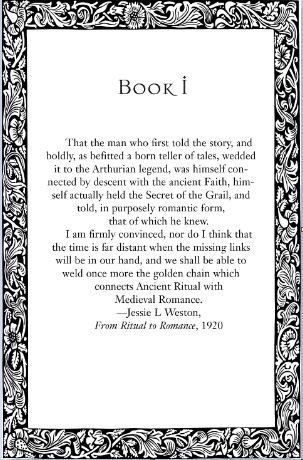
This fascinating novel is prefaced with a quote from the book From Ritual to Romance written by Jessie L. Weston in 1920:
“That the man who first told the story, and boldly, as befitted a born teller of tales, wedded it to Arthurian legend, was himself connected by descent with the ancient Faith, himself actually held the Secret of the Grail, and told, in purposely romantic form, that of which he knew. I am firm firmly convinced, not do I think that the time is far distant when the missing links will be in our hand, and we shall be able to weld once more the golden chain which connects Ancient Ritual with Medieval Romance.”
For readers interested in Arthurian legend, ancient archaeology, the development of ancient philosophies and religions this book will be a journey well worth taking.
Terry Stanfill combines a stunning knowledge of Mediterranean history, art and archaeology to create an engrossing tale of mystery and romance. Bianca, An American of Italian heritage, is a student of art history who writes for an art magazine. Giovanni is an Italian archaeologist. Neither of them really wants to attend the wedding of a mutual cousin in Venice but for different reasons, they both do and there they meet each other and embark upon a journey of destiny, which Giovanni explains to her:
“In this case there’s no such thing as coincidence. Again it’s synchronicity -events unlikely to ever occur together by chance. You see, Bianca the culmination of synchronicity is its direct revelation of destiny, the design of the whole universe working itself out in the display of each unique human life. And since you delve so deeply into the unconscious synchronicity is activated and can occur frequently. Again, its all that right brain business I keep talking about.” (p. 169)
Bianca is an intuitive who studies the diary of her great grandmother Nina and sometimes dreams or has visions of what Nina saw in her life. And Interspersed into the 2007 narrative are bits of medieval & ancient history in the words of historical characters. It is Pythagoras, for instance, who makes a claim that Bianca and Giovanni would each agree with (as exemplified in their lives):
“The highest and the fewest are those who love wisdom, those whose lives are devoted to pursuits of the mind – the philosophers, whose entire lives given to searching for the true wisdom of the universe. Perhaps theirs are not only the greatest gifts, but also the greatest challenges.” (p.173)
The story culminates when Bianca and Giovanni discover the real site of Camelot together and thence discover their destiny . . . together. Along the way, the author also demonstrates her knowledge of music, neuro-psychology and Italian cuisine. Every detail is perfect and the reader. upon completion of this literary journey, remembers it as if it were a real life journey to Italy, Greece, France & back into time.
Reviewer Sandra Shwayder Sanchez: Sandra is a retired attorney and co-founder of a small non-profit publishing collective: The Wessex Collective with whom she has published two short fiction collections (A Mile in These Shoes and Three Novellas) and one
novel, Stillbird.
novel, Stillbird.
PR Web Discuses the Historic Elements of Terry Stanfill's New Novel Relams of Gold.
Was the Original Camelot Actually in France?
Art expert Terry Stanfill reveals surprising historic possibility for King Arthur legend.
Los Angeles, CA (PRWEB)

“As people ponder the legacy of President Kennedy and his ‘Camelot,’ it’s a good time to revisit the original Camelot of King Arthur legend, and I have compelling new evidence about where it may have been located,” says art expert Terry Stanfill, author of "Realms of Gold: Ritual to Romance" (http://realmsofgoldthenovel.blogspot.com), a novel of ancient history and modern romance that posits her new theory about Camelot.
“The Arthurian legend is so ancient, and yet it has been one of the most enduring interests in Western civilization,” she says. “It’s exciting to think that after all of these centuries, we have a strong case for a real Camelot.”
Educated in Medieval history, Stanfill has traveled extensively through Asia and Europe, particularly France and Italy, and researched the art and artifacts. She offers this primer on King Arthur, including her own surprising theory about the true location of the original Camelot:
- The legend
- The reality
- Avalon
- Camelot
“When Chrétien de Troyes wrote of Camelot, this place may have been held in the memory of the locals as a place where peace, prosperity and the good life held a long reign,” Stanfill says. “His vision was a nostalgic tribute to a distant, golden age of tranquility that was on this hilltop.”
Stage director Manfred Flynn Kuhnert, an Arthurian legend aficionado and teaching fellow at Harvard College, says Stanfill offers the most compelling evidence he’s heard for the historical existence of Camelot and its location in France.
“The citadel of Latisco on Mont Lassois -- a site of palatial buildings unprecedented in the Celtic world – is not far from Avallon,” Kuhnert says. “Arthur Riothamus’ time in Burgundy is documented, and we know that the first person to write about Arthur was the bard Chrétien, who lived in the area.
“This place is exactly as he described it: ‘on a hill, a place by a river, surrounded by forests, with plains beyond.’ Terry Stanfill may well have it right.”
About Terry Stanfill
Terry Stanfill holds a degree in English literature with a minor in medieval history. She is an Overseer of the Huntington Library in San Marino, Calif. An enthusiastic preservationist, she was decorated by the president of Italy with the Ordine al Merito, Cavaliere della Repubblica Italiana, and more recently as Commendatore, for her fundraising efforts for the restoration of San Pietro di Castello, the ancient cathedral of Venice. She is a former international representative for Christie’s auction house and former director of Norton Simon Museum in Pasadena, Calif. “Realms of Gold: Ritual to Romance” is her third novel. Her first two are “The Blood Remembers” and “A Tale of the Fortuny Gown.” Stanfill is married to Dennis Stanfill, former CEO of 20th Century Fox and MGM Studios.
Story Merchant Client Terry Stanfill's 'Realms of Gold' Offers Unusual Twist on Arthurian Legend

"Many scholars of Arthurian legend believe that, if there was really a Camelot, it was in England," Stanfill says. "I've found compelling evidence that there was a Camelot -- in France! And I believe the Grail of legend was found nearby, in a grave."
A world traveler intimately familiar with France and Italy, Stanfill employs real-life archaeological discoveries and ancient history in a plot about an unlikely modern romance. The protagonist is Bianca Caldwell, a single young woman who writes for a New York art magazine. Her gift is a powerful imagination and intuition.
On a trip to Venice, Italy, for a wedding, she meets handsome archaeologist Giovanni Di Serlo, who's in no mood for a relationship. The couple nevertheless embark on a journey through time and geography, following the ancient trail of an enormous bronze vessel known as the Krater of Vix.
"In real life, this vessel was found in 1953 in a grave near Mont Lassois, France, where archaeologists unearthed a hilltop fortress in 2007," Stanfill says. "I believe that fortress was Camelot, and that the Krater is the Grail -- krater is a Greek word that evolved into the word 'grail.'
"Add to that, Mont Lassois is near Avallon, another important place name in Arthurian legend."
Arthur Riothamus, King of the Britons, (a real historical figure in the mid-400s A.D.), was known to have spent time in France and died in Avallon following a battle.
Erik T. Haskell, professor of French Studies & Humanities at Scripps College, Claremont University Center, was enchanted with "Realms of Gold."
"The novel is a masterful tapestry of human aspirations and enterprises, of science and intuition, revealing the author's profound understanding of the past and her visionary re-crafting of it that leads to the story's romantic -- and historically surprising -- revelation," he wrote.
About Terry Stanfill
Terry Stanfill is an Overseer of the Huntington Library in San Marino, Calif., former international representative for Christie's auction house and former director of Norton Simon Museum in Pasadena, Calif. Stanfill is married to Dennis Stanfill, former CEO of 20th Century Fox and MGM Studios.
Story Merchant Client Terry Stanfill's Realms Of Gold Kirkus Review


REALMS OF GOLD
(reviewed on September 15, 2012)
Stanfill’s (The Blood Remembers, 2001) novel follows an unlikely pair of lovers as they piece together an ancient puzzle that will shed light on an age-old mystery.
In
1953, an archaeological team working in Vix, a small town in the
Burgundy region of France, found the 2,500-year-old tomb of a woman some
claim to have been a Celtic princess. The burial site, surprisingly
well preserved, housed both the woman’s body and a treasure of
immeasurable value that included a perfectly intact krater (a
ritual wine vessel) likely cast in Southern Italy. While the
groundbreaking find revealed much, it left many questions unanswered:
Who was this mysterious woman? Why was she entombed with such treasure?
And what was the origin of the foreign urn? These questions—which still
vex experts today—drive Stanfill’s scintillating tale of intellectual
discovery and budding romance.
In contemporary Venice, Bianca Evans
Caldwell—an American author—crosses paths with archaeologist Giovanni de
Serlo at a wedding and immediately falls for the suave, confident
Italian. But neither suspect that this chance meeting would send them
both on a continent-spanning adventure that will help solve the
mysteries of the Vix krater and the sleeping princess,
all the while delivering surprising new insights into the mythology of
England and France. Stanfill’s narrative initially feels ornate, but it
morphs into a lively, precise plot. The author pours her estimable
learning into this, her fourth novel, and she’s equally comfortable
writing about the nuances of ancient art, the links between myth and
history, and the nooks and crannies of modern-day Italy. And though her
book seems by turns a travel guide or an archaeology textbook, its
details only add verisimilitude to a satisfyingly complex story of love,
learning and intrigue in Europe.
Subscribe to:
Posts (Atom)