"The universe is made of stories, not of atoms."
—Muriel Rukeyser
____________________________
Showing posts with label book review. Show all posts

50 Irrelevants Who Rocked the World Reviewed!


50 “Irrelevants” Who Rocked the World by Kenneth Atchity & Chi-Li Wong is a compelling, uplifting collection of short biographies that celebrates the human spirit’s ability to transcend obscurity, doubt, and adversity. Authors Kenneth Atchity and Chi-Li Wong profile fifty individuals from all walks of life—athletes, activists, entertainers, scientists, and entrepreneurs—who were once dismissed, overlooked, or labeled “irrelevant,” yet defied expectations to make a profound impact on the world.

From household names like Michael Jordan, Harriet Tubman, and J.K. Rowling to lesser-known but equally inspiring figures like José Hernández, Janet Guthrie, and Khaby Lame, each story is framed around four key elements: Dream, Drive, Audience, and Fortune. The authors explore how these components interweave in each life, showing that greatness often stems from relentless belief, hard work, and the refusal to give up.

What makes this book particularly resonant is its unflinching look at rejection and failure as integral steps on the path to relevance. Atchity and Wong do not romanticize struggle; they honor it, spotlighting perseverance over perfection. The narratives are brief but rich, ideal for readers who want bite-sized yet meaningful doses of motivation.

Perfect for young adults, professionals at a crossroads, or anyone seeking a reminder that obscurity is not a life sentence, 50 “Irrelevants” delivers powerful proof that relevance is earned—not bestowed. It’s a tribute to the underdogs, the dreamers, and those brave enough to dance on the razor’s edge of uncertainty.

Recommended for fans of motivational storytelling, educators, entrepreneurs, and readers looking for inspiration that honors both struggle and success.


This book is available on Amazon, as are most of Ken's books. I highly recommend anything and everything he writes!

Listen as Ken and I discuss this book on the podcast.

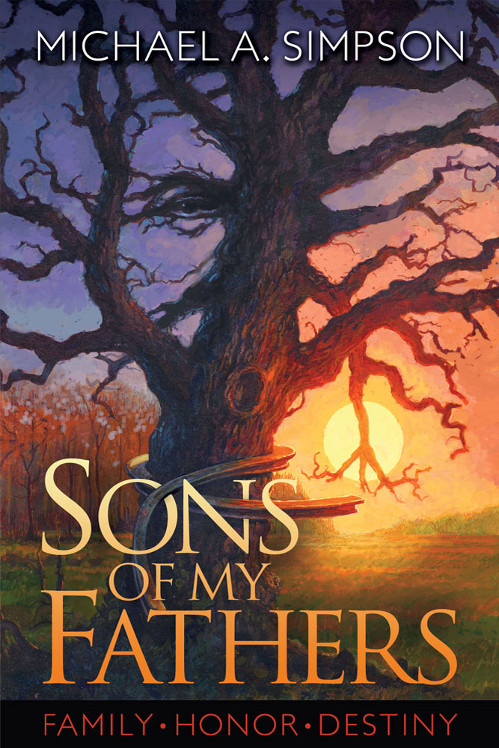
Michael A. Simpson's Sons of My Fathers Five Star Review!

Archaeolibrarian - I Dig Good Books! Review


AVAILABLE ON AMAZON


Synopsis:

Sons of My Fathers, based on the true story of author Michael A. Simpson’s family, is a multi-generational journey that intertwines two dramatic stories set one hundred years apart—the heroic saga of 19-year-old Ulysses Simpson who, when "hell comes to Georgia," joins his father on a course of revenge, a path that will forever change the destiny of their clan. And the true tale of another young Simpson man six generations later who, despite his moral reservations, enlists in the U.S. Army, following in the footsteps of his father who was a WWII Marine Corps combat veteran and one of the legendary fighting force's elite instructors during the Korean War. 

When Ron volunteers as a "walking dead"—the term for those who fly unarmed medevac helicopters during combat because of their high mortality rate—but is instead assigned to fly a Huey gunship, he fights a personal war with himself over whether to keep a century-old family oath. As his brother Michael comes of age and experiences his first love, Ron's fateful decision forces him to confront his family's past and risk sacrificing his own future, an act that ultimately sets a landmark precedent for "soldiers of conscience" who would follow him in military service. 

Deeply personal and compellingly written by the younger brother in this story, the book is uniquely set against America's involvement in two great civil wars—our country's own conflict in the 1860s and Vietnam in the late 1960s. It is an evocative journey into the author's family history and the universal themes central to it—the bonds of family and star-crossed love, duty versus faith, the true nature of patriotism and conscience in war, and the turbulent end of innocence. Rich in emotional textures, Sons of My Fathers is a transformative and timeless coming-of-age narrative.


Other than his mother’s lullabies, the whistle of the Dixie Flyer was the earliest sound Michael Simpson could remember hearing.

Since the time of Baylis Simpson and the Confederacy, the locomotive’s melancholy cry had announced its passage through Forest Park, a quiet Georgia town of hard work and modest dreams snuggled on Atlanta’s southern doorstep. The rail line pierced through the heart of this blue-collar community, running parallel to Main for several blocks before bending south, just before the street emptied out onto Jonesboro Road in front of the Fort Gillem Army base. The road was the same one that Rhett Butler and Scarlet O’Hara used for their imaginary escape from Atlanta. The fictional Tara plantation was said to have been located just a short stride down its blacktop.

Every night of Michael’s young life, the Flyer’s whistle beckoned him, filling his imagination with a long-vanquished landscape of graceful mansions and stately plantations, of hoop-skirted ladies who thought about things tomorrow and men who frankly didn’t give a damn.


5 out of 5 (exceptional)

Independent Reviewer for Archaeolibrarian - I Dig Good Books!

I'm not usually a 5 star reviewer but.....

Two stories that reverberate the lessons of life through time. A story of love, hate, war and peace. There are real life lessons to be learnt by people everywhere in the pages of this book. 

I laughed and cried reading this. It's such a brutally honest book, with some shocking events in the chapters. It was a book I devoured, wanting to hear about the characters and how things panned out.

I loved how determined Baylis was. Also Ron who followed his convictions and saw through the consequences of these, even at a loss to himself. 

I haven't read a book like this in a long time that deals with real events, feelings and people, comparing different eras, but showing so starkly how humanity seems to make errors and repeat them. 

Absolutely awesome read. Thank you Michael A Simpson! 

* A copy of this book was provided to me with no requirements for a review. I voluntarily read this book, and my comments here are my honest opinion. *


Michael A. Simpson is a writer, director and producer of award-winning documentaries and feature films (whose credits include the Oscar-winning “Crazy Heart,” “Hysteria,” and “Kidnapping Mr. Heineken”). He continues his older brother Ron's tradition of questioning authority and speaking out against social and political injustice, as his friends, both real and virtual, will attest. He grew up in dark rooms watching flickering images on a screen, is a connoisseur of raisin oatmeal cookies, a walking storehouse of music knowledge and trivia, finds reasons to get his passport inked whenever possible, and remains a “rebel without a pause.” "Sons of My Fathers," based on his family's history, is his first book.


Story Merchant E-Book Deal Michael A. Simpson's Sons of My Fathers

 FREE SEPTEMBER 23 - SEPTEMBER 17!

FAMILY * HONOR * DESTINY

A transformative and timeless journey into one family's personal history during two controversial wars.


Michael A. Simpson is a writer, director and producer of award-winning documentaries and feature films (whose credits include the Oscar-winning “Crazy Heart,” “Hysteria,” and “Kidnapping Mr. Heineken”). He continues his older brother Ron's tradition of questioning authority and speaking out against social and political injustice, as his friends, both real and virtual, will attest. He grew up in dark rooms watching flickering images on a screen, is a connoisseur of raisin oatmeal cookies, a walking storehouse of music knowledge and trivia, finds reasons to get his passport inked whenever possible, and remains a “rebel without a pause.” "Sons of My Fathers," based on his family's history, is his first book.

Yes, Mr. DeMille: At the Right Hand of a Hollywood God

FREE  This Week on Amazon 


Phil Koury was Cecil B. DeMille's "personal representative" since 1946 and stood close as DeMille made some of the most successful movies of his time. 

This is a first-hand account of the ups and downs of one of our most controversial Hollywood legends. It covers his legendary qualities, exhibitionism, terrorism as a director, rampant individualism, tremendous public following, and box office success—and the scorn of the critics—and follows his career from the theatre to early "flickers" and on through the talking pictures.

It is not to be missed if you love learning about the mechanics and foibles of the film business.


When LA Review of Books Reviewed Dennis Palumbo's Night Terrors

The Criminal Kind: Dennis Palumbo’s "Night Terrors"


Night Terrors by Dennis Palumbo


NIGHT TERRORS, the third in Dennis Palumbo’s series featuring clinical psychologist Daniel Rinaldi, proves that there is more to a procedural mystery than mere procedure. A cunning reworking of genre conventions, it is consistently surprising and occasionally even subversive, undermining our expectations and challenging the fundamentals of procedural mysteries.


In his latest literary outing, Rinaldi is abducted in the night by the FBI and thrown into a case against his will. He’s been assigned to Lyle Barnes, a recently retired FBI agent who is suffering from a severe case of night terrors that has him on the brink of collapse. Barnes’s condition isn’t helped by the fact that he, too, is in the custody of the Feds. Barnes’s final job was helping to apprehend a serial killer of prostitutes, John Jessup, who recently died during a prison riot. Now, one of Jessup’s admirers — an anonymous letter writer known only by his signature tag, “Your Biggest Fan” — has been avenging Jessup’s death by murdering those responsible for his imprisonment. Barnes is high on the list. But before Rinaldi can begin the therapy, Barnes escapes, and it’s a race against time to find him before the “Fan” does. Concurrently, Rinaldi is pushed into yet another investigation when he agrees to meet the mother of Wesley Currim, a young man who has confessed to the brutal murder of a local businessman. Besides pleading guilty and leading the police and Rinaldi to the body, however, Currim has revealed no details as to how, or why, the crime was committed, or why he denies his mother’s alibi. Initially called in for his psychological expertise,


Rinaldi soon finds himself acting as detective more than therapist — a role far more dangerous than he anticipated.


Smartly structured with well-timed twists and revelations, Palumbo and his surprises are always one step ahead of the reader. Though at times dense on procedural exposition, Palumbo deserves high praise for playing so fairly with readers. His style is low on red herrings, out-of-the-blue clues, and last-minute rescues — the puzzle pieces are all there from page one, and while the way they fit together isn’t obvious, the conclusion is achieved naturally.


Whereas conventional mysteries can be seen as reasserting stability on an unstable world — uncovering the truth, righting wrongs, and asserting justice — Palumbo in Night Terrors repeatedly disrupts any notion of security. Fiendishly clever villains and feeble authorities are nothing new to the mystery field, but Palumbo approaches these stale tropes with a fresh perspective. So much of Night Terrors’s exposition is dedicated not to how the investigative process pieces things together, but rather how it frequently fails to. “They still don’t have squat, do they?” asks Barnes. “That’s ’cause they rely too much on procedure and modern forensics.” In this sense, Night Terrors is an anti-procedural. And whereas one would expect a professional specialist like Daniel Rinaldi to use his vocation like “magic” at key points throughout the narrative, Palumbo repeatedly denies any such narrative convenience. (Barnes, too, is apathetic toward Rinaldi’s attempts at psychology: “That’s just therapeutic bullshit.”) Palumbo challenges his character to move beyond the niche he has created for himself — a provocation that many series creators (and their protagonists) don’t often place themselves in.


Among the most distinguishing facets of noir is the way in which it responds to social conditions. Even in literature, crimes don’t happen in a vacuum. Economic desperation fuels the nihilism of James M. Cain and Horace McCoy’s 1930s novels, just as post– World War II discontent and malaise runs deep through the 1950s paperbacks of Day Keene and Harry Whittington. In Night Terrors, Palumbo reacts to a distinctly post-economic-collapse American geography:


Unlike Pittsburgh, whose seventeen miles of steel works had been torn down, victims of the economic cataclysm that ultimately revitalized the city, towns like Braddock had no reason to dismantle their dying mills and factories. Nothing was going to take their place.


And in retired FBI agent Lyle Barnes — at one point the grand protector of the country — Palumbo sees a fractured, shaken consciousness that hasn’t been pieced together again.


Clinicians are blaming the unusual rise in adult symptoms to the uncertainty of contemporary life. The economy, terrorism. Even the recent natural disasters. Tsunamis. Earthquakes. The daily anxiety suppressed by adults during waking life, later invading their sleep.


Palumbo may state his theme obviously, but he’s not trite about it, nor does he pretend that Rinaldi could solve these paramount issues. Once more, Palumbo contests the notion of the fix-it-all detective in favor of one whose wisdom lies not in his power, but in his powerlessness.


¤


Cullen Gallagher regularly reviews noir novels and anthologies for LARB.


LARB CONTRIBUTOR

Cullen Gallagher lives in Brooklyn, New York. His writing has appeared in many publications including The Paris Review, Brooklyn Rail, and Not Coming to a Theater Near You, as well as in the anthologies Cult Cinema: An Arrow Video Companion (2016), edited by Anthony Nield, and Screen Slate: New York City Cinema 2011–2015 (2017), edited by Jon Dieringer. He blogs about crime fiction at Pulp Serenade (www.pulp-serenade.com).

Teresa Weaver's Bookshelf Atlanta Magazine


SEVEN WAYS TO DIE by William Diehl with Kenneth John Atchity 

Before he died in 2006, Diehl (Sharky's Machine and Primal Fear) had written more than 400 pages of his tenth novel, about a captain in the NYPD on the trail of a serial killer in Manhattan. Using an outline and notes that Diehl left behind, Atchity finished the thriller, staying very true to the fast-paced, screenplay-ready plot that was the author's trademark. It's a fitting posthumous tribute to the former journalist-and first managing editor of Atlanta magazine who left his day job in his fifties to pursue his dream of writing fiction.

FIRST LOOK: As always his psyche was momentarily askew. He performed each autopsy compassionately. They were constant reminders of the finite line between life and death, between the human body and a corpse without a soul.

Tome Tender Reviews A Potter's Tale by Dave Davis


A fascinating and intriguing tale of life, love, betrayal and murder, Dave Davis’s A POTTER’S TALE challenges readers with mysteries from the past, the brilliance of a present day life snuffed out too soon and long held secrets that could spell the destruction of the universe.

When a former physician now reporter teams up with his tenacious partner, they had no idea that the story of the murdered teen would lead them across continents, civilizations, religions and scientific research facilities. Who is trying to cover up hidden secrets of the universe? To what end?

Dave Davis has added enough twists and left enough imaginative breadcrumbs along the way that science fiction buffs, history buffs and lovers of all things mysterious and suspenseful will each find a compelling reason to turn page after page! Taut writing, believable characters and some “didn’t see that coming,” moments make this one of those tales that boggles the mind, because, what if?...


SYNOPSIS:

Love. Betrayal. Murder. Then the universe started to collapse. They say it all started in 1935 when Roz Lhulier and his team unearthed the massive tomb of Pakal, the greatest Mayan king, and with it, an ancient text, called a codex. They're wrong.

The codex is deciphered by Alan Turing, the genius who broke the German's Enigma Code during WWII, but its message is jealously guarded by the Astronomers, a lethal offspring of the Catholic Church. Astronomers have compromised or killed anyone with knowledge of the secret--presidents and prime ministers, just for instance.

The codex pulls others into its deadly orbit: Noah, a former physician, and his partner Kate, reporters for the Washington Post. They investigate the murder of DiShannia, a precocious teen, who's achieved national recognition for her research on the demise of Mayan civilization. They're led from Washington DC, to the British Museum, to the Center for Nuclear Research in Geneva, to Melbourne, Australia.

Each step enlightens them, offers clues, frightens them. And us.

The two strands of the novel--the codex and its rich human stories--are joined by another narrative, creating a kind of weird DNA. This third strand involves the Potter, who crafts the story. And the genes that craft us all.

Does the universe collapse? The Potter knows the answer. Noah, Kate discover it. We learn it too--on the last page.

A Write Time Reviewed by The Screenwriting Struggle

 BOOK REVIEWS

REVIEW: WRITE TIME: GUIDE TO THE CREATIVE PROCESS BY KENNETH ATCHITY


I’ve reviewed many books about the writing process, from the broad and overarching to the highly specialized, focused on a singular step of the journey. I’ve read the greats’ musings on everything from formulating the idea, to plotting it out, to emphasizing the emotional element, to remedies for writer’s block. Each is great in its own right, but what if I want a mentor to really make it personal, get in my head, delve into the intricacies of my own unique process, troubleshoot my pet neuroses that seem to chronically hold me back from reaching what I know to be my true potential, and clue me in on how to harness and optimize the writer’s most precious resource; time. Simple request, right? Simple for Kenneth Atchity, author of Write Time: Guide to the Creative Process, from Vision through Revision – and Beyond.

This book reads like a writer’s counseling session (the constructive kind), in every sense of that term; from cold hard business prudence strategies to processing deep-seated self-defeating thoughts. It grabs you from the Author’s Note which, as with any great forward or introduction, does more than just preview what’s to come. Dr. Atchity‘s credibility is firmly established here. He lets us know that 1) he feels our pain, and understands what we’re going through as creative souls who want to be professional artists, and 2) he’s been around the block enough times to know how to get us to where we want to be.

Once we get rolling, Atchity dispenses with the BS right out of the gate and lets us know that, while writing might be based on intuition and creative passions, it’s a craft and a discipline that must be honed through a rigorous and deliberate regimen. But here’s the good news – he’s going to take you by the hand and lead you through the process of establishing a productive and rewarding routine, and he’s going to leverage your own psychology to do it, turning your debilitating issues and hangups to your advantage. The book takes a deep dive into the human mind, points out how its natural workings must be considered, accommodated, and manipulated to develop habits and tricks to make your mental apparatus work for you instead of against you in achieving your creative goals, and some of his strategies will really surprise you!

Atchity provides an intriguing illustration of the interplay between parts of the brain that activates the motive power of creation. Just as conflict is the foundation of story, so it’s also the spark that sets your creative will into motion – this is the conflict between your rational faculties (which he nicknames the Continent of Reason) and your free-wheeling intuition (dubbed the Islands of Consciousness). The original quirky ideas of the islands are translated into the comprehensible and relatable language of the Continent through the intermediary function he calls the Managing Editor. Getting a grasp on these dynamics allows us to work toward striking a balance between “tricking” our brains into action and riding the wave of their natural functioning to channel our mental energy into our writing. Sound intriguing? That’s just the beginning!

As the title indicates, Write Time charts a detailed path to writing success, leaving no stone unturned, from initial dream all the way to polished product. It’s a comprehensive guide to the creative, technical, business, and personal aspects of the craft. Sound too rigid and formulaic for your taste? What if I told you it entails A LOT of variation at the numerous stages, and more than a few mandated vacations? The aim isn’t that you match a prescribed workflow to the letter. It’s to show you a proven real-world model and leave you to dovetail what’s useful with your own strengths, fill in any gaps in your process, make adjustments, and replace what’s not working for you. This section is all about establishing a writing agenda that your mind is geared to stick to and thrive on, and how to not become a statistic who perpetually and eternally has a “work in progress.”

Of course, one of the main threads of the book is the teaching of time management. It’ll show that you don’t really lack the time to achieve your writing goals. The time is there, you’re just not coordinating your cognitive resources in such a way to generate the necessary output within that time. Maintaining a reasonable perspective on the work/ time relationship is paramount. There are methods of mindset, planning, strategy, prioritizing, and step-by-step exercises to optimize your available chunks of time (even if you have to steal them). This chapter alone is worth the price of the book.

From there the writing process begins, and we’re off to the races. Here’s what’s in store as you make your way through Write Time:

  • Approaching drafting and revision
  • Style – how it comes about, and its rightful place in the writer’s hierarchy of values (pretty low, but valuable)
  • A sample step by step process of creating a nonfiction book, explaining the reasons for the order, actions, and method at each waypoint; with an accompanying comparison to fiction writing
  • The most important elements of fiction, and how to pack your story with maximum drama by tapping into your intuition to find its natural shape and structure (which has nothing to do with chronology)
  • What your main priority should be to succeed in writing (Hint: It’s not using big words and feeling clever)
  • A lengthy chapter on getting your book published. Don’t make the mistake of dismissing and skipping this one as irrelevant to the plight of a screenwriter. There’s a wealth of information here about…
    • Dealing with gatekeepers with respect and professionalism (in person and through correspondence such as query letters and emails)
    • Legal forms and contracts for deal-making
    • Handling rejection, and the higher pressure situation of handling acceptance
    • Seeking representation, consulting attorneys
    • Customizing your workspace.
  • The importance of understanding mythology for shaping and clarifying your story, with a striking illustration of how a film can go astray due to the inconsistent retelling of a myth.
  • Methods and tricks for getting in touch with your subconscious through dreamwork and other avenues, along with some brilliant case studies of psychological techniques employed by writers having story problems, that’ll leave you inspired and cracking up.
  • Overcoming psychological traumas of the past by channeling them into our writing and bridging the gap between conscious and unconscious.
  • Some nice practical nitty-gritty stuff on screenwriting – character development, structure, twists, layers of effective storytelling; all through the prism of the key questions on the minds of the producers/ executives evaluating and vetting your work for production and/ or broadcast.
  • The card system revisited, with workflow tips distinguishing the processes of novels vs. screenplays.
  • Insights about revising (keep a particular eye out for the “conflict or cut” rule), and how many revisions are enough.
  • The crucial golden Hollywood skill of pitching and how it must not be overlooked in one’s pursuit of a screenwriting career, with a really fun illustration of the pitch-to-production process (it involves a relay race).
  • A baker’s dozen of straightforward rules for breaking into Hollywood; covering the personal, psychological, mindset, business, and more.
  • A critical therapeutic chapter on Recapturing Creativity – what to do when your motivation to create (inevitably) wanes. A veritable troubleshooting manual for the writer’s perspective. Something to be revisited any time you feel you’ve lost your way.
  • He closes with an amazing collection of his favorite quotes from great figures to leave the reader feeling inspired, encouraged, and motivated to carry on with the struggle.

Overall, Write Time amounts to a rather economical mentoring session with a writing sage who’s been there, done that, and wants us to get there too. It’s a premium blend of tough love, advice, encouragement, clarification, and delusion-busting. It approaches the needs of the writer from every angle and gives us what we’re yearning for, whatever that may be. For the writer at any stage of the game looking for guidance, this one is not to be missed.

Fran Lewis: Just reviews/MJ magazine Reviews Rat Pack Party Girl: Jane McCormick with Patti Wicklund - FREE ON AMAZON THIS WEEK!

From her 1960s sexcapades with the likes of Frank Sinatra, Dean Martin, Peter Lawford, and Vic Damone, to sex-trade survivor and women's advocate the former Rat Pack high-roller tells a wrenching story of endurance!

purchase on Amazon.com


Some stories are told with passion, heart and feeling. Some stories need to be told in order to enlighten the world about events that might not always be in the headlines of a newspaper or a newscast but need to be brought to the public. This story needs to be told and retold so that women, children, young boys and girls, young adults become aware of the pitfalls of falling for the lies, deceits, deceptions and unsavory behaviors of those that would prey on the weaknesses of others.

In 2007 Jane McCormick's perspective on life took on a different turn and Jane would decide to write a book called Breaking her Silence: Confessions of a Rat Pack Party Girl and Sex Trade Survivor. The title was Patti’s idea and a good one. Printing over 2000 copies and things changed greatly as the interviews came and Jane met with FBI agents, law enforcement agencies and more hoping to help other women. Jane explains how she and Patti have helped other women, dealt with her adversities and had the courage, bravery and forethought to come out and tell this story.

This is a story that although some of the scenes are graphic and the language strong should be read by young adults and adults starting out in life teaching them what never to do. Never let anyone own you body and soul. Never become someone you are not. Never let anyone tell you that you are worthless and never stay silent when someone abuses you. Schools need to be more vigilant, parents need to be more aware and Jane your story needed to be told.

Some women wind up with STD’S, AIDS, and other communicable diseases some just give up. Jane chose to stand tall and look herself in the mirror and be able to realize she is special, she counts and most of all deserves the admiration of so many for telling this amazing first hand account of what happens when you have to do anything to survive. Told in narrative form and told with heart and soul this book deserves

FIVE GOLDEN STARS.
Fran Lewis: Just reviews/MJ magazine