
Creative individuals navigate the fine line between solitude and loneliness, discovering how isolation can fuel artistic expression or lead to despair.
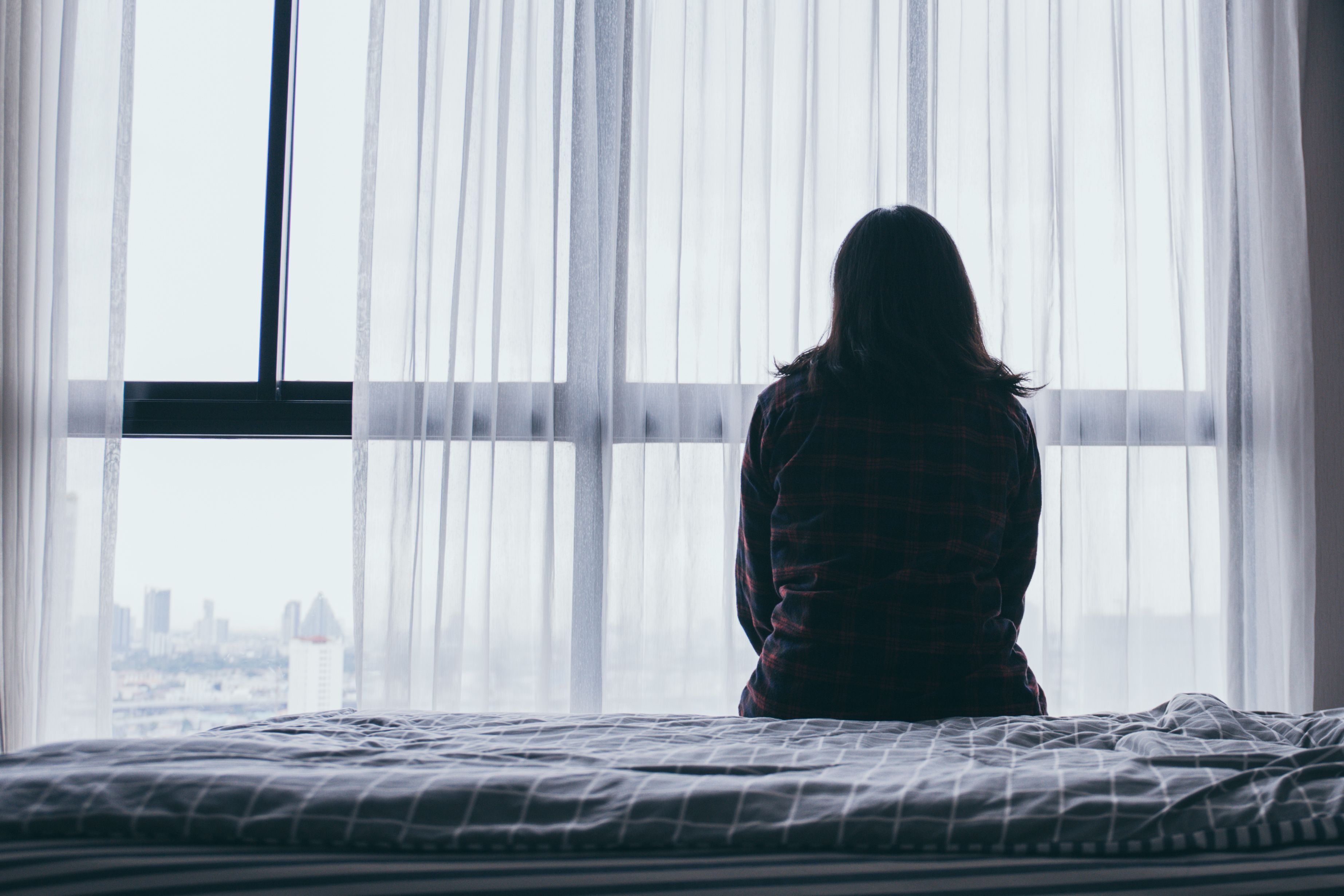 |
| panitan/AdobeStock |
“Art is everywhere, except it has to pass through a creative mind.”
-Louise NevelsonIn the early-1960s, a British film was released called “The Loneliness of the Long-Distance Runner.” It was a predictably dreary, angst-ridden story about a rebellious loner trying to find his place in an unforgiving society.
This column might just as well be called “The Loneliness of the Long-Distance Artist,” because one of the issues creative patients often struggle with is the sheer loneliness that is required by most artistic endeavors. Whether the patients are just trying to realize some creative dream, or they are successful veterans in their respective fields, they are usually in it for the long haul. In other words, they plan to “go the distance.” Or as one of my creative patients put it, for a true artist, such loneliness, or what feels like self-imposed isolation, is “the cost of doing business.”
Even film and TV directors, orchestra conductors and the like, whose creative efforts involve working with others, spend many hours alone in preparation for those admittedly group-oriented endeavors. Regardless, my interest here is in those creative patients—writers, painters, composers, designers, etc—whose workday is characterized by being alone. Alone with their thoughts, alone with their creative concerns, alone with their doubts and fears and hopes—and, literally, alone in the sense that there is rarely anyone else in the room.
Now for many creative patients, this time alone is a wonderful luxury, a period of grace bestowed on artists that frees them to focus on their work. They are liberated from the noise of the outside world—the emotional demands of others, the burdens of everyday responsibilities, the endless cacophony of worrisome world events. What one person experiences as loneliness, another appreciates for its most profound aspects: it is quiet, usually unhurried, and blissfully unpopulated.
As novelist Saul Bellow once remarked about writing, it can possess “a stillness that characterizes prayer.” For many artists, regardless of their particular field, this is demonstrably true.
But not every artist experiences those long hours alone as either inspiring or profound. For them, there is only the aching emptiness and despair that loneliness can invite, particularly when the creative work is not going well. In such cases, as I have seen in my practice, loneliness can give birth to a set of painfully familiar (usually family of origin-based) meanings. An artist suffering from crippling loneliness is subject to doubts about their talent, questions about the validity of the project they are engaged upon, and vulnerable to the heightened suspicion that they were not cut out to be artists in the first place.
In such instances, the desire to pursue a creative career is, to paraphrase one of my patients, “either a blessing you’ve been cursed with or a curse you’ve been blessed with.” This ambivalence about endeavoring to be an artist lies at the heart of many a creative patient, regardless of level of outward success.
I know this from personal experience, having been a Hollywood screenwriter for many years before becoming a psychotherapist. Writing—for both veterans and those just starting—is time-consuming, frequently frustrating, often terror-inspiring, and bad for your posture. Its other prominent features include long hours of typing, frequent intervals of staring at a blank page or screen, and no guarantee whatsoever that anything you produce will be worth the effort. In addition to which, in the words of screenwriter Ben Hecht, “fun is the enemy.”
Which reminds me of a novelist patient of mine, the author of a successful series of thrillers, who once complained: “I can’t go in that room anymore. It’s so damned quiet.” Divorced, his children grown and flown, he worked alone in his office at home.
“I mean, writing these damn things is hard enough.” He shook his head. "Plus, it’s so lonely in there by myself.”
“It can be,” I said. “But let me suggest something. Maybe you’re not in there by yourself. You share that room with the memory of every person you’ve ever encountered—parents, teachers, friends and enemies…”
He frowned. “Listen, my office is eight-by-ten feet. If anybody else is skulking around in there, I sure as hell don’t see ‘em.”
“You know what I mean. Besides, in one sense loneliness can just mean being disconnected. Not just from others, but from your interior self. You carry a whole world of feelings, experiences and fantasies inside you. Maybe if you let them out, and explored them fully, the office wouldn’t feel so lonely.”
He didn’t buy this approach. Nor any of the others I offered. We returned to this issue again and again in therapy. Some days his loneliness overwhelmed him, leaving him lethargic and unmotivated. Yet at other times a patch of solid writing made him so excited, so anxious to get back to “that room” that he actually felt lonely—in essence, disconnected—when he was not writing.
Over my years in practice, I have seen many creative patients wrestle with this issue. Especially when contrasted with its seemingly adjacent (though quite dissimilar) circumstance—the solitude necessary for most artistic efforts. And there is a difference. Loneliness is usually experienced as a loss of connectedness, either with oneself or others; an interior emptiness that can feel both soul-crushing and self-invalidating. As opposed to solitude, which can inspire a felt sense of coming into contact with yourself, taking ownership of your interior world. Which, paradoxically, seems expansive rather than inhibiting.
As a well-known conceptual artist once explained it to me in session, “I only live in the solitude of work, God help me. It’s everywhere else that I feel uneasy, like I’m faking it. Because I am.”
Obviously not a “people person” (her own words), our clinical work lay elsewhere. But there was no question in her mind (nor in mine) of the value of solitude when it came to her art. In fact, many artists have noted the value, if not the necessity, of solitude, both in their work and for personal growth.
For example, Leonardo da Vinci said, “If you are alone, you belong entirely to yourself.”
And according to May Sarton, the distinction was clear: “Loneliness is the poverty of self; solitude is the richness of self.”
Rilke was even more blunt. “What is necessary, after all, is only this: solitude, vast inner solitude.”
When working with creative patients, particularly those for whom loneliness is a salient, presenting concern, our job as clinicians is to help them reframe the meaning of their experience in terms of solitude. For one thing, it can be empowering to choose solitude in pursuance of your artistic goals, as opposed to seeing loneliness as a condition imposed upon you merely because you are alone. In which case, loneliness thus feels like a punishment for the mistake of attempting to be an artist; in contrast, choosing solitude can support the experience of feeling proactive and self-affirming.
Moreover, as I have written about elsewhere, I believe it is crucial for any creative person to have a positive, engaged relationship with their process. If you can help patients see that the choice of solitude supports the requirements of that process, is in fact a necessary aspect of it, its benefits become self-evident.
As Henri Poincare said, “to invent is to choose.” So, I feel it is vital that the creative patient embrace the solitude of artistic endeavor as a choice. Conceptualized this way, solitude then is not mere isolation. It is a return to the self, a reacquaintance with the patient’s inner world, including both its turmoil and its riches. The darkness and light from which creativity is birthed. Admittedly, such a commitment to solitude can risk an occasional slide into loneliness, a disquieting sense of isolation. That “cost of doing business” that my patient above mentioned. A price every artist pays at some time or another.
Which brings to mind a somewhat snarky quote attributed to Jean-Paul Sartre: “If you’re lonely when you’re alone, you’re in bad company.”
But that is a topic for another column.
Mr Palumbo is a licensed psychotherapist and author in Los Angeles. His email address for correspondence is dpalumbo181@aol.com.


