


Master the Essential Building Blocks to a Successful Story.
Learn the Mechanics and Techniques of Storytelling.
How to Write a Treatment that Guides you Through your First Draft and Identifies Soft Spots in your Story.
Understand the Rules of Revision
Learn the Secrets of the 3-Act Structure.

Showing posts with label writing community. Show all posts
Showing posts with label writing community. Show all posts
Story Merchant E-Book Deal - Sell Your Story to Hollywood $.99
Through the expanding influence of the Internet and the corporatization of both publishing and entertainment, the process of getting your book to the big screen has gotten more complicated, more eccentric, and more exciting.
WHAT IS A STORY?
Writing, though driven by intuition and passion, is first and foremost a craft that demands discipline.
Collaborate with Ken Atchity for one-on-one coaching.
Don’t put a deadline on your dreams!
Persistence is showing up for your writing—even when no one’s reading yet.
With one-on-one coaching, you’ll get the support, structure, and belief to keep going until your voice breaks through.
WRITE TO MAKE A DIFFERENCE!
What kind of impact do you want to make on an audience with your writing?
Let's go ahead and answer that question.
Let's go ahead and answer that question.
Write with Purpose!
Kenneth Atchity's Writer's Lifeline: Turning Writers into Bestsellers, and Bestsellers into Blockbusters for 25 years!
One-on-one professional assistance and interaction goes a very long way toward making your writing and publishing dreams a reality.
Sometimes writers, when they begin their careers, think that if they write, they can write about anything, but the truth is they need to write from their heart about things that matter to everyone, and if they do that, you can hardly go wrong. Because stories are really not about words or word choice or anything like that. They’re about conveying the power of a character facing a dilemma that you have no idea how he or she will resolve, and when you do that, you’ve got everyone’s attention.
Sometimes writers, when they begin their careers, think that if they write, they can write about anything, but the truth is they need to write from their heart about things that matter to everyone, and if they do that, you can hardly go wrong. Because stories are really not about words or word choice or anything like that. They’re about conveying the power of a character facing a dilemma that you have no idea how he or she will resolve, and when you do that, you’ve got everyone’s attention.
Visit: https://thewriterslifeline.com or
Contact Ken: atchity@storymerchant.com
Why Aren’t You Writing?
Kenneth Atchity's Writer's Lifeline: Turning Writers into Bestsellers, and Bestsellers into Blockbusters for 25 years!
One-on-one professional assistance and interaction goes a very long way toward making your writing and publishing dreams a reality.
FILM COURAGE: Sell Your Story To Hollywood: Writer's Guide To Show Business - Dr. Ken Atchity [FULL INTERVIEW]
 |
| Available on Amazon |
The #1 Writer's Pocket Guide to the Business of Show Business by Kenneth Atchity.
Through the expanding influence of the Internet and the corporatization of both publishing and entertainment, the process of getting your book to the big screen has gotten more complicated, more eccentric, and more exciting.
This little book aims to help you figure out how to get your story told on big screens or small.
Work 1 on 1 with Story Merchant CEO, Hollywood producer, and author Dr. Ken Atchity.
Sign up Today at Writers Lifeline
Story Merchant E-Book Deal Ken Atchity's Sell Your Story to Hollywood $.99!
|
| Available on Amazon |
Through the expanding influence of the Internet and the corporatization of both publishing and entertainment, the process of getting your book to the big screen has gotten more complicated, more eccentric, and more exciting.
This little book aims to help you figure out how to get your story told on big screens or small.
Maren R, ReviewerFull of information but still easy to read! If you want to start screen writing -even if it snot the rather lofty goal of becoming a Hollywood writer- this book will tell you how you could actually manage it!
Cristie U, Reviewer
This is a helpful and honest guide as to how to get your book made into a movie or tv show. It seems like it would be easier now because of the internet, but the author points out how difficult it still is and how to ensure your book gets into the right hands.
Terri D, Reviewer
Sell Your Story to Hollywood is a quick guide to getting your story into the hands of those who make things happen in Hollywood. The author Kenneth Atchity speaks from experience with decades working in Hollywood to get stories from the page to the screen. Although every guide about breaking into Hollywood should be viewed through the lens of how small the odds really are, this book starts out a bit discouraging for those who are truly interested in learning what they can do to move from a novel to a produced screenplay. The first step in getting this done, according to this book? Have an international bestseller. Okay. Not everyone can do that. Step 2: get reviewed by the NYT or other prestigious publication. Um... if a writer had that, they probably wouldn't need this book. While some of these initial steps are not quite what you would consider actionable advice for getting your screenplay produced, the book does move toward more actionable steps that you can take, though the guide does assume that you have a great story to tell with either an impeccably written novel or screenplay. As a writer with scripts but no connections to the industry, the parts of this book that I found most helpful were actual Appendix B and Appendix C. Writers at any stage can probably find something useful to take away from this guide to use in pursuing their own Hollywood career.
Reviewer 428382
Informative and well written, this is a guide that ever writer should read. I really enjoyed it and learned a lot.
pamula f, Reviewer
Hollywood buys stories all of the time. Sometimes they buy a story that started out as a small article in a hometown newspaper. This book will show you how to get your writing out there for the world to see.
Steven M, Reviewer
I’ve recently completed a screen writing course and was delighted to have been approved for this ARC. The author clearly knows his stuff and offers an insight into the world of scriptwriting for movies. A perfect introduction to a world that some of us can only dream of.
Librarian 121315
Have you ever watched a movie and thought to yourself that you can come up with a better story? Or have you ever been inspired by a movie to tell a story of you own? For either of those cases, this is one of the books that you must read. I said one of the books because there are other books that can also stir you in the right direction; nevertheless, this book will certainly give you a good start. I loved that the author offers real life examples of movies that we have heard or watched before making the book’s contents more relatable to the readers. This is a great introduction to the business of movie making and readers should feel more comfortable with this subject after studying this book.
I’ve recently completed a screen writing course and was delighted to have been approved for this ARC. The author clearly knows his stuff and offers an insight into the world of scriptwriting for movies. A perfect introduction to a world that some of us can only dream of.
Librarian 121315
Have you ever watched a movie and thought to yourself that you can come up with a better story? Or have you ever been inspired by a movie to tell a story of you own? For either of those cases, this is one of the books that you must read. I said one of the books because there are other books that can also stir you in the right direction; nevertheless, this book will certainly give you a good start. I loved that the author offers real life examples of movies that we have heard or watched before making the book’s contents more relatable to the readers. This is a great introduction to the business of movie making and readers should feel more comfortable with this subject after studying this book.
Loglines

It's not necessary for your log line to mention character names. A strong character trait will do - with a dramatic teaser about the story. All log lines go back to that ancient storyteller's formula, "What would happen if a character like x ended up in a situation like y."
Next add a specific catch word that quickly tell the reader what the story is about. Is it about love, greed, obsession murder, family turmoil? Once you're set on one or two words you can push out from there adding a few more economical adjectives and verbs to make up your logline.
A high concept log line that makes a story out of one of the most universal
human emotions:
fear, love, hate, envy, etc.
deadly sins: anger, greed, lust, etc.
plot motivators: betrayal, vengeance, discovery, rebirth, survival, etc.
virtues: loyalty, faith, responsibility, etc.
deadly sins: anger, greed, lust, etc.
plot motivators: betrayal, vengeance, discovery, rebirth, survival, etc.
virtues: loyalty, faith, responsibility, etc.
and incarnates that element in characters we can care about, relate to, and root for to shape an "original story" that feels both fresh and relevant to today's global market. If you can do that, and your writing equals your vision, you're only steps away from financial success and recognition on the biggest screen of all.
- A woman or family in jeopardy?
"Cape Fear": A lawyer's family is stalked by a man he once helped put
in jail.
- An ordinary woman in extraordinary circumstances?
"Erin Brockovich": An unemployed single mother becomes a legal
assistant and almost single-handedly brings down a California power company
accused of polluting a city's water supply.
- Men on a mission?
"Saving Private Ryan": US soldiers try to save their comrade who's
stationed behind enemy lines.
"American Pie": Four teenage boys make a pact to lose their virginity
by prom night.
- A man against nature?
"Castaway": A FedEx executive must transform himself physically and
emotionally to survive after a crash landing on a deserted island.
"Cliffhanger": A retired mountain climber must conquer an unclimbable
peak to save the survivors of a plane crash from certain death.
Or the system?
"People Vs. Larry Flynt": A pornography publisher becomes the
unlikely defender of free speech.
"Class Action": A female attorney finds that her nemesis is her own
father, and must choose between her corporate client and justice."
- A woman escaping from something or someone she loves.
"Enough": On the run from an abusive husband, a young mother begins to train herself to fight back.
Iconic Loglines From IFilmThings
Blade Runner
A blade runner must pursue and terminate four replicants who stole a ship in space, and have returned to Earth to find their creator.
The Godfather
“The ageing patriarch of an organized crime dynasty transfers control of his clandestine empire to his reluctant son.”
The Matrix
A computer hacker learns from mysterious rebels about the true nature of his reality and his role in the war against its controllers.
The Shawshank Redemption
“Two imprisoned men bond over a number of years, finding solace and eventual redemption through acts of common decency.”
The Lion King
Reservoir Dogs
After a simple jewelry heist goes terribly wrong, the surviving criminals begin to suspect that one of them is a police informant.
The Hangover
Three buddies wake up from a bachelor party in Las Vegas, with no memory of the previous night and the bachelor missing. They make their way around the city in order to find their friend before his wedding.
The Terminator
A human soldier is sent from 2029 to 1984 to stop an almost indestructible cyborg killing machine, sent from the same year, which has been programmed to execute a young woman whose unborn son is the key to humanity’s future salvation.
The Jungle Book
Bagheera the Panther and Baloo the Bear have a difficult time trying to convince a boy to leave the jungle for human civilization.
Finding Nemo
Nemo, after he ventures into the open sea, despite his father’s constant warnings about many of the ocean’s dangers. Nemo is abducted by a boat and netted up and sent to a dentist’s office in Sydney.
American Beauty
Lester Burnham, a depressed suburban father in a mid-life crisis, decides to turn his hectic life around after becoming infatuated with his daughter’s attractive friend.
Writers Lifeline: Hollywood High Concept

Writing even the greatest screenplay that isn’t high concept is choosing either the indie path or willful self-indulgence.
Dealing with
“high concept” is one of the most challenging and frustrating tasks of
the Hollywood writer, agent, or producer; reducing the story to a
compelling logline is what high concept is all about. As a former
academic not prepared for a world focused on marketing, it took me years
to realize that the term “high concept” means almost its opposite. It
means “simple concept,” as in Fatal Attraction: An innocent smile at a party turns a married man’s life upside down and put his family in mortal jeopardy.
Sometimes a title is its own high concept, as with Margaret Mitchell’s best-selling novel Gone with the Wind,
the extended logline of which would be: “Against the backdrop of the
great Civil War, a narcissistic Southern beauty obsessed with idyllic
love struggles to reconstruct her life and finds that her true love is
closer than she thinks.”
High concept is
a story that will compel the broadest audiences to watch the movie
after hearing a pitch of only a few, or sometimes even one, word(s):
Psycho
Sleepless in Seattle
Armageddon
Unwanted Attentions
Vertigo
Jaws
How to Lose a Guy in Ten Days
American Sniper
Unfaithful
Four Weddings and a Funeral
San Andreas
Black Hawk Down
Panic Room
Selma
Runaway Bride
Don’t Tell Mom the Babysitter’s Dead
Home Alone
Cabin Fever
Die Hard
Ex Machina
These examples
of high concept are pitched by their very titles. It’s enough to hear
the title—and know that Adam Sandler and Jack Nicholson star—to compel
audiences to the box office for Anger Management.
“Die Hard on a boat,” was allegedly the logline line that led to the sale of Steven Seagall’s Under Siege.
Titles like The Fisher King, Seven Days in May, Snow Falling on Cedars, The Shipping News
may be evocative, but do not express a high concept that will instantly
lure audiences. Though such titles may get lucky and become successful
movies, in today’s blockbuster market they’d be swimming upstream.
Nothing is more
important to marketing your story than a “high concept logline” that
makes it immediately stand out from all those stories that are subtle,
nuanced, and difficult to pitch, and that depend entirely upon
“execution.” Here are some more examples that have led my companies or
others to sales:
• “Jurassic Shark!” (the two-word description given AEI client Steve Alten’s Meg
by ICM-agent Jeff Robinov, who spearheaded a “preempt” from Disney for
$1.1 million; the story was then re-sold to Newline, and then to Warner
Brothers)
• When the most obnoxious guy in the world realizes he’s become an asshole on a false premise, he makes a list of all the people he’s wronged and sets out to repay them one by one. (John Scott Shepherd’s Henry’s List of Wrongs, sold to New Line Pictures for $1.6 million).
• Life or Something Like It: An ambitious and self-involved reporter is sparked into action to change the pattern of her life when she interviews a street-psychic who tells her that her life is meaningless—and that she’s going to die—soon.
• When the most obnoxious guy in the world realizes he’s become an asshole on a false premise, he makes a list of all the people he’s wronged and sets out to repay them one by one. (John Scott Shepherd’s Henry’s List of Wrongs, sold to New Line Pictures for $1.6 million).
• Life or Something Like It: An ambitious and self-involved reporter is sparked into action to change the pattern of her life when she interviews a street-psychic who tells her that her life is meaningless—and that she’s going to die—soon.
• The Madam’s Family: The true “Canal Street Brothel” story of three generations of madams and their battle against persecution by the FBI.
• The Lost Valentine: A man and woman find the love of their lifetimes when they’re brought together to memorialize the bittersweet story of a doomed World War II pilot and the wife who promised to wait forever for his return.
Consider these further examples, grouped by “genre”:
A woman or a family in jeopardy
The Shallows:
While riding the waves at a remote beach, a young surfer finds herself
injured and stranded just twenty miles from shore on a buoy—as a great
white shark begins stalking her.
Room: After being abducted, abused, and imprisoned for seven years in a small windowless room a mother devises a bold escape plan.
An ordinary woman in extraordinary circumstances
The Danish Girl: What happens if the husband you adore needs to be a woman?
Woman in Gold:
Six decades after World War II, a Jewish octogenarian begins a quest to
reclaim the artwork confiscated from her family by the Nazis and now
proudly celebrated by the Austrian government—including a famed Gustav
Klimt masterpiece.
Men on a mission
Saving Private Ryan: US soldiers try to save their comrade who’s stationed behind enemy lines.
Bridge of Spies:
At the height of the Cold War in 1960, the downing of an American spy
plane and the pilot’s subsequent capture by the Soviets draws Brooklyn
attorney James Donovan into the middle of an intense effort to secure
the aviator’s release.
Man against nature
The Martian: He was left behind—on Mars.
The Revenant: A frontiersman fights for survival after being mauled by a grizzly and left for dead by his own hunting team.
Man or woman against the system
Spotlight:
A Boston news team sets out to expose numerous cases of child
molestation and cover up on the part of the local Catholic Archdiocese.
Concussion:
A pathologist uncovers the truth about brain damage in football players
who suffer repeated concussions and comes up against the corporate
power of the NFL.
People Vs. Larry Flynt: A pornography publisher becomes the unlikely defender of free speech.
Class Action: A female attorney finds that her nemesis is her own father, and must choose between her corporate client and justice.
A woman escaping from something or someone she loves.
The Perfect Guy: After breaking up with her boyfriend, a professional woman gets involved with a man who seems almost too good to be true.
Enough: On the run from an abusive husband, a young mother begins to train herself to fight back.
Sleeping with the Enemy: A young woman fakes her own death in an attempt to escape her nightmarish marriage, but discovers it’s impossible to elude her controlling husband.
Filmmakers long to spot in our onslaught of daily email queries a high concept logline that makes a story out of universal—
• human emotions: fear, love, hate, envy, etc.
• deadly sins: anger, greed, lust, etc.
• plot motivators: betrayal, vengeance, discovery, rebirth, survival, etc.
• virtues: loyalty, faith, responsibility, etc.
• human emotions: fear, love, hate, envy, etc.
• deadly sins: anger, greed, lust, etc.
• plot motivators: betrayal, vengeance, discovery, rebirth, survival, etc.
• virtues: loyalty, faith, responsibility, etc.
—and embodies those elements in characters we can care about, relate to, and root for to shape an “original story” that feels both fresh and relevant to today’s global market.
If you can do
that, and your writing effectively expresses your vision, you’re only
steps away from recognition in the toughest story marketplace of all.
Film Courage : Character Development Is About These 3 Things
Professional coaching tips to help you figure out point of view, structure, and master all the elements of story. Learn more www.thewriterslifeline.com
Improve Your Storytelling!
Sign Up For This Brand New Online Course From Author And Hollywood Producer Ken Atchity Designed to Improve Your Storytelling.

Here's What To Expect
Pay upfront or utilize our payment plan to pay as you learn!
An Interview With Ken Atchity, The Founder & CEO Of Story Merchant
Ken Atchity CEO of Story Merchant:

Q: Could you provide our readers with a brief introduction to Story Merchant?
A: Story Merchant is a literary full-service set of companies that serves the every need of writers worldwide–from ghostwriting and editing, to coaching and tutorial, to marketing to publishers and the entertainment industry, and to producing their stories.
Q: What is your backstory?
A: In my first career, I was a tenured professor of comparative literature (Yale PhD), Fulbright professor of American Studies, senior reviewer for The Los Angeles Times Book Review, and distinguished instructor at the UCLA Writers Program. I’m the author of over 20 books (fiction and nonfiction) of my own, have sold over 200 books to publishers, made over 200 film-TV deals for clients, and through our Story Merchant Books imprint have direct-published nearly 300 books for writers whose profiles weren’t high enough to take to traditional publishers (as well as literary states).
Q: How did your company come into being?
A: It came into being as an extension of my teaching career, where I coached writers toward publishing and film careers; and as a response to hundreds of inquiries generated by my books on writing, starting with A WRITER’S TIME: GUIDE TO THE CRETIVE PROCESS FROM VISION THROUGH REVISION; WRITING TREATMENTS THAT SELL; HOW TO PUBLISH YOUR NOVEL; YOUR VIP AUTOBIOGRAPHY, and QUIT YOUR DAY JOB AND LIVE THE LIFE OF YOUR DREAMS.

Q: What’s the best thing about Story Merchant that people might not know about?
A: We were the development producers on THE MEG (starring Jason Statham) that grossed nearly $600million worldwide. THE MEG 2: THE TRENCH hitting theatres August 4th!We are responsible for nearly 20 New York Times Bestsellers, including Governor Jesse Ventura’s I AIN’T GOT TIME TO BLEED, Clint Hill and Lisa McCubbin’s MRS. KENNEDY AND ME, Jerry Blaine’s THE KENNEDY DETAIL (which we then produced as an Emmy-nominated documentary for Discovery), and DRACULA: THE UN-DEAD.
Q: What are your plans for the future?
A: Doing bigger and bigger movies, and also distinguished smaller films in line with my lifelong literary interests. And finding a marketing partner for Story Merchant Books.
Q: Could you provide our readers with a brief introduction to Story Merchant?
A: Story Merchant is a literary full-service set of companies that serves the every need of writers worldwide–from ghostwriting and editing, to coaching and tutorial, to marketing to publishers and the entertainment industry, and to producing their stories.
Q: What is your backstory?
A: In my first career, I was a tenured professor of comparative literature (Yale PhD), Fulbright professor of American Studies, senior reviewer for The Los Angeles Times Book Review, and distinguished instructor at the UCLA Writers Program. I’m the author of over 20 books (fiction and nonfiction) of my own, have sold over 200 books to publishers, made over 200 film-TV deals for clients, and through our Story Merchant Books imprint have direct-published nearly 300 books for writers whose profiles weren’t high enough to take to traditional publishers (as well as literary states).
Q: How did your company come into being?
A: It came into being as an extension of my teaching career, where I coached writers toward publishing and film careers; and as a response to hundreds of inquiries generated by my books on writing, starting with A WRITER’S TIME: GUIDE TO THE CRETIVE PROCESS FROM VISION THROUGH REVISION; WRITING TREATMENTS THAT SELL; HOW TO PUBLISH YOUR NOVEL; YOUR VIP AUTOBIOGRAPHY, and QUIT YOUR DAY JOB AND LIVE THE LIFE OF YOUR DREAMS.
Q: What’s the best thing about Story Merchant that people might not know about?
A: We were the development producers on THE MEG (starring Jason Statham) that grossed nearly $600million worldwide. THE MEG 2: THE TRENCH hitting theatres August 4th!We are responsible for nearly 20 New York Times Bestsellers, including Governor Jesse Ventura’s I AIN’T GOT TIME TO BLEED, Clint Hill and Lisa McCubbin’s MRS. KENNEDY AND ME, Jerry Blaine’s THE KENNEDY DETAIL (which we then produced as an Emmy-nominated documentary for Discovery), and DRACULA: THE UN-DEAD.
Q: What are your plans for the future?
A: Doing bigger and bigger movies, and also distinguished smaller films in line with my lifelong literary interests. And finding a marketing partner for Story Merchant Books.
Improve Your Storytelling!
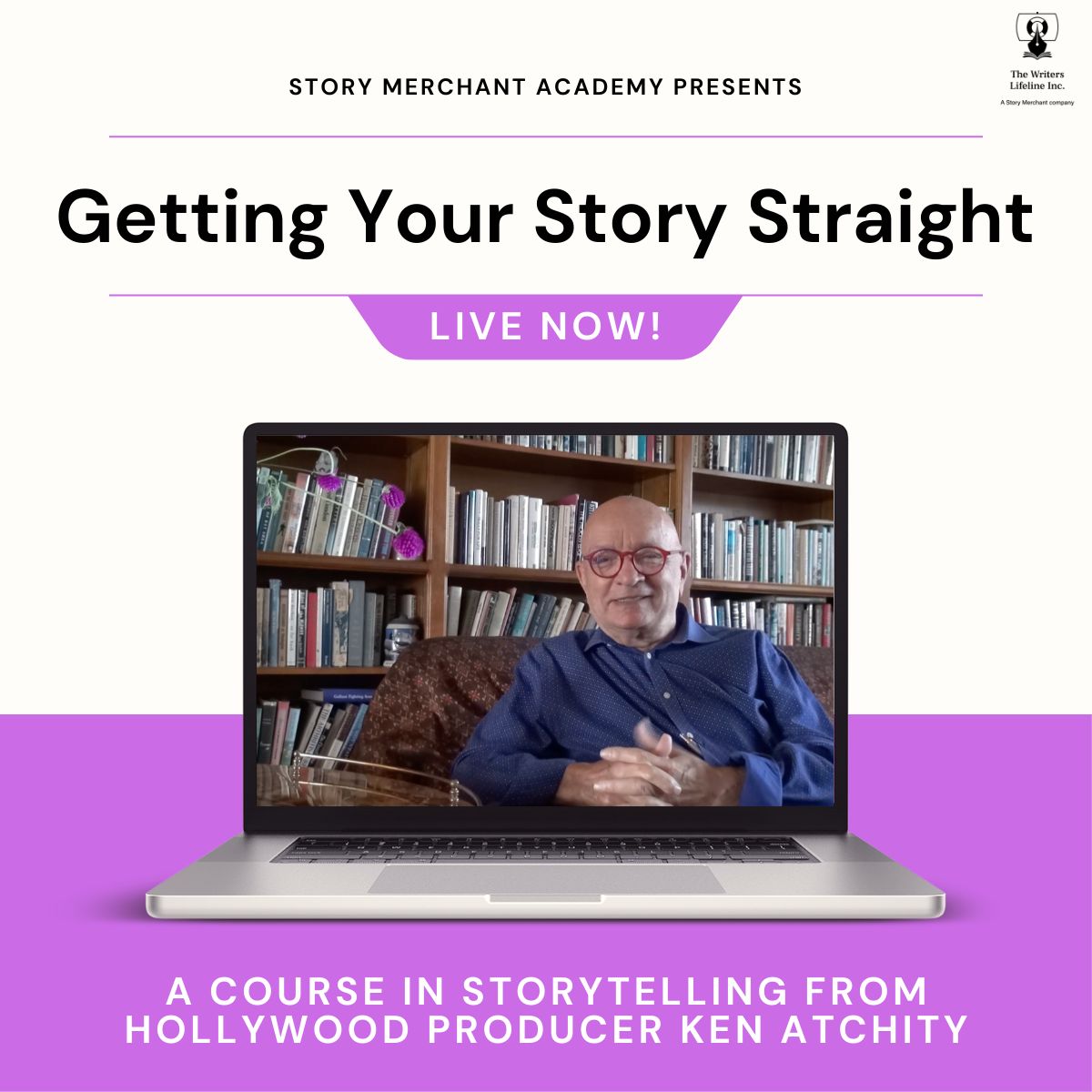
Be The First To Sign Up For This Brand New Online Course From Author And Hollywood Producer Ken Atchity Designed to Improve Your Storytelling.
Author Spotlight: A.M. Adair
The game is over, now. It's war. In the shadows you can't see the line between good and evil. When this war is over -- what side will CIA operative Elle Anderson finder herself standing on?
Get the entire series by A.M. Adair today and find out!


#FREE November 8 - November 12! Kenneth Atchity's "TELL YOUR STORY TO THE WORLD & SELL IT FOR MILLIONS"

If there's a story distracting you during the day and keeping you awake at night, ask yourself: Is this a great story? If your answer is yes, then this is the book for you.
Learn from Ken Atchity and Lisa Cerasoli about how to write your own top-notch page-turner and then how to navigate the cutthroat publishing and entertainment business.
Read Tell Your Story to the World & Sell It for Millions Today: https://lnkd.in/grCsw2Xz
Subscribe to:
Posts (Atom)