"The universe is made of stories, not of atoms."
—Muriel Rukeyser
____________________________
Showing posts with label Nadine Maritz. Show all posts

Story Merchant Book Deal: Writing Treatments to Sell by Kenneth Atchity and Chi-Li Wong

$.99 September 9 - September 13!


Writing treatments that sell is a first book of its kind devoted entirely to the function of treatments in film and TV and how to write and present effective ones. The book is a collaboration by Kenneth Atchity and Chi-Li Wong, partners in Atchity Productons.

Kenneth and Chi – MA
AVAILABLE ON AMAZON
is sincerely honored by your willingness to share your knowledge and adventure relating to this new book. So without any further ado here are all our questions.

What made you initiate the idea of providing a guide like Writing Treatments to Sell? 

The most frequent question we were getting from clients—novelists as well as itinerant screenwriters was “what is a treatment?” We realized that book answering this question would be helpful.

Who was your target audience? 

The book’s target audience is anyone who wants to write or sell a story to the motion picture or television world.

Who ended up putting pen to paper?  

We have a process where we outline the content together, Chi-Li takes a shot at the first draft, then Kenneth does the next, etc.

Is the book specifically targeted for the film industry only? 

Although we targeted the book to the film industry, in the years since it was first published we've learned that its useful to writers of all kinds—children’s books, novels, etc.—because it helps them to “get the story straight” before launching into the actual drafting.

Why a book based specifically on treatments? 

Because a treatment is a unique creature that will never itself see publication or production, and therefore everyone wonders why it even exists.

What is a “treatment?” 

To quote directly from the book: “A treatment is a relatively brief, loosely narrative written pitch of a story intended for production as a film for theatrical exhibition or television broadcast. Written in user-friendly, dramatic, but straightforward and highly visual prose, in the present tense, the treatment highlights in broad strokes your story’s hook, primary characters, acts and action line, setting, point of view, and most dramatic scenes and turning points.” The book goes into detail about the meaning of each phrase in this definition, distinguishing the treatment from “coverage,” “synopsis,” “outlines,” among others.

The Story Merchant itself is all about content, branding and consultation in the entertainment and media arena. How does this book tie into the bigger plan of Story Merchant? 

This book, like Atchity’s How to Publish Your Novel or Write Time: A Guide to the Creative Process, from Vision through Revision is a tool by which the Story Merchant shares experience in the commercial world of stories with aspiring storytellers.

Does reading the book create a sense of more business for Story Merchant or is it more directed towards internal growth for each and every writer / screen writer? 

We can’t spend time with every storyteller out there who needs guidance, so we wrote this book to  help anyone who’s motivated enough to buy it—now available in ebook for the first time. But that’s not to say Story Merchant has found coaching clients through this and Atchity’s other books.

Being an aspiring author myself, I find that optimism and endurance are two of the main things to hold onto while craving for acknowledgement towards your own work, what is your advice towards fellow aspirers who look up to yourselves for hope? 

We’ve learned that hope is great, but determination is even better, when it comes to success. Just keep working on your career, whether you’re in a good mood or not, whether you’re hopeful or not. Work is the only sure road to success.

In general how has publishing and moving into the entertainment industry changed for writers. I mean – I myself sometimes wish that I had started writing ten years earlier as it seems as if the market might have been less chaotic. In today’s time it’s as if everyone can put pen to paper and call themselves an author. How do you define the word author, writer? 

A writer is someone who WRITES, and who cares enough about her writing to find an audience for it. While everything else has changed, that definition has not changed and will not change.

Last but not least, what else can people look forward to? Being in the industry you are it is important to recreate your image and stay in the zone with current trends, how do you intend on moving forward while carrying the weight of years and years’ experience in the existing field? How do you mould yourself to be eye catching and present in the future?  

We've just launched Story Merchant Academy a brand new online course designed for writers to improve their storytelling.  Sign Up Now

As always, thanks a lot for your presence and willingness to Share.  

Thanks for providing this wonderful forum.


Interview – Ken Atchity on Brae MacKenzie

 
Kenneth John Atchity Author of Homer’s Iliad: The Shield of Memory – Which was his Ph.D. Dissertation. The work was awarded Yale Graduate School’s Highest Academic Honor – The Porter Prize; and was later published by Southern Illinois University Press (Edited by John Gardner).  Mentors at Yale Included Thomas Ber.

Kenneth John Atchity Author of Homer’s Iliad: The Shield of Memory – Which was his Ph.D. Dissertation. The work was awarded Yale Graduate School’s Highest Academic Honor – The Porter Prize; and was later published by Southern Illinois University Press (Edited by John Gardner).  Mentors at Yale Included Thomas Bergin, Thomas Greene, A. Bartlett Giamatti, Richard Ellinger, Eric Segal and Lowry Nelson Jr.

His Twenty Books Include:

Homer: Critical Essays (G.K.Hall), The Renaissance Reader (HarperCollins), The Classical Greek Reader (Harper-Oxford University Press),Italian Literature: Roots & Branches (Yale University Press), A Writer’s Time (W.W. Norton) Seven Ways to Die (with William Diehl) (Story Merchant Books) The Classical Roman Reader (Harper-Oxford), The Messiah Matrix.

Kenneth represents writers of both fiction and nonfiction. He accounts for numerous bestsellers and movies both produced in television and on the big screen. In 2011 he was nominated for an Emmy Award for Producing “The Kennedy Detail.”

We are very pleased to introduce our readers to his latest addition to storytelling which is called Brae MacKenzie.


Ken, Brae Mackenzie is a romance of Mythic Identity. What inspired her story?

I had it in the back of my mind for years, ever since I did a driving tour of Scotland and fell in love with the place and its mysterious past.

What made you decide to try out Romance?

Actually romance, for me, is a ‘return to the old neighborhood.’ My first film project after leaving academia was a series of sixteen romance movies (“Shades of Love”) that allowed me to explore romance from every angle. I’ve been in love with romantic literature since college when I read Denis de Rougemont’s Love in the Western World and realized the power of romantic love over our western imaginations. I conceived of Brae Mackenzie as the first of a series of romances about American women returning to the countries of their origins to discover their true selves in the myths of that country.

How has the audience received the book since its launch last week?


It’s too early to tell. It hasn’t been out long enough for anyone even to read it. I hope your followers will take a look—and write a review on amazon.com

What made you decide to give it a mythical underline?

It wasn’t really a conscious decision. I’ve always loved romance and when I wrote one I wanted to explore my equal fascination with local myths, which form such a strong part of our unconscious minds, our yearnings and questionings.

Can you tell us a bit more about your main character? What makes her relatable?

Like so many contemporary women Brae is juggling so many balls she doesn’t have time and space to question what she’s doing. Beneath it all, though, is that nagging feeling that she’s missing out on life—that there’s something in her depths that isn’t being satisfied.

Can you give us a bit more insight into what it takes for you to write your stories?

I realize, after readying this book for publication, that it takes courage among other things. What if no one likes the story? What if there’s no audience for it? At the end of the day, though, it’s a story that has haunted me for years and I felt it deserved to be out there to make its own way in the world.

Does it involve a lot of research and planning?
I tend to start with a bunch of facts that intrigue me, then find a story to incorporate them. As I write the story, I don’t stop to check out the veracity of the details—I just imagine what the story needs. Then, when I get stuck somewhere, I turn to serious research to get me unstuck and generally discover that the facts I imagined are more accurate than I could have predicted; I also discover facts that I had not imagined, and work them into the story as I go along. Finally when the first draft is done, I do the most serious checking and research which tends to enrich the story. That’s where the serendipity happens—when you discover facts you had no idea were out there and they somehow magically seem to work in your story.

How long does it take from an idea to a full book?


In this case it’s taken 30 years or so. I did the first draft when I was teaching mythology at Occidental College, shoved it in a drawer somewhere as other things took my attention. Found it, when cleaning out my drawers and asked my top editor to read it and tell me what she thought. She insisted I finish and publish it, so I spent a year revising it repeatedly until it was at the point where I needed to get it born and out there on its own to find its fate.

What’s next for Ken the author?

I just finished the first volume of my memoirs, A Story Merchant’s Story: Growing up Atchity. Now I’m working on the second “novel of mythic identity,” this one about a Sicilian-American woman, faced with a crisis in her career, who turns her back on it to go to Sicily for the first time and discover her origins. I love Sicily so much I couldn’t resist it.
What other romance novels are you thinking of?

I love to travel, to learn new things, to eat the local cuisine so I’m hoping to do a Japanese novel, as well as ones set in Ireland, England, France, Spain, Mongolia, maybe Brazil and Mexico.

Where can people look forward to meet you?

I’ll be meeting and assisting writers at the Dublin Writers Conference in June, hosted by Laurence O’Bryann of booksgosocial.com.  Sign up at http://thebookpromoter.com/conference/ I’d love to meet your readers there!

Where can readers find the books?

Brae MacKenzie Available on Amazon

Read More at Nadine Martiz's My Addiction-Novels


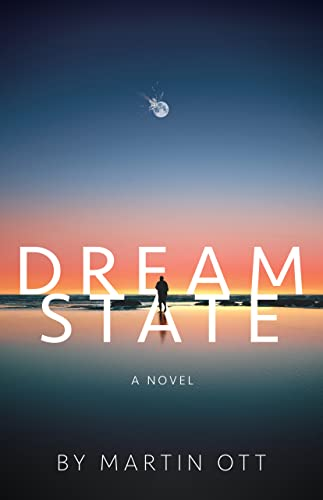
Martin Ott's New Thriller Dream State Reviewed by Nadine Maritz


Dream State is a different kind of Thriller that plays off on an Island – Beleze, experienced by three characters Heidi, Russel, and Marley. 

Oddly enough, I kept thinking about Sandman which obviously also revolves
around dreams and the lack of it. I didn’t finish the series (and I know people
are going to castrate me for this –but — I just didn’t enjoy it)

Having said that, lack of sleep is absolutely something relatable and the
madness that derives from its absence is a reality I think many can relate to. Martin nailed the mind sets created from sleep deprivation one hundred percent along with the psychological effects on people. 

The book is a fast-paced attention read, in the sense that you really need to keep track of the characters, their past, their present and their existing surroundings. Whilst I really enjoyed the different read, – because it’s not something I would usually deviate to – I did feel that the regular play back on the characters pasts drew away from the story and its progress. Yes, it did give us insight into what makes them tick, but the take back, was consuming in some instances. I also struggled to really connect with any of the main characters, although strong leads there was something amiss. I settled that debate by convincing myself that logically they are lacking something — sleep.
So, if that was the intent, its applaudable.

The setting revolves around the moon being hit by an asteroid and the impact it has on everyone on the island and then of course the bigger impact on the world.

It focuses on the ways people deal with the lack of sleep, how they interpret different people’s actions, how their pasts haunt their present existence and how they cope with impulsive irregularities in their existing environment. As if that isn’t enough, people also need to deal with groups trying to take over the island and pirates roaming the surrounding sea.

The thriller takes on a kind of post apocalyptical sci-fi setting the more it progresses, and it made me question the impact it would have on our world. I mean people always talk about an asteroid hitting earth, but I haven’t experienced or read about scenarios where it hits the moon and the impact it would have on humanity.

I gave this book a 3 out of 5.

Plus, for its innovation, the thought it provoked and the thriller tone that absolutely glares you in the eye with the madness created, minus because I didn’t connect with it in similar fashion to the likes of The Interrogators Notebook, which I still love and wish someone would take to screen. 


For more on this crazy adventure you can go to Amazon and purchase the book

for Kindle or Paperback. You can also connect with the Author on his Website, on Instagram, Twitter and on GoodReads. 

You can also go view Nadine's previous Interview with Martin Ott and my Review on The Interrogators Notebook.

AUTHOR INTERVIEW – BILL BORCHERT – HOW I BECAME MY FATHER ... A DRUNK!

There are a few times in life when you meet someone and you just know it’s an honor. You are not sure why you deserve the honor, all you know is that it’s here, you are presented with it and now you better use it. This is how it feels to interview someone called William G Borchert. Willian – or Bill as many know him was nominated for an Emmy in 1989 for Screenwriting the commendable Warner Bros/ Hallmark hall of fame movie, My name is Bill W. 

The film starred James Garner, James Wood and Jobeth Williams and was based on material gathered and personal interviews. Bill also wrote “When love is not enough,” starring Winona Ryder and Barry pepper. Over the years he has written a number of books, "The Lois Wilson Story: When Love Is Not Enough, Sought Through Prayer and Meditation, 50 Miracles That Changed Lives," and "1,000 Years of Sobriety." 

Bill, thanks so much for setting out some time to share your story with our readers. 

Your latest novel is a very intimate journey called, “How I Became My Father…A Drunk.” Can you tell our readers more about your journey and why you decided to share it with the world?

WB: There has been one primary goal of my journey over the last 50 years or so as a writer who has recovered from the disease of alcoholism.  That goal has been to share my experience, strength, and hope with others suffering from the same malady to show them from my own personal experience that there is a pathway to recovery and a life beyond their wildest dreams.

There was a time as a young man when drinking meant fun, parties and freedom.  It enabled me to do things I was too shy or too timid to do sober. I thought it made me a better dancer, a better writer, a better lover. It was my friend until it turned against me and began taking away everything that was near and dear to me in my life. Then it tried to kill me. That’s why I willingly share my story with others going through the same thing—so they can find what I have found, a new way of life.

However, my new book, “How I Became My Father…A Drunk” is one I never intended to write. I guess I didn’t want to re-live a rather painful and shameful past after years of making peace with it and with those that were involved. But when several very close and loving friends, including my wife, convinced me that my experience growing up with an alcoholic father and then becoming an alcoholic myself could help families better understand the disease and its solution, I put pen to paper.

Alcoholism, like many addictions, is a disease many humans can’t comprehend. How much of what you suffered was heredity?

WB: From my own personal experience as well as from sharing with other recovered alcoholics over some years now, I’m convinced that alcoholism is definitely a family disease.  First of all, science has discovered that it’s in the genes. They say that anyone with one parent who is alcoholic has a 40-50% chance of becoming addicted themselves.  If both parents are alcoholic, there’s an 80-90% chance that one or more of the children will follow suit.

Not only is alcoholism hereditary, it is also environmental. What I mean is, the shameful and harmful behavior of every alcoholic affect, at least, seven other people in their lives—parents, spouses, children, other relatives and friends and even co-workers. 

So, with more than 40 million alcoholics in the United States alone, that means more than 250 million people are impacted in some way by the disease of alcoholism and  most don’t know  what to do or where to go for help. That’s another reason I wrote my latest book—to show that there is a solution.

How have you dealt with the part of society that doesn’t understand what an addict goes through or how he sees the world?

WB: Despite the continued attempt by many in the recovery field to educate the world about the fact that alcoholism is a disease, there’s still a terrible stigma attached to it. Many people still consider abusive drinking a moral weakness or the lack of will power. That’s why so many addicts deny they are addicts and why this terrible denial keeps them sick, makes them sicker and sadly kills too many.

I have been through this myself more than once. Even though I have become a successful author and screenwriter, I can still see people pause and reflect when, should the occasion call for it, I tell them I am a recovered alcoholic.

So I keep on writing about recovery from addiction, hoping that someday it might help reduce the denial among alcoholics and lessen the stigma that surrounds them. The more people who come to know “the sober alcoholic,” the more the stigma will subside. At least, that is my hope.

Has this book had any effect on others who struggle with alcoholism?

WB; I am pleased to report that it has. Even though the book was only published three months ago, I am already getting emails and phone calls from people telling me how much they “identified” with my story, how much it helped them, their parents or siblings and how they are telling all their relatives and friends to get a copy.

Some admitted they had a similar problem with a drunken father, swearing never to be like him and then becoming the same or worse. Several women said it was a drunk and abusive mother that caused the problems in their homes. I really wasn’t that surprised to hear those kinds of stories since, as I said before, alcoholism is a family disease.

One lady told me very excitedly: “This book should be must reading in every home in America.” I should have been embarrassed by such a laudatory remark, but I wasn’t. Since I believe in what she said, I simply replied, “Thank you very much.”

As a world class writer, your success continued throughout your struggle, how did you manage to focus on your work while the balance of your family had to live in the wake of your own destruction?

WB: As we know today, alcoholism, like any other disease, only gets worse not better when left untreated. So as my disease progressed, my success digressed.

By the age of 22, I had become a by-line feature writer for the largest evening newspaper in the world, based in New York City. I was covering and writing some of the major stories of our time. By the age of 25, as a result of my abusive drinking and erratic behavior, I was on my way out the door. I began bouncing from one job to the next, writing for magazines, radio shows, and small public relations firms.

I tried focusing on my work. I knew I was a good writer when I was sober. I knew I was a young man who had been given tremendous opportunities to achieve significant success and financial reward in a career I loved. But I had no idea that my disease made me powerless over alcohol. I walked around with a mental obsession for booze that turned into a physical craving once I picked up the first drink. As a result, my whole life became unmanageable and my wife and children suffered the consequences.

By the age of 27, I was just about unemployable in the media world of New York City. I had developed a reputation as an unreliable drunk who turned in phony stories and cheated on his expense account. I was deeply in debt, drank up two lovely homes and was now living with my wife and four children in my mother-in-law’s basement.

Why my wife stayed with me I couldn’t understand. I would have been long gone. But she says she still loved me and prayed that the good Bill she knew was deep inside would one day come out. And I thank God every day that her mother was kind, generous and understanding enough to take care of my family when I couldn’t. I also thank God for being able to make amends to them all when I finally got sober.

If you grew up feeling the power of addiction, seeing the dark veil it had over yourself, your family—what made you fall into the same trap?

WB: That’s a question most addicts, if not all, find almost impossible to answer—at least in a way that non-addicts can understand.

You would think, for example, when an alcoholic reads in the newspaper or sees on TV that a drunk driver killed three small children as they were crossing the street that he would never again get behind the wheel when he’s drinking. But he does.

Alcoholism is a three-fold disease. It affects one physically, mentally and spiritually. It’s that mental part that triggers the kinds of decisions and actions that can lead to disaster—the kinds of decisions non-drinkers cannot understand. But neither can the addict.
I promised myself I would never be like my father. But one night in a crowded saloon, surrounded by the camaraderie of other newspaper reporters, I gave in to the peer pressure and had a few drinks.  Little did I know the exuberance I felt was from my alcoholic genes coming to life. Those damn genes told me I could handle few drinks now and then, particularly on special occasions.  They lied to me. Soon every day was a special occasion. 

Soon one drink was too many and a thousand weren’t enough.
As a result, there were many things that I began doing over and over again that I never wanted to do in the first place. But I was now powerless over alcohol. My body craved it. And once I took that first drink, all bets were off.

When did you know you wanted help?

WB: As I began to feel things slipping away and couldn’t understand why I was unable to stop drinking, I tried many different ways to help myself—taking pledges, pleading with God, going to church, trying harder to focus on my job and on my family.  But nothing worked. Things continued to get worse.

It wasn’t until thoughts of suicide started to invade my booze-soaked brain that I finally reached out beyond myself for help. I discuss that period of my life in some detail in my new book.

How has this mindset changed your life?

WB: Despite my thoughts of suicide, deep inside I knew I really didn’t want to die. The real problem was I didn’t know how to live. I had no goals, no direction, no guidance and no support. All I had was fear and a lack of hope.

Then I came into a Twelve Step recovery program.  I was now ready to admit I was powerless and willing to do whatever it took to get sober and stay sober.  At the suggestion of a sponsor, an older man who had nearly experienced his own demise from booze, I made a decision to turn my will and my life over to a God of my own understanding.  Gradually a whole new pathway opened up.

Through the Twelve Steps of recovery my thinking changed, my actions changed and I was able to once again use in a positive and productive way the talents I had been given.  Today I live an entirely different life, one that is truly beyond my wildest dreams.

Do you feel you have been given a final chance at life?

WB: I no longer think about fate or how much longer I might be around. Therefore I don’t see anything, be it life, work, relationships or even the lottery, as a final chance. I try to live my life one day at a time, not in the past or in the future but in the now. However, the one thing I am absolutely sure of is—to drink again is to die.

When you realized this is it, you want to live, what did you decide to do with your life?

WB: In early sobriety, my brain was very muddled. I just hung in there and tried to follow the suggestions of others who had much more sobriety such as the man I had asked to be my sponsor in recovery.  One of the most important things I was told was not to make any major decision during the first year of my sobriety.

As the mist cleared, I knew I wanted to write again. I did, and after a while became rather successful as an author and screenwriter. Then one day I came to realize what a great debt I owed for this great gift of sobriety I had been so freely given. That’s when I began to dedicate myself to writing books and movies about recovery from addiction, hoping that others might find the unbelievable life I have found as a sober man.  It has given me the kind of satisfaction that money can’t buy.

Has writing been a big healing point in your life?

WB: When you are able to do what you love to do in life, I believe it makes you happy, healthy and very grateful.  At least that’s what has happened to me. So yes, my writing has not only been healing but it has helped expand my horizons far beyond where they were when I was nothing but a selfish, centered alcoholic pounding on the bar in a sleazy saloon for another drink.

How much does sharing your journey as a well-known artist contribute to the sales of your books?

WB: That’s a difficult question to answer. I guess when people read one of your books and enjoy it that may prompt them to buy another. I have met people who told me they have read all my books and seen my movies. I also know that many well-known major authors have large followings. So I guess the answer is yes.

Are there any events where people can reach out to you?

WB: When I am asked to speak at business, professional or social meetings or conventions or hold book signings, these events are usually posted on Facebook or on my website, williamborchert.com.

What’s next in line for Bill?

WB: There’s a major film producer already interested in making a movie based on my new book, “How I Became My Father…A Drunk.”  In the meantime, I am finishing several magazine articles and meeting my commitments for a number of speaking engagements. Then I’ll take a deep breath and choose from four very interesting ideas what will be my next book.My wife, Bernadette, says I’d rather write than breathe. But we always manage to spend some fun and loving time together.

Where can readers go to buy your books?

WB: First, if readers would like to find the books and movies I have written, they can go to my website, williamborchert.com and click on “books and movies”

Should they like to purchase any of my books, they can do so directly from my website or they can find most of them in bookstores as well as on Amazon.com, Hazelden.com or Hallmark Hall of Fame.com. There is one exception however. My new book, “How I Became My Father…A Drunk” can only be purchased from Amazon.com or from my website, williamborchert.com.

Do you have any place where people could contact you or someone who may feel they need help?

Definitely. I can be reached by email at: williamgborchert@aol.com or on my cell phone: 843-855-9747. And I always answer or return messages since there was a time when I needed to reach out too.

Read more at My Addiction Books

AUTHOR INTERVIEW - RAT PACK PARTY GIRL: From Prostitute to Women’s Advocate - Jane McCormick


When Ken introduced me to Jane, I had this disheveled vision of Marilyn Monroe combined with the novel I read on Holly Madison – Down the Rabbit Hole. I’m not sure why that vision popped into my head as the story Jane relays holds such deep meaning and purpose. It carries a broad and impactful message.

Janie McCormick is an author who shares a harrowing, heart-breaking, and inspiring memoir on how she escaped a life of abuse only to fall into the dangerous and luxurious high-roller prostitution ring in Las Vegas in the 60’s. She was the Rat Pack’s (and namely Frank Sinatra’s) go-to girl for all their “fun.”

Jane, it’s a privilege to pick your brain and have you share your story. Breaking my silence; Confessions of a Rat Pack Party girl and the sex-Trade survivor was released in November 2010. How have readers received this story?

JM:My first response to how you viewed me as a mixture of Marilyn Monroe, a “worldly famous actress” and Holly Madison, a Hugh Hefner’s, go-to girl was interesting. Both beautiful well-built blonds with “Type A” personalities like myself. I, however, was the high-class call-girl entertaining many celebrities and millionaires seven days a week. I worked on my own and wasn’t in a prostitution ring!

In regards to “Breaking My Silence: Confessions of a Rat Pack Party Girl and sex-trade survivor:”  
JM:Patti Wicklund and I self-published “Breaking My Silence” in 2007, and sold 2000 copies. In 2010, we self-published the book with IUniverse, a print-on-demand company, because we hoped the book would reach more people.

The people loved it. Many said, “they couldn’t put it down!” Most couldn’t believe I survived that life and others were intrigued with the celebrities. But for the most part, it was an “eye-opener” about the misunderstood world of prostitution and my search for true love.

What Made you decide to sit down and put words to paper? 
  
JM: I thought about this since I left Vegas in 1970 and I didn’t want others to get caught up in this lifestyle.

How has this book changed the lives of others in similar circumstances? 
  
JM: I think if a victim is reading this book they’ll learn that they are not alone in this abuse. That I survived and so can they!

How has the release of this book changed your life?
JM: I realize that a lot of abused women need help. In Sweden, it against the law to: “Buy or sell human beings for sex!” Sweden arrests “pimps” and “johns!” As John Choi, Ramsey County Attorney says, “Jane provides courage for other victims to seek help and properly puts into context that prostitution is not a victimless crime. Her book should inspire us all to create violence-free families and communities, where all women and children are valued and safe.”

In today’s time, sex has literally become a household brand if one considers how easily accessible it is to everyone who has access to anything electronic. In your experience how has its impact escalated and influenced the world we live in today? 
JM: It’s the ruination of this world, to forget morals, values, and human dignity. Human Trafficking is an epidemic in the world. It’s larger than drug trafficking and it needs to stop!

Your book manages to give insight into the girl most women sees as prostitutes. Do you feel that the empathy it draws can be used against women you are trying to help?  
JM: That’s one reason why I wrote the book. By using me as an example of others, that society needs to see that prostitutes are human beings with hearts and souls like everyone else. No one was born to be a prostitute! That we are victims and survivors of abuse. That people need to remember that it could happen to them.

Life stories, in general, are always so hard to comment on. I mean if this was your life, and you shared it with the world, who am I to say; hey this is a really shitty book? Readers out there, however, have different opinions on critiquing work, how do you deal with negative comments towards your story and your life?
  
JM: When I stood on the stage in Reno, Nevada in 2012, at question and answer session for the play of VOICES IN THE LIFE OF PROSTITUTION IN NEVADA, By Norman Stephens, executive producer and Peabody and Emmy Award Winner, where they used me as a lead character, a man asked, “You know you liked making that money. You know that you didn’t have to do that work! You know you wanted to!” And I said to the elderly man, “How would you like it if your kids had to turn tricks to live. No woman likes to turn tricks!” Afterward, the man left the room.

As a victim, how have you managed to wake up and redirect your entire life, your mind set on something positive? 
JM: I woke up after Johnny, my “old man,” tried to shoot me because he didn’t want to lose his money maker! I left him for a woman who loved me for me and he’d lost control of me.

In earlier year’s women were drawn to places like Las Vegas because of the glam and the money. Today the lines have undoubtedly become a lot more blurred due to the internet and society having a broader spectrum to connect. What should women look out for in today’s time? 
JM: Look out for some guy that says, “It’s okay for you to go to bed with that guy for money. Because it’s only for sex and not for love. I understand all that, it’s okay with me!” If a guy says that, you know that real men do not want their women going to bed with other men and they should tell that man to get away from you and she should run for her life. He’s nothing but a glorified pimp!

How much different is it from when you were involved in these circles? 
JM: There were no circles for me. I strictly worked Vegas high-rollers by myself and was introduced by pit bosses and owners. I didn’t work in brothels and wasn’t moved around like other working girls who weren’t allowed on the Strip. Many of those girls stayed downtown in the 60s.

How much do novels like 50 Shades of Grey contribute towards this type of market?
  
JM: 50 Shades of Grey brings out the controlling self-centered sickness of men’s need for sexual control.

Does BDSM play a big role in these types of environments or is it something that has really only popped its head since the popularity of 50 Shades?  

JM: BDSM – a sexual practice that stands for bondage and discipline; dominance and submission; and sadism and masochism. One, in my experience most pimps and johns want to be in control. That’s why they pay for sex. But I thought I was the one in control. The men liked a woman to be in control, giving them pleasure, entertaining their sexual fantasy. Two, without knowing my true situation at the time I was with Johnny, I tried to keep him happy by giving him all the money so he’d love me more and wouldn’t beat me up. I needed his approval and would do anything he wanted.  Now I encourage other women to: “Shatter the Silence, Stop the Violence!” To speak out and get help. To change laws to help victims of abuse throughout the world.

If you start talking to someone who was about to depart on the same journey you undertook, what is the one piece of advice you would give them? 
JM: I tell them that I’ve been there. The high-class call girl of Vegas in the 60s who made a half-million a year. I was beaten, belittled, raped and left out in the street to die. I tell them: “Don’t do it! Run for your life!” As James Douglas Dunlap, FBI, Forensic Examiner, Cryptanalysis & Racketeering Records Units with 30 years of experience wrote: “I commend Jane and Patti for what they had to do in writing Rat Pack Party Girl and the compassion Jane has in conveying her life story to educate and inform the society. I hold Jane in the highest regard for speaking out about this horrendous problem we have in human trafficking.”


What do you want to achieve with your novel – Breaking My Silence: Confessions of a Rat Pack Party Girl and sex-trade survivor?
  
JM:  First, I’m promoting my new book called RAT PACK PARTY GIRL: From Prostitute to Women’s Advocate, which is published with STORY MERCHANT BOOKS, President/CEO Dr. Ken Atchity along with the gracious, kind help of Norman Stephens Productions. My achievement comes from a quote by Tara Patet, Domestic Violence Prosecutor, “Jane McCormick is a true survivor and champion for all women who have endured violence and exploitation. Her journey and her willingness to share her story so that others may learn from her experience is a testament to her courage resilience and grace.”

Can you share one thing in your life that was a turning point, one opportunity you feel you should have used that would have changed your life dramatically?
  
JM: Meeting the love of my life, Patti Wicklund changed my whole life into unconditional love, trust and security. It was all that I ever hoped to have and something I searched for throughout my struggles in life. I’ve been with her for 22 years. We’ve written these books, and together we produced television programs based on Breaking My Silence Issues. We believed it was an opportunity to bring awareness to non-profit organizations such as, Minnesota Coalition against Sexual Assault, and law officials like, John Choi, Ramsey County Attorney, who work hard to help victims of abuse. As quoted by Andrea Paulet, Public Access Lead, wrote: “Jane McCormick and Patti Wicklund won our 2012 Community Involvement Award for their efforts to address issues that affect women in our community because Jane used her own experiences to shine a light on the risks women face.”

When you read all the memoirs from former playmates and people with similar experiences or stories, do you ever relate to their experiences? 
  
JM: I relate more to current issues and it breaks my heart to see it happening today. Now the sexual predators are using kids and there’s no law to protect women from the age of eighteen because you’re considered to be an adult. And like many women today after being raped, they never report it because they’re afraid and don’t believe anything could be proven in law. For instance, a guy steals a dollar and goes to jail for 10 years, a guy rapes a girl and is let out on good behavior.

purchase on Amazon.com

How and where can readers with similar reach out to you?
  
JM: I can be reached at ratpackpartygirl@gmail.com 

Are there any events in your areas where readers can go for book signings?
  
JM: Books can be purchased at: Amazon; Story Merchant Books;

If you’d like an interview, please feel free to contact us at ratpackpartygirl@gmail.com

Links on Youtube: 

2. Rat Pack Party Girl From Prostitute to Womens Advocate