
Showing posts with label AEI clients. Show all posts
Showing posts with label AEI clients. Show all posts
LISTEN TO THIS VOA INTERVIEW: Agents Say JFK Assassination Transformed Secret Service
Gerald Blaine and Lisa McCubbin, Authors of The Kennedy Detail says weaknesses exposed by the Kennedy assassination forced a change in how the Secret Service was funded. “So it made them realize even more how important their mission was, and they were able then to convince Congress to get more money. They had been asking for more money for years and years to get more people. They knew they couldn’t protect the president with what they had," said McCubbin. Clint Hill stayed with the Secret Service after the assassination. He rose to Assistant Director and witnessed changes in the agency - no more travel in open automobiles, and more agents, more money, and better communication.
Hello From A Kennedy Detail Fan
Hi, Jerry,

I just wanted to tell you how very, very much I enjoy The Kennedy Detail. I use the present tense because I'm actually in the middle of re-reading it right now. I'm a young Kennedy fan; I'll be 25 next month. It started when I bought a biography of JFK Jr not long after his death. I was hooked, and now read and watch whatever I can about this fascinating family.
A while back, I stumbled across The Kennedy Detail documentary while channel surfing, and thoroughly enjoyed it. Wish it was available on DVD! Then I was browsing in my local Barnes & Noble one day and discovered the book! It's now one of my favorites.
I will also say (because I think you will be glad to hear it) that before I read the book, I wasn't 100% sure Oswald acted alone. I didn't buy into a specific conspiracy theory, but I thought it was possible. Not anymore! I may not have been willing to take the word of the Warren Commission as gospel, but your word *is* good enough for me!
The Secret Service agents are mentioned in plenty of books about JFK's presidency, but reading about things from their point of view really increases my admiration and respect. And you're all so humble about it. I know y'all all would say you were just doing your jobs, but it is important for me to tell you how much I look up to you. All of this was long before my time, but future generations will not forget you. From the first, I developed an especial admiration and respect for your good friend, Clint Hill (I just finished Mrs. Kennedy and Me last week!). If you would be so kind, please give him my best wishes.
Just out of curiosity, I know you do some public appearances. How often are you in/near North Carolina? It would be amazing to hear you speak, and an honor to shake your hand.
Whoops, looks like I rambled longer than I meant to! I have an English degree, it's what I do--communicate. ;) Take care!
With deepest respect,
Collyn Loftis


Stuart Connelly's BEHIND THE DREAM

 BEHIND THE DREAM
The Making of the Speech that Transformed a Nation
Author: Jones, Clarence B.
Author: Connelly, Stuart
A star
is assigned to books of unusual merit, determined by the editors of Kirkus Reviews.Essential reading about a moment of surpassing political and moral importance
On August 28, 1963, a photographer working for the United States Information Agency (USIA) took a picture which has become an iconic image of the March on Washington for Jobs and Freedom. The photograph, in the holdings of the National Archives, is of a young African-American girl, holding a March on Washington banner and concentrating intently on the scene before her. The image has been reproduced countless times in history books, on calendars and most recently in the National Park Service brochure for the Martin Luther King Jr. Memorial in Washington, DC. Edith Lee-Payne of Detroit, Michigan, celebrated her 12th birthday by attending the March on Washington with her mother. She had no idea she had been photographed, let alone that over the years her face had become so well-known. Recently her sister saw the photograph in a calendar celebrating African-American history. She told Ms. Lee-Payne, who says she is still "in shock." Also appearing in the video is National Archives supervisory archivist Ed McCarter and the photographer to whom the image is attributed, Rowland Scherman. In addition to the famous image of Ms. Lee-Payne, many other USIA photos from that day are shown
AEI Client Noire's LUST: THE 5TH DEADLY SIN Part 5 in the G-Spot 2 Urban Erotic Serial Saga Now uploaded to Nook and Kindle!!!
LUST: THE 5TH DEADLY SINPart 5 in the G-Spot 2 Urban Erotic Serial Saga is:Twice as Long and Twice as Thick!LUST: The 5th Deadly Sin has just been uploaded to Nook and Kindle e-book formats for $3.99!
If you don't have an e-reader, you can also download the free apps from Amazon and B&N to read them on your computer or cell phone!KINDLE. NOOK. PAPERBACK. NOW!


AEI CLIENT DENNIS PALUMBO'S COLUMN FOR PSYCHOLOGY TODAY
ENVY in Hollywood
I want to talk about the one constant of life in Hollywood: envy.
I’m thinking about a patient of mine, a screenwriter, that I saw in my practice some years back. Despite the gains he’d made in therapy, he felt his work was continually undermined by his envy of other writers.
He told me he had to stop reading Written By, the magazine of the Writers Guild, as well as the various chat boards and writing websites, because seeing the deals being made by other writers angered and deflated him. He’d grown increasingly self-critical about his work habits—normally a source of pride and satisfaction—since hearing about an A-list screenwriter’s penchant for “knocking out a new million-dollar spec” every six months. It had reached a point where learning of a friend’s having lunch with a potential new agent could trigger a depression.
For some, of course, hearing of another’s success can be a spur to greater efforts. For others, the result can be a crippling paralysis.
It took me a long time to understand, and to accept, that envy is a natural by-product of the achieving life. Throughout our childhood experiences in our families, and then our schools, and ultimately in the adult world, we strive to achieve in a matrix of others who strive to achieve---such that comparison is not only inevitable, but often the only standard by which to measure that achievement.
With time and maturity, we hopefully develop the self-awareness (and self-acceptance) to measure ourselves by more internal monitors; to enjoy the expression of our creative talents for their own sake.
But we also live in the real world and need the validation of that world. For a writer, actor or director in a commercial marketplace, that means enduring intense competition, and the almost daily spectacle of others enjoying extravagant rewards in fame and money—all while negotiating the often gut-wrenching peaks and valleys of one’s own career.
In other words, that means living with envy.
The key to surviving envy, as is the case with all feelings, is to acknowledge it. By that, I’m not referring merely to the fact that you’re envious, but also the meaning that you give to it.
For example, if a screenwriter sees envy as a sign of some kind of moral weakness or character failing—a view possibly engendered and reinforced in childhood—the effect on his or her work can be quite debilitating.
Equally harmful is seeing your envy as a disparaging comment on your own efforts, a confirmation of a lack of faith in yourself. “If I let myself feel envy,” one actor patient told me, “it means I don’t believe in the possibility of my own success.”
Another patient, a struggling independent film producer, bravely insisted that “envy is counter-productive.” So terrified of anything that might derail his firmly held belief in “positive thinking,” the meaning he gave to envy—as well as any other “negative” emotion—was of an insidious obstacle on the tracks of his forward momentum.
Only by investigating what envy means to us can we risk acknowledging it. The plain fact is, it’s just a feeling, like other feelings—which means it’s simply information, data about what’s going on inside of us.
If nothing else, envy informs us of how important our goals are. It reminds us of the reasons we undertook the creative life in the first place, and challenges us to commit once more to its rigors and rewards.
Moreover, in my own case, I find that I’m much less troubled by envy if I’m writing well, if I’m truly engaged with my current project. (As many of you know, though I no longer write for film and TV, I’m currently the author of a series of mystery novels.) Over the years, I’ve learned that when I’m fully “caught” by what I’m working on, intrusive thoughts about the creative and/or career triumphs of others usually don’t enter my mind. Usually.
So the choice is yours. You can deny your envy, or use it to re-double your efforts. You can talk it to death among your friends (also a great procrastination ploy, by the way), or you can suffer in silence. Or, hopefully, you can accept it with humor and self-acknowledgment, and perhaps explore what its meaning is for you.
But one thing I know. For a creative person in Hollywood, to coin a phrase, nothing’s certain except death and taxes. And envy.
Guest Post: AEI CLIENT KEITH ROBERTS ANCIENT VS MODERN BUSINESS
Most people who make investment decisions for themselves or for
business probably have technical investment skills like the ability to
read balance sheets or calculate net present values. But developing an
investment strategy requires a broader perspective, such as the ability
to distinguish between fundamental and incremental change. Using that
example, I would like to show how the history of ancient business can
usefully contribute to such challenges.
My interest in ancient business did not begin as a quest for
investment strategies. As manager of a small manufacturing and
distribution company, I was stomping around my office late one night,
frustrated with our antiquated business practices. I heard myself
mutter, “this place is run like a Roman blacksmith shop!” I stopped.
Did they even have any blacksmith shops in ancient Rome, I wondered?
How did they run, and what did they do? In fact, how did business, to
which billions of us now devote our working lives, even begin, and what
are the important differences between ancient businesses like Roman
blacksmith shops and the computerized, outsourced, internet-linked,
machine-based businesses of today? Such questions led to The Origins of Business, Money, and Markets.
Satisfying curiosity is fun, but knowledge of history has practical
functions as well. Often, the easiest way to understand complex
phenomena like business is to watch their development unfurl over time.
The earliest phases of development often display its driving forces
most clearly, thus constituting a relatively simple model of what may
now be something of bewildering complexity.
In the back of my mind, then, I hoped that by learning about ancient
business and what affected its standing and profitability, I might gain
insight into investment strategies applicable today. As a wise old man
once said, if you want to know where the train is going, look at the
tracks.
In modern life we face an endless succession of changes, many of
which appear dramatic, or are claimed to be so. Important investment
and policy decisions turn on the question of just how fundamental a
change may be. For business, a fundamental change is one that disrupts
existing practices in major ways, often hard to foresee. A leading
modern example would be the Industrial Revolution. Incremental changes
have consequences too, but that’s just life; they do not change the
nature, role, or operations of business, and they have a more limited,
more predictable impact. Distinguishing between one type and the other
is not easy, but has major investment implications.
While change came much more slowly to the ancient world than it does
today, there are some interesting examples of the difference between
fundamental and incremental change. For instance, the coming of the
Iron Age around 1000 BC, a development of immense political importance,
would seem to have fundamentally changed business as well. After all,
the Iron Age led to gigantic empires in the Middle East—the Assyrian,
Babylonian, and Persian—as it dramatically undercut the previous Bronze
Age cost of tools, armor and weaponry. A Bronze Age cooking tripod was
worth three women or twelve oxen to Achilles, but iron tripods
performing the same function cost a small fraction of that.
On closer observation, however, iron technology changed business very
little. Yes, blacksmiths came into their own, and yes, iron tools made
farming more productive. But the Iron Age did not noticeably improve
the marginal role of business in the economies of the Middle East,
change business practices, or lead to disruptive new industries.
Business played no different or larger role in the economies of the
Assyrian, Babylonian, and Persian Empires than it had in the Sumerian
and Egyptian societies that were the first civilizations 2000 years
earlier.
By contrast, the second great change—the invention of
coinage—dramatically altered the role and practice of business in the
Greek world. Coins were invented late in the 7th century BC,
when in order to pay Greek mercenaries the Anatolian kingdom of Lydia
began minting pure gold coins in a size equal to a year’s pay. As the
Greeks learned of this innovation, they began issuing their own coins.
Over the course of the 6th century BC, these became smaller
and more useful as a medium of exchange in their markets. Coins vastly
increased Greek purchasing power.
This revolutionized the nature and role of business. As trade in
coin replaced barter, economic exchanges became much more frequent,
stimulating consumer demand. With more trades in terms of money, prices
became visible indicators of value, and provided instant information
about supply and demand. So useful were these money-based markets that
they, and the traders and manufacturers who worked them, became central
to many city-state economies and were considered defining features of
Greek life. The conquests of Alexander the Great and the Romans later
made this nexus of business, money, and markets the dominant form of
urban economy throughout the western world.
The difference between the impact on business of the Iron Age and of
coinage cautions us to ignore the “shock and awe” of change as a general
proposition, and focus on the practical details of exactly how the
change might work in reality.
Consider now two of the most famous changes taking place currently:
globalization and the computer revolution. With the rapid growth of
nations like China, India, and Brazil, plus the wonderfully written
books of Thomas Friedman, globalization has attracted enormous
attention. It has certainly wreaked havoc with US and European labor
markets, as many formerly well paid jobs have been shipped to low wage
nations, and it has led both to a great new wave of business
consolidation as firms have bulked up for international competition, and
also to new competition as formerly protected national markets have
opened up to firms and products from outside their borders. It has also
permitted a vast expansion of international investment, and with new
players gaining advantage, provided many new investment opportunities.
Based on the example of the Iron Age, however, I would argue that
despite its dramatic political and personal consequences, globalization
does not represent a fundamental change for business. The expansion of
supply chains, the addition or subtraction of competitors, the creation
of new investment opportunities, even the internationalization of
labor—these are all normal conditions of business life. Globalization
has not produced radically new industries, altered the role of business
in modern economies, or fundamentally changed the nature of business
activity. Its investment implications are by no means trivial, but they
hardly point to dramatic innovations, a proliferation of new
businesses, or changed perspectives on the business landscape.
By contrast, the computer revolution (really, the microprocessor
revolution) that started in the 1960’s does indeed seem fundamental,
comparable in scope and impact to the Industrial Revolution. Only with
computers could many scientific calculations even be made, leading to
vital new industries like genomics and virtually the entire modern field
of microbiology. Computer-aided design and manufacturing permit
products and tolerances never before possible. Computers power
virtually instantaneous communication and information capabilities that
are transforming the modes of buying, selling, innovation, marketing,
and business organization.
In finance, computers have greatly increased the trustworthiness of
promises to repay, resulting in a vast expansion of purchasing power by
way of credit. Computers have reduced the risk creditors must bear by
supporting an explosion in options and other hedging instruments. Risk
has also fallen because computers facilitate the creation of credit
instrument portfolios whose risk is lower than that of the components.
By allowing “quants” to create complex structured finance vehicles that
allocate credit risk to parties with different risk preferences,
computers have greatly increased the supply of credit. Computers also
crunch vast quantities of data to provide rapid and massive evaluations
of consumer creditworthiness, making predictions of future repayment far
more accurate. In these and other ways, computers make it far more
rational to provide credit to many more people and businesses than ever
before: that is, to increase the purchasing power that fuels business
activity.
In short, the computer revolution resembles the invention of coinage
far more than it does the advent of the Iron Age. As such, it offers
vast and fertile possibilities for investment, and requires a much
greater focus of attention than do the comparatively simple implications
of globalization. That conclusion, I submit, is important for framing
investment and even public policy strategies. I am sure that it could be
reached without historical knowledge, but for me history has greatly
clarified where the train tracks lead.
Story Merchant Client Kerry Valderama's Memories of a Hundred Made The Top 100 List For The Table Read My Screenplay Contest Sundance 2012
"MEMORIES OF A HUNDRED"
Top 100 list for the Table Read My Screenplay Contest Sundance 2012

The list will be broken down further into the 2 Grand Prize Winners, Top 10 Category Winners,
TOP 100 Overall and Honorable Mentions by Jan. 5th
TOP 100 Overall and Honorable Mentions by Jan. 5th
Guest Post: AEI CLIENT DENNIS PALUMBO'S COLUMN FOR PSYCHOLOGY TODAY
There's an old joke about a man working in the circus, whose job it was to follow behind the elephants, sweeping up their droppings. When asked why he doesn't find some other line of work, he replies, "What, and leave show business?"
What makes the joke funny, of course, is the truth behind it. Creative and talented people, having once tasted the nectar of Hollywood success, find it almost impossible to quit the field, even when the odds are stacked against them.
And nothing stacks the odds higher than committing the one unpardonable sin in Hollywood---getting older. As the late, great TV writer Larry Gelbart once said, "The only way to beat ageism in Hollywood is to die young."
I ought to know. I deal with issues like ageism in the entertainment industry---not to mention depression, creative "blocks," relationship crises and dozens of other concerns---every day in my therapy practice.
Who am I? I'm a former Hollywood screenwriter (My Favorite Year; Welcome Back, Kotter, etc.), now a licensed psychotherapist in private practice in Los Angeles. And though I've retired from film and TV, I still do some writing---articles, reviews, and, most recently, a new series of mystery novels.
But my full-time day job is my therapy practice. Given my background, I suppose it's no surprise that my patients are primarily writers, actors, and directors in the entertainment industry. They range from the famous and successful to the unknown and struggling. And after over 23 years of doing therapy in Hollywood, I can state one thing with complete confidence:
Doing therapy is the same everywhere. Except here, where it's different.
Which, by way of example, brings me back to ageism.
At 63, my patient Walter (not his real name, of course) has been directing episodic television for most of his adult life---except for the past five years, during which, despite Herculean efforts to get work, he's been unemployed. He also got divorced and lost his house, and had to move to a condo in Burbank.
At a recent session, Walter announced more bad news.
"My agent finally dumped me," he said quietly, without rancor.
"I'm sorry, Walter. I know you've been his client a long time."
"Twenty-one years. Lasted longer than my marriage. And the sex was better..." He managed a rueful smile. "Hey, I can't blame him. He busted his ass for me. But let's face it, nobody wants to see a gray-haired old fart like me on the set. Everybody there looks like my grandchildren."
As is often the case with patients in his situation, we talked about options. Walter agreed that he could probably teach, but that even teaching jobs were getting scarce and the money wasn't very good.
But the money wasn't really what bothered him. Right now, at 63, he felt he was a better director than at any time in his life. He knew his craft, he understood actors, he could keep his head in a crisis. But it seemed clear that nobody wanted to see a face much over 40 or 45 nowadays.
"I might as well pack it in," he said gloomily. "My life in this town is over."
"Your life isn't over, Walter." I said. "Neither is your career. Unless you're ready for it to be over."
"What does that mean?"
"It means you don't have to let other people decide what you can do. Or how to feel about what you can do."
"Hell, don't get all therapeutic on me now."
"I'm not. I'm being pragmatic. If you want to teach, go teach. But if you still love directing, go find something to direct. A play. A short film. You say you have a few bucks. Okay, then hire someone to write something. Or rent a small theater downtown and put something up on its feet."
"Forget it. I'm used to working for studios. Networks. Guys with parking spaces on the lot, who at least have to pay me for the privilege of pissing all over my work."
"And I know how much you'll miss that. But at least you'll be directing. If that's what you still want to do."
"Hell, it's what I am."
He sat back, stroking the edge of his trim, salt-and-pepper beard. Then he laughed. "Hey," he said, "remember that joke about the guy at the circus, cleaning up after the elephants?"
"One of my favorites."
"You think I'm that guy?"
"Walter, I think we're all that guy. These are the lives we lead, the things we do. If it's who we really are, all we can do is keep doing it. As a colleague of mine said once, about trying to achieve in any profession: Keep giving them you, until you is what they want."
He paused. "You know, Alvin Sergeant is in his 70's or 80's, and he wrote those first Spider-Man movies. Huge hits. For years, David Chase couldn't get arrested, and then he creates The Sopranos. Hell, John Huston directed his last picture in a wheelchair, sitting next to an oxygen tank."
"All true."
"I mean, maybe I'm just kiddin' myself, but..." He nodded toward the door. "There's gotta be at least one more elephant out there, right?"
I smiled. "I've never known a circus without one."
Interview with Author and Therapist Story Merchant Client Dennis Palumbo by Breakfree to Success


Listen to internet radio with Breakfree to Success on Blog Talk Radio
Previously "BreakFree to Success"- the Doug Foresta Show is a self-help show for creative people. The show features extraordinary creative people sharing tips and inspiration for living a successful creative life.Doug Foresta is a radio host, speaker and consultant who helps creative people tap into their inner "spark" and fully express their creativity. The show features one-of-a-kind guest lineup- everyone from celebrities and and up and coming artists to CEO's, business leaders, and unique creative people from all over the world! For more information about the show and various guests, and to read Doug's reflections on the various shows and post your thoughts and comments, visit www.dougforesta.com
WILLIAM DIEHL’S FINAL BOOK IS NOW AVAILABLE IN NOOK BOOK!

nookbook http://www.barnesandnoble.com/w/seven-ways-to-die-william-diehl/1008171998?ean=2940013453814
 LendMe™
 Shop more PubIt! eBooks
More About This Book
Overview
From the Nez Perce Indian reservation in Idaho to New York’s Central Park is a straight line right through Bill Diehl’s last and most intriguing lead character, Micah Cody.There are seven basic ways to die. In 1969 Dr. John C. Cavanaugh catalogued them all in his Primer of Forensic Pathology-Cast Studies for the Novice M.E.
Micah Cody is a 30-something NYPD captain of homicide, who’s founded a special unit known as TAZ with city-wide license to take over any investigation at all, with special focus on serial killers. Now its ultimate challenge is on the loose in Manhattan, with three victims already whose causes of death seem like intentional defiance of TAZ’s existence—and four to go in four deadly days leading up to Halloween. Chronicling it all with great amusement is the Capote-like award-winning crime writer Ward Hamilton who, egged on by his sexually voracious socialite bedmate, is determined to bring TAZ to its knees journalistically.
Captain Micah Cody's Nez Perce name is “Youngest Wolf” from his ability to communicate with the animals and read nature's signs. As all hell is breaking loose in Manhattan, the wolves in Central Park howl, the peregrine falcons shriek their warnings—and Micah is listening.
Seven Ways to Die is a non-stop, sexy read with Diehl doing to the end what he did best throughout his bestselling career.
Product Details
- BN ID: 2940013453814
- Publisher: AEI Books
- Publication date: 11/18/2011
- Format: eBook
- File size: 375 KB
- Items ship to U.S, APO/FPO and U.S. Protectorate addresses.
AEI Client Royce Buckingham's The Dead Boys Continues to Garner Recognition!

NEW! 2013 Louisiana Young Readers’ Choice Selection
The Louisiana Young Readers’ Choice Award is a reading enrichment program of the LCFTB. Participation in this program has climbed from 5,485 votes the first year to over 29,000 students participating in 2009. The purpose of the program is to foster a love of reading in the children of Louisiana by motivating them to participate in the recognition of outstanding books. Books must be published three years prior to the award being given.
http://www.state.lib.la.us/literacy-and-reading/louisiana-young-readers-choice
Library Journal Reviews Story Merchant Client Dennis Palumbo's Fever Dream
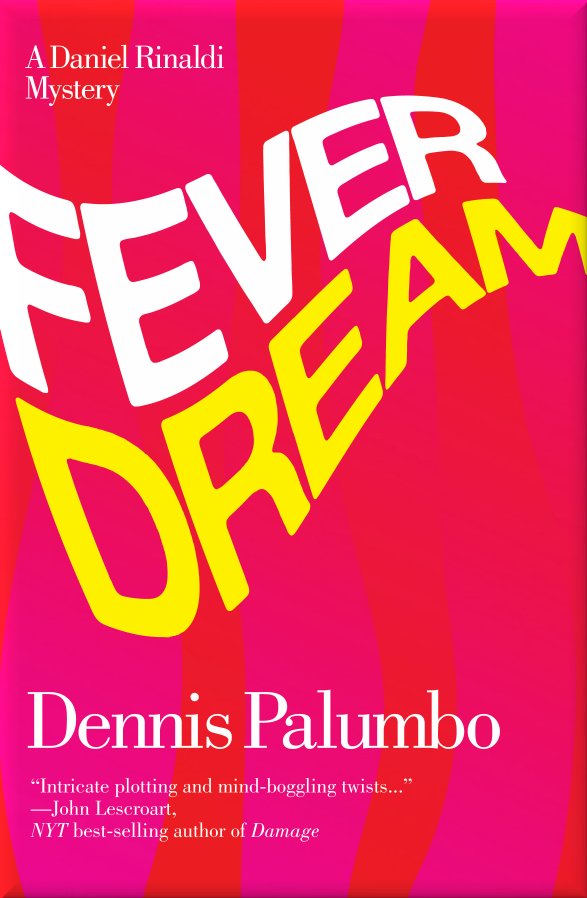
Pittsburgh psychologist Dan Rinaldi’s (Mirror Image) boxing skills serve him well in this high-octane police procedural, which opens with a bank robbery gone awry. Brought in by the police to help debrief a released hostage, Rinaldi again finds himself in something much more convoluted than a simple robbery. Somehow this case is tied in with the district attorney’s current campaign for governor. Stick with the two story lines, because ten rounds of sleuthing are required before Rinaldi’s astute powers of observation and physical agility can crack this case wide open. VERDICT Lots of action coupled with earnest conversations makes for a roller-coaster read. Veteran screenwriter Palumbo composes his book as if it were a TV movie, filling it with a few too many thinly developed characters. Still, the intriguing plot and the psychological angle will hold your attention. For pacing, action, and a look at the underbelly of big cities, fans of Robert Ellis’s Lena Gamble mysteries might take to this series.
http://www.libraryjournal.com
AEI Client Noire's BETRAYAL: The 2nd Deadly Sin is now available in Nook and Kindle e-book formats AND in paperback!
|


Early reviews of AEI Client Noire's Betrayal

5.0 out of 5 stars NOIRE'S DONE IT AGAIN!!!
By P. Cannon "SK"
I just finished reading GSpot 2: Betrayal, and emotions are still running high! Wow! As always, Noire pulled us in from the very beginning. She started this book with the unexpected and the unthinkable and that's exactly how she ended it! It took a moment for what I was reading to actually sink into my brain! What??! After getting up and walking around, I decided to read it again to make sure, and I'm still in a state of shock, disbelief, and pure pisstivity! The Queen of Urban Erotica has done it again. But then again...what else did we expect? Kudos Noire! SK
5.0 out of 5 stars Can't Wait!
By Laneal Baugh "LaNeal Baugh" (Florence, AL USA)
I read this book in a day and I couldn't stop reading!!! And Noire u did ur thang wit dis part and I can't wait until G-Spot 2: Greed comes out!!!!! :)
5.0 out of 5 stars FANTASTIC....................
By MSP
G-SPOT 2 BETRAYAL: THE 2nd DEADLY SIN was FANTASTIC from beginning to end. Could'nt wait to read what would happen next, read it in 1 sitting. This book was so vivid, It felt like I was watching a movie unfold. Would've given more stars if possible. NOIRE is an AMAZING WRITER. I am a TRUE FAN. Can't wait until GREED: THE 3rd DEADLY SIN release date. FANTASTIC FANTASTIC FANTASTIC..................................................
5.0 out of 5 stars love this!
By kels1fan
Once again, Noire does not let us down!! LOVE this and can't wait until the next one comes out!! Was kinda sad about the ending but excited at the same time... can't wait to see what happens next!! Denita Brown
4.0 out of 5 stars Entertaining and Provoking.....
By Kr Bankston "TheAuthor-KRBankston" (ATLANTA, GA, US)
Another great read by Noire...can't say I'm honestly suprised by peoples actions in the book, lies told, or how it ended, I for one am a severe pessimist and I already believe that most people would sell their sould if the price were right. I was very saddened by some of the events in the book, but I won't spoil it for anyone about to read. Noire did a sensational job....
5.0 out of 5 stars What about your friends!
By Baby Girl (T. Smith) (Chicago il)
all i can say is noire there is never a dull moment. when i first spoke with moire on fb about Betrayal i never thought it would end up like this. The action and plot is so thick until it makes you feel like you are right in the story with the writer. from beginning to the end you are a for a shock of your life. My heart is so heavy for juicy because its like she cant catch a brake. No matter where she turns its always something. I dont wanna give too much but all i can say is these little black books are something else. at the end of the day i really hope this can be turned in to a movie of some sort. Keep up the good work Noire!
5.0 out of 5 stars You already know!
By Alli Louisiana
This book is the shiz nit! I couldn't stop reading it, and kept my eye on the percentage read b/c I didn't want it to end LOL. Come on now, Noire never disappoints. The end will shock you...I didn't see that coming. I know it's betrayal but damn...
5.0 out of 5 stars Nobody Does it like Noire
By Sapphire
Noire is definitely on her game with the Deadly Sins series. The second installment left me with questions but I know many of them will be answered in the next installment. It takes a talented author to weave a story that brings the reader in and keeps them wrapped up in the story. She has done both in Betrayal. Waiting another month for Greed is going to be pure agony. Well done, Noire.
5.0 out of 5 stars Upheaval...Devastation...Misfortune...
By Dawn Chambray (Michigan, United States)
But it all narrows down to betrayal where Noire once again takes you on a ride full of adventure and mayhem. Believe me I was tired as heck getting off work at midnight but still managed to read Betrayal from front to back and be done by 5 am. It's just that intriguing. Once you get going you cannot stop! Each page pegs your interest and you are yearning to know who, what and why... In Betrayal, everything is still happening so fast! Oh the heartbreak, turmoil, lies and deceit! Poor Juicy Mo! She's experienced more catastrophe than one lifetime should dish out! Will things ever get better for her? Or will she end up in the same psycho place that Salida was released from? The suspense is killer but it makes it more interesting; makes you think and wonder what mysteries lie in wait for you next;which questions will be answered or touched upon, and what new mysteries will come about. What is Salida really up to? Did she really believe Money Making Monique's lies or is she putting on a front to keep everyone under her psycho spell? Who are the Italians really taking care of? Where is DarQuese really? The ring? And why? Rita, Rita, Rita...why, why, why??? All these questions and more are still a mystery. In one more month Greed will drop and just maybe there will be some answers in there. Until then one can only wonder.
5.0 out of 5 stars She did it again!
By Miss Drenna
Noire's 2nd installment to G-Spot 2 was everything I wanted it to be! It left me with my jae dropped wide open and a thousand questions like: why does Noire have to change the literary game with a serial novel? Why do her fans have to wait a whole month for the next book? Does she get off on the anticipation? Then it hit me: duh she wouldn't have it any other way. Anticipation is a mutha.... It's gonna be a long month!
Read An Excerpt From Betrayal Here
Latest Nods for AEI Client Royce Buckingham's Dead Boys

- 2011 Cybils Award Finalist
- Fall 2011 Junior Library Guild Selection
- One of 20 books included in the St. Louis, MO Battle of the Books in which 30 schools participate annually. Royce will be a featured author on the event's blog soon, which is updated weekly. We've noticed an uptick in book sales in the St. Louis area since July when the book battle books were announced (as tracked through Amazon's sales tracking).
- The Dead Boys has also been selected as a 2011-2012 nominee for the Isinglass Teen Book Awards. Books are chosen by a committee of librarians as well as per teen recommendations. I believe the winning book is voted on by participating teens. The program is promoted by 14 libraries in New Hampshire. Winner chosen in April 2012 and announced at the NHLA meeting/conference in May.
St. Louis Battle of the Books
Isinglass Teen Book Awards
ADVANCED PRAISE FOR STORY MERCHANT CLIENT DENNIS PALUMBO'S FEVER DREAM

“Palumbo’s exciting second mystery featuring Pittsburgh psychologist Daniel Rinaldi…takes the reader into the seamy side of the Steel City, chock-full of corruption and crime, love and loss.” --Publisher’s Weekly
“In this fine novel…Rinaldi’s methods are as much Columbo as shrink: he notices details that don’t fit and picks at them until the whole psychodrama comes clear. A smart, strong read.” --Booklist
"Intricate plotting and mind-boggling twists make Dennis Palumbo's Fever Dream a memorable mystery. The character of psychologist and trauma expert Daniel Rinaldi gives great heart to this story and elevates it to novelistic heights."
--John Lescroart, New York Times best-selling author of Damage
“Lovers of noir will enjoy Dan Rinaldi's fast-paced adventures. Rinaldi, an empathic therapist, is on call to the Pittsburgh police. He needs every ounce of his Golden Glove skills to survive the violent world of Pennsylvania politics.”
--Sara Paretsky, Mystery Writers of America Grand Master, author of the V.I. Warshawski novels
"Fever Dream is another well-wrought puzzle for the likable Dr. Dan Rinaldi to unravel. Fans will be delighted."
--Thomas Perry, Edgar award-winning author of The Butcher’s Boy
“Dr. Daniel Rinaldi is back in a new non-stop thriller that finds the humane, quick-witted Pittsburgh psychologist (and former pugilist) searching for a link between a failed bank robbery, several brutal murders, a homicidal soldier of fortune, a small town ex-sheriff and a gubernatorial election. A fast, gripping read that offers that rare combination of dimensional characters and propulsive action.”
--Dick Lochte, award-winning mystery critic and author of Sleeping Dog
"Palumbo again delivers more great characters, a page-turning mystery and sizzling suspense. If you liked Mirror Image, you'll love Fever Dream."
---Bobby Moresco, Oscar-winning writer/producer of Crash and Million Dollar Baby
The Emmys
 |
| With Jerry & Joyce Blaine, Kayoko Mitsumatsu, Clint Hill & Lisa McCubbin |
 |
| With Chi-Li Wong |
 |
| Kayoko Mitsumatsu and Director Vince DePersio |
 |
| Jay Renfroe (Renegade83) and Chi-Li Wong |
 |
| Chi-Li Wong, Fred and Betsey Griffin |
 |
| Jerry Blain and Fred Griffin |

Subscribe to:
Posts (Atom)
Overview
From the Nez Perce Indian reservation in Idaho to New York’s Central Park is a straight line right through Bill Diehl’s last and most intriguing lead character, Micah Cody.There are seven basic ways to die. In 1969 Dr. John C. Cavanaugh catalogued them all in his Primer of Forensic Pathology-Cast Studies for the Novice M.E.
Micah Cody is a 30-something NYPD captain of homicide, who’s founded a special unit known as TAZ with city-wide license to take over any investigation at all, with special focus on serial killers. Now its ultimate challenge is on the loose in Manhattan, with ...