|

Frank Center Lobby dedication to Scott Beard - April 1st!


In memory of Betty White

At her eightieth birthday celebration, in 2001, at KC’s Leawood-South Country Club, the entire family gathered to celebrate my mother’s endless good spirits and hospitality. Dancing and telling jokes and winking, she reigned over the event like the dowager empress she’d become, wearing her signature red dress. and looking for all the world like Betty White on a good day.
My mother was a force larger than
life.
Oddly enough, I met Betty White
because of Mom.
An aspiring novelist and former Mormon
bishop named James Michael Pratt sent me a copy of his self-published book, The Last Valentine. I read the
description on the back cover and thought it was maybe too romantic even for
“Mr. Romance,” as I’d been dubbed during my years in Montreal producing Shades of Love.
But the concept nagged at me, so I
sent the book to Mom and asked her to read it.
She called me two days later.
“You must get involved in this book,” she said. “It’s wonderful.”
I asked her for details. Her response
was sketchy—she was already becoming forgetful, especially of things she’d
read, which is why I’d learned to return her call the minute she reached out to
me after a read. But it was clear emotionally: Mom didn’t use must loosely.
This was beyond should!
Long story short, I did get involved.
My Writers Lifeline company helped Jim perfect the story and my management
company sold it, at auction, for a bunch of money to St. Martin’s Press. It
became a New York Times bestseller, and led to four or five further
bestselling books for Jim.
At one point in his book tour, we
converged in KC where Jim was being hosted by Barnes and Noble—and he insisted
on meeting Mom. “She’s the one who got this book published,” he said. I
certainly wasn’t going to argue with that.
You’d think a New York Times bestseller
would have an easy route to the screen. But I knew one lesson by heart: nothing
is easy in Hollywood. It took over ten years before Valentine was picked
up by Hallmark Hall of Fame. Their president, meeting me over breakfast at the
Alameda Plaza overlooking KC’s Country Club Plaza, brought up a ticklish
subject. “You know this company will never call a movie ‘The Last Valentine,’”
he told me—then tipped his orange juice in a toast.
I laughed, at what I thought was a
joke. But it wasn’t. The movie was retitled, “The Lost Valentine,” and starred
Jennifer Love Hewitt and Betty.

It was one thing to meet the voluptuous Jennifer Love Hewitt—“Don’t avoid these,” she scolded our Director of Photography, having checked the replay of a wedding moment where the camera discreetly hovered above her cleavage line, “I built my career on these beauties.” Unleashing the camera, they did a more revealing take.
But
it was meeting Betty White on the set in Atlanta that truly thrilled me, for
two reasons. In her red dress, white hair, and feisty countenance, she looked
exactly like Mom. And I was given the chance to tell Betty the story of how my
mother had gotten this book published and this movie made.
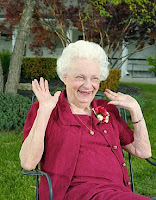
Excerpt from My Obit: Vol 2: My Multi-Storied Mother, forthcoming 2022.
In Memoriam Chris Kühne
 |
Chris Kühne
1991-2021 |
Born and raised in Mexico City, Chris turned to film and writing following a near-death experience. He moved to Los Angeles in 2013 to study film and screenwriting at the New York Film Academy, as well as Business and Management of the Entertainment and Film and TV Development at the University of California, Los Angeles. In 2015, he co-wrote the Goya-nominated feature film Yerma: Barren (Spain/UK), and served as a script consultant on the Spanish feature film El Violín de Piedra, both directed by renowned Spanish director Emilio Ruiz Barrachina.
In Memoriam - Alex Cord
 |
| Alex Cord May 3, 1933 - August 9, 2021 |

We’d get together at Alex’s home, an island of macho tranquility unlike my bustling Park La Brea apartment where, he commented, I always sounded like I “was being pursued by a starving pack of Rottweilers.” There he would calmly and methodically whip up an excellent pasta while we free-wheeled convoluted chats about our mutual love of Italy (he was born Alexander Viespi), the serendipitous vagaries of life, the tragic disconnect between him and his son Wayne, the deteriorated state of male/female relationships--reciting Shakespearian monologues back and forth until it was time to settle down to our writing sessions.

Larry Thompson In Memoriam

LARRY D. THOMPSON
After graduating from the University of Texas School of Law, Larry spent the first half of his professional life as a trial lawyer. He tried well over 300 cases and won more than 95% of them. Although he had not taken a writing class since freshman English (back when they wrote on stone tablets), he figured that he had read enough novels and knew enough about trials, lawyers, judges, and courtrooms that he could do it. Besides, his late, older brother, Thomas Thompson, was one of the best true crime writers to ever set a pen to paper; so, just maybe, there was something in the Thompson gene pool that would guide him into this new career. He started writing his first novel about a dozen years ago and published it a couple of years thereafter. He wrote six highly acclaimed legal thrillers and White Witch, unique to itself. His popular Jack Bryant series is now being developed by Atchity Productions as a television series, Lawyer No Fee.

Larry is survived by his wife, Vicki who shared his exuberant attack on life. He was fatherly proud of sons Ryan, a Colorado restaurateur and distiller (try his 10th Mountain bourbon!) and Kel, an award-winning Florida filmmaker (his first feature film, THE TERRIBLE ADVENTURE, repped by Story Merchant, now making the rounds of festivals)—his daughter Casey, a health and wellness entrepreneur, and four grandchildren. Larry had retired from law to devote full time to writing.
In Memoriam Umberto Eco

The Name of the Rose by Umberto Eco
Hardcourt Brace Jovanovich
 here is a kind of novel that changes our mind, replaces our reality with its own. We live in a new world after we've read it. Umberto Eco, the celebrated Bolognese semiotican and Joyce scholar, brings us a new world in the tradition of Rabelais, Cervantes, Sterne, Melville, Dostoevsky, Joyce himself, and Garcia-Marquez.
We recognize the author's claim--or disclaimer--in the prologue to his "terrible story of Adso of Melk": that it's a hasty translation of a lost transmittal copy, that he's uncertain about its value and about the need to publish it. He refuses to allow his reader to easily suspend disbelief because his purpose is to explore the relationship between belief and narrative.
Filled with the good-natured polyglot banter of the superfluosly learned, "The Name of the Rose" might be seen only as a effete "Canterbury Tales" except for tell-tale markings on the walls of its medieval monastic library, markings declaring that this records of those walls' destruction is itself a labyrinth in the library's image. We learn the markings, deconstructing the book as we read. We see how the labyrinth operates on more than one level-in our imitative act of finding our way in and out. Eco makes his intellectual riddles accessible by weaving them into an intriguing detective story. A series of grisly murders turns Brother William of Baskerville, and his assistant Adso (our narrator), into prior-day Sherlock Holmes and Watson.
William is friend of Occam, admirer of Bacon, devotee of Aristotle, and consumate practitioner of Thomistic analysis. Like Joyce's Dedalus, he studies the world's signs and cluse with eyes both open and closed; his vision is so exhaustive--literally and metaphorically--that he at one point sees through six eyes.
Through the course of their investigations of the abbey's crimes and its secret heresy, we're given the flavor of the waning Middle Ages in Southern Europe, the ephemeral unity of medieval thought under the Thomistic rule had long since been abandoned as a possibility, and Aquinas himself, suspected of having been a self-important windbag. Now "everything looked the same as everything else," and all morality is arbitrarily and universally metamorphosed.
If you had a romantic notion of the relative simplicity of the late Middle Ages, Eco modernizes your view. He paints a time of multiple popes and multiple anti-Christs, a time when a man would trade sexual favors for a book, when the papal palace in Avignon displaced "crucifixes where Christ is nailed by a single hand while the other touches a purse hanging from his belt, to indicate that he authorizes the use of money for religious ends..."
In a time of diminishing belief, all hands reach desperately from the encroaching shadows of doubt. There were monsters in the imagination in those days: "The cynocephali, who cannot say a word without barking... blemyae, born headless, with mouths in their bellies and eyes in their shoulders... and those whose soles are reversed so that, following them by their footprints, one arrives always at the place whence they came and never where they are going..."
No less marvelous, in the vanished monastery we find their counterparts in a guarded reliquare displaying "the tip of the spear that pierced the side of the Saviour!," "a yellowed shred of the tablecloth from the last supper," "a piece of the manger of Bethlehem," ..."a tibia of Saint Margaret," "a rib of Saint Sophia," "the chin of Saint Eobanus," "a tooth of the Baptist," "Moses' rod," "a tattered scrap of very fine lace from the Virgin Mary's wedding dress"--and much, much more.
Later, in Ados's dream during the "Dies Irae" of Terce, the holiness is comically transformed into "the tail of Saint Ubertina, the uterus of Saint Venantia, the neck of Saint Burgosina engrained like a goblet at the age of 12..." The narrator's dream itseld is one of the richest in 20th-Century literature, a mad comination of Fellini, Fuentes, Borges and Bosch. William's interpretation shows how his assistant's dream was a dream of books, a dream of dreams, of a past and future inextricably mixed in imagination--a triumph of intertextuality. And it provides the key to the mysterious and outrageous crimes they're investigating.
Criminal investigation and exploration of theology and the mentality of the era are interlaced with a comic explosiveness of language reminiscent of Rabelais, as when the semi-demented Salvatore fives Adso a recipe: "Facilis. You take the cheese before it is too antiquum, without too much salis..."
Eco's characters may verge on the dry, but the plot is as neat as Conan Doyle or Christie, with ironic undertow echoing Chesterton's Father Brown series.
The interplay between Adso and William like that of Quixote and Paza, involves us in the paradoxical mind of the times: a delicate but thorough mixture of rationalism and superstition. We prefer, by authorial design, Adso--even when his private opinions nudge against a heresy not yet born: "The older I grow and the more I abandon myself to God's will, the less I value intelligence that wants to know and will that wants to do; and as the only element of salvation I recognize faith, which can wait patiently, without asking too many questions."
Eco dances on the banks of allegory without drowning in its inane waters. As his characters wrangle over the question of whether Christ possessed property, the narrative offers chilling insight into mores that suggest those of our own time, when the Church of Rome, for all it ecumenicism and globetrotting Popes, still belies its own vow of poverty.
But the book's central dialogue is between men and books, and books and books, and only through the latter, men with men. We harbor the notiron of a preliterary world, where ideas have yet to be born and we commune directly with reality. William disillusions Adso of that concept, and Adso admits the lie: "Until then I had thought each book spoke of the things, human or divine, tha lie outside books. Now I realized that not infrequently books speak of books... In the light of this reflection, the library seemed all the more distrubing to me. It was then the place of a long, centuries-old murmuring, and imperceptible dialogue between one parchment and another, a living thing... a treasure of secretes emanated by many minds, surviving the death of those who had produced them or had been their conveyors."
When the labyrinth is unwoven we're not surprised that "the plan of the library reproduces the map of the world." When the crime itself is solved, the cause is not a contemporary murderer but... I won't spoil the the book for you. Suffice to hint that laughter and comedy move from the diabolic to the humanistic, that the name of the rose is a play of words.
A true investigation succeeds from a false pattern, and the plot to destroy comedy is succesful by accident. But the investigation's success is superficial. William's antagonist, Jorge of Burgos (foreshadow of Luis Borges), succeeds in repressing the book which might have undermined the stucture of all holiness. William accuses Jorge of being Satan: "The Devil is not the Prince of Matter; the Devil is the arrogance of the spirit, faith without smile, truth that is nevere seized by doubt."
A book like this seeks to replace the world with itself, and eventually does so, showing the reader that reality, except as vision, is already inaccessible; that only vision matter; that even before he began reading it can lead us to recite, with a Kempis, the great imitator: 'In omnibus requiem qaesivi, et nusquam inveni nisi in angulo cum libro.' " (In all things I have sought peace, and nowhere have I found it except in a corner with a book.)
In Memoriam: Art Johnson

Born in San Diego, California in 1945. At the age of twenty-three, Arthur Johnson moved to Hollywood where he spent the next twenty-one years as a studio musician, composer for films and records and touring musician to the stars. In 2002, he moved to Monaco with his wife Patricia.
He continued to perform and teach throughout his illness as well as completing an autobiography entitled Memoirs of a Sideman (excerpts and other writings here), and three novels, The Devil's Violin, Deadly Impressions and recently Marilyn My Marilyn. Listen to his music for Marilyn, My Marilyn Film.
In Memoriam Harlan Ellison
 |
I only got to meet Harlan two or three times, and since it was in my position of VP for Los Angeles PEN it was somehow always antagonistic (by his selection, of course). He tried to shout me down when I was announcing something or other. I told him, Why don’t you stand up and defend yourself like the writer that you are instead of just interrupting obnoxiously. He jumped to his feet, stated his case, then sat down. And grinned. It gave me a good feeling.
I loved reading his words, but none more than what he sent me one day when I asked him what he did with “cranks & weirdos” he must deal with even more than I did as an editor. He sent me a mimeographed statement he sent to them, that went substantially like this:
SOME PRETERNATURALLY IMBECILIC ASSHOLE, USING YOUR NAME, SENT ME THE ENCLOSED PIECE OF SHIT USING THE UNITED STATES POSTAL SERVICE AND I AM RETURNING IT TO YOU HEREWITH IN THE KNOWLEDGE THAT YOU WILL NEED IT AS EVIDENCE WHEN YOU FILE A FEDERAL CASE AGAINST THE MORONIC FUCKER. GOOD LUCK WITH THAT!
Being a professor at the time, I didn’t have the balls to actually use it, but I never failed to think about it when I opened a crank missive. If only I could adopt it to email today!
R.I.P., Ellison. You rocked!
Read New York Times Obituary