"The universe is made of stories, not of atoms."
—Muriel Rukeyser
____________________________
Showing posts with label Talmadge Farm. Show all posts

Story Merchant Book Author Leo Daughtry's Author talk in Charlotte at The Sharon at Southpark!

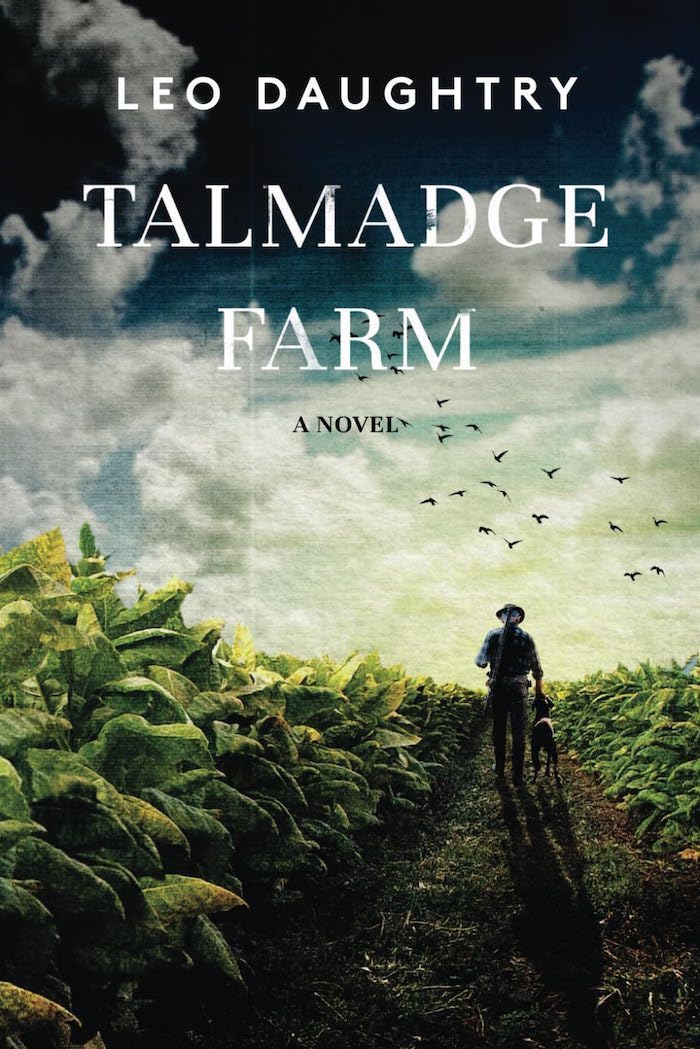
Former North Carolina political leader Leo Daughtry brings the rich stories of the South to life through his debut novel, Talmadge Farm.

Leo's thought-provoking discussion on heritage, politics, and storytelling rooted in the rural South brings the voice behind Talmadge Farm.


The Goethe Book Awards recognize Leo Daughtry's Talmadge Farm!

First Place Category Winner 

in Late Historical Fiction


AVAILABLE ON AMAZON


 Praise for “Talmadge Farm”


“Set in North Carolina in the 1950s and 60s, Leo Daughtry’s story gives readers a cast of flawed characters that elicit sympathy, anger, love and hate. 

The Talmadges, landed gentry, and their two sharecropper families try to adjust to the changing political, economic and social landscape of the decade. 

Gordon Talmadge commits one mistake after another, ultimately destroying the legacy handed to him, as his loyal wife Claire stands by his side while the sharecropper families – one black, one white – are ultimately driven off the farm for better and for worse. A page turner.” 

— George Kolber, author of Thrown Upon the World, and writer/producer of Miranda’s Victim


“In this stirring novel, Leo Daughtry creates a big, complicated portrait of family, place, race, class, and greed. Set in North Carolina, Talmadge Farm tells the story of three intertwined families. Daughtry delves deep into the heart of his characters. You’ll almost forget that you don’t know them personally; this story feels that real.” 


 Judy Goldman, author of Child: A Memoir and Together: A Memoir of a Marriage and a Medical Mishap


“Talmadge Farm is a classic. Through the lives of a farm owner’s family and their sharecropping tenants, Leo Daughtry weaves a story about the emerging South. This is a story of triumph and tragedy, of good and evil, and finally reconciliation. A true morality play.” 

— Gene Hoots, former tobacco executive and author of Going Down Tobacco Road

Narrator Justin Price tells AudioFile listeners about narrating Leo Daughtry's novel, TALMADGE FARM.


"Talmadge Farm has often been described as a love letter to the South. Daughtry says, “Despite what the South has done and is doing, everybody loves the South. The South has a charm about it, and this book talks about the good parts of the South, how good the people are, and what the South has meant to so many of us… It’s a love story in many respects.”


It’s 1957, and tobacco is king. Wealthy landowner Gordon Talmadge enjoys the lavish lifestyle he inherited but doesn’t like getting his hands dirty; he leaves that to the two sharecroppers – one white, one Black – who farm his tobacco but have bigger dreams for their own children. While Gordon takes no interest in the lives of his tenant farmers, a brutal attack between his son and the sharecropper children sets off a chain of events that leaves no one unscathed. Over the span of a decade, Gordon struggles to hold on to his family’s legacy as the old order makes way for a New South.


Publishers Weekly's Book Life Reviews Leo Daughtry's Talmadge Farm


Daughtry debuts with an expansive panorama of the 1950s and ‘60s American South, when tobacco ruled the land and desegregation was in its infancy. Gordon Talmadge, wealthy inheritor of his family’s Talmadge Farm, makes his money off the backs of others—including the two sharecroppers on his land, Will Craddock and Louis Sanders. But tobacco’s star is waning, and Gordon, reluctant to diversify in any way, is entrenched in the past, putting his fortune—and family-owned bank—at risk. When his intoxicated son, Junior, tries to rape Louis’s 15-year-old daughter Ella, it sends shockwaves that change their lives and Talmadge Farm forever.

Daughtry expertly contrasts the experiences of Gordon’s privileged family with that of his sharecroppers, particularly the grim realities that the Sanders endured as a Black family in the midcentury South. Both Will and Louis are up against impossible odds as they try to provide for their families, and when Louis’s son, Jake, is blamed for harming Junior when defending his sister, he’s forced to flee their small town for Philadelphia, desperate to make ends meet so he can study medicine. Meanwhile, Gordon’s tobacco crops can’t keep pace with his spending habits, and he rashly decides to bring on a crew of migrant workers from another state—a choice that results in disaster.

Gordon—and society’s—treatment of the sharecroppers is painful to read, but Daughtry capably evokes harsh historical truths of the era, particularly the generational abuse that wealthy landowners inflicted on the descendents of enslaved peoples. The reverberations of that shake through the Sanders’s family as the story builds to some dark consequences, though some of the most reliable women, Ella and Mary Grace, overcome obstacles as they strive toward happiness. Gordon eventually faces some justice, though he never truly makes amends for his harmful behaviors. Change, of course, comes in the end, but the cost for all involved is steep.

Celtic Lady Interviews Story Merchant Author Leo Daughtry

 “Talmadge Farm” is a sweeping drama that follows three unforgettable families navigating the changing culture of North Carolina at a pivotal moment in history. A love letter to the American South, the novel is a story of resilience, hope, and family – both lost and found.


What inspired you to write “Talmadge Farm?”


I lived through changing times, particularly the 1950s when there was nearly complete segregation in the South, especially in rural areas. Sharecropping was common, and women did not divorce in those times because it was considered demeaning, a failure. Then in the 1960s, everything began to change. Sharecropping disappeared, birth control entered the picture, and women could live life with more freedom and less dependence on men.


Can you tell us more about your family history and its connection to North Carolina and tobacco? 


How did this environment influence your writing? 

Beyond the direct associations with tobacco and North Carolina, are there more subtle aspects of your upbringing and family history that influenced your writing?


Tobacco was king in North Carolina. People practically worshiped it. Where I grew up, it put food on the table. Cotton was more up and down, but tobacco provided financial stability, not just for farmers but for the whole community. My family grew tobacco, sold fertilizer and seed, and managed a tobacco auction. It was our whole world. 


You have had a successful career as a lawyer and an Air Force Captain before that. What prompted you to pursue writing fiction?


I always had the idea for this particular story in my head. The 1950s and 1960s were two decades that changed the world, and a farm with sharecroppers is a bit of a pressure cooker environment. You have the farmowner’s family – in many cases people of wealth and entitlement – living just down the driveway from the sharecropping families. The sharecroppers were poor and had limited options, so they felt stuck living on a farm that didn’t belong to them doing backbreaking work with no way out. It’s a situation that lends itself to drama: families with major differences in class/race/socioeconomic status living in such close proximity to one another.


How has the landscape of tobacco farming changed, and how did you incorporate those changes into the plot of “Talmadge Farm?”


Probably the biggest change was the shift from sharecropping to migrant workers. Today, tobacco farmers are large corporations that use migrant workers as laborers. But in the 1950s, farming relied almost completely on sharecropping, which was a hard life. Tobacco farming is physically demanding work, and sharecroppers needed the help of all family members to complete the various steps – planting, seeding, suckering, priming, worming, and cropping – of harvesting the crop. 


Sharecroppers at one farm would help sharecroppers at the neighboring farm because they did not have the resources to hire extra people. In the 1950s, sharecroppers were unable to get credit anywhere but at the general store and maybe the feed store. They truly lived hand to mouth all the time, only able to pay their debts after the tobacco auction in the fall. Hence the phrase “sold my soul to the company store.” Sharecroppers often turned to moonshining as a way to make extra money.


As I describe in the novel, sharecropping began to disappear in the 1960s as children of sharecroppers started taking advantage of new opportunities that the changing society offered. Migrant workers took over the labor of farming. In addition to labor changes, new machinery improved the industry. N.C. State was instrumental in developing advances in the farming world. Legislation changed and farmers were allowed to have acreage allotments outside of the land they owned. I touch on all of these changes in the novel.


Are any of the characters in your book based on real people?


Not really. The closest characters to real people in my life are the characters of Jake and Bobby Lee. Jake is a Black teenager who wants to escape farm life and ends up running away to Philadelphia to become a success. Bobby Lee is a young Black soldier stationed at Fort Bragg. On the farm where I grew up, there was a Black sharecropping family with four sons, the youngest of whom was my age. We were very good friends.


All of the boys were bright and athletic, could fix anything, yet were limited in their opportunities. They didn’t have a school to go to or a job to look forward to. Their only options were to stay on the farm or join the army. The character of Gordon, while not based on any one person, reminds me of a lot of men I knew who did not treat women well, who were racist, who enjoyed the status quo and were resistant to anything that threatened their way of life.


In addition to the changing tobacco farming methodologies, the 1950s ushered in a period of profound social change, marked notably by the introduction of credit cards. How did these outside factors impact farming, and in what ways did they inform the development of the plot in “Talmadge Farm?”


In the novel, Gordon is the president of the local bank, yet he resists the advances in the banking industry, including credit cards and car loans and the incursion of national banks into rural communities. Gordon’s father, who founded the bank, was a brilliant man adept at navigating the bank through changing times, but Gordon simply doesn’t have the smarts to see what’s coming, and no one can get through to him. He’d rather play a round of golf than look at the balance sheet.  


Leo Daughtry is a life-long resident of North Carolina. He grew up among the tobacco fields of Sampson County which served as inspiration for his debut novel, “Talmadge Farm.” After graduating from Wake Forest University and its School of Law, he established a private law practice in Smithfield, N.C. 


He was a member of the N.C. House and Senate for 28 years, including serving as House Majority Leader and House Minority Leader. When not practicing law, Leo enjoys spending time in Atlantic Beach with his wife and daughters. 


Praise for “Talmadge Farm”


“Set in North Carolina in the 1950s and 60s, Leo Daughtry’s story gives readers a cast of flawed characters that elicit sympathy, anger, love and hate. 

The Talmadges, landed gentry, and their two sharecropper families try to adjust to the changing political, economic and social landscape of the decade. 

Gordon Talmadge commits one mistake after another, ultimately destroying the legacy handed to him, as his loyal wife Claire stands by his side while the sharecropper families – one black, one white – are ultimately driven off the farm for better and for worse. A page turner.” 

— George Kolber, author of Thrown Upon the World, and writer/producer of Miranda’s Victim


“In this stirring novel, Leo Daughtry creates a big, complicated portrait of family, place, race, class, and greed. Set in North Carolina, Talmadge Farm tells the story of three intertwined families. Daughtry delves deep into the heart of his characters. You’ll almost forget that you don’t know them personally; this story feels that real.” 


 Judy Goldman, author of Child: A Memoir and Together: A Memoir of a Marriage and a Medical Mishap


“Talmadge Farm is a classic. Through the lives of a farm owner’s family and their sharecropping tenants, Leo Daughtry weaves a story about the emerging South. This is a story of triumph and tragedy, of good and evil, and finally reconciliation. A true morality play.” 

— Gene Hoots, former tobacco executive and author of Going Down Tobacco Road


Via Celtic Lady Reviews

Southern Literary Review Book Review of Talmadge Farm

Talmadge Farm” by Leo Daughtry

In a sweeping story set in eastern North Carolina, Leo Daughtry takes readers from 1957 to 1970, a time of convulsive societal change in Talmadge Farm (Story Merchant 2024). As the Vietnam War intensifies, the civil rights movement spreads across the South, reaching even wealthy bank president and tobacco farmer, Gordon Talmadge. North Carolina’s Research Triangle has its birth, accelerating the industrial development of farms and the decline of tobacco. Another blow to the tobacco industry comes from the Surgeon General, who warns of health risks and mandates warnings on cigarette packs.

Buffeted by changes he resists, Gordon badly misplays his hand. Alternating between defiance and compliance, he treads a crooked path, using alcohol and denial to avoid the challenges he faces. While his wife Claire shows kindness to the farm’s two sharecroppers and their families, Gordon exhibits enough arrogance, disregard, and bigotry to earn readers’ distain.

With sensitivity and attention to detail, Daughtry tells the story of Gordon Talmadge, along with his family members. Interwoven are two other families, those of the sharecroppers who work the fields. Each family has its own demons and secrets. The sharecroppers live in poverty, toiling in ways that benefit the Talmadge family but not their own. One of the sharecroppers —the White one—bootlegs and drinks himself into trouble. The kindly Black sharecropper and his equally kind wife suffer from their inability to protect their three children from threats and influences beyond anyone’s control but that of Gordon and his near-clone of a son, Junior.

One of those sharecropper children, Jake, is forced to flee the farm:

 He “squeezed himself into the bed of Mr. Allen’s truck. He was completely surrounded by baskets of summer crops: tomatoes, beans, okra, watermelon, peaches. He couldn’t help feeling as if he, too, had been plucked from the earth, uprooted from everything he’d ever known.”

The circumstance of Jake’s ultimate return is one of the poignant comeuppances of Gordon Talmadge, whose power and wealth turn out to be a house of cards. As Gordon struggles to keep from losing the farm, his bank flounders. In crisis, as he “pulled out of the employee lot, he noticed the workmen had finished installing the new bank sign. Waiting at the stop sign for traffic to clear, he watched them hurl the old lettering from Farmers and Merchants into the back of their truck, probably headed for the town dump.”

Gordon mellows into a character who is more insecure than imperious, and far more vulnerable than powerful. Forced to watch underlings succeed as he fails, Gordon emerges as the most transformed figure in this engaging saga.

Talmadge Farm serves as a timely cautionary tale about prejudice, greed, and resistance to change. It also serves as a reminder that human kindness can transform and resurrect lives going off the rails. It is a rebuke of privilege and a testament to Southern grit.

Leo Daughtry

Leo Daughtry is a first-time novelist who grew up in the tobacco fields of Sampson County, North Carolina. A graduate of Wake Forest University and its law school, he established a private practice and also served as a member of the North Carolina House and Senate for twenty-eight years. Still practicing law, Daughtry especially enjoys time at Atlantic Beach with his wife and daughters.


AVAILABLE ON AMAZON


Wake Forest Magazine Interviews Leo Daughtry

Harvesting Home

Double Deac Leo Daughtry draws on memories of his childhood tobacco farm to write a historical novel about the South.


Leo Daughtry (’62, JD ’65) drew inspiration and many of the characters for his historical novel “Talmadge Farm” from his years growing up on a tobacco farm in eastern North Carolina in the 1950s.

Daughtry, 84, grew up in rural Sampson County, about an hour southeast of Raleigh, on a farm owned by his father. He weaves a story of the wealthy Talmadge family and two sharecropper families — one white, one Black — whose lives intertwine against the backdrop of socioeconomic and racial changes sweeping the South that upend their lives in different ways. He draws from boyhood memories of dove hunting, moonshiners, segregation, the backbreaking work of harvesting tobacco and sharecroppers scraping to survive at a time when tobacco was king in North Carolina.

One reviewer described “Talmadge Farm” as a “stirring novel” with a “big, complicated portrait of family, place, race, class and greed.” The novel won first place in historical fiction in the 2025 Feathered Quill Book Awards and was named a finalist for the 2024 Goethe Book Awards for late historical fiction.

Daughtry and his wife, Helen, live in Smithfield, North Carolina. His granddaughters, Katherine Riley (’20) and Hannah Riley (’24), are also alumni.

Daughtry was a Judge Advocate General in the U.S. Air Force before founding law firm Daughtry, Woodard, Lawrence & Starling in Smithfield in 1969. He served in the North Carolina House and Senate for 28 years, and was House majority and minority leader, until retiring in 2017. A past member of the Alumni Council and School of Law Board of Visitors, he has endowed scholarships in the college and law school. The law school named its North Carolina Business Court courtroom in his honor in 2018. The North Carolina Bar Association established the N. Leo Daughtry Justice Fund in 2022.

Kerry M. King (’85) of Wake Forest Magazine talked with Daughtry by Zoom at his office in Smithfield. Excerpts from their conversation have been edited for length and clarity.​

Kerry King: Before we talk about “Talmadge Farm,” I’m curious to know why you came to Wake Forest and what it was like when you were a student.

Leo Daughtry: My brother-in-law (Bill Peak ’48, MD ’51) went to Wake Forest, and I followed Wake Forest sports — Dickie Hemric (’55) and players like that. There was a tournament called the Dixie Classic (held in Raleigh from 1949 to 1960) where the Big Four (Wake Forest, Duke, NC State and UNC-Chapel Hill) would play four other schools, and we would go to at least one game to see Wake Forest play.

 Wake Forest had recently moved to Winston. Dr. (Harold) Tribble (LL.D. ’48, P ’55) was president. We had chapel on Tuesdays and Thursdays. There was no dancing on campus. If we had parties, we’d have them off campus. For football games, we all wore suits. If you were lucky enough to have a date, you always got her a mum or flower to wear.

Wake Forest was great for me. It allowed me to leave the tobacco farm and go to college and experience life in a different way than I had known before. And Wake Forest was very patient with me. I tried to be a good student, but I just didn’t have the background. It took me a while to get my bearings.

The Vietnam War was really becoming an issue. I went into the Air Force (after graduating from law school) and served in Turkey, assigned to NATO.

KK: Do you remember any particular professors, either in college or in law school?

LD: Dr. (John) Broderick in English, Dr. (Emmett Willard) Hamrick (P ’83) in religion, Dr. (David) Smiley (P ’74) in history and Dr. (Kenneth) Raynor (1914) in math. Dr. (Marcel) Delgado got me through Spanish. I didn’t have Dr. (Ed) Wilson (’43, P ’91, ’93) for a class, but I certainly knew and liked him. He was one of the finest guys and represented Wake Forest so well. I’ve gotten to  know his son (Ed Wilson Jr. JD ’93), who is a judge.

In law school, Dr. (James) Webster (’49, JD ’51, P ’81), Dr. (Hugh) Divine, Dr. (Robert) Lee (JD 1928, P ’55, ’68), Dr. (Norman) Wiggins (’50, JD ’52). They were all good teachers.

KK: You had a long career as a lawyer and in the General Assembly. What inspired you to write “Talmadge Farm”?

LD: It had been germinating a long time. I wrote it from an outline I did when I was in the General Assembly. We’d have some debates that I didn’t have to be involved in, so I had some free time. I knew the characters I wanted in the book. The reason I chose the name Talmadge is because I didn’t know anybody named Talmadge so I could make him the bad guy. (Gordon Talmadge, a banker and the owner of Talmadge farm, is the book’s central character.) I would write the outline and then change it, and then write it and change it. I knew where I wanted to start and where I wanted to end.

Leo Daughtry ('62, JD '65), author of "Talmadge Farm"

KK: What were the major themes you wanted to write about?

LD: Well, sharecropping for one thing, and the 1950s. My most impressionable years were the late ’50s and early ’60s because I was a teenager. I saw all the changes that were beginning to occur in the South. I went to a very small country school, where half of the students at least were children of sharecroppers. I had Black sharecropper friends and white sharecropper friends. They had one thing in common. They were poor as church mice, and they had very little hope of getting ahead. Most of the kids that I knew wanted to get off the farm. Farms had gotten bigger, tobacco allotments had changed, and migrant workers were replacing the sharecroppers. And automation enabled farmers to be more efficient, and that just eliminated the sharecroppers.

(I also wanted to write) about change, how people have to change, and some people can change better than others. Gordon could not figure out how to change. He got left behind because of his inability to accept change.

KK: How much of the book draws from your experiences and people you knew growing up?

LD: Almost all of it. Gordon was invented; I had to have a villain. Everybody knows someone like Gordon. He had everything going for him, but he wasn’t very smart (and wouldn’t adapt to the changing South). Black people lived in a completely segregated environment then. I wanted to make all the women really strong (characters) because there were no women doctors or lawyers then.

KK: Alumni are sure to enjoy the tidbits you sprinkle in the book about Wake Forest, Winston-Salem, Old Salem and R.J. Reynolds. The book ends soon after one of the characters, David, graduates from Wake Forest. Was he based on you?

LD: No, but I really wanted David (the good son in the novel) to go to Wake Forest. I didn’t want the bad son (to go to Wake Forest). (One of the other characters) went to Bowman Gray (School of Medicine). And, I remember Christmas at Old Salem and those Moravian cookies.


Via Wake Forest Magazine

Sampson’s Leo Daughtry Pens Debut Novel


 It’s been 10 years in the making, but former North Carolina state Representative and Senator Leo Daughtry has released his debut novel “Talmadge Farm.”

“My first and last, probably,” Daughtry joked over the phone about his book. “It’s a lot of work.”

Daughtry is a Sampson County native now living in Smithfield. His 320-page novel is available now for purchase at Amazon and Barnes & Noble.

He said last week that he’s spent years creating outlines for the book and then throwing them away before doing another one, all because they did not fit the story he wanted to tell.

“I probably started doing outlines 10 years ago. And I would do an outline, tear it up, and do another one. But I had in my head about what I wanted to do,” he said.

And that idea was to create a story based on events that he lived through growing up in Sampson County, namely sharecropping, the research into tobacco and how that affected the industry, and other societal changes taking place in the 1950s and 1960s.

“I wanted to have a book to sort of show the lives of the sharecroppers. And then show the changes that were taking place in the late 50s and 60s,” he admitted.

Daughtry went on to explain that his childhood of living in a rural town and going to a rural school where most of his classmates were the children of sharecroppers gave him the inspiration to write about their hardships and what happened to them as sharecropping started to die out.

“I went to a very rural school,” Daughtry explained of his years in the Hobbton district. “And in my class, I would say over half of the students, my classmates, were the children of sharecroppers. That was the way, in those days, that was the way farming was done.”

Making a living as a sharecropper, he said, was “a desperate and hard thing to do.” And that as the years went on, especially in the 1950s, it “became clear that sharecropping wasn’t really a good way to live.”

“Many of the children left the farm when they grew up,” Daughtry explained, “and some moved up north, particularly the African Americans. Many of them went into the army to get off the farm.”

He also mentioned woman getting clerical certificates to get an office job instead of working as a maid or in the fields, all of which were explored within the pages of “Talmadge Farm.”

But having children leave wasn’t the only change that happened to sharecropping families in this time.

Daughtry explained that the advances in technology and the growth of the farms led to sharecroppers leaving completely.

“You had the mechanization on the farms. Farms got larger, they consolidated, and so there was just no place for sharecroppers,” Daughtry said. “So, they left the farms. Some involuntary and some voluntary.”

Which then led to an influx of migrant workers, a subject that Daughtry also touched upon in his book. Other major events he talked about included segregation, the Vietnam War, and women’s rights.

And when talking about farming, Daughtry knew he would have to talk about the changes the tobacco industry and its farmers faced.

“Tobacco was king, but it was not going to be there forever. It was a contradiction. It was a way to make a living and support your family. And that’s a good thing. And then on the other hand, it was killing people who smoked and that’s a bad thing,” he explained.

Most of all, Daughtry wanted to tell a story through lenses of different characters, each with their own unique tie to the fictional Sampson County he had created in his book. They were characters, he said, that were easy to write and show the way that people in that time period could have adapted to all the changes happening around them.

“I think it was easier for the young people in the book to adapt and to change than it was for the older people. Their way of life was certainly, for the landowner, very satisfactory. They had someone going to work. They had someone looking after them. In other words, they had maids and cooks. They had a good life, and they didn’t particularly want to change,” Daughtry said about writing some of the characters.

A press release sent out by Books Forward gives “Talmadge Farm” the following synopsis:

“It’s 1957, and tobacco is king. Wealthy landowner Gordon Talmadge enjoys the lavish lifestyle he inherited but doesn’t like getting his hands dirty; he leaves that to the two sharecroppers – one white, one Black – who farm his tobacco but have bigger dreams for their own children. While Gordon takes no interest in the lives of his tenant farmers, a brutal attack between his son and the sharecropper children sets off a chain of events that leaves no one unscathed. Over the span of a decade, Gordon struggles to hold on to his family’s legacy as the old order makes way for a New South.”

via Sampson Independent 


AVAILABLE ON AMAZON

Author Spotlight: An Interview with Leo Daughtry


What inspired you to write “Talmadge Farm?”

I lived through changing times, particularly the 1950s when there was

nearly complete segregation in the South, especially in rural areas.

Sharecropping was common, and women did not divorce in those times

because it was considered demeaning, a failure. Then in the 1960s,

everything began to change. Sharecropping disappeared, birth control

entered the picture, and women could live life with more freedom and less

dependence on men.


Can you tell us more about your family history and its connection to

North Carolina and tobacco? How did this environment influence your

writing? Beyond the direct associations with tobacco and North

Carolina, are there more subtle aspects of your upbringing and family

history that influenced your writing? 

Tobacco was king in North Carolina. People practically worshiped it. Where

I grew up, it put food on the table. Cotton was more up and down, but

tobacco provided financial stability, not just for farmers but for the whole

community. My family grew tobacco, sold fertilizer and seed, and managed

a tobacco auction. It was our whole world.


You have had a successful career as a lawyer and an Air Force

Captain before that. What prompted you to pursue writing fiction? 

I always had the idea for this particular story in my head. The 1950s and

1960s were two decades that changed the world, and a farm with

sharecroppers is a bit of a pressure cooker environment. You have the

farm owner’s family – in many cases people of wealth and entitlement –

living just down the driveway from the sharecropping families. The

sharecroppers were poor and had limited options, so they felt stuck living

on a farm that didn’t belong to them doing backbreaking work with no way

out. It’s a situation that lends itself to drama: families with major differences

in class/race/socioeconomic status living in such close proximity to one

another.


How has the landscape of tobacco farming changed, and how did you

incorporate those changes into the plot of “Talmadge Farm?” 

Probably the biggest change was the shift from sharecropping to migrant

workers. Today, tobacco farmers are large corporations that use migrant

workers as laborers. But in the 1950s, farming relied almost completely on

sharecropping, which was a hard life. Tobacco farming is physically

demanding work, and sharecroppers needed the help of all family members

to complete the various steps – planting, seeding, suckering, priming,

worming, and cropping – of harvesting the crop. Sharecroppers at one farm

would help sharecroppers at the neighboring farm because they did not

have the resources to hire extra people. In the 1950s, sharecroppers were

unable to get credit anywhere but at the general store and maybe the feed

store. They truly lived hand to mouth all the time, only able to pay their

debts after the tobacco auction in the fall. Hence the phrase “sold my soul

to the company store.” Sharecroppers often turned to moonshining as a

way to make extra money. 

As I describe in the novel, sharecropping began to disappear in the 1960s

as children of sharecroppers started taking advantage of new opportunities

that the changing society offered. Migrant workers took over the labor of

farming. In addition to labor changes, new machinery improved the

industry. N.C. State was instrumental in developing advances in the

farming world. Legislation changed and farmers were allowed to have

acreage allotments outside of the land they owned. I touch on all of these

changes in the novel.


Are any of the characters in your book based on real people? 

Not really. The closest characters to real people in my life are the

characters of Jake and Bobby Lee. Jake is a Black teenager who wants to

escape farm life and ends up running away to Philadelphia to become a

success. Bobby Lee is a young Black soldier stationed at Fort Bragg. On

the farm where I grew up, there was a Black sharecropping family with four

sons, the youngest of whom was my age. We were very good friends. All of

the boys were bright and athletic, could fix anything, yet were limited in

their opportunities. They didn’t have a school to go to or a job to look

forward to. Their only options were to stay on the farm or join the army. The

character of Gordon, while not based on any one person, reminds me of a

lot of men I knew who did not treat women well, who were racist, who

enjoyed the status quo and were resistant to anything that threatened their

way of life. 


AVAILABLE ON AMAZON
 

In addition to the changing tobacco farming methodologies, the 1950s

ushered in a period of profound social change, marked notably by the

introduction of credit cards. How did these outside factors impact

farming, and in what ways did they inform the development of the plot

in “Talmadge Farm?” 

In the novel, Gordon is the president of the local bank, yet he resists the

advances in the banking industry, including credit cards and car loans and

the incursion of national banks into rural communities. Gordon’s father, who

founded the bank, was a brilliant man adept at navigating the bank through

changing times, but Gordon simply doesn’t have the smarts to see what’s

coming, and no one can get through to him. He’d rather play a round of golf

than look at the balance sheet. So between the changing farming

landscape and the evolution of new banking practices, Gordon is getting

squeezed from both sides of the ledger as it were. It proves to be his

downfall. I think that’s one of the great strengths of the plot – how

everything is tied to everything else.


How did other social changes – including race relations – impact the

tobacco industry and your writing? 

In the 1960s, the minority labor pool available to farm tobacco began to dry

up as kids started moving up north or joining the army. We see this in the

novel through the characters of Jake and Bobby Lee. Ella is another

example. She’s the Black teenage daughter of a sharecropping family, and

she hates farm work. She ends up enrolling in a secretarial program and

getting a job at the county clerk’s office, opportunities that were unheard of

in the 1950s.


The Surgeon General issued a groundbreaking report 60 years ago on

the harmful effects of smoking. How did this pivotal moment influence

your approach to writing? What firsthand impacts did you observe

while coming of age among the tobacco farms of North Carolina? 

Most people where I lived didn’t believe the Surgeon General was accurate

in that report. Most everyone smoked. People viewed it as the government

coming in and trying to tell us what to do. A prevailing theme was that the

government was trying to get rid of tobacco but wasn’t doing anything

about alcohol. One notable exception I remember is that good athletes in

the 1950s were discouraged from smoking, so maybe the coaches were on

to something that the rest of us weren’t ready to hear yet. In the novel, we

see Gordon’s constant frustration at what he views as interference from the

government, while other characters, mostly ones involved in the medical

community, begin to appreciate that smoking was bad for one’s health.


How did you address the plight of women in the novel? 

In the 1950s, women were very limited in their opportunities. There were

very few professional opportunities for women outside of teaching, nursing,

and working as a secretary. Divorce was scandalous and unheard of in

those days. We see lots of examples of this in the novel. But of all the

characters, it’s two of the women who have the clearest moral compasses:

Claire, Gordon’s wife, and Ivy, the Talmadges’ maid. Both of them see

more clearly than anyone else where Gordon is going off the deep end, but

they are nearly powerless to do anything about it.


The novel touches on themes of privilege, racial injustice, and the

struggle for autonomy and dignity. How did you navigate these

sensitive topics while crafting the narrative, and what challenges did

you encounter along the way? 

I lived through this time, and I witnessed first-hand people who enjoyed

privilege that was unearned as well as racial injustices that denied Black

people access to the same opportunities as white people. And yet most

people – white and Black – were simply striving to make a better life in an

honorable way. I tried to infuse all of the characters in “Talmadge Farm”

with dignity and humanity, even Gordon, who finally gets his comeuppance

in the end.


The novel is described as a "love letter to the American South." Can

you expand on this sentiment? 

As I look back on my childhood, in many ways it was a wonderful time to

grow up. It was safe. We never locked our doors. Our whole life existed just

in that area; it was a long trip traveling to Raleigh, which was only 60

minutes away. There was a strong sense of community, of church, of taking care of each other


Ultimately, what do you hope readers will take away from “Talmadge

Farm?” 

I mainly hope they will be entertained by a great story about three families

who called Talmadge Farm home during the tumultuous times of the

1950s-1960s.


What impact do you aspire for the book to have on discussions about

history, identity, and resilience in the American South? 

We have now moved on from the post-Civil War time and the Jim Crow

period to a place where we’re beginning to find our identity as a state and

region. In the 1950s, North Carolina was one of the poorest states in the

country. Our economy was dependent primarily on tobacco farming but

also textiles and furniture making, none of which paid a living wage. 

Segregation was rampant, and minorities had few opportunities to improve

their lot in life. Our university graduates who studied computer science and

technology ended up leaving the state to find jobs in those industries. That

all began to change in the 1960s with the enforcement of desegregation,

the advent of birth control, and changes in farming regulations and

methods. 

Another major turning point in our state’s economy was when

Governor Hodges convinced IBM to move from New York to North Carolina

as part of the development of the Research Triangle Park. A large number

of technology and pharmaceutical companies followed suit, and there was

a ripple effect that extended across the state, even to areas like Hobbsfield,

our fictional town in “Talmadge Farm.” My hope is that reading this novel

will help people understand how we got to where we are today.


via Celtic Lady