"The universe is made of stories, not of atoms."
—Muriel Rukeyser
____________________________
Showing posts with label Truly Excellent Writing. Show all posts

DREAMWORKS: THE BROTHER IN VIETNAM Maxine Hong Kingston


THE BROTHER IN VIETNAM 

Maxine Hong Kingston 


When I went to Singapore, where I have maybe fifty relatives, I found part of the family that my mother left behind forty years ago, and never saw again, and will probably not see again. My newfound aunt told me she had dreamed that the ghost of her husband had escorted me to Singapore. "And what does your mother dream about?" she asked. I understood that if I am to know someone well, I have to know what she dreams about. Dreams are more telling than news about one's job or health. I told my mother's dreams, and so felt that I am a worthy connection between family members who are far apart.

To write thoroughly about people, tell not only what work they do but how they spend their days off, and tell what they dream. In the following excerpt, "The Brother in Vietnam," the brother has three nightmares as his ship sails to Asia. The on-scene killings that take place in this story occur in dreams.


From CHINA MEN 


My mother holding my hand, I went through a curtain into a dark, out of which came explosions and screams, voices shouting things I did not understand. In a rectangle of light—which grew and shrank according to how close or far away I thought it—men with scared eyes peered over the top of a big hole they were in. Helmets weighed down their skulls. Their cheekbones were black. The men ran, clutching guns, and fell, and crawled.

The explosions rolled them screaming on the ground. I saw the undersides of their boots. Their faces and hands were not flesh-color. Everyone wore the same outfits. The color had gone out of the world. I stumbled tanglelegged into my mother's skirt and the curtain and screamed with the soldiers. Suddenly they were all gone like a dream, and I was crying in the street. Years later I figured it had only been a movie, a war movie, an old sepia-tone. "Did you take me to an American movie when I was a baby?" I've asked. Usually my father took us to American movies, my mother to Chinese movies, where she could visit with friends during the boring parts, and children played and shouted without getting ejected. MaMa said, "You cried so much that the usher ghost threw me out of the theater." I worried about making her waste money on a ticket, and so she diverted me from the actual horror—I had seen a vision of war. . . . from her. 

So that was how babies were born. Our room turned white, and through the window flew a white Christmas card like a dove and landed on the floor. It had fluttered in the air. Forgetting about what we had seen through the cracks, my sister and I picked up the card. It was very beautiful with snow and sparkles. "There's no envelope," we said. "No stamp. No name. No mailman. How could it come through the window?" I checked the window; someone must have snuck up to the open window and thrown the card in. But screen and glass were shut tight against the winter. "You saw it too, didn't you?" my sister and I asked each other, our brother only about a year old and no help. "Yes, it flew through the glass near here." We pointed out the pane, one of the top ones. "How did this card come into the room?" we asked when an adult entered. "The baby's born," said the adult. That baby was my brother who was born on Christmas day. 

Later the adults said that they found him naked under a pine tee, but I know what I had seen: blood and a flash of white flying, a flash of flying white. . . . . One brother got married a few months before the draft exemption for married men was canceled. But one brother enlisted in the Navy and the other was commissioned as an officer in the Air Force. I drove my youngest brother to the airport in the middle of the night. He didn't want the flowers I brought; he had already refused to carry the chickens and puddings that MaMa had cooked. He was in his uniform like the middy that he wore in his baby picture. He said not to wait for him to board or for the plane to take off. "Go on," he said. "Don't wait around." So I only got to see him check his luggage. As I drove past the terminal, I saw him sitting by himself on a cement bench under a light. . . . He was assigned to a ship, an aircraft carrier.

 The beams and cables of the Golden Gate Bridge swung overhead. A few people up there waved and gave the peace sign. The Bay was gray like the pewter-color rocket launchers bolted to the decks. For a frantic second the brother wanted to turn the ship around. It was like a moving island of planes and jeeps and tanks. Maybe those khaki torpedoes and silver rockets were H-bombs. Or they were flares. He didn't know what an H-bomb looked like, perhaps a cassette or a crystal chip. . . . As the ship moved toward Asia, he dreamed fiercely. 

The dreams came more and more quickly; the land sent them: An army enters a city to free it from an enemy. A soldier of the rescuing army, he walks through a castle into the dungeons. Going down the stairs, he sees at face level—bodies hanging, some upside down, some brown and dried up, black hair and arms swaying, feet turning this way, then that, bodies with black hair in their middles, corpses with sections missing and askew, but mercifully all dead, hanging by hooks and ropes. Laundry tubs drain beneath the bodies. 

The live women and children on the ironing tables, the last captured, are being dissected. It has to be a dream or a movie, he thinks, but he blinks his eyes, and the sights do not go away. He takes up his sword and hacks into the enemy, slicing them; they come apart in rings and rolls. He grits his teeth and goes into a frenzy, cutting whatever human meat comes within range. When he stops, he finds that he has cut up the victims too, who are his own relatives. The faces of the strung-up people are also those of his own family, Chinese faces, Chinese eyes, noses, and cheekbones. He woke terrified. The live bodies he had cut up had not screamed or wept because their mouths had been gagged and eyes blindfolded. Scared awake, he looked at the underside of the rack above him and at the sleeping man across the aisle; it was only the closeness in these berths that had made him dream like that. 

He went to sleep again, and another dream recurred: Armies crawl like alligators under barbed wire. They have been ordered to charge a beach like at Normandy—only the beach is as wide as the Sahara Desert or the Gobi or Death Valley. In a panic of attack all those miles, they crawl and charge for years. It is an army of burrowing animals, moles, groundhogs, prairie dogs, ostriches. Frightened by shadows and sounds, they dig deeper. Nursing cubs and kids wriggle beneath bigger animals. Turkeys burrow under one another and die in a pile. Administering first aid, he cuts open their chests and sees gross internal damage. He tries unstacking the animals, weaning them. The alligators, left arm and leg, then right arm and leg, crawl toward battle. Occasionally, a wild stallion rears up and is shot. He woke again, wondering why he should have such disorderly animal dreams when the ship was a machine. These dreams must have come from his years of poultry chores. 

When he slept again, he dreamed that he was a barkless dog tied to a table leg in a kitchen equipped with a sink, oven, and operating table. Families—mother, father, and one child—are in kitchens like this all over the world. A voice comes over the loudspeaker: "Children, take up your knives; women, forks; men, spoons." Then with their arms around one another, the wife picks up the fork, and the husband the spoon. The loudspeaker says for them to kill themselves by forking and scooping. "Spoon, knife, or fork?" the loudspeaker asks the barkless dog, who knows that if he took the sharpest instrument, he would deprive someone else of a quick death. 

He chooses the spoon, but is not willing to gouge himself to death. Because he is a dog and not watched as closely as human beings, he runs out of the kitchen-surgery, but outside, the shooting war has begun. He runs in and out the door, unable to decide whether it is better to commit suicide or to kill.


Kenneth Atchity. Dreamworks 3:3: 1983 (Dreamworks Magazine) . Story Merchant Books.  


TRULY EXCELLENT WRITING: The Ghosts of Ponce De Leon Park by Fred Willard


Part Four


Del woke up, or he thought he woke up. It seemed like he was back in the kudzu field and there were men standing around him, but something reminded him of the mission back at Nashville.
It was the picture the reverend had taken him aside to see. Some old drunk had painted it from the Book of Revelation showing skeletons on winged horses, the four horsemen of the apocalypse riding above the battle field at Armageddon. He hadn't understood then what the preacher had meant, showing it to him like that, but now he knew that he had been shown his death.

He might as well have put his hands on Del's head in benediction and said, "Go forth my son, and die by skinhead," because Del knew the four men looking down at him were going to kill him. They didn't have any hair and their skin was stretched tight and showed their skulls. The moonlight made it seem they had bleached bone instead of flesh and their eyes had retreated in their sockets. They leaned over Del lying in his bedroll and his own piss.


"He smells rank," one of the men said.

"Let's put him out of his misery."

"It's my legs," Del said. "They ain't no good."

"Don't worry old man. God's going to give you a new body."

Del saw the heel of the boot coming down on his face, felt bone crunching, and heard a sound like loud ringing in his ears. He let go of everything and didn't know nothing they did after that.

Del was unconscious and then he saw the kudzu in front of his face again. There was a man standing next to him. The man knelt down and put his hand on Del's shoulder.

"Hello, son. I've been wanting to talk to you for a long time."

Del knew he was dead because it was his father's voice. He stood up quickly, held his arm in front of him and marveled at it.  It was milky white under the full moon and had perfect skin like a baby's, like he had never worked in the sun or fallen down.

The dark green kudzu was silver where it was kissed by the light and his father's face was beautiful like a blessing Del had never seen in this world.

"I've been wanting to tell you that I always loved you. I didn't leave you that night, and that's the truth. Some bad men took me away from the ball park in their automobile. They took me out of town and killed me. They cut my gut open so my body wouldn't float, and they wrapped me in burlap, and tied cement blocks to me, and they threw me in the Chattahoochee River. I swear, son, that I never meant to leave you that night. I always loved you. And now I've been sent down here to take you up to heaven," he said.

Del picked up the bottle, took a little sip and saw the hunger on his father's face as he looked at the sherry. He wouldn't offer him any.  He'd wait for him to ask ... or maybe even beg.

"If you just come from heaven, how come you want a drink so bad?" Del asked.

"They sent me down to get you, son. You don't go with me, you got to stay by yourself."

"You always were a liar. How do I know it’s heaven you’re taking me to?"

"Could you give me a taste of that wine? Then we could go up there. Don't you want to be with the other people? Your mother's up there."


Del turned around, kicked his dirty bed roll and started walking fast to the railroad, then running down the tracks leaving his father far behind. Now that God have given him his new body, he didn't need nobody or their stinking lies. From now on he would travel alone.


A Note From the Editor
There is, in every city of some size, "a street of appetites" — a place where people with hungers congregate, a street where things happen in dark places. In Atlanta, The Bitter Southerner’s hometown, that street has always been Ponce de Leon Avenue. Ponce, as we call it, is home to the legendary Clermont Lounge, where strippers whose average age is 46.5 shake their moneymakers, and the Majestic Diner, which has been serving hangover prevention and cures 24/7 since 1929. Ponce always begs to be the setting of a novel. Back in 1997, an Atlanta writer named Fred Willard delivered a great one. “Down on Ponce” was hard-boiled crime fiction, solidly in the tradition of Raymond Chandler and Jim Thompson. “Down on Ponce” permanently planted itself in my brain. I was 36 years old when it came out, and I’ve gone back to reread it several times. For a guy like me, who loves crime fiction written with verve and feistiness, “Down on Ponce” was just the ticket, particularly because I knew its setting like the back of my hand. But in the last decade or so, the literary world hasn't seen much of Fred Willard's work. Then a few weeks ago, out of the blue, Willard sent The Bitter Southerner a short story. This made me a happy guy — happier still because his story is set once again on Ponce, Atlanta's “street of appetites,” as Willard so aptly describes it here. You'll experience two Ponces in this story. One is the Ponce of the 1990s, when the kudzu-shrouded, long-unused railroad tracks that bisect the street were still the home of much nefarious activity. Today, those tracks are a pedestrian trail called the BeltLine. The other is the Ponce of the mid-20th century, when the Negro League Atlanta Black Crackers and the minor-league Atlanta Crackers shared Ponce de Leon Park, an old baseball field now long gone. Today, a Whole Foods sits about where center field was. A crime does occur in this story, and the writing is as blunt as the best crime fiction, but in “The Ghosts of Ponce de Leon Park,” Willard is now exploring different characters with different hungers — the homeless. We meet Bob and Del soon after they arrive in Atlanta, having come to the city after Del “just wore out my welcome too many places” in Nashville. Speaking of welcomes, we’re happy to welcome one of our favorites, Fred Willard, to the pages of The Bitter Southerner. — Chuck Reece
Repost from the Bitter Southerner

TRULY EXCELLENT WRITING: The Ghosts of Ponce De Leon Park by Fred Willard


Part Three


He woke up in the middle of the night breaking a fever. There was a bright full moon.
"I got to pee bad, man, and I can't move my legs," he said. "I need help getting up.”

Bob didn't answer so he pushed himself up a little bit on an elbow and saw the ground where Bob had been sleeping and had crushed the kudzu, but Bob and his bedroll were gone. Del felt for his money stash and it was gone, too. At least he left one of the pints.

There wasn't nothing he could do but lie there until somebody came along to help. He held the pee as long as he could then wet the bed. It felt uncomfortable as it soaked his pants and ran up his back. He didn't think he could go back to sleep, but that wasn't the worst part. Something much more frightening was happening because time was messing up somehow and he was also back in his parents’ little shack they had rented in West Atlanta when he was nine years old.


"I was thinking about taking the boy to a ball game," his father said.

Del pretended he wasn't paying attention but he hoped his mother would say yes. She was the one who had a job, and she always watched every penny she made. That's what his parents always fought about.

"I guess we ought to do something for him," his mother said. She walked back to her bedroom, where she kept her money, and closed the door so nobody could hear her hiding place. When she came out she handed a couple folded dollar bills to his father, and some change, too.

"Why don't y'all get yourself a hot dog? That way I don't have to cook nothing for you tonight."

She went back to her room and laid down. She worked so much she was always tired. Some days she went to bed as soon as she got home from work.

After a while his father said, "Okay, boy, it's time to go to that ball game."

He followed his father up to the trolley stop, trying to keep up with his funny bobbing walk. They sat on a hard bench for a few minutes till the trolley came.

"Mr. Driver, I need a transfer for me and my boy." He said it like they always did things together.

The driver tore off two scraps of paper, and handed them to him, and then his father made a big to do about handing one to Del.

"Now you hold onto this, Son. It's what makes you able to ride the second trolley."

They both sat down.

"I like this sideways seat the best," his father explained.

"Me too, " Del agreed.

After a few minutes his father pulled the cord that rang the bell and said, "Time to get off."

They were at another bus stop and Del sat on a bench like the other one.

"Now you sit here, till I get back. No matter what happens, just stay there."

He crossed the street and went in a liquor store and when he came out Del could see a bottle stuck in his front pants pocket. When he sat next to Del he took it out, and held it to his lips and swallowed three or four times.

"Here. You want some?"

He handed it to Del who took a sip but thought it tasted sour, like puke. He pretended to like it, though.

"Here comes the bus." His father put the bottle back in his pants.

"They don't like you to drink this stuff on the bus," he father explained.

Once they got on it seemed like they were at a party.

"Anybody going to see the Crackers?" his father asked.

A bunch of people laughed like his father had told a joke.

"Seems like most of us are," a woman said.

"Have a seat, son."

He sat Del down in the sideways seat, then walked back four or five rows to where there was a bunch of men sitting. He said something, they laughed, and a couple of them looked up toward the driver, then the bottle came out and they were passing it around.

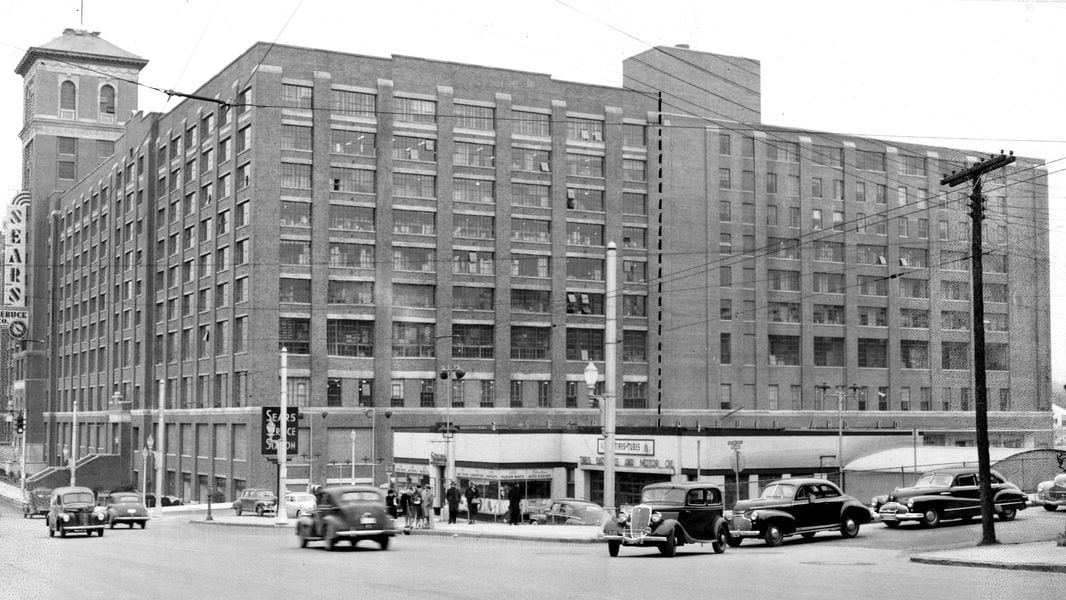
Del looked out the window and watched the people on the street until they stopped next to this big brick building with a tower on top like a castle.

"That's the Sears and Roebuck."

A woman sitting next to him said this when she saw him looking at the building.

"Everybody off the bus," his father said. The men with him laughed like this was pretty funny.

People were already starting to line up to buy tickets, so his father ran ahead and bought two seats in the white bleachers. They went up this ramp into the park and he followed his father and the other men under the wooden seats to a refreshment stand where a man was cooking hot dogs on a grill.

Dell asked, "You going to get us some hot dogs, daddy?"

"Don't have no money left," he said. "But wait a minute here. I got something in my pocket."

He reached in his pocket and pulled out his white handkerchief. He bent down on one knee, and laid it out like a neat square, then stepped back and started doing a little dance like a buck and wing and giving out these little yelps.

He was pretty good at it, but Del didn't like to watch.

Pretty soon a crowd had gathered and people were dropping nickels and dimes, even a few quarters on the handkerchief.

"Thank you very much, folks." his father said. He scooped up the money and handed Del a quarter.

"You keep this in case you need it. Don't spend it on food or nothing. Just hold onto it. Now go on up and get us our seats and I'll be along in a little while."

The men from the bus had gathered around his father again and Del knew he wanted to drink with them, so he went to get their seats in the bleachers. A boy his own age tried to sit down next to him, but he held his hand out over the seat and said, "My daddy's going to be sitting there," so the boy moved over a space.


Pretty soon the teams took to the field and everybody cheered. Del didn't know much that was going on but he acted like he did, so nobody would think he was stupid. He didn't know how to play ball. His parents moved around so he never really got to have many friends and the few boys he knew didn't have the equipment. Still, it was real beautiful to watch. The lights made the field seem bright green and the uniforms stuck out like a cartoon in the newspaper. Out in the distance there was this dirt bank covered with kudzu and a big magnolia tree and over to the right, a railroad track. It didn't look like how he'd imagined a ballpark, but he liked it.

He actually started figuring out the game, at least part of it, and he'd get excited with every pitch, and cheer with the crowd when the players from Birmingham would swing at a pitch and miss.

He was having fun until he figured out that his father wasn't coming to his seat, and then he only watched the game because he knew he ought to be having fun since he probably wasn't going to get to come back.

The Crackers won. As the crowd left, he didn't see his father and he knew he wasn't here. In his pocket, he felt the quarter and wondered if this was the time he was supposed to save the money for, or if there would be another one. Finally he decided this must be the time, because spending  it was the only way he was going to get home.

"I'd like a transfer, Mr. Driver." he said

The man gave him a funny look, but handed him the transfer.

Del was pretty sure he could spot the street where he lived, but he wasn't too sure about the stop by the liquor store, so he sat in the sideways seat twisted around with his face pressed against the window. It turned out to be easy to see because of the lights, so he rang the bell and got off the trolley.

He was quiet going in the house. He was starving and got a piece of  bread. He hoped his mother wouldn't notice and get mad.

"That you boy?” she called from the bedroom.

"Yes ma'am."

"Is your father with you?"

"No ma'am, he ain't."

"I should have known," she said. "He don't care nothing about you. He just wanted the money so he could get a drink."


"He won't be coming back neither," she said. "I told him the next time he took to drinking he couldn't come back, but sometimes that man needs a drink so bad he'd trade his whole life for it."


A Note From the Editor
There is, in every city of some size, "a street of appetites" — a place where people with hungers congregate, a street where things happen in dark places. In Atlanta, The Bitter Southerner’s hometown, that street has always been Ponce de Leon Avenue. Ponce, as we call it, is home to the legendary Clermont Lounge, where strippers whose average age is 46.5 shake their moneymakers, and the Majestic Diner, which has been serving hangover prevention and cures 24/7 since 1929. Ponce always begs to be the setting of a novel. Back in 1997, an Atlanta writer named Fred Willard delivered a great one. “Down on Ponce” was hard-boiled crime fiction, solidly in the tradition of Raymond Chandler and Jim Thompson. “Down on Ponce” permanently planted itself in my brain. I was 36 years old when it came out, and I’ve gone back to reread it several times. For a guy like me, who loves crime fiction written with verve and feistiness, “Down on Ponce” was just the ticket, particularly because I knew its setting like the back of my hand. But in the last decade or so, the literary world hasn't seen much of Fred Willard's work. Then a few weeks ago, out of the blue, Willard sent The Bitter Southerner a short story. This made me a happy guy — happier still because his story is set once again on Ponce, Atlanta's “street of appetites,” as Willard so aptly describes it here. You'll experience two Ponces in this story. One is the Ponce of the 1990s, when the kudzu-shrouded, long-unused railroad tracks that bisect the street were still the home of much nefarious activity. Today, those tracks are a pedestrian trail called the BeltLine. The other is the Ponce of the mid-20th century, when the Negro League Atlanta Black Crackers and the minor-league Atlanta Crackers shared Ponce de Leon Park, an old baseball field now long gone. Today, a Whole Foods sits about where center field was. A crime does occur in this story, and the writing is as blunt as the best crime fiction, but in “The Ghosts of Ponce de Leon Park,” Willard is now exploring different characters with different hungers — the homeless. We meet Bob and Del soon after they arrive in Atlanta, having come to the city after Del “just wore out my welcome too many places” in Nashville. Speaking of welcomes, we’re happy to welcome one of our favorites, Fred Willard, to the pages of The Bitter Southerner. — Chuck Reece
Repost from the Bitter Southerner

TRULY EXCELLENT WRITING: The Ghosts of Ponce De Leon Park by Fred Willard


Part Two


How Sears transformed the retail scene in Atlanta

When it came down to it, Del didn't know jack-shit about Bob. He thought Bob could just as easy take off with the money and not come back, buy himself a decent dinner and keep all the wine for himself. He had the look of someone who knew how to take care of himself, all right.  His jeans, work shirt and heavy shoes were a lot newer than Del’s, whose clothes looked like they were about to rot off. Not that he cared anymore, but Del thought they smelled like it too.

At the shelter in Nashville, Bob had got hung with the name Normal Bob. He wasn't so damn normal, but he had the good luck to show up after Crazy Bob who got his instructions from a dog named Tick that nobody else could see. Mostly the dog told him to howl. So Bob became Normal Bob to tell him apart from Crazy Bob.

Normal Bob was going back to Atlanta so Del planned to tag along. Del had a little stash of money and Normal knew the city so it seemed like a good partnership.

Del laid out in his bedroll and put his head on his little bag of clothes and watched the puffy white clouds drift across the early evening sky. In a little while, the night would unzip its bag of tricks and spill the predators into the hundreds of pockets of darkness along this street of appetites, and by then Del hoped to be fed, drunk and sleeping unnoticed among the weeds.

Now that he'd got the weight off his legs, he noticed he was getting the shakes in his hands, but there wasn't nothing he could do about it till Bob got back with the wine. He lay like this about an hour, till twilight, when he heard a man approaching, looked up and saw Bob carrying a couple of sacks.

"I got us both a Chubby Decker Plate."

He handed Del a pint bottle. Del broke the seal, and took three or four gulps, and fought to keep them down. He didn't want to waste any of it.

"You going to eat anything with that?" Bob asked.

"First things first," Del said.

"You shouldn't have made this trip. It was too much for you," Bob said.

"Had to leave Nashville."

"It must have been big trouble," Bob said.

"No, I just wore out my welcome too many places. Life was getting too hard."

"Well, a lot of little trouble can be just as bad as big trouble," Bob said. "Tomorrow morning we can head up to St. Luke’s for breakfast. Talk to the guys there. See what's going on."

"I don't know if I can make it," Del said. "I don't think I'm going to be able to walk at all."

"I can call the Grady wagon then, they can take you to the hospital."

“I'm afraid they might have to cut my legs off."

Bob tried to change the subject.

"This place we're sitting is historic. It's the back end of the old Ponce de Leon Baseball Park. That magnolia tree would have been at dead center field. The Atlanta Crackers used to play here. I came to the games with my old man. They tore the place down when they built the new stadium for the Braves. Turned it into this parking lot."

"I never liked this place none," Del said.

"You been here then?"

"I lived in Atlanta a couple months when I was a kid. I came here with my father once," Del said. "What do they call that building across the street?"

"That would be the old Sears and Roebuck. It's got city offices now, so they call it City Hall East."

"I remember the Sears and Roebuck, you got of the trolley and walked across the street to the park."

"That's right, man, they still had the old electric trolleys when the Crackers played here."

"I never had no luck here. We shouldn't have stopped here."

"Hell, you were the one who wanted to stop, Del. You said your legs were bad. You never should have left Nashville with your legs like that."

"I know that, now," Del said. The memory of the old ball park pinned him to the ground like a stack of cement blocks on his chest.


A Note From the Editor
There is, in every city of some size, "a street of appetites" — a place where people with hungers congregate, a street where things happen in dark places. In Atlanta, The Bitter Southerner’s hometown, that street has always been Ponce de Leon Avenue. Ponce, as we call it, is home to the legendary Clermont Lounge, where strippers whose average age is 46.5 shake their moneymakers, and the Majestic Diner, which has been serving hangover prevention and cures 24/7 since 1929. Ponce always begs to be the setting of a novel. Back in 1997, an Atlanta writer named Fred Willard delivered a great one. “Down on Ponce” was hard-boiled crime fiction, solidly in the tradition of Raymond Chandler and Jim Thompson. “Down on Ponce” permanently planted itself in my brain. I was 36 years old when it came out, and I’ve gone back to reread it several times. For a guy like me, who loves crime fiction written with verve and feistiness, “Down on Ponce” was just the ticket, particularly because I knew its setting like the back of my hand. But in the last decade or so, the literary world hasn't seen much of Fred Willard's work. Then a few weeks ago, out of the blue, Willard sent The Bitter Southerner a short story. This made me a happy guy — happier still because his story is set once again on Ponce, Atlanta's “street of appetites,” as Willard so aptly describes it here. You'll experience two Ponces in this story. One is the Ponce of the 1990s, when the kudzu-shrouded, long-unused railroad tracks that bisect the street were still the home of much nefarious activity. Today, those tracks are a pedestrian trail called the BeltLine. The other is the Ponce of the mid-20th century, when the Negro League Atlanta Black Crackers and the minor-league Atlanta Crackers shared Ponce de Leon Park, an old baseball field now long gone. Today, a Whole Foods sits about where center field was. A crime does occur in this story, and the writing is as blunt as the best crime fiction, but in “The Ghosts of Ponce de Leon Park,” Willard is now exploring different characters with different hungers — the homeless. We meet Bob and Del soon after they arrive in Atlanta, having come to the city after Del “just wore out my welcome too many places” in Nashville. Speaking of welcomes, we’re happy to welcome one of our favorites, Fred Willard, to the pages of The Bitter Southerner. — Chuck Reece
Repost from the Bitter Southerner

TRULY EXCELLENT WRITING: The Ghosts of Ponce De Leon Park by Fred Willard

Part One

Drive bye: Saying farewell to the Ponce de Leon Zesto - Atlanta ...


“We can thumb some more or just walk down the railroad tracks to Ponce," Bob said.

"My legs don't feel so good," Del said. "The doctors at the clinic said my circulation is bad."
"I know, man. You already told me. Maybe walking will get your circulation going."
"Maybe so. I don't know about that. I just know my legs don't feel good."
Del looked down the rail bed. A tree line on either side hid it from the apartments and the shopping center and as the line curved gently in the distance to the left it also hid the destination.
"How far is it," he asked.
"Maybe a mile."
"I guess we might as well walk it. We might stand around that long waiting for a ride."
They walked between the rails matching strides to the wooden ties.
"I don't know if I can keep this up," Del said.
"We can slow down."
"It ain't the speed it's the reach."
"The gravel's harder."
"I'm going to walk over to the side on the dirt," Del said. He stepped over to the worn path on the edge of the right of way.
"It's softer here," he said.
"That's your problem," Bob said. "You're too damn soft. It's like you never worked."
"I worked plenty."
"Down there is where the snakes are," Bob said.
"I don't see any damn snakes."
Del was slowly falling behind Bob's strides on the railroad ties.
"Hold on. What's the damn hurry?"
"You're in bad shape."
"It's the circulation. The doctors said I might get gangrene. Then they'd have to cut my legs off."
"That's the other thing, your circulation. I can tell you hadn't been working, not without any circulation. So where did you get that stash of money?"
"I ain't got that much."
"But where did you get it? You been sucking dicks?"
"Why did you go and say something like that?"
"Well have you?"
"Hell, no."
"Where did you get the money, then?"
"Sold blood."
"No wonder you can't walk."
"You never sold blood?"
"I never been in bad shape like you are."
"So if I'm in bad shape, why don't you just slow down? It ain't polite running off like that."
"I'll slow down. but this cut-through scares the hell out of me sometimes."
"Why's that?"
"All sorts of bad shit happens back here. The skinheads catch you and they kick your ass. They killed a couple homeless along these tracks. Stomped this one guy till his heart exploded."
"Now you're frightening me. What do they do — hide in the trees till you come by?"
"No. They just use it as a cut-through. They walk over from Little Five Points, go up to Piedmont Park to beat queers. Keep your eyes open. We see anybody, we can get off the tracks and hide. I just don't like thinking about it."
"You wouldn't run off and leave me, if you saw the skinheads coming, would you?"
"I don't know, man. There wouldn't be much point in my sticking around for an ass-whipping if I couldn't do nothing, would there?"
"I'll try to walk faster, but my legs are killing me. If we see some skinheads, help me hide in the trees before you run off."
"I'll do that, Del."
The track had been following a gentle curve, but as it straightened they could see Ponce de Leon Avenue ahead.
"It isn't that much further," Bob said.
They didn't talk as they tried to make time. Del's legs felt raw. They were swelling and he walked with them stiff in a fast shuffle so he could keep up. He counted steps to help the time pass. When they were almost to Ponce he said, "My legs are no good, I got to lay down."
"We farted around so long we can't get nothing at the Open Door or St. Luke’s," Bob said. "I guess we might as well spend the night in this kudzu field. You want to buy us both a dinner since we missed it because of your damn circulation."
"You can get us dinner and a couple pints of sherry," Del said.
They walked to the kudzu-covered field to the right of the tracks, and found a little depression where they wouldn't be as visible and unrolled their bedrolls. Del pulled some money out of his stash and handed it to Bob.
"Why don't you take a water bottle."
"Okay, I got to go to Green's then up to the Zesto, so it's going to take me some time, so just hang on."
"I ain't going nowhere,"  Del said.


A Note From the Editor
There is, in every city of some size, "a street of appetites" — a place where people with hungers congregate, a street where things happen in dark places. In Atlanta, The Bitter Southerner’s hometown, that street has always been Ponce de Leon Avenue. Ponce, as we call it, is home to the legendary Clermont Lounge, where strippers whose average age is 46.5 shake their moneymakers, and the Majestic Diner, which has been serving hangover prevention and cures 24/7 since 1929. Ponce always begs to be the setting of a novel. Back in 1997, an Atlanta writer named Fred Willard delivered a great one. “Down on Ponce” was hard-boiled crime fiction, solidly in the tradition of Raymond Chandler and Jim Thompson. “Down on Ponce” permanently planted itself in my brain. I was 36 years old when it came out, and I’ve gone back to reread it several times. For a guy like me, who loves crime fiction written with verve and feistiness, “Down on Ponce” was just the ticket, particularly because I knew its setting like the back of my hand. But in the last decade or so, the literary world hasn't seen much of Fred Willard's work. Then a few weeks ago, out of the blue, Willard sent The Bitter Southerner a short story. This made me a happy guy — happier still because his story is set once again on Ponce, Atlanta's “street of appetites,” as Willard so aptly describes it here. You'll experience two Ponces in this story. One is the Ponce of the 1990s, when the kudzu-shrouded, long-unused railroad tracks that bisect the street were still the home of much nefarious activity. Today, those tracks are a pedestrian trail called the BeltLine. The other is the Ponce of the mid-20th century, when the Negro League Atlanta Black Crackers and the minor-league Atlanta Crackers shared Ponce de Leon Park, an old baseball field now long gone. Today, a Whole Foods sits about where center field was. A crime does occur in this story, and the writing is as blunt as the best crime fiction, but in “The Ghosts of Ponce de Leon Park,” Willard is now exploring different characters with different hungers — the homeless. We meet Bob and Del soon after they arrive in Atlanta, having come to the city after Del “just wore out my welcome too many places” in Nashville. Speaking of welcomes, we’re happy to welcome one of our favorites, Fred Willard, to the pages of The Bitter Southerner. — Chuck Reece
Repost from the Bitter Southerner


Guest Post: This Emotion by Gary Wenkle Smith


THIS EMOTION


          How do you know he is a killer?

He is the one sitting beside me.  The only person in the courtroom who is being accused of murder, who says I did it, the killings.

          I first met Dennis in West Valley Detention Center, Rancho Cucamonga, California.

Would you come into the jail with me?

          The setting is surrounded by thick concrete from the moment you enter the institution. The smell is like no other. Thirty-five hundred men and nine hundred women, their bodily excretions, their inability to engage in routine hygiene—clothing exchange is once a week, and showering perhaps twice—inadequate ventilation, even their breath from the low-grade, poor-quality food adds to the stink that is so oppressive that first time visitors are shocked by the impact of it upon their senses. I am reminded of it at once, and I unconsciously adapt, forgetting it for the moment.

The lobby is large: two sets of glass doors, two restrooms, and a multi-windowed counter, with “Official Visiting” over one window. I have called in advance and I check in at the counter, showing my driver’s license and bar card. From behind two-inch-thick glass, the Custody Assistant accepts my cards and pushes a yellow form under the metal plated drawer under the window, which I fill out and return to her. She calls the unit where I will visit, advising: “One official on the way.” Then she slides a small yellow pass along with my ID and bar card under the window to me.

I take the pass and cards and I thank her.  I walk to a steel door with thick glass and waive my yellow paper pass at the deputy sitting in a room to the left of a metal detector. There is a visitors’ window to the left of the door where civilian visitors check in, give their ID and wait for the deputies to run them before they are allowed to enter. It is not uncommon for someone to be cuffed and arrested before their visit, upon a deputy discovering they have an outstanding warrant.

The deputy pushes a switch to the right, and I hear a hissing, then the door opens into the wall, slamming in place. I walk in and pass through a metal detector. I always beep. Most deputies who know me don’t bother with a wand scan of my body. The uniformed deputy is no-nonsense, but over time and routine contact with him he has become civil. He takes my visiting slip, my ID and bar card and begins writing information on his daily log—who I am, my client and his booking number and then hands me a key on a long dirty lanyard with an oxidized brass circle-shaped piece with a hole through it, all held in place on a soldered-closed two inch ring, kept in an old hotel-type squared key box, where he puts my ID and Bar Card.

I thank him and walk out of his office into the room with the metal detector.  I stand in front of another steel door, waiting for the vacuum release to engage the hydraulics so it pulls itself into the wall with another loud banging. I step into the hallway. When the door closes behind me it slams and clangs and echoes down the walls and reminds me that I am now locked inside the jail.

I pivot left, and walk down a long polished concrete hallway. The walls are drab yellow, a low energy color. The lighting is bright fluorescent. There is a blue line with arrows pointing toward me every twenty feet directing people coming out of the institution back to another locked exit fifteen feet from the room I just left.

Arrows on the walls with large black letters point ahead, listing units 1-15, one on top of the other. When I reach a doorway, I make my way to the right around a bubble, named by inmates, which is a room with limousine black tinted glass shaped in a semi-circle. I’ve never known what goes on in there. To my right are hallways to units 11 and 12, then a bit further to units 13-15. They are long hallways, painted drab yellow with polished concrete floors.

I continue around the bubble to the left until another hallway comes into view into which I turn right. On the wall in thick black paint are arrows pointing the way to UNITS 1-10. I continue walking until I reach another doorway with another bubble. The arrows point me around the bubble to the right and the first hallway has the bold lettering: UNITS 9-10, the second hallway hold units 7 & 8. I turn down that hallway and walk 200 steps, finally reaching unit 7 on the right, unit 8 on the left. By now, I have forgotten the stench of the place.

I enter a visiting area with one wall full of glass windows and steel circular seats welded to a metal post coming out of the wall in front of each window, and telephones beside each seat with cords six inches too short so visitors have to lean down to their left to speak while visiting. The visitor must sit in the seat and wait for their friend or loved one to make it up the stairs from the room below.

The room is empty today. I can see the bubble behind the doorway into the room with the stairs. I see a man wearing orange standing outside a door the top half of which is probably unbreakable plexiglass, waiting for the door to buzz so he can open it and make his way to the stairs and up to the visiting area. To my immediate left is a wall speaker with a button. I press the button, and moments later a male voice is heard: “Yes.”

“Good morning, Official Visit for Dennis _________.”

“He’s on his way.”

“Thank you, sir.”

On the left there is a locked door. It is a steel door with a see-through window that is very thick. I insert the key and pull open the door, which is very heavy. I step in and there are two doors of the same kind on my right, behind which are visiting rooms for lawyers and other professionals.

The door I have just entered slams, the noise deafening. It is shocking to the senses each time, but I’ve become familiar with it. I enter the second room after inserting the same key, turning the lock the opposite direction of the other door. That one slams shut also as I step into the room.

The horrible stench of the unit hits me. It is much more powerful than in the lobby. It is an overpowering stench. This day it is so strong I am repulsed, wanting to walk out and away.

This room is painted a drab yellow, with unpolished concrete flooring, a pile of trash in one corner of the floor including Kleenex, visiting slips, wadded paper, even gum wrappers. There is a black mesh screen dividing my side from the inmate side. There is a concrete counter that runs under the mesh to the other side so that we can lay our documents, and elbows on it.

Through the window on the door on the inmate side, I watch Dennis climb the stairs slowly. It is obvious he is in pain as he chugs his way up. When he finally reaches the door, he waits for a deputy to press a button buzzing him into the room. He looks at me and smiles. He has a nice face. His hair is sandy brown and shaggy.

The door buzzes and he pulls it open, holding it so it doesn’t slam behind him. When he steps in, I am still standing. I tell him my name and offer my knuckles on the grating that divides us. We bump knuckles. We both sit. Trying to see his eyes I move and adjust my vision through the half inch diamond shaped openings in the mesh. We work together to get a clear view of one another.

I can smell him—his breath, his days-old perspiration clinging to his clothing that is wrinkled and frayed with the letters 3X on the thigh and front of the short-sleeved top. I silently process this sensory information.

He is weary, his eyes with deep crow’s feet, somewhat red, seemingly blurry as he arranges his body on the steel plate upon which he must sit. I know how uncomfortable it is, as I am on the same type seat. I also know that he has had spinal fusion. He is overweight by at least thirty pounds, looking bloated.

I know about the food in WVDC from personal experiences. The menu hasn’t changed in years: Frozen waffles for breakfast, frozen mystery meat sandwiches for lunch, which has an orange dye in in the meat that stains your fingers if you are able to get to the hot water dispenser to try to thaw it; and dinner might be any combination of stuff presented as food, including shriveled corn, some kind of material passed off as meat, and perhaps on a good day a squashed slice of bread.

Supplements of starch and sugar are available through commissary, including Top Ramen, ten cents in the store, a dollar twenty in jail. Milky Way bars are a dollar fifty, and coffee prices change weekly.

There are no hygiene products given, so you are either required to buy your own, or if on welfare, i.e. no money on your books, others in your car—your race—will help you out. Everyone has to shower when allowed lest they begin to stink. A resounding beating is in order for the intentionally unhygienic.   

Dennis asks me if I knew Joe, an old friend, one of the Berdoo Hells Angels. I told him I did, and tears poured from him. He said he had been praying I would somehow find my way to him. Joe had spoken of me with praise. Dennis had lived next door to him during his teen years, Joe teaching him how to use a wrench. They had remained friends, but Joe had died, and Dennis did not know who to call to get my name.

I cried with him, already believing we were meant to be together in this thing, the multiple homicide case. He heart-shot three people in his driveway in the desert in the nighttime in the middle of nowhere. He had been sitting in jail for fourteen months, his prior counsel leaving him to wait after only one visit, suggesting he could get him life, plus fifty, instead of 3 lives, plus one hundred fifty, or maybe death.

He had no hope. I felt that, too. He had been alone, unable to mourn, now crazy. Each day spent in conflict with his belief that what he had done was right, but nonetheless being caged and put on show, the accused.

He told me what happened that night, and I knew it was true. I saw it with him as he experienced it, once again, slowly padding his way across the 8 x 10 visiting cell behind the mesh that separated us.

          I could go with him because I have been taught to develop my ability to feel with others—to mirror their feelings, to change seats with them and become them, to stand behind them and express what I feel, hoping they repeat my words, confirming that I heard them. I have listened and I have felt, and often their pain is so intense I never leave them, they never leave me.

We would re-visit that night many times before trial.

I believe TLC training has opened psychic abilities to see and understand those with whom I engage, even more so when we are put together on a journey toward trial.  Listening, hearing and intuition are all central to TLC training, and I use it constantly.

          There are limitations on how we can work in the jail. Dennis could not leave; he could not afford to post the three and one half million dollars bail. I could not stand behind him, but I could mirror what he said, using his gestures, asking him how he was feeling, trying to express what I believe he was feeling, waiting for his confirmation.

It was much more difficult when our close-up vision was blurred by the mesh. It required greater focus, something I have developed over my many years of jail visits. I have been in our various custodial institutions literally thousands of times over the past forty-one years.

Some of what I have learned through Trial Lawyers College must be modified to fit the circumstances, and the person with whom I am working. Dennis was suffering from deep depression and sorrow. For him, life was over. I had to find my way into his world and develop trust so I might be able to explain my idea of how we will present our defense—that he killed those three people in self-defense. Part of the way in is to be able to love my clients. With Dennis, that was not difficult.

          Dennis and I shared who we were for seven months while our experts did their work. I grew to love him more each visit. Every week we met and discussed how he felt. Often, he was depressed, and we spent the first hour chatting about things bothering him, working our way into his private hell.

He spoke of the ghosts that visited each night, still tormenting him. How he wished he had died that night so he would never have to think about it again. Recalling his dreams in which I would magically appear and save him. A color emerging in those dreams finally becoming a blue shirt he wore as we walked out of the courtroom together to his freedom beyond the door.

While he spoke, I listened, often mirroring his body language, when appropriate, repeating what he expressed with my body and words. In time, he began to believe that I saw him, felt him, understood him, and would not abandon him.

Before me, he had told his parents to let him go, it was over, because the first lawyer assured him he could get him that deal: fifty to life instead of three life sentences plus one hundred fifty year, maybe death.

          Most frequently, we went through that night of the killings, step by step, remembering how he had felt while it was happening.

It was slow motion, a sensation I had experienced a couple of times before—once when a friend was killed as we raced down the street, him on his motorcycle, me in my Trans Am, and a car turned in front of his motorcycle. The other time I was thrown off my dirt bike.

When he spoke of the attack, I asked him to move through it slowly. I did the same, mirroring his motions on my side of the mesh. He heard the dogs barking and went out to see if it might be a coyote. I heard them also.

He walked to the corner of the driveway where the chain link fence ended before it turned the corner. I stood there with him. I saw the horror on his face when the giant with a clown mask came out of the dark and grabbed him by the shoulder.

My face filled with that fear, I felt it, the terror, the adrenaline rush as we blocked the arm and began stumbling backward across the driveway, drawing from our front left pocket our snub nose .357 five shot Smith & Wesson handgun we had been carrying day and night for the past eighteen months.

We drew the gun slowly with our left hand and were grabbed by the hair on the back of our heads. We felt the pull toward the ground and brought our gun across our chest and aimed at the body beside us and fired. The explosion deafened us, and the flash of light blinded us.

The hand let go of our hair and we watched a shadow shuffle off with a strange movement of short steps, into the darkness. We turned and two more shadows were charging us. We fired and their eyes lit up like demons. We fired again, both times the gun recoiling, the flash again blinding us, the sound more a thudding. We watched both shadows turn and shuffle off, that same strange way of moving with measured steps, into the black of the night. We saw them no more.

We stayed still, waiting, wondering whether that really happened, and if so, where had they gone? We heard our hearts beating, but no other sounds.

I asked Dennis to tell me where he was, what he was feeling. He froze in place. I froze with him and waited. Several minutes passed before he tried to leave the cell. When he tried to pull it open, I knew he was going into his house to call 911. I asked again. “Dennis, where are you?” He slowly turned and looked at me.

He said: “I’m here now.”

“I went there with you,” I told him.

“I know.”

We knew we were ready for trial when we had been through it all several times.

We worked on the terror he felt as each day began. They were asleep, finally, having thrown trash into his yard the night before. They stayed up into the wee hours, talking loudly, several of them, leaning on the fence each night, calling his name, waking him. So, he built the wall.

It took months of digging holes large enough to put railroad ties in, tamping the sand to keep them in place. Each day ended in physical agony. He showed me how hard he worked, digging, bending, lifting, shoveling, and tamping. Finishing by mid-morning before the creatures came out and started with their threats.

The first threat came before the wall. Adam walked to the fence while Dennis worked on the ground beneath it. He leaned on the fence, Dennis’ fence, his huge arms bulging, and said: “I’m here to evict some people.”

Dennis tensed. He had seen Adam. He was an unusually large man, and now Dennis knew he was mean and had ill will toward him.

“How did you feel?”

“Scared. I asked him ‘oh really, who?’ and he said I’d find out. I told him I was a Boy Scout.”

“What did you mean?”

“I’d be ready.”

Several months passed before Dennis made it out of the desolation of despair and was ready to communicate, to share, to be challenged in front of a jury.


*             *                   *                   *             *


We set the case for trial.

I have spent a good deal of time training in voir dire. Selecting a jury to hear a triple homicide case was exciting.

I begin with the presumption of innocence. I share that most people, myself included, don’t really presume people innocent, that we always think the worst, that when I see a person sitting where the defendant sits and I wonder what they did. “Who else feels that way?”

It always gets a good conversation going, and that is what I want, a conversation. Just a bunch of good folks having a talk about the law, and the idea of killing and how they felt about those things, I show them mine, they show me theirs. It works.

Few of us admit to a willingness to let others take our lives. I’ve spoken with a couple of people who said they would never kill, not even for loved ones. I thanked them for their honesty. It takes days to pick a jury in a murder trial, and judges usually don’t rush the process.

We have to be comfortable in our own skin to stand and engage people about their beliefs, embracing each word they offer, thanking them as we go, speaking directly to them as though there were no one else in the room.

Cross-examination is probably my favorite activity in life. The state of ecstasy lasts longer than any other—it goes on and on. The lead detective, a Sergeant by the time of trial, wrote a report that was vague, but between the lines I knew he was trying to tell the truth. When he entered the courtroom that first day after Opening Statements, in uniform, ready to testify, I approached him.

“Sergeant, I’m Gary Smith. I represent Dennis. I’ve spoken with a lot of people about you.”

“You investigated me?”

“Yes, and they all said the same thing. Do you want to know what they said?”

“I don’t know.”

“They all said you are an honest man, and I’m counting on it.”

Most cops are good witnesses. They show up in uniform. When called they stroll to the stand, smiling at the jury. They are sworn, sit and face the jury, some offer a greeting.

Our Sergeant was subdued. He did not look at the jury during direct. On cross, he engaged me, and I took him back to that night, what he saw when he arrived. The jury could see and feel there was something between us.

The Sergeant answered all my questions truthfully, which did not help the prosecution, including that it was obvious the shootings took place on Dennis’ driveway.

The allegation was that Dennis had laid in wait—ambushing the three deceased, them dropping to the ground where they were shot, in the dirt road in front of his house—was slowly dispelled by the prosecution witness, the case agent.

I knew a lot about the only eyewitness. Part of my belief system is that I should always know more than the opposition. Some of that comes from knowing my clients. I had a good investigator, too.

Everyone lies at some point in their lives, and in criminal cases witnesses on both sides lie. Some lie because of their fears of being part of the accused. Some lie because they want the accused to be convicted, others are protecting the accused.

I knew that the eyewitness, Whitney, was a speed user. I know a lot about that drug and what it does to people. I heard it in her voice when she was being interviewed that night by one of the detectives.

I instructed my investigator how to proceed with her: bring her in, encourage her to be open, assure her you want to hear her story, thank her when she shares.

I knew she wanted to talk, and that she would be under the influence when interviewed. Speed users are not occasional users.

I knew that once she started telling, she would not be able to stop. She came back for a second video interview. Rick, my investigator, knew where to take her and she told it all.

The physical and forensic evidence confirmed Dennis’ story in every detail. I needed Whitney to give it up, confirm what I knew. At first, she was combative. A witness can only remain that way if you join them.

When I took Whitney on a journey, I did my best to show the world from her eyes, and help the jury see it, to know how she felt, to understand why she lied,  engaging her with a discussion about the events of that night.

I took her to her lies. She had forgotten that my investigator had her on video, admitting her lies, telling the truth.

I understood why she lied, and so did the jury. She went with the deceased to “fuck him up,” to “kick his ass.” They were all wigged on speed, or alcohol, Fentanyl and some pot. They were two huge men and a large woman, and Whitney was with them.

She was in the midst of the killings, and she wanted out. She knew she might be criminally liable—we all did.

She set herself anywhere from eighteen to thirty-five feet from the shootings, yet she saw it all.

It took repetitive cross to end the days of her testimony with the same story: they went there to get Dennis and he got them.

The prosecutor repeatedly took her back on re-direct to her lies, only emphasizing the magnitude of them, and I walked her through the truth, again and again.

It was somewhat cathartic for her, although her addiction did not allow much room for introspection.

I showed my empathy by repeating her words with enthusiasm. I did not mock her but pushed her to embrace the truth each time.

The prosecutor lost all respect from the jury by getting her to repeat her lies, only to be reminded of the truth.

Dennis and I never broke faith with the jury.

          The trial ran Monday through Thursday for three weeks.  I presented Dennis as a witness on the final day.

It was late evening at the jail, and the place was noisy, even upstairs in our visiting room. Men drank coffee and ate candy and other supplements purchased through commissary each week. They were jacked up and restless with nowhere to go. I could feel the tension, the edge of violence ever-present in custodial settings.

Dennis was scared about testifying. I could smell his fear, taste it. He hadn’t been allowed to shower all week because he had been transported from West Valley Detention Center in Rancho Cucamonga to Victorville each morning, eating only cold cereal, a peanut butter and jelly sandwich for lunch—squashed flat and mushy, returning late at night, fed a sandwich of ice-cold mystery meat, then left to his own devices.

The smell is unique to him, but I know the sensation it invokes in me. I know the smell of fear and it is a reminder to be direct about what I am seeing, what I feel, how I know it.

We are intimate, and our relationship is based upon trust at the very core of our beings. If I were less than fully engaged, it would be a breach of trust. I was tired, but so was Dennis. His days were so much longer than mine.

We discussed his fear and went deeper to the source. We walked through that night again. I felt the terror they had instilled in him over those many months before he killed them.

I felt the agony, the depression, the relentless anxiety, the remorse, the betrayal of the government, but there was light in the hope and trust he placed in me.

Again, we practiced his time on the stand telling the story, the truth that would set him free. Moving my arm toward the jury box we have created in his cell, I asked him: “Please tell the jury, did you shoot those people?”

We had a reminder, me using my arm to direct his attention to the jury should he begin to look at me. The number one rule: the jurors are the most important people in his life.

That night, Dennis was also tired and on edge. He was angry about what the deceased made him do. He was angry that he was being prosecuted, and that people had lied about him. He resented the prosecutor promoting Whitney’s lies over and over. I let him vent.

While he did, I mirrored his body language. He knew what I was doing.

Finally, he agreed that if he showed his anger, the jury would not understand. If he showed his feelings beneath the anger—the pain he felt, they would love him. That had been our mantra throughout our work. If you bond with the jury by opening yourself to them, letting them see you in your pain, they will not hurt you.

When Dennis turned to the jury and, with each question I posed, told them what he did, he was talking to old friends, just like we had spoken together, telling the story of the case. When I asked him if he shot Adam, Angela and Robert, he said he had, and he told them why. He spoke of the endless days of threats and torment, sleeping with the gun, keeping it in his pocket, the dreams of them killing him. The attack in the dark with high winds screaming, as though the devil himself was director of the scene unfolding. He told them it was his worst nightmare. He wept, and they did too.

 When I closed, we all wanted to be able to defend our lives like Dennis did, and still have a life in the world. Dennis spoke for all of us. We all wanted to free him of his burden. We felt his pain. He was a killer, but it was necessary.


*             *                   *                   *             *


They sent us out that courtroom door, Dennis in his blue shirt.

          The jury loved Dennis, and they knew I loved him.

It all comes from this emotion.