"The universe is made of stories, not of atoms."
—Muriel Rukeyser
____________________________
Showing posts with label literature. Show all posts

Letter of His Holiness Pope Francis on the Role of Literature in Formation

Pope Francis, in his letter on the role of literature in formation dated August 4th, extols the value of reading novels and poetry as an indispensable tool for the personal and spiritual growth of every Christian, including the missionaries of the Congregation of the Mission founded by St. Vincent de Paul.
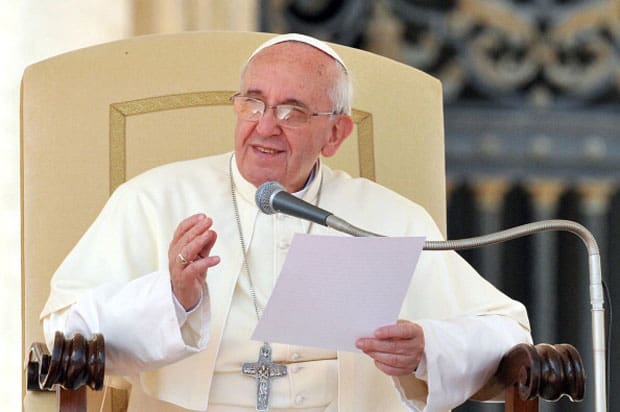
Letter from the Holy Father Francis on the role of literature in formation 2

Literature is not just a means of entertainment but a vehicle for exploring and understanding the depths of the human soul, fostering a fruitful dialogue with contemporary culture, and enhancing the empathetic and pastoral capacity of ecclesial workers. Pope Francis calls for a radical shift in the formation of priests, valuing literature as an essential component of their educational journey:
“With this writing, I wish to propose a radical shift concerning the great attention that, in the context of the formation of candidates for the priesthood, must be paid to literature.”

Summary and Commentary of the Chapters

Pope Francis begins by emphasizing how the reading of novels and poetry is crucial in the personal maturation journey of every Christian, including priests and pastoral agents. He notes that finding a good book can offer relief during moments of solitude and difficulty, opening new inner spaces and preventing entrenchment in obsessive ideas. In an era dominated by digital media, this practice retains its irreplaceable value.

The Pope reflects on the active role of the reader in enjoying a literary work. Unlike audiovisual media, reading stimulates the imagination and creativity, allowing the reader to rewrite and expand the text with their personal experience. This process enriches both the reader and the work itself, creating a unique and personal synthesis with each new reading.
Pope Francis criticizes the scant attention paid to literature in the training paths of future priests. He argues that neglecting literature leads to intellectual and spiritual impoverishment, depriving seminarians of privileged access to the heart of human culture. He thus proposes a radical change that integrates literature as an essential part of priestly formation.

The Holy Father highlights how literature allows for an authentic dialogue with contemporary culture. Quoting the Second Vatican Council, the Pope states that literature expresses the human condition, illustrating its joys and sufferings. Ignoring literature means losing the opportunity to understand and interact with various cultures and their deepest expressions. Sharing his experience as a literature teacher, Pope Francis recounts how he encouraged his students to read authors they were interested in, then guided them towards a broader passion for literature. This method has shown that approaching literature through what one loves can lead to a deeper and more lasting discovery of the love of reading.

Faith and culture

For a believer, literature becomes an indispensable means of entering into dialogue with the lives of people and the culture of their time. The Pope reiterates that literature, by expressing real life events, allows one to speak to the hearts of men and grasp the presence of the Spirit in human events.
“Contact with different literary and grammatical styles will always allow for deepening the polyphony of Revelation without reducing or impoverishing it to one’s historical requirements or mental structures.”

Never a Christ without flesh

Pope Francis draws attention to the current religious context, characterized by a return to the sacred and a spiritual quest that can be ambiguous. He emphasizes the importance of not offering a “Christ without flesh” but of proclaiming an incarnate Jesus Christ, made human and historical. This is essential to adequately respond to people’s thirst for God. According to the Pope, literature helps future priests develop a sensitivity to the full humanity of the Lord Jesus, allowing them to proclaim the Gospel in a way that truly touches the concrete lives of people.
“an assiduous frequentation of literature can make future priests and all pastoral agents even more sensitive to the full humanity of the Lord Jesus, in which His divinity is fully poured out, and to proclaim the Gospel.”

A great good

In this chapter, Pope Francis illustrates the multiple practical benefits of reading. Reading improves vocabulary, stimulates imagination and creativity, helps to express oneself better, improves concentration, and reduces stress and anxiety. Moreover, reading prepares people to understand and face various life situations. Quoting famous authors, the Pope highlights how reading allows one to live intense and diversified experiences in a short time, broadening our understanding of the world and of ourselves.
“In reading, we dive into the characters, the concerns, the dramas, the dangers, the fears of the people who have ultimately overcome the challenges of life.”

Listening to someone’s voice

Pope Francis cites Argentine writer Jorge Luis Borges, highlighting the importance of direct contact with literature and “listening to someone’s voice.” Reading sensitizes one to the mystery of others and helps to touch their hearts. This process is essential for believers and particularly for priests whose task is to touch the hearts of contemporary human beings. Literature and poetry, with their ability to move, offer an unparalleled contribution to this effort.
“Here is a definition of literature that I like very much: listening to someone’s voice. And do not forget how dangerous it is to stop listening to the voice of the other who calls out to us!”

A sort of gym of discernment

Literature is described as a “gym of discernment” that refines the inner and outer scrutiny capacities of future priests. By reading, seminarians learn to navigate between salvation and perdition, living the act of reading as a process of discernment. Literature stimulates the reader to explore their own inner truths, offering a safe space to confront anxieties and spiritual crises. This exercise is compared to the Ignatian experience of “desolation,” where inner turmoil can lead to greater awareness and growth.

“The act of reading is then like an act of “discernment,” thanks to which the reader is personally involved as a “subject” of reading and at the same time as an “object” of what he reads.”

Attention and digestion

According to Pope Francis, reading is like a “telescope” that focuses on the complexity of human experience. Literature helps to slow down, contemplate, and listen, counterbalancing the tendency towards efficiency and superficiality. The reading process is compared to “digestion,” an action that allows one to assimilate and interpret life in depth. This hospitable approach to reality fosters a more complete and sensitive understanding of people and situations.
“literature helps us to say our presence in the world, to “digest” and assimilate it, capturing what goes beyond the surface of life; it serves, therefore, to interpret life, discerning its fundamental meanings and tensions.”

Seeing through the eyes of others

By reading, one acquires the ability to “see through the eyes of others,” expanding our humanity and developing empathy. Literature allows us to identify with the experiences of others, fostering solidarity, compassion, and mercy. This process makes us more sensitive to the sufferings and joys of others and helps us better understand their lives and desires. Reading thus becomes an experience of personal growth and human sharing.
“When one reads a story, thanks to the author’s vision, everyone imagines in their own way the tears of an abandoned girl, the elderly woman covering her sleeping grandson’s body, the passion of a small entrepreneur trying to move forward despite difficulties, the humiliation of one who feels criticized by everyone, the boy who dreams as the only way out of the pain of a miserable and violent life.”

The spiritual power of literature

Pope Francis concludes by highlighting the crucial role of literature in the education of the heart and mind of future priests. Literature frees language from static conventions, allowing for greater spiritual openness. Furthermore, it recalls the primary task entrusted by God to man: to “name” beings and things, giving them meaning and creating communion. This affinity between priest and poet manifests in a ministry of listening and compassion, where the literary word becomes a vehicle for the divine Word.
“The spiritual power of literature finally recalls the primary task entrusted by God to man: the task of “naming” beings and things (cf. Gn 2:19-20). The mission of guardian of creation assigned by God to Adam passes first and foremost through the recognition of the reality and meaning of the existence of other beings. The priest is also invested with this original task of “naming,” of giving meaning, of becoming an instrument of communion between creation and the Word made flesh and of its power to illuminate every aspect of the human condition.”

Literature as an access route to the mysteries of man

The Pope concludes by affirming that literature uncovers the abysses of the human soul and helps pastors engage in fruitful dialogue with contemporary culture. Literature is an “access route” that makes future priests more sensitive to the full humanity of the Lord Jesus, promoting a proclamation of the Gospel that authentically resonates in the hearts of people.
Pope Francis’s letter is an invitation to rediscover the spiritual power of literature in priestly formation. For the missionaries of the Congregation of the Mission, this means embracing reading as a tool for personal and pastoral growth, to better understand and accompany humanity in its search for meaning and redemption. Literature thus becomes an indispensable traveling companion for every missionary, capable of enriching their vocation and service. Especially for confreres engaged in Vocational Pastoral Ministry, literature can be the means to help in discerning those young people who wish to approach the Vincentian charism to clothe themselves in Christ and to serve the poor in the best possible way!


Girolamo Grammatico
Communication Office

Op-ed: After 200 years, Herman Melville is still relevant By: Aaron Sachs, Cornell University


This issue of Classics Illustrated, published by the Gilberton Company, Inc. in April 1947, contains an adaptation of Herman Melville’s Moby Dick. The cover art by Louis Zansky depicts the crew of the Peoquod battling the white whale Moby Dick. (Gift of Olivia V. Crisson and Phillip M.S. Crisson in honor of Peter Bozzer, now in the collections of the National Museum of American History)
Outside of American literature courses, it doesn’t seem likely that many Americans are reading Herman Melville these days.

I propose that you pick up one of his novels, because his work has never been more timely. This is the perfect cultural moment for another Melville revival.

The original Melville revival started exactly a century ago, after Melville’s works had languished in obscurity for some 60 years. In the immediate aftermath of World War I, scholars found his vision of social turmoil to be uncannily relevant.

Once again, Melville could help Americans grapple with dark times – and not just because he composed classic works of universal truths about good and evil. Melville still matters because he was directly engaged with the very aspects of modern American life that continue to haunt the country in the 21st century.

Melville’s books deal with a host of issues that are relevant today, from race relations and immigration to the mechanization of everyday life.

Yet these aren’t the works of a hopeless tragedian. Rather, Melville was a determined realist.

The typical Melville character is depressed and alienated, overwhelmed by societal changes. But he also endures.

Ultimately, “Moby-Dick” is about the quest of the narrator, Ishmael, the story’s lone survivor, to make meaning out of trauma and keep the human story going.

Ishmael goes to sea in the first place because he’s feeling a particularly modern form of angst. He walks the streets of Manhattan wanting to knock people’s hats off, furious that the only available jobs in the new capitalist economy leave workers “tied to counters, nailed to benches, clinched to desks.” The whaling ship is no paradise, but at least it affords him a chance to work in the open air with people of all races, from all over the world.

When the crewmen sit in a circle squeezing lumps of whale sperm into oil, they find themselves clasping each other’s hands, developing “an abounding, affectionate, friendly, loving feeling.”

Then there’s Melville’s novel “Redburn,” one of the author’s lesser-known works. It’s mostly a story of disillusionment: A young naïf joins the merchant marine to see the world, and in Britain all he finds are “masses of squalid men, women, and children” spilling out from the factories. The narrator is abused by the ship’s cynical crew and swindled out of his wages.

But his hard experience nonetheless broadens his sympathies. As he sails home to New York with some Irish families fleeing the famine, he remarks:

“Let us waive that agitated national topic, as to whether such multitudes of foreign poor should be landed on our American shores; let us waive it, with the one only thought, that if they can get here, they have God’s right to come…. For the whole world is the patrimony of the whole world.”

Melville’s fall and rise

In November 1851, when “Moby-Dick” was published, Melville was among the best-known authors in the English-speaking world. But his reputation started to decline just months later, when a review of his next book, “Pierre,” bore the headline, “Herman Melville Crazy.”

That opinion was not atypical. By 1857, Melville had mostly stopped writing; his publisher was bankrupt; and those Americans who still knew his name may well have thought he’d been institutionalized.

Yet in 1919 – the year of Melville’s centennial – scholars started returning to his work. They found a writer of grim, tangled epics delving into the social tensions that would ultimately lead to the Civil War.

It just so happened that 1919 was a year of labor strife, mail bombs, weekly lynchings, and race riots in 26 cities. There were crackdowns on foreigners, privacy, and civil liberties, not to mention the lingering trauma of World War I and the Spanish flu pandemic.

Over the ensuing three decades – an era that included the Great Depression and World War II – Melville was canonized, and all of his works were reprinted in popular editions.

“I owe a debt to Melville,” wrote critic and historian Lewis Mumford, “because my wrestling with him, my efforts to plumb his own tragic sense of life, were the best preparations I could have had for facing our present world.”

"Moby Dick," a collection of nose art from B-24s from the 90th Bomb Group. (San Diego Air and Space Museum Archive) Repository: San Diego Air and Space Museum Archive


Why Melville still matters

America is now dealing with its own dark times, full of foreboding over climate change, extreme class divisions, racial and religious bigotry, refugee crises, mass shootings, and near-constant warfare.

Go back and read Melville, and you’ll find apt depictions of white privilege and obliviousness in “Benito Cereno.” Melville paints consumer capitalism as an elaborate con game in “The Confidence-Man,” while excoriating America’s imperial ambitions in “Typee” and “Omoo.” He was even inspired to break his silence at the end of the Civil War and write an earnest plea for “Re-establishment” and “Reconstruction.”

“Those of us who always abhorred slavery as an atheistical iniquity,” he wrote, “gladly we join the exulting chorus of humanity over its downfall.” But now it was time to find ways for everyone to get along.

His 1866 book “Battle-Pieces,” though full of bitter fragments, has a final section dominated by idealistic nouns: common sense and Christian charity, patriotic passion, moderation, generosity of sentiment, benevolence, kindliness, freedom, sympathies, solicitude, amity, reciprocal respect, decency, peace, sincerity, faith. Melville was trying to remind Americans that in democracies there is a perpetual need to carve out common ground.

It’s not that society doesn’t or shouldn’t change; it’s that change and continuity play off each other in surprising and sometimes bracing ways.

In dark times, the rediscovery that human beings have almost always had to confront terrible challenges can produce powerful emotions.

You might feel like knocking someone’s hat off. But you might also feel like giving the Ishmaels of the world a gentle squeeze of the hand.

And in doing so, you might help to keep the human story going.


Dr. Aaron Sachs is a Professor of History at Cornell University, but his doctorate is in American Studies, which means he brings an interdisciplinary approach to his scholarship and teaching — History, English Literature, Science, Technology, Urban Planning and other fields. His views might not represent those of Navy Times or its staffers.


Read more 


Lisa Lucas, National Book Foundation: Stop Saying Books Are Dead. They’re More Alive Than Ever


Lisa Lucas is the executive director of the National Book Foundation, the presenter of the National Book Awards and a non-profit that celebrates the best literature in America, expands its audience, and ensures that books have a prominent place in American culture

“The book is dead,” is a refrain I hear constantly. I’ll run into people on the subway, in a taxi, in an airport, or wherever I might be and when I tell them what I do, they ask me “do people even still read anymore?” This simple question implies the very work I do at the National Book Foundation may not be worthwhile—or even possible. It’s generally a casual statement, a throwaway remark, a comment repeated so often that it’s taken as fact. The book is obviously dead, or at least dying, right?

False. When people tell me that fighting for books is fighting a futile battle, that’s the moment my optimism kicks in. That’s the moment I power up my very deepest belief in literature. A person who wants to challenge or lament the death of reading with me is a person looking for a fight and, I think, a person who wants to be convinced otherwise. This gives me hope. I’m here for this fight.

Not long ago, I came across an article with the headline “Reading is a rapidly depleting form of entertainment,” which cited recent findings from Pew Research Center that 24% of Americans didn’t read a book in 2017. Now, what I saw was that 76% of Americans did read a book. The reality is that if 76% of any population is participating in a single activity then you are surrounded by people doing that very thing. The article said that books are dying; the research said—to me, at least—that we are a nation of readers.

The glass is far more than half full. After more than a decade of decline, the number of independent bookstores is on the rise — despite the dominance of online retailers. The American Booksellers Association, which promotes independent bookstores, says its membership grew for the ninth year in a row in 2018. Sales of physical books have increased every year since 2013, and were up 1.3% in 2018 compared to the previous year.

Of course, we know that everyone doesn’t read, and we didn’t need a poll to tell us. But we do need to better understand who reads and why and how to encourage them to read more and more joyfully. We need to figure out who has been left out of the conversation around books and welcome them into the fold with open arms. And so the job of people like me is to widen the audience and make sure that books remain steadfastly relevant to our culture. At the Foundation, we bring authors from around the nation to meet would-be readers on their home turf, distribute books to young people living in housing projects, and celebrate diverse, wide-ranging, excellent work on our largest stage at the National Book Awards.

My colleagues at publishers, libraries, bookstores and literary non-profits share these challenges. We all need to figure out how to make more seats at the table. Our job is to build readers. And while some might consider this work an uphill journey, we do this every day because the profound pleasures of a good book are for everyone, everywhere.

Storytelling is fundamental to human beings. It is how we explore and make sense of this world and understand one another. Because books absorb us and harness our imaginations, they are an essential medium for storytelling—as well as a satisfying one. The idea that these benefits and pleasures are for a limited subset of any given population is dangerous. Books are not exclusive.

Literature strengthens our imagination. If we all have the tools to try to imagine a better world, we’re already halfway there. Each day, there are more books being published that speak to every kind of person, from every kind of place. And I believe readers can be built—because I know we have an unlimited number of invitations to this party.

Read more