"The universe is made of stories, not of atoms."
—Muriel Rukeyser
____________________________
Showing posts with label Review. Show all posts

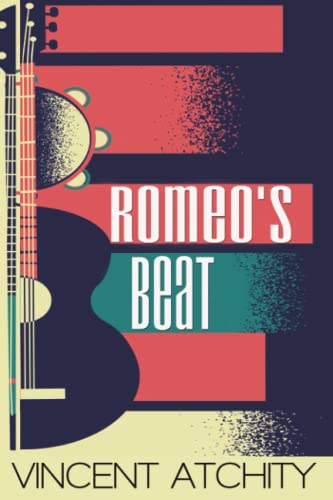
Robert L. Rivenbark, Jr. Reviews Vincent Atchity's Story Merchant Book Romeo's Beat


How delightful to discover in the #MeToo age, when trust between men and women—and romantic love itself—has reached its nadir in our dysfunctional culture, that it’s still possible for an American novelist to write a literary love story that celebrates the eternal bond between man and woman. That’s precisely what Vincent Atchity has achieved with Romeo’s Beat. His novel has a deceptively simple premise—until you let it enfold and lift you into regions rarely explored in contemporary fiction. The points of comparison I can think of in terms of Atchity’s style are Ernest Hemingway (particularly in A Farewell to Arms) and Anaïs Nin (particularly in her Ladders to Fire). But Atchity has his own distinct voice, well-suited to his subject matter, giving his book a rhythm and cadence that make it a prose poem of unsurpassed beauty.


I had the honor of hearing Atchity do a live reading from his novel. During the Q&A afterward, he mentioned that given his responsibilities running a psychological clinic and raising three children with his wife, he had only been able to devote sixteen minutes day to his novel, beginning in 2007. Thankfully, he persisted, and the result is exquisite.

Set in the early 1980s, an era when great rock anthems resounded from FM stations, Romeo’s Beat follows the journeys of Juliet, a beautiful young Kansas botanist possessed of a mystical bond with nature; and Colin, a young singer/lyricist/guitarist who’s postponed recording his first record album in L.A., despite a lucrative recording contract, in a quest to find something enduring in his own music.

Juliet meets Colin while she’s on a solo pilgrimage to Salamanca, Spain, the city of her philosophical hero, Miguel de Unamuno. In her strolls through Salamanca’s cobblestone streets, she returns often to the Calle de Bordodores to see Pablo Serrano’s monumental statue of Unamuno. Yards away is one of her favorite shrines to Mary. Juliet considers her own personal religions to lie “suspended in a continuum between Unamuno and the Virgin Mary.” Unamuno scribed these words: “My religion is to seek for truth in life and life in truth.” Juliet believes this, too. “Even knowing that I shall not find them while I live,” she sadly concludes.

She’s at a crossroads. Having won a scholarship to begin her doctoral studies in botany in a month, she’s also engaged to Brad, a pleasant enough young man who brings solid financial prospects, given his upscale family roots. But Brad operates on a plain of consciousness that can’t begin to approach Juliet’s capacity to blend romantic and sexual passion with mystical intimations that take her into realms of awareness lightyears beyond Brad’s conventionality. She tells herself that she loves Brad, but that affirmation has started to ring hollow. Then she meets Colin in Salamanca, during his stopover on a peripatetic journey through Europe in search of his musical voice. The thunderbolt strikes them both. Juliet is powerfully drawn to this stranger in a way wholly unacceptable to her trajectory in life, so soon to be devoted to study, teaching, and a conventional marriage.

Colin, for his part, is strongly attracted to Juliet as well, but he’s obsessed with his own search, expressed in this reflection while he samples garlic-fried Champiñones mushrooms in a Salamanca tavern: “Colin had learned to cook from his father, and had a deep appreciation for dishes that brought together fundamental elements. The smell of olive oil and garlic had won him over before he’d even realized its source. It had grabbed something inside him that was older than he was, something that was inside everyone, and that would outlast any individual. For lyrics to last, Colin thought, they had to incorporate something as fundamental as olive oil and garlic.”

What follows is an elegantly articulated dance of love that focuses on the internal journeys of the two lovers, as they gradually come to accept that their meeting is going to disrupt their lives and change them both profoundly. The pace of this change unfolds slowly—perhaps too slowly for modern readers (though the novel is a quick read at 144 pages). But despite this minor pacing issue, Atchity does a magnificent job of dramatizing how, as their relationship becomes more intimate, Juliet’s and Colin’s hearts and souls are embroidered together, giving special significance to the Calle de Bordodores (which means “embroiderers”) that Juliet visits so often. From their love grows intimacy, the birth of a daughter, and a tragedy that raises the tale to classical stature.

It’s remarkable how Atchity occupies the minds, hearts, and souls of Juliet and Colin, particularly since we live in an age where writing from the point of view of the “other”—men writing from a feminine point of view, or women writing from a male point of view—is a taboo that often reduces our literature in a way that great writers of previous ages didn’t have to contend with (imagine Shakespeare hesitating to write Romeo and Juliet because he wasn’t a woman). Atchity’s insights are those of a mature artist who’s achieved a measure of wisdom about the eternal truths of life and love. At the end of the novel, I found myself hungering for more of this gifted writer’s work. Highly recommended reading.


    Book Review


Reviewed by Romuald Dzemo for Readers' Favorite

Talmadge Farm by Leo Daughtry immerses readers in rural Southern life in the mid-20th century, offering a vivid portrait of its settings and characters. The Talmadge family is a fixture in the Eastern North Carolina community, and the story opens with their annual dove hunt. Beginning in September 1957, the narrative unfolds against the backdrop of Talmadge Farm—a sprawling estate encompassing hundreds of acres of tobacco fields and the imposing Talmadge mansion. Gordon Talmadge is a typical Southern patriarch obsessed with maintaining his family's legacy and fortune through the bank he controls. He cares very little about the welfare of the sharecroppers on his farm, especially the Sanders family, highlighting the stark contrasts between their privileged existence and the struggles of those bound to the land. The tension grows at different levels and escalates between Gordon and the Sanders family when Junior, Gordon’s son, attacks Ella Sanders. The fallout has dire ramifications.

Leo Daughtry has crafted a character-driven narrative with a solid historical setting. The characters are finely drawn, and watching them evolve through multiple conflicts is interesting. Gordon Talmadge is an ambitious man with domestic issues and hints at an underlying strain in his marriage with Claire, creating suspense. The dynamics between the Talmadges and the Sanders family, notably when sharecropping is at play, highlight the social and racial tensions and the disparity in their social standings, exacerbating misunderstandings and conflicts. Daughtry deftly illustrates the South's racial and class tensions, revealing how the social fabric frays when underlying injustices surface. The characters are not black-and-white caricatures but flawed individuals who react to their circumstances with varying degrees of morality. Talmadge Farm is an engaging tale that transports readers into an intriguing historical moment and place.

Story Merchant E-Book Deal: The Dark Madonna: A Fable of Resiliency and Imagination by Nicolas Bazan


An American neuroscientist becomes embroiled in an international mystery that explores the meaning of miracles.

While attending a scientific conference in Poland New Orleans neuroscientist, Dr. Alvaro Cruz, visits Auschwitz and faces the ghosts of his own harrowing escape from Argentina’s “Dirty War” of the 1970’s.

When he and his wife meet an American artist-priest just outside the entrance of the notorious concentration camp Alvaro is inexplicably drawn to this enigmatic man and his stories about the icon of Catholic Poland known as “The Black Madonna” and a religious vision he experienced as a young art student. After returning to Krakow Alvaro can’t get the comments and demeanor of young Father Stephen out of his mind.

When Alvaro’s colleague invites him to visit the Jasna Gora Monastery where the famed Black Madonna of Częstochowa is housed he jumps at the opportunity.

During his visit to the monastery an elderly woman becomes hysterical about the changed appearance of the Madonna, and suffers an epileptic seizure ; she insists this is not the real Black Madonna, confirming his own odd sensation that the painting was not authentic!

In his obsession with discovering the truth Alvaro begins to piece together fragments of the complex mystery surrounding the icon’s history. What his findings reveal, the real story of the Black Madonna and the people charged with protecting her, could never have been anticipated. What comes to light is a stunning revelation not only about the painting but also about human frailty and our mind’s ability to overcome it.

Like Bazan’s previous Alvaro Cruz novel, Una Vida: A Fable of Music and the Mind, The Dark Madonna: A Fable of Imagination and Resiliency is a compelling narrative interplay of religion, science, culture, and art. Where scientific explanation ends and religious mystery begins lies the open synapse that connects human with divine.


FIVE STAR REVIEW: 

The Dark Madonna: A Fable of Resiliency and Imagination by Nicolas Bazan is absolutely mesmerizing with its intriguing blend of fact and fiction! With few pages, the tale of art forgery, greed, and religious beliefs and mysteries leads a scholar on a journey across continents and cultures that left me wanting more from this brilliant author.

Nicolas Bazan has written with a passionate pen, telling his story in the first person, deeply emotional and moving, almost like a pilgrimage of self-discovery and inner awakening as I was taken to ghostly remains of the German prison camps, where the determination to survive and the spirit of those who died there could be felt in the air. On visiting Poland, almost drawn by fate, our main character finds his scientific expertise put to good use when a sacred relic appears to be a clever forgery and a young religious man goes missing. Who is behind this great deception of the faith of the masses? Will the vandal be found? Will the relic be found? Were the reasons behind its theft truly evil or misguided? Can the answer to a religious mystery be found in science?

Wonderfully entertaining and well-written, this short novella feels like a much longer work with its attention to detail and deeply thought-out plot.

I highly recommend it!

Night Owl Reviews Story Merchant Books' Dragon Heart by Linda A. Malcor

  AVAILABLE ON AMAZON

Dragon Heart

Dragonlords of Dumnonia

This is a novel that took my breath and imagination away. Seldom do I enjoy a novel to the point I couldn't put it down for a moment. From the start there is a synergistic energy that keeps the storyline in place at all times. For once I wished I could ride a dragon! This story is intended for young adults, but I say it's for everyone. The characters were fresh and eager. The plot is an old one, but with many twists to keep the reader off their feet.

There is a scrap of a boy who dreams of riding a dragon, but he feels his dreams are far away, especially in the land of Drumnonia where there are dragons, riders, AND demons, gods, and elves. In the end, he becomes a dragon rider, and not just an ordinary rider either: he is the Dragonheart!

A dragonheart is a rider who is part dragon and part Drumnonian, and they are rare. They also do many spectacular things in their lifetimes, but this youngster, Shashtah, hasn't begun his journey to where the spectacular become normal. He picks as his first dragon an ancient who knows her time is up in five years. She is a dragon to teach Shashtah what he needs to learn as he has a mission too important to wait for him to learn all he needs to know prior to leaving.

This story takes the reader into the beginning moments of one young man's dreams and shows how incredible his rise to stardom is. There are many adventures and the author packs this story in so tight, it's a wonder if there is any more Shashtah can do in another novel. I'm very excited and hopeful that there is another novel with Shashtah coming soon.


Book Blurb for Dragon Heart

THE WIZARDS . . .
Life on Centuria used to make sense. Beings with special powers went to the School of Corin to learn how to control them. The more they learned, the more powerful they became. And the greatest Wizard of them all was the White Wolf.

THE WAR . . .
During their quests for knowledge, the Wizards accidentally opened a door to another dimension, where the Mirari lived. Beings of Light, the Mirari banished one of their rebels to Centuria where he became known as the Dark One. The Dark One took his anger out on the unprotected world, and the Wizards did not have the power to stop him. So the Mirari sent two of their own, the Winged Warrior Criton and the Elven King Farador to help. Their magic did not work properly on Centuria, though, and all they could do was keep the Dark One’s forces at bay.

THE DRAGONS . . .
An experiment begun by the Wizard Corin, the Bronze Dragons and the Dumnonians who care for them control a land rich in sand and so poor in everything else that not even the Dark One wants it. Caravans trade for supplies in the wealthy land of the Dragonslayers, Daethia, which supply the Dragons and Dumnonians with barely enough provisions to keep them alive.
THE PROPHET . . .

A caravaneer, Shashtah wants to Bond with one of the Bronzes and help the Dragonriders of Dumnonia carry “Eternal Death to the Dark One!” When demons capture and torture Shashtah, his powers awaken at the wrong time and out of control. The Dragons suddenly find themselves with a very dangerous, untrained Prophet rather than what they had really bred for: a Dragonheart.


Fossil River - Kirkus Reviews -

Fossil River by Jock Miller is FREE this week on Amazon!


This pedal-to-the-metal speculative thriller revolves around the discovery of a highly territorial colony of predatory dinosaurs in Alaska that has survived undetected for millions of years.

The story begins in an America on the verge of collapse: The nation’s oil reserve is almost gone, and, within a matter of weeks, the country’s entire infrastructure could crumble. However, scientists have discovered the largest fossil fuel deposit in the world, within Alaska’s Noatak National Preserve, which could save the nation from imminent disaster. But there’s one major drawback: a large colony of vicious birdlike dinosaurs (classified as Deinonychus) that have lived in the secluded area for millennia. Zoologist Scott Chandler and his ex-girlfriend Kimberly Fulton, a pre-eminent paleontologist, are tasked by the president of the United States himself to help identify and somehow suppress the mysterious predators—– but an overzealous military presence turns the volatile situation into an all-out blood bath, as dozens of Marines enter the “lost world,” and none return alive. When Fulton’s wayward son and his girlfriend venture into the area, Chandler and Fulton are forced to attempt a desperate rescue.

The narrative features well-developed characters, a plausible and well-researched premise, vivid description and brisk pacing throughout. The only two significant criticisms are that the conclusion is somewhat predictable, and the overall concept isn’t particularly original; James Robert Smith’s The Flock (2006), for example, features a very similar setup. That said, readers who like intelligently written thrillers, à la Michael Crichton’s Jurassic Park (1990) and Frank Schätzing’s The Swarm (2006), will likely enjoy this pulse-pounding trip into the Alaskan wilderness.

An undeniably readable thriller with breakneck pacing and jaw-dropping action sequences.

Author Anthony Avina Reviews Kevin Spark's novel id! #FREE on Amazon this Week!

" This was a mind-blowing and thought-provoking psychological horror thriller. The imagery played well into the deep-set tone that psychological horror novels often take..." Anthony Avina

The Synopsis

A psychologist and daughter of a murderer develops a revolutionary test to explore the id unencumbered by morality and sets a killer and the cop driven to violence by that same killer on a path of destruction in author Kevin Spark’s “id: A Novel”.

Dr. Shelly, a brilliant psychologist, forever haunted by her father and his murderous past, is driven by the need to find out why we do the things we do? Is the concept of free will just a concept and nothing more, a construct that blinds us to a less palatable truth, that who we are is predetermined and encoded at birth? Does anyone really choose to do the bad things we do or are we just doing what comes naturally?

Shelly constructs an experiment using a sensory deprivation tank and virtual reality, allowing the darkest part of ourselves, the id, to run free. Unencumbered by morality or remorse, Shelly finds the perfect subject in Adam. A borderline psychotic born into a world of neglect and crime. Delving into the deepest pits of his subconscious, Shelly surfaces with far more than she bargained for.

Detective Hopper, responsible for Adam’s capture, remains a broken man. After suffering a breakdown due to the escalation of his own violent behavior, he is placed under the care of Dr Shelly. Encouraging him to go looking for his own redemption, Hopper becomes a pawn in her web of deception until the lines of reality are redrawn as Hopper and Adam come full circle to an explosive end.

The Review

This was a mind-blowing and thought-provoking psychological horror thriller. The imagery played well into the deep-set tone that psychological horror novels often take, and the inclusion of VR gaming environments and sensory deprivation tanks helped elevate the tension that the reader felt as the story progressed. The way these psychological ids came to life in the story and the way they spoke to the psychological aspects of our own minds helped elevate the atmosphere of this book tenfold. 

Yet it was the rich character development that really helped highlight this psychological horror. The way each of the main characters really played off one another in this almost cat-and-mouse style thriller and the steady pace of the narrative itself allowed the tension to build more and more as time went on. The way the author explored the “animal” that rests within us all and the ways in which we all deal with that animal in our lives played well into the story, and the heart-pounding terror that the imagery of these character’s ids brought to life will haunt readers well beyond the final pages of this book.

The Verdict

Haunting, captivating, and engaging, author Kevin Spark’s “id: A Novel” is a must-read psychological horror thriller. The twists and turns the narrative takes and the shocking conclusions that each character finds themselves in only lend themselves to the dynamic atmosphere and chilling imagery the author’s impressive writing style conjures up, drawing me in similarly to the way the acclaimed film The Cell starring Jennifer Lopez and Vincent D’Onofrio did when I first watched it. If you haven’t yet, be sure to grab your copy today!

Rating: 10/10

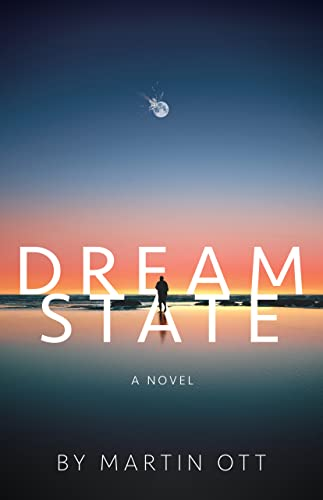
Martin Ott's New Thriller Dream State Reviewed by Nadine Maritz


Dream State is a different kind of Thriller that plays off on an Island – Beleze, experienced by three characters Heidi, Russel, and Marley. 

Oddly enough, I kept thinking about Sandman which obviously also revolves
around dreams and the lack of it. I didn’t finish the series (and I know people
are going to castrate me for this –but — I just didn’t enjoy it)

Having said that, lack of sleep is absolutely something relatable and the
madness that derives from its absence is a reality I think many can relate to. Martin nailed the mind sets created from sleep deprivation one hundred percent along with the psychological effects on people. 

The book is a fast-paced attention read, in the sense that you really need to keep track of the characters, their past, their present and their existing surroundings. Whilst I really enjoyed the different read, – because it’s not something I would usually deviate to – I did feel that the regular play back on the characters pasts drew away from the story and its progress. Yes, it did give us insight into what makes them tick, but the take back, was consuming in some instances. I also struggled to really connect with any of the main characters, although strong leads there was something amiss. I settled that debate by convincing myself that logically they are lacking something — sleep.
So, if that was the intent, its applaudable.

The setting revolves around the moon being hit by an asteroid and the impact it has on everyone on the island and then of course the bigger impact on the world.

It focuses on the ways people deal with the lack of sleep, how they interpret different people’s actions, how their pasts haunt their present existence and how they cope with impulsive irregularities in their existing environment. As if that isn’t enough, people also need to deal with groups trying to take over the island and pirates roaming the surrounding sea.

The thriller takes on a kind of post apocalyptical sci-fi setting the more it progresses, and it made me question the impact it would have on our world. I mean people always talk about an asteroid hitting earth, but I haven’t experienced or read about scenarios where it hits the moon and the impact it would have on humanity.

I gave this book a 3 out of 5.

Plus, for its innovation, the thought it provoked and the thriller tone that absolutely glares you in the eye with the madness created, minus because I didn’t connect with it in similar fashion to the likes of The Interrogators Notebook, which I still love and wish someone would take to screen. 


For more on this crazy adventure you can go to Amazon and purchase the book

for Kindle or Paperback. You can also connect with the Author on his Website, on Instagram, Twitter and on GoodReads. 

You can also go view Nadine's previous Interview with Martin Ott and my Review on The Interrogators Notebook.

In Memoriam Umberto Eco


I met Umberto Eco just once, but it was enough to impress me with the awe reserved only for the most serious storytellers I’ve come in touch with over the years, like Carlos Fuentes and Eugene Ionesco. By sheer serendipity, our offices were adjacent at the University of Bologna, when I was Fulbright professor there. Still, I was surprised to hear from him after my review of The Name of the Rose in The Los Angeles Times appeared. He called it, “the best review I’ve read,” and republished it in his Essays on the Name of the Rose (Bompiani, 1985). May he rest in honor.


The Name of the Rose by Umberto Eco
Hardcourt Brace Jovanovich 

here is a kind of novel that changes our mind, replaces our reality with its own. We live in a new world after we've read it. Umberto Eco, the celebrated Bolognese semiotican and Joyce scholar, brings us a new world in the tradition of Rabelais, Cervantes, Sterne, Melville, Dostoevsky, Joyce himself, and Garcia-Marquez.

We recognize the author's claim--or disclaimer--in the prologue to his "terrible story of Adso of Melk": that it's a hasty translation of a lost transmittal copy, that he's uncertain about its value and about the need to publish it. He refuses to allow his reader to easily suspend disbelief because his purpose is to explore the relationship between belief and narrative.

Filled with the good-natured polyglot banter of the superfluosly learned, "The Name of the Rose" might be seen only as a effete "Canterbury Tales" except for tell-tale markings on the walls of its medieval monastic library, markings declaring that this records of those walls' destruction is itself a labyrinth in the library's image. We learn the markings, deconstructing the book as we read. We see how the labyrinth operates on more than one level-in our imitative act of finding our way in and out. Eco makes his intellectual riddles accessible by weaving them into an intriguing detective story. A series of grisly murders turns Brother William of Baskerville, and his assistant Adso (our narrator), into prior-day Sherlock Holmes and Watson.

William is friend of Occam, admirer of Bacon, devotee of Aristotle, and consumate practitioner of Thomistic analysis. Like Joyce's Dedalus, he studies the world's signs and cluse with eyes both open and closed; his vision is so exhaustive--literally and metaphorically--that he at one point sees through six eyes.

Through the course of their investigations of the abbey's crimes and its secret heresy, we're given the flavor of the waning Middle Ages in Southern Europe, the ephemeral unity of medieval thought under the Thomistic rule had long since been abandoned as a possibility, and Aquinas himself, suspected of having been a self-important windbag. Now "everything looked the same as everything else," and all morality is arbitrarily and universally metamorphosed.

If you had a romantic notion of the relative simplicity of the late Middle Ages, Eco modernizes your view. He paints a time of multiple popes and multiple anti-Christs, a time when a man would trade sexual favors for a book, when the papal palace in Avignon displaced "crucifixes where Christ is nailed by a single hand while the other touches a purse hanging from his belt, to indicate that he authorizes the use of money for religious ends..."

In a time of diminishing belief, all hands reach desperately from the encroaching shadows of doubt. There were monsters in the imagination in those days: "The cynocephali, who cannot say a word without barking... blemyae, born headless, with mouths in their bellies and eyes in their shoulders... and those whose soles are reversed so that, following them by their footprints, one arrives always at the place whence they came and never where they are going..."


No less marvelous, in the vanished monastery we find their counterparts in a guarded reliquare displaying "the tip of the spear that pierced the side of the Saviour!," "a yellowed shred of the tablecloth from the last supper," "a piece of the manger of Bethlehem," ..."a tibia of Saint Margaret," "a rib of Saint Sophia," "the chin of Saint Eobanus," "a tooth of the Baptist," "Moses' rod," "a tattered scrap of very fine lace from the Virgin Mary's wedding dress"--and much, much more.

Later, in Ados's dream during the "Dies Irae" of Terce, the holiness is comically transformed into "the tail of Saint Ubertina, the uterus of Saint Venantia, the neck of Saint Burgosina engrained like a goblet at the age of 12..." The narrator's dream itseld is one of the richest in 20th-Century literature, a mad comination of Fellini, Fuentes, Borges and Bosch. William's interpretation shows how his assistant's dream was a dream of books, a dream of dreams, of a past and future inextricably mixed in imagination--a triumph of intertextuality. And it provides the key to the mysterious and outrageous crimes they're investigating.

Criminal investigation and exploration of theology and the mentality of the era are interlaced with a comic explosiveness of language reminiscent of Rabelais, as when the semi-demented Salvatore fives Adso a recipe: "Facilis. You take the cheese before it is too antiquum, without too much salis..."

Eco's characters may verge on the dry, but the plot is as neat as Conan Doyle or Christie, with ironic undertow echoing Chesterton's Father Brown series.

The interplay between Adso and William like that of Quixote and Paza, involves us in the paradoxical mind of the times: a delicate but thorough mixture of rationalism and superstition. We prefer, by authorial design, Adso--even when his private opinions nudge against a heresy not yet born: "The older I grow and the more I abandon myself to God's will, the less I value intelligence that wants to know and will that wants to do; and as the only element of salvation I recognize faith, which can wait patiently, without asking too many questions."

Eco dances on the banks of allegory without drowning in its inane waters. As his characters wrangle over the question of whether Christ possessed property, the narrative offers chilling insight into mores that suggest those of our own time, when the Church of Rome, for all it ecumenicism and globetrotting Popes, still belies its own vow of poverty.

But the book's central dialogue is between men and books, and books and books, and only through the latter, men with men. We harbor the notiron of a preliterary world, where ideas have yet to be born and we commune directly with reality. William disillusions Adso of that concept, and Adso admits the lie: "Until then I had thought each book spoke of the things, human or divine, tha lie outside books. Now I realized that not infrequently books speak of books... In the light of this reflection, the library seemed all the more distrubing to me. It was then the place of a long, centuries-old murmuring, and imperceptible dialogue between one parchment and another, a living thing... a treasure of secretes emanated by many minds, surviving the death of those who had produced them or had been their conveyors."

When the labyrinth is unwoven we're not surprised that "the plan of the library reproduces the map of the world." When the crime itself is solved, the cause is not a contemporary murderer but... I won't spoil the the book for you. Suffice to hint that laughter and comedy move from the diabolic to the humanistic, that the name of the rose is a play of words.

A true investigation succeeds from a false pattern, and the plot to destroy comedy is succesful by accident. But the investigation's success is superficial. William's antagonist, Jorge of Burgos (foreshadow of Luis Borges), succeeds in repressing the book which might have undermined the stucture of all holiness. William accuses Jorge of being Satan: "The Devil is not the Prince of Matter; the Devil is the arrogance of the spirit, faith without smile, truth that is nevere seized by doubt."

A book like this seeks to replace the world with itself, and eventually does so, showing the reader that reality, except as vision, is already inaccessible; that only vision matter; that even before he began reading it can lead us to recite, with a Kempis, the great imitator: 'In omnibus requiem qaesivi, et nusquam inveni nisi in angulo cum libro.' " (In all things I have sought peace, and nowhere have I found it except in a corner with a book.)

Kenneth J. Atchity

Blogcritics Reviews How to Quit your Day Job and Live Out Your Dreams


Are you in an unsatisfying job and would like to get out of your current line of work? Do you want to transition from a job that is secure but soulless, from a life that is created by others to one that is created by you which allows you to follow your creative dreams? If you do, this book is for you.

Kenneth Atchity was also in a job he despised. He was a tenured professor. He should have been on top of his game and happy. He had security, and everything he wanted financially. But he was still fundamentally unhappy because he felt drained and didn’t feel as if he was fulfilling his creative purposes in life. How sad? He always wanted to be a story merchant and film producer. Then one day he dared to take the necessary steps to make his dreams come through. And this is how the idea for this book was born.

Kenneth Atchity’s book is for everyone who feels that their creativity has been squelched at their current line of work. How to Quit Your Day Job and Live Your Dreams will show the reader how to create a personal vision and recreate your life so that it fulfilling your vision, face negative peer pressure, identify and control conflicting inner voices, redefine what it means to live successfully for yourselves, steal time to make your dreams come true, and a lot more. The book is full of advice for the person who is still working at a dead end job and wants to take fruitful steps to get out. Kenneth Atchity shows the reader how to do this through consistent planning, a bit of hard work, and perseverance.

The good news is that we can all reclaim our lives, and we don’t have to stay in dead end jobs for the rest of our lives and live unhappy and unfulfilled days. We can be bold and recreate our lives so that they are what we want them to be. So, if you want your life to change for the better, pick Kenneth Atchity’s book today and get ready to transform your life one step at a time.

Kirkus Reviews: Nobody Walks by Dennis M. Walsh

Pulpy, engrossing account of losing a family member to a senseless murder and retribution delivered through the criminal justice system.

Attorney Walsh was the only one among his four brothers to follow the straight-and-narrow path, perhaps due to the example set by their father, a Cleveland cop turned mobster. But none of them were prepared for the death of Chris, the youngest, at the hands of fellow denizens of the meth-and-gangs subculture on the fringes of Southern California’s pornography business. Walsh lived a sibling’s nightmare, asked to identify Chris’ decaying body. Street gossip quickly pinpointed the killer, David Steinberg, Chris’ former roommate, who was an associate of white supremacist prison gangs. Despite fears that he might pre-emptively sabotage eventual prosecution, Walsh began sniffing around Chris’ friends, a motley group of drug users, porn stars and entertainment-industry hangers-on. Many agreed to cooperate with him, given the implied threat of his more criminally inclined brothers’ thirst for vengeance. The narrative is sensibly straightforward, following the turns as police, prosecutors and Walsh make efforts to gather evidence on, arrest and successfully prosecute Steinberg and his cronies. As the author himself might agree, he is in some ways too close to the material. The narrative is populated by a surfeit of underworld figures who don’t really come alive as fully developed characters, but instead seem caricatures of seamy decrepitude. Still, Walsh captures the arc of his family’s involvement in an act of senseless malice, calling into question the cultural endurance of macho violence within certain subcultures and the difficulty of holding men responsible for horrific acts within the legal system’s overtaxed framework.

Gritty, effective, personalized tale of the outlaw lifestyle and its consequences.

Publisher's Weekly BookLife Review of The Messiah Matrix

Image result for book life logo

A riveting novel grounded in theological academia featuring an exciting narrative that leaves fiction fans and history buffs alike interested in delving into the factual basis for the book.

Atchity’s plot is fast-moving and full of mysterious twists and turns that will keep readers on their toes throughout this fascinating novel. The prose often flows beautifully, with meticulous descriptions of settings, characters, and adventures. The various storylines intersect at the most crucial moments, and the exciting dialogue and sense of dark humor conveyed certainly intensify these scenes.

Though The Messiah Matrix brings to light many fresh theological and historical possibilities, the subplots of the novel bring to mind the popularized work of Dan Brown. The storyline of deception, questioning, and even murder within the Church is not a new one, but the elements of archaeological discovery and alternate past timelines shine a fresh new light on the genre of historical fiction. The main and supporting characters are described in thorough detail: their aspirations, their fears, their romantic and emotional turmoil.


Publishers Weekly Reviews Dennis Palumbo's Head Wounds


Head Wounds: A Daniel Rinaldi Mystery Head Wounds: A Daniel Rinaldi Mystery
Dennis Palumbo. Poisoned Pen

The violence starts early in Palumbo’s engrossing fifth mystery (after 2014’s Phantom Limb) featuring clinical psychologist Daniel Rinaldi, who consults for the Pittsburgh PD. Daniel is at home reviewing the file of the unsolved murder of his wife, Barbara, when someone takes a shot at him through his living-room window. Soon afterward, the police apprehend the shooter, Eddie Burke, the drunk, disaffected boyfriend of Daniel’s attractive, well-to-do neighbor, Joy Steadman. Daniel does his best to comfort Joy, but when he returns to her house to check on her hours later, he finds her strangled body. He eventually learns that Joy told Eddie that she was sleeping with him, hence Eddie’s rage. The police suspect Daniel in Joy’s murder. Meanwhile, a computer-savvy psychopath sets out to torment Daniel by killing or maiming an ever-widening group of his patients, friends, and family members. The tension rises as Daniel uses his understanding of the human psyche to play a deadly game of cat-and-mouse with his nemesis. Palumbo, a licensed psychotherapist, has delivered another well-crafted page-turner. (Feb.)
Buy this book

Five Star Review for Larry D. Thompson's White Witch


purchase on Amazon.com


I have read 2 previous novels by this author, known for his legal thrillers, DEAD PEASANTS and THE INSANITY PLEA, and have been anxiously waiting for his latest book, WHITE WITCH, which has a bit of a different spin that I absolutely loved.

Will Taylor, VP of security for an international mining company, finds himself dealing with more than your average security. Set in the rainforests of Jamaica, the settlers and owners of the land will fight to keep the mining company out. Will soon finds out that there is much more going on. Is it pure legend or is there truth to the Voodoo stories associated with the land.

What could go wrong on this tropical island? Co-workers and officials are being murdered? Why and by who? Could ghosts of the past have something to do with the killings? And who’s side does Will align himself with when the owners of the land sue his employer?

This was an exceptional read!!!! Not only was the story intriguing, so was the history of Jamaica. The way the author weaves his legal expertise with the history of the island makes for a compelling read! This novel was well worth the wait! Fantastic!

Highly, highly recommend!!!

Read more 

A Bookaholic Swede Reviews Larry D. Thompson's White Witch


purchase on Amazon.com

I must say that White Witch is a truly interesting book that started off great with a flashback to Annie Palmer tyranny before the story turned its focus on the present time and the Maroons struggle with an American aluminum company that is after their land. For someone like with pretty little knowledge of the history of Jamaica was this book awesome to read. I love getting to know the history of the Maroons, how they fought both the Spaniards and the Englishmen for their freedom and won. Now they once again have to fight against a powerful enemy, a company after their land.

The beginning of the book really made it out to be more of a horror book than a thriller with a lot of strange things going on. I would have loved it to be more of a horror book than a thriller actually. Still, I found the plot to be interesting with murders being done with snake daggers, the same kind that is said that Annie Palmer, the White Witch, had used to kill with.

I also liked how ex-Navy SEAL Will Taylor and his team more and more realized that they are working for the wrong side and I liked this change and what it brought on as Will and Vertise Broderick, a journalist who is also a Maroon decides to hire an attorney to fight for their cause in the court. The question is will they be able to prove that the land is the Maroons?

White Witch is a book that gave me a lot in return. I got an interesting story and I also gained some insight into the history of Jamaica and the Maroons.

Read more


Dennis Palumbo's Head Wounds Makes Thomas Perry’s Favorites of 2017!

It’s his 5th book about psychotherapist Daniel Rinaldi. I recommend it highly, particularly for people who have read the rest of the series, because it is one of those books that take up some issues we’ve been wondering about since the beginning of a series, and give us big, shocking answers to them. I also think the villain in this book is more frightening than any other I’ve seen for quite a while. Very early in the book he gets into the reader’s head like a recurring nightmare, and for the rest of the book we root for Rinaldi to get him out for us by catching him or killing him.  ~ Thomas Perry

Read more


Psychologist Dr. Daniel Rinaldi consults with the Pittsburgh Police. His specialty is treating victims of violent crime—those who’ve survived an armed robbery, kidnapping, or sexual assault, but whose traumatic experience still haunts them. Head Wounds picks up where Rinaldi’s investigation in Phantom Limb left off, turning the tables on him as he, himself, becomes the target of a vicious killer.

“Miles Davis saved my life.” With these words Rinaldi becomes a participant in a domestic drama that blows up right outside his front door, saved from a bullet to the brain by pure chance. In the chaos that follows, Rinaldi learns his bad-girl, wealthy neighbor has told her hair-triggered boyfriend Rinaldi is her lover. As things heat up, Rinaldi becomes a murder suspect.

But this is just the first act in this chilling, edge-of-your-seat thriller. As one savagery follows another, Rinaldi is forced to relive a terrible night that haunts him still. And to realize that now he—and those he loves—are being victimized by a brilliant killer still in the grip of delusion. Determined to destroy Rinaldi by systematically targeting those close to him—his patients, colleagues, and friends—computer genius Sebastian Maddox strives to cause as much psychological pain as possible, before finally orchestrating a bold, macabre death for his quarry.
How ironic. As Pittsburgh morphs from a blue-collar town to a tech giant, a psychopath deploys technology in a murderous way.

Enter two other figures from Rinaldi’s past: retired FBI profiler Lyle Barnes, once a patient who Rinaldi treated for night terrors; and Special Agent Gloria Reese, with whom he falls into a surprising, erotically charged affair. Warned by Maddox not to engage the authorities or else random innocents throughout the city will die, Rinaldi and these two unlikely allies engage in a terrifying cat-and-mouse game with an elusive killer who’ll stop at nothing in pursuit of what he imagines is revenge.

A true page-turner, Head Wounds is the electrifying fifth in a critically acclaimed series of thrillers by Dennis Palumbo. Formerly a Hollywood screenwriter, Dennis Palumbo is now a licensed psychotherapist in private practice.


The Washington Times Reviews John Pfordresher's THE SECRET HISTORY OF ‘JANE EYRE’: HOW CHARLOTTE BRONTE WROTE HER MASTERPIECE

THE SECRET HISTORY OF ‘JANE EYRE’: HOW CHARLOTTE BRONTE WROTE HER MASTERPIECE

By John Pfordresher 


purchase on Amazon.com


If I had read this admirable study by John Pfordresher, a professor of English at Georgetown University, of the enormous amount of lived experience Charlotte Bronte put into her novelistic Magnum Opus “Jane Eyre” even a few months ago, I would have thought it a little bit superfluous. After all, more than any other novel I have read, it strikes one with such immediate force, inducing a visceral reaction, an immediate empathy with the eponymous heroine.

Reading about the powerful emotions, even more powerfully expressed, in its opening which the bullied, scorned child Jane feels while locked in that infernal room, you would have to have the stoniest of hearts not to be moved to your very core.

But recently at an academic symposium, I had to sit and listen while a professor at a prestigious British university bloviated — seemingly endlessly — about what a ludicrous provincial figure Charlotte Bronte cut in London literary society.

In an insufferably superior manner, he mocked her Yorkshire accent, her dour demeanor, the paucity of her conversational skills, all the while paying lip service to her as a great writer. His whole point, insofar as one could grasp it amid the excess verbiage, was how could this ridiculous creature have produced such great books?

Had I been able to get a word in edgewise, what I would have said was “you just don’t get it, man!” And what I was thinking was “pity your poor students whom you are so misleading.” Didn’t he realize that perhaps the central point of “Jane Eyre” is that a small, unprepossessing young woman could possess a strength of character and of will so powerful as to be all-consuming and literally terrifying?

After all, when she does eventually get the once so formidable Mr. Rochester, who had deceived, teased and tormented even as he bewitched her, he is much reduced and physically as well as emotionally in her power. Make no mistake, it is the small, plain woman who has the upper hand now.

So if there are people like this strutting their false stuff in the groves of academe, Mr. Pfordresher’s students are fortunate indeed to have a guide like him to Charlotte Bronte’s life and oeuvre who understands how intricately they are intertwined. And so are the readers of this book, which now seems to me a good deal less redundant and a great deal more necessary than I might previously have thought.

This is indubitably a teacher and a critic who has enormous respect for Charlotte Bronte. And he knows how to express it through the words of those who actually knew her:

“When the well-known critic Harriet Martineau visited the family home in Haworth in later years she felt ‘something inexpressibly affecting in the aspect of the frail little creature who had done such wonderful things, and who was able to bear up, with so bright an eye and so composed a countenance, under not only such a weight of sorrow, but such a prospect of solitude. In her deep mourning dress (neat as a Quaker’s), with her beautiful hair, smooth and brown, her fine eyes, and her sensible face indicating a habit of self-control, she seemed a perfect household image.’ “
And how to add his own penetrating insight to this perceptive, respectful portrait:

“Reading ‘Jane Eyre’ we know how much of a personal victory Bronte had achieved through that self-control and how many secrets her composed countenance had concealed.”

That sentence, with which Mr. Pfordresher concludes his fine study, is nothing less than the distillation of his thesis and the multiple demonstrations of its validity.

Although Mr. Pfordresher gives due attention to Charlotte Bronte’s other works like “Shirley” and “Villette,” it is no accident that his title and subtitle enshrine “Jane Eyre” as her masterpiece; and rightly so.

It needs emphasizing that, just as the academic canon has come to elevate Jane Austen’s “Emma” on grounds of its structural perfection over her masterpiece “Pride and Prejudice,” it has tried the same legerdemain (albeit less successfully) with “Villette.” Here, the author demonstrates convincingly that although this last of Bronte’s novels published in her all too short lifetime draws more directly on her thwarted love for her teacher Constantin Heger in Brussels, Jane’s obsessive love for Mr. Rochester draws even more strongly on it.

And it is important never to lose sight that, however accomplished “Villette” is, “Jane Eyre” is, in addition to its manifold intrinsic virtues, probably the single most influential English novel ever written. Think “Rebecca” among so many other novels that could not have been written but for this magnificent precursor: a true and fruitful masterpiece indeed.

• Martin Rubin is a writer and critic in Pasadena, California.

Read more at The Washington Times