"The universe is made of stories, not of atoms."
—Muriel Rukeyser
____________________________

Discovery.com Announces Kennedy Special

JFK Requested Bodyguards to Back Off

Days before he was assassinated in Dallas, John F. Kennedy asked his secret service agents to give him space to campaign.

By Emily Sohn | Thu Oct 21, 2010 05:30 PM ET

Four days before the fateful 1963 motorcade in Dallas when John F. Kennedy was fatally shot in the head, the young president had requested that his secret service agents give him some space.

"President Kennedy made a decision, and he politely told everybody, 'You know, we're starting the campaign now, and the people are my asset,'" said agent Jerry Blaine. "And so, we all of a sudden understood. It left a firm command to stay off the back of the car."

Be sure to tune into "The Kennedy Detail" airing Nov. 22 at 9 p.m. ET/PT on the Discovery Channel.

Blaine's revelations, as well as those from JFK's secret service agents in a forthcoming book, "The Kennedy Detail" and in a series of interviews with the Discovery Channel, reveal how challenging this charismatic president could be to protect and how shaken his murder left those whose job it was to keep him safe.

They were well trained and extraordinarily professional. They were dedicated to the President and especially to the honor of the presidency. Most of all, the Secret Service agents assigned to protect John F. Kennedy were stoic and silent.

They did not talk about their feelings for JFK. And they did not discuss their emotions about his death -- not with each other and not to the world -- until now.

Forty-seven years after the 35th president was fatally shot on Nov. 22, 1963, his bodyguards are sharing their memories about a charismatic man, his glamorous family, and a tragic ending.

Their words offer a new window into an event that transformed not just the nation, but also the men who were supposed to keep him safe.

Investigation Discovery: Explore video, follow the timeline and take a quiz about the JFK assassination.

What emerges from the interviews is a deep sense of grief and remorse. For their jobs and their country, the agents sacrificed sleep, personal freedoms, and time with their families in order to protect the lives of others. They became a tightly knit group. As they reunite with each other and recount their memories of the assassination, many of them unleash tears.

"It was an assault on our country, on every single thing that we stand for," said agent Toby Chandler, who was giving a speech to agents-in-training when the news came in from Dallas. "It was a thing that just must not be allowed to happen. And we were supposed to prevent it. And we failed."

"In our work, and in military work and things like that, you either get the job done or you don't," he continued. "There are very few excuses. You can always say 'Well, you know, it would have been a nice picnic if it didn't rain, but it rained.' And it rained on us. And so we lost a symbol of our country."

Compared to the presidents before him, JFK was a challenge to protect, especially in a motorcade, said agent Jerry Blaine. Eisenhower kept to himself and traveled in a closed-top car, Blaine explained, making him easy to cover.

But Kennedy was charismatic. He wanted to stand up in an open-top car and wave. He wanted to get out and shake hands, unencumbered. He loved crowds. And the crowds were big.

Still, the shooting in Dallas surprised everyone. When agent Paul Landis heard the first shot from his seat in the car behind Kennedy, he continued to scan the buildings and the crowds. But he didn’t see anything.

"I thought, 'Well maybe there was a blow-out or something,'" Landis said. "When the third shot happened, I saw the President's head explode, just like a melon. And well, I knew as soon as he'd been hit, there was no way he was gonna survive that."

For the men who weren't on the scene, shock hit first. But they had jobs to do. So, they pushed aside their emotions and went to work -- moving the children to a home in Georgetown, escorting the President's body to the White House, and later accompanying the First Lady on her powerful, yet dangerous walk from the White House to St. Matthew's Cathedral.

"When all this is going on, your personal feelings are one of a tremendous emotional hit because of the respect you have for that family and for the president," remembered agent Tom Wells, who was escorting young Caroline to her first sleepover when he heard the news that Kennedy had been shot.

Like the other agents, Wells had a deep respect for Kennedy, who knew the names of all his guards, frequently asked about their families, and made them feel like they were a part of his own.

"You've got an upheaval that goes on in your mind and in your gut," Wells said. "There's this unbelievable sympathetic feeling you have. But there's no room for that because the only thing you have got to deal with now is what your role is. So, it is a difficult time. It's a roller coaster, even as detached as I was from the main event."

Eventually, each agent moved on.

"We have a code in the Secret Service called 'worthy of trust and confidence,'" Blaine said. "So I made a decision. You walk away from here. You don’t talk about it. You put it behind you."

As close as they were during the Kennedy administration, many of the agents lost touch with each other in the years following the assassination. Many agonized about what they could have done differently to prevent the shooting. Eventually, they tried to forget.

"Of course, I wish Dallas never happened," said agent Ron Pontius. "Everyone will say that. It was a terrible thing to happen. And I think we're marked for it for the rest of our lives."

Agent Clint Hill was in the motorcade behind Kennedy that day in Dallas. After the fatal shot, Hill jumped on the back of the President’s car and held on as the car raced to the hospital. In the years after the assassination, Hill sunk into a downward spiral of depression and alcoholism. In 1990, when he was pulling his life back together, he finally visited Dallas again.

"I walked in Dealey Plaza for a long time, looking back and forth and up and down, at every angle, for everything possible that I could think of," he said. "How could this have been avoided? What could we have done differently? Where did we go wrong? Why did it happen?"

"I finally came to the conclusion that because of everything that happened that day," he continued, including the weather, the configuration of the streets, and the position of the shooter, "that every advantage had gone to the shooter that day. And we had none."

"So I realized that based on all those conditions, there was nothing that I could have done," he said. "And I finally accepted the fact that what happened was something that I could not avoid. And so that was a great deal of relief to me."

5 new video installations by Glen Pitre for Katrina & Beyond Exhibit Opens At The Louisiana's State Museum


Opening to the public 10/26/10


Côte Blanche Productions was commissioned to create several video installations as part of the Louisiana’a State Museum’s major new Katrina & Beyond exhibit. These original pieces by video artists Michelle Benoit and Glen Pitre will permanently reside in the historic Presbytere next to St. Louis Cathedral in New Orleans’ Jackson Square.


Living With Water is a poem to south Louisiana in moving images and music, projected onto a screen shaped like an Elemore Morgan painting.


Resilience chronicles Louisiana’s long history of disasters --- storms & floods, epidemics & invasions --- and our undiminished capacity to recover from them.


Hurricane Rita provides first hand accounts of Louisiana’s “forgotten storm.”


Reducing Risk looks at how we might make coastal life safer.


Life in Balance, the most ambitious of the five, swirls with imagery, some joyous, some heartbreaking, as it chronicles how devastation can be molded into hope. On a wall built of storm-salvaged windows, each glazed in black glass, 14 video screens follow 50 different Louisianans out of despair and into rising determination to rebuild all that was good and replace what was not with something better.


Lake Charles-born, Paris-educated Michelle Benoit is an award-winning filmmaker, screenwriter, novelist, playwright, museum designer, and non fiction author. Her work has been translated into more than two dozen languages.


Cut Off, LA, born and reared Glen Pitre is best known as writer/director of the big screen “gumbo westerns” Yellow Fever, Huit Piastres et Demie!, Belizaire the Cajun, The Scoundrel’s Wife, and The Man Who Came Back. America’s most famous film critic, Roger Ebert, calls Pitre “a legendary American regional director.”

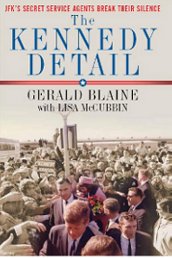
AEI Clients Gerald S. Blaine and Lisa McCubbin's The Kennedy Detail Reviewed on The Huffington Post

President Johnson Almost Shot By Secret Service Agent Hours After Kennedy Assassination: New Book

by Marcus Baram

A Secret Service agent came close to shooting President Lyndon Johnson just hours after Kennedy's assassination, according to "The Kennedy Detail", a new book that claims to be the first account of the tragedy by members of Kennedy's security detail.

Though Kennedy assassination buffs already have their bookcases full with countless accounts of the assassination, the book by retired agent Gerald Blaine does contain some new revelations.

The night after the assassination, Blaine says he was assigned to protect Johnson's two-story house in Washington when he heard the sound of someone approaching.

Instinctively Blaine picked up the Thompson submachine gun and activated the bolt on top. The unmistakable sound was similar to racking a shotgun. He firmly pushed the stock into his shoulder, ready to fire. He'd expected the footsteps to retreat with the loud sound of the gun activating, but they kept coming closer. Blaine's heart pounded, his finger firmly on the trigger. Let me see your face, you bastard.


The next instant, there was a face to go with the footsteps.

The new President of the United States, Lyndon Baines Johnson, had just rounded the corner, and Blaine had the gun pointed directly at the man's chest. In the blackness of the night, Johnson's face went completely white.

A split second later, Blaine would have pulled the trigger...

Blaine struggled to regain his composure as the reality of what had just happened washed over him. Fourteen hours after losing a president, the nation had come chillingly close to losing another one.

Story continues below

The book also includes the first-ever account of the fateful day by Clint Hill, the agent who jumped on the back of the car in the midst of the shooting and pushed Jackie down into the back seat.

And Blaine dismisses speculation about Kennedy's relationship with Marilyn Monroe. He says that he was on duty the night of May 19, 1962, the famous birthday fundraiser at which Monroe sang for the president. Blaine says that Monroe was present later in Kennedy's suite at the Carlyle Hotel, but that she "left before the other guests."

And he says that the only other time Monroe was in the president's company was in Santa Monica in 1961, at the home of Peter and Pat Lawford, where Kennedy took a brief swim before departing.

2010 New England Book Festival Sets Date

THE 2010 NEW ENGLAND BOOK FESTIVAL RETURNS TO OMNI PARKER HOUSE HOTEL


BOSTON, MASS. The 2010 New England Book Festival will hold its annual awards ceremony on January 15, 2011 at the Omni Parker House Hotel in Boston for its annual competition honoring the best books of the holiday season.


One of the grand literary hotels of New England, the Omni is the former home of the famed "Saturday Club," where Emerson, Thoreau, Hawthorne and Longfellow met to discuss the literary achievements of the day.


The competition will accept entries in the following categories: non-fiction, fiction, biography/autobiography, children's books, young adult, how-to, cookbooks, science fiction, photography/art, poetry, spiritual works, compilations/anthologies, gay, unpublished stories and wild card (for books that don't neatly fit elsewhere). All entries must be in English.


Our grand prize for the 2010 New England Book Festival winner is $1500 cash and a flight to the awards in Boston in January, 2011.


Submitted works will be judged by a panel using the following criteria:


1) General excellence and the author's passion for telling a good story.

2) The potential of the work to reach a wider audience.


FESTIVAL RULES: New England Book Festival submissions cannot be returned. Each entry must contain the official entry form, including your e-mail address and contact telephone number. All shipping and handling costs must be borne by entrants.

NOTIFICATION AND DEADLINES: We will notify each entry of the receipt of their package via e-mail and will announce the winning entries on our web site (www.newenglandbookfestival.com). Because of the anticipated high volume of entries, we can only respond to e-mail inquiries.

Deadline submissions in each category must be postmarked by midnight on November 25, 2010. Winners in each category will be notified by e-mail and on the web site. Please note that judges read and consider submissions on an ongoing basis, comparing early entries with later submissions at our meetings.


TO ENTER: Entry forms are available online at www.newenglandbookfestival.com or may be faxed/e-mailed to you. Please contact our office at 323-665-8080 for fax requests. Applications must be accompanied by a non-refundable entry fee of $50 in the form of a check, money order or PayPal online payment in U.S. dollars for each submission. Multiple submissions are permitted but each entry must be accompanied by a separate form and entry fee.


AWARDS: The New England Book Festival selection committee reserves the right to determine the eligibility of any project.


The 2010 New England Book Festival is part of the JM Northern Media family of festivals, which include the DIY Convention: Do It Yourself in Film, Music & Books, New York Book Festival and Hollywood Book Festival. The New England Book Festival is sponsored by The Larimar St. Croix Writers Colony, eDivvy, Shopanista and Westside Websites

THE KENNEDY DETAIL - CALENDAR OF EVENTS FEATURING GERALD BLAINE, LISA McCUBBIN AND CLINT HILL


RADIO

10/20 CBS News Network Radio – Brief interview at the top of every hour

10/29 KABC/LA, 7:30 am

11/8 ABC Radio Tour, 8:30 - 10:00 am

11/12 Premiere Radio Tour, 8:00 - 11:00 am

11/12 The Leonard Lopate Show (WNYC/NY), 1 pm

11/18 KERA’s “Think!” with Krys Boyd, 1:00 – 2:00 pm

11/30 The Ronn Owens Show (KGO/San Francisco) (Time TBD)


PRINT

11/8 Newsweek – “My Turn” column by Blaine


TELEVISION

10/20 Good Morning America (ABC) – News mention/LBJ

10/20 World News with Diane Sawyer (ABC) – News mention/LBJ

11/4 Literati Scene (BNN-TV/Boston, MA) – Interview

11/9 Situation Room with Wolf Blitzer (CNN) – Interview

11/11 Morning Joe (MSNBC) – Interview, 8:50 am

11/11 Hardball with Chris Matthews (MSNBC) – Interview

11/12 Fox & Friends (Fox News Channel) – Interview

11/19 Good Day, Texas (KDFW-TV/Dallas, TX/Fox affiliate) – Interview

11/22 Discovery Channel – Two-hour special based on the book, 9-11pm EST

11/22 Last Word with Lawrence O’Donnell (MSNBC) – Interview


EVENTS


Boston, MA

11/3 Harvard Coop Talk/signing, 7:00pm, 3rd Flr.

1400 Massachusetts Avenue

Cambridge, MA 02138

(617) 499-2000

www.harvard.bkstore.com


Washington, DC

11/8 Discovery Channel Sneak Peek & Reception.

Georgetown/Gaston Hall - By invitation

Discovery will film the event and the footage will be

featured on their website

National Press Club Book Fair & Authors’ Night Signing, 5:30pm

529 14th St. NW, 13th Flr.

Washington, DC 20045

202-662-7500

http://press.org/bookfair


New York

11/11 Barnes & Noble (82nd and Broadway) Talk/signing, 7:00pm

2289 Broadway

New York, NY 10024

212-362-8835

http://store-locator.barnesandnoble.com/store/1979


Dallas, TX

11/17 Stonebriar Country Club – Private event

11/18 Sixth Floor Museum Oral History Recording 2:30 – 5pm

11/20 Sixth Floor Museum at Dealey Plaza Talk/signing, 2:00pm

411 Elm St.

Dallas, TX 75202

(214) 747-6660

http://www.jfk.org


San Francisco, CA

11/30 Book Passage Talk/signing, 6:00pm

1 Ferry Building # 42

San Francisco, CA 94111-4231

(415) 835-1020

www.bookpassage.com


12/1 Yacht Club – Private event


San Diego, CA

12/3 Warwick’s Talk/signing, 7:00pm

7812 Girard Ave

La Jolla, CA 92037-4287

(858) 454-0347

http://www.warwicks.com


Los Angeles, CA

12/6 Book Soup– Talk/signing, 7:00pm

8818 W Sunset Blvd

Los Angeles, CA 90069-2125

(310) 659-3110

booksoup.com


Bakersfield, CA

12/7 Russo’s Books Talk/signing, 6:00pm

9000 Ming Avenue

Bakersfield, CA 93311

(661) 665-4686

russosbooks.com‎


Denver, CO

12/9 Denver Press Club Talk/signing, 12:00pm

1330 Glenarm Pl

Denver, CO 80204-2115

(303) 571-5260

denverpressclub.org‎

AEI Client Royce Buckingham Interview with Through The Toll Booth

Interview with Middle Grade Novelist Royce Buckingham

by Clete Barrett Smith on October 4, 2010

in Features

This week I’ll be looking at middle grade books with boy appeal.

Royce Buckingham is a Pacific Northwest author who specializes in boy-friendly fiction. His latest book, the supernatural mystery/thriller The Dead Boys, was released by Putnam on September 2 and is a Junior Library Guild Selection.

TOOLBOOTH: Your new book, The Dead Boys, is full of intensely creepy scenes. What are the challenges in writing horror for children?

BUCKINGHAM: It’s a knife-edge, so to speak, because you’re trying to scare them but you’re not trying to traumatize them. You want to do things that are scary but also kid-safe. The difficulty is, how do you get a really good scare, but without the jeopardy that we know as adults is the worst thing that can happen to you? You have to take yourself back to when you were a kid and remember things that scared you then. Some things you forget – like how scary a bully can be. For me, it was a bully with a knife. I was terrified when I got home from school that a bully with a knife was going to cut me. Now, I’m not sure how the bully was supposed to get in my house, or what it was going to be like when he cut me [laughs]. But that was enough.

TOOLBOOTH: Your first two books mixed horror and humor, but this story is strictly scary. Did it feel like you were working without a safety net when you decided to forego the humor? How was that process different?

BUCKINGHAM: I wrote the first draft and my editor asked me, “Do you want this to be spooky?” When I said, “Yes,” he told me he would adjust my tone, and then he cut one hundred of the two hundred pages that I had sent him. And what he had done was cut out all of the humor. I was outraged and terrified and started over, but it all seemed to work. Because now the tone was consistent. The creepy moments are no longer watered down by parts that are safe. There’s no place for the reader to run – you go to the next chapter and it just gets scarier. There’s no place for the reader to relax.

TOOLBOOTH: Your books are often described as “boy-friendly.” What elements do you think constitute a good “boy book”?

BUCKINGHAM: Boy protagonist, first and foremost. Action. Not a lot of internal thought – now, that’s not because boys don’t think, but they tend to like action. They tend to like to see things happen, they like to get to the point.

TOOLBOOTH: Does word count play into a book for boys? Dead Boys is a very spare story – was it a conscious decision to write a short book? From my days as a teacher, I know that many boys tend to pick the shortest book on the list.

BUCKINGHAM: There’s a synchronicity between the way boys read and the way I write. Because I’m a lawyer, I’ve been trained to write with an economy of words. Boys like to get to the point, which matches up with what I do.

TOOLBOOTH: Speaking of getting to the point: Your books all have supernatural elements. How soon do you think a story should get to the supernatural hook?

BUCKINGHAM: I think probably by the first line. Or earlier [laughs]. When boys flip your book open, I want them to be hooked right away by whatever your best idea is.

TOOLBOOTH: Is that why you wrote a prologue that sets up the monster tree?

BUCKINGHAM: Yes, I’ve done that with all of my books. I call it a James Bond opening. James Bond movies always open with a big action scene, and you know right away what kind of movie you will be watching.

TOOLBOOTH: Speaking of supernatural elements, how do you deal with suspension of disbelief for a main character?

BUCKINGHAM: That’s a tricky question, because it’s a hard thing to do. One thing you can do is tell your reader more than you are telling your main character. Dead Boys isn’t like that, but a lot of books are. One of the tricks of Dead Boys is that the kids talk like they are from different eras – 60’s, 50’s, 40’s . . . Now, a reader will pick up on that, because they know what kind of book they are reading, but the main character might not pick up on a clue like that. The reader is paying close attention but the character is not hyper-aware.

TOOLBOOTH: Finally, I know that you have a lot of experience in pitching story ideas – to agents and editors in the literary world as well as film producers in Hollywood. What are some tips you would give people on how to pitch well?

BUCKINGHAM: There’s a pitching formula, and you can go to screenwriting books for that. Save the Cat is a good one to show you how to set up a pitch. They can say it better than I can. But once you have the formula down, what you have to do is you have to practice it. It’s like anything else; if you practice you get better at it.

TOOLBOOTH: Who are you practicing with?

BUCKINGHAM: People at parties, people at work, professionals in the industry, friends, fellow writers when they have time. Anybody who will listen. Your waiter. You get to practice with different personalities – people who are interested, people who are bored, people who interrupt. You do it a zillion times and it all becomes part of your experience. And the people who have experience with something generally do it better.

You can visit Royce online at www.demonkeeper.com

- Clete Barrett Smith