
Dealing with your Type-C Creative Mind Chapter 4
4 Ways to Succeed as a Writer
For all storytellers—novelists, screenwriters, journalists, nonfiction writers, and children’s book writers.
Learn more about One-on-one coaching to help understand a Type-C personality and equip you with practical tools to make yourself more productive and less frustrated with storytelling.
Learn more: http://www.thewriterslifeline.com/


Getting Your Story Straight: Setting
Chapter 4 – Setting
Professional coaching tips to help you figure out point of view, structure, and master all the elements of story.
Learn more: http://www.thewriterslifeline.com/
Professional coaching tips to help you figure out point of view, structure, and master all the elements of story.
Learn more: http://www.thewriterslifeline.com/
Ken's Weekly Book Recommendation
This Week How Did Warren Buffett Succeed?:How I Went from Broke to Millionaire in Under Nine Years Following Warren Buffett's Step-By-Step Guide to Stock Market Success by James E. Pierre
A personal finance book that teaches you how to budget your expenses for the purpose of investing in the stock market and how to properly analyze and pick stocks in an easy, accessible way.

A personal finance book that teaches you how to budget your expenses for the purpose of investing in the stock market and how to properly analyze and pick stocks in an easy, accessible way.

Listen to the First BASIC TRAINING FOR TRANSITION with Kenneth Atchity
The transition from military service to civilian life isn’t always easy. For many vets the problems feel insurmountable. This virtual Q&A session with story editor and career-change coach Dr. Ken Atchity (YalePHD) will revamp personal mythologies. Many vets come home trapped in dysfunctional stories they tell themselves. Dr. Atchity will suggest strategies & tactics to aid transition into taking charge of your own story—and making it happen.
This event is brought to you by New York-based O&M Partners. We are proud to be able to present this event and support the men and women who have given their service to our country. Thank you for passing this information on to all who might benefit
Chapter 3 “Dealing with your Type-C Creative Mind” – What is a Type C?
For all storytellers—novelists, screenwriters, journalists, nonfiction writers, and children’s book writers.
Learn more about One-on-one coaching to help understand a Type-C personality and equip you with practical tools to make yourself more productive and less frustrated with storytelling at http://www.thewriterslifeline.com/
Follow Ken's series on IGTV @storymerchant Facebook @thestorymerchant
Learn more about One-on-one coaching to help understand a Type-C personality and equip you with practical tools to make yourself more productive and less frustrated with storytelling at http://www.thewriterslifeline.com/
Follow Ken's series on IGTV @storymerchant Facebook @thestorymerchant
Guest Post: When Your Only Weapon Is Inaction by Dennis Palumbo

“One of the problems that is endemic to this situation is, we have an enemy, this virus, and the weapon we use against the enemy is inaction, just sitting in your house. I think that’s very hard on the psyche.”
With the COVID-19 pandemic in its third month in the US, Connect spoke to psychotherapist Dennis Palumbo about recurring themes in his therapy practice with writers who are under extended stay-at-home orders and grappling with an entertainment industry on indefinite pause.
For three decades, Palumbo has been a licensed psychotherapist for working writers and others in creative fields. To the therapy setting Palumbo brings his own experience as a sitcom writer, screenwriter, and, more recently, crime novelist (2018’s Head Wounds is the fifth installment in his Daniel Rinaldi series). Palumbo’s non-fiction book Writing from the Inside Out (2000) was an adaptation and expansion of his regular columns for Written By.
You’re both a therapist for other writers and a writer yourself. So how is your writing going?
Dennis Palumbo: I’m a little more desultory because, like anyone else, I feel some of the stress of the uncertainty of this. Plus, you know, dealing with deliveries and putting on my mask and gloves when I go to get the mail. It’s certainly having an effect on my patients. My own writing is going ok. I have patients who are writing up a storm and I have patients who can’t focus for more than ten minutes. Because they’re thinking about the pandemic, and especially if they have young children they’re doing home schooling or trying to keep them entertained. Plus, there’s the omnipresent media. I have patients who just cannot stop watching CNN. As this thing has gone on and on, one of the first things I’m recommending to people is to very much curtail their watching of the news.
It’s a slippery slope between staying informed and getting lost in it all.
Palumbo: Check it in the morning and then check it in the evening to make sure there hasn’t been an alien invasion or something. Other than that, I think one of the problems that is endemic to this situation is, we have an enemy, this virus, and the weapon we use against the enemy is inaction, just sitting in your house. I think that’s very hard on the psyche. We have a fight-or-flight mechanism. When someone throws a rock at you, you pick up a rock and throw it back, or else you run away. And we can’t run away, we have to stay in the house, and we can’t fight it. So I think our cortisol levels are always being elevated because we’re in a state where there’s no tool we can use against the virus, other than staying put. I think the body doesn’t like that. The psyche certainly doesn’t like it. So no matter how busy you are, either with your children or with your writing, this sense of impotence contributes to depression and anxiety. And then you add to that, there’s no end date. Most people don’t like uncertainty. One of the real problems with the quarantine is the uncertainty.
So much of anxiety is typically about what you invent in your mind, but COVID-19 is a very real external crisis. How does this affect the tenor and substance of your practice?
Palumbo: It’s sort of like a background hum that’s always there even if you’re not talking about it. The way most therapy sessions go, the first ten minutes the person talks about how they’re dealing with the pandemic, they had a good week, a bad week. But even if we then go into other issues after that, this is always there. People say, “Oh, well, if your patients are writers they’re all used to being alone in a house.” Well, 60% of them write for television, so they’re used to going to rooms, number one. And number two, they still want to be able to go out and have coffee or lunch with a friend. So it’s a palpable thing that invades everyone’s consciousness all the time.
And writers are like antenna. The raw materials of a writer’s life is their feelings and their ideas, and the meanings they give to their feelings and ideas. If it’s permeated by something from the outside, then you’re really going to be sensitive to it. The uncertainty around when the quarantine will end, as well as what life will look like in the future, exacerbates a person’s inclination toward either depression or anxiety. One of the hallmarks of depression is the belief that nothing you do will make you feel any better, and how you’re feeling now is how you’re always going to feel. Because there’s no end in sight, it reinforces those two aspects of depression.
So it’s ok to spend the entire session talking about the pandemic?
Palumbo: That 50 minutes belongs to you. A lot of people worry that their careers are going to get sputtered out and maybe not come back again. It’s the same fears that writers always have in a strike, particularly people who had something that was going. Look at the people whose pilots didn’t get made. You go from the elation of getting a pilot script greenlit to production, to a pandemic hits and no one’s making a pilot.
You mentioned that some of your patients are writing up a storm, and some aren’t. What about the added stress and guilt of, “Oh, I should be writing more right now.”
Palumbo: For many, many years in my practice, almost to a person, every writer says, “Boy if I had the time, I would write my personal novel, or that spec screenplay about Elizabeth the First.” Now they have the time, and nobody’s writing it. It just runs the gamut. There are people, like I said, who are writing up a storm. Some of them have to because they’re working in animation, and animation is rolling right along. But for other people, they’re having a hard time focusing.
I’m a therapist, not a writing coach. Whenever someone has an issue with their writing, whether it’s blocks or procrastination or a story point, to me it’s inexorably bound up in whatever their personal issues are. It’s much more important to look at the underlying issues, the meaning you give it.
What about practical advice in terms of creative work right now?
Palumbo: I do think you should have a structure. You should create a fake structure. The other thing is, and it’s really hard, but to stay in the present. Just do what you need to do on a Wednesday. I think if you start saying, “But I wonder, are we going to be able to leave our homes in September, I wonder if my kid’s school is going to open in September, I wonder when production’s going to start, what if it doesn’t start till January?” All that catastrophizing the future does is create anxiety. And I often suggest to my patients that, your feelings don’t predict the future. You can feel like, oh my god this is never going to end, but that doesn’t mean it’s never going to end. You can feel like, oh this is going to just put a nail in the coffin of my career. That’s a feeling. It predicts nothing. And in my 30 years of practice, I’ve had so many people sit on that couch and tell me, “Well, my career is over.” And two years later they have a show on the air.
None of our feelings predict anything. They’re just data on what it feels like to be us in that moment.
Read more
Getting Your Story Straight: 3 Act Structure
Welcome to "Getting Your Story Straight" series on Instagram @storymerchant.
What is the difference between “Something that happens” and a “scene.”
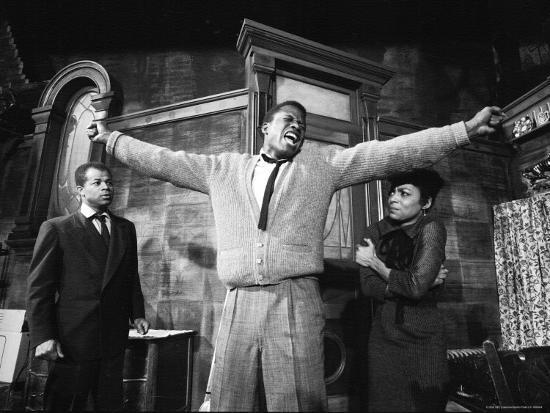
Many submissions from both novelists and screenwriters are filled with “non-conflicted” writing, passages in which “something happens” that is filled with emotion, description, and symbolism in which no conflict happens to change the character(s) and forward the story, from a dramatic point of view.
In professional storytelling, drama is all that matters—not just in general, but in each and every scene.
The “scene” is the unit of drama. What makes a scene different from an event, or “something that happens,” is that in a scene a conflict is introduced and/or resolved. It’s that simple. A scene has a well-defined beginning, middle, and end; the beginning’s purpose is to “set up” the conflict, the middle works through the conflict’s components or obstacles, and the end “resolves” the conflict and/or, in some cases, introduces the next conflict.
In Memoriam Umberto Eco

I met Umberto Eco just once, but it was enough to impress me
with the awe reserved only for the most serious storytellers I’ve come in touch
with over the years, like Carlos Fuentes and Eugene Ionesco. By sheer
serendipity, our offices were adjacent at the University of Bologna, when I was
Fulbright professor there. Still, I was surprised to hear from him after my
review of The Name of the Rose in The Los Angeles Times appeared.
He called it, “the best review I’ve read,” and republished it in his Essays
on the Name of the Rose (Bompiani, 1985). May he rest in honor.
The Name of the Rose by Umberto Eco
Hardcourt Brace Jovanovich
 here is a kind of novel that changes our mind, replaces our reality with its own. We live in a new world after we've read it. Umberto Eco, the celebrated Bolognese semiotican and Joyce scholar, brings us a new world in the tradition of Rabelais, Cervantes, Sterne, Melville, Dostoevsky, Joyce himself, and Garcia-Marquez.
We recognize the author's claim--or disclaimer--in the prologue to his "terrible story of Adso of Melk": that it's a hasty translation of a lost transmittal copy, that he's uncertain about its value and about the need to publish it. He refuses to allow his reader to easily suspend disbelief because his purpose is to explore the relationship between belief and narrative.
Filled with the good-natured polyglot banter of the superfluosly learned, "The Name of the Rose" might be seen only as a effete "Canterbury Tales" except for tell-tale markings on the walls of its medieval monastic library, markings declaring that this records of those walls' destruction is itself a labyrinth in the library's image. We learn the markings, deconstructing the book as we read. We see how the labyrinth operates on more than one level-in our imitative act of finding our way in and out. Eco makes his intellectual riddles accessible by weaving them into an intriguing detective story. A series of grisly murders turns Brother William of Baskerville, and his assistant Adso (our narrator), into prior-day Sherlock Holmes and Watson.
William is friend of Occam, admirer of Bacon, devotee of Aristotle, and consumate practitioner of Thomistic analysis. Like Joyce's Dedalus, he studies the world's signs and cluse with eyes both open and closed; his vision is so exhaustive--literally and metaphorically--that he at one point sees through six eyes.
Through the course of their investigations of the abbey's crimes and its secret heresy, we're given the flavor of the waning Middle Ages in Southern Europe, the ephemeral unity of medieval thought under the Thomistic rule had long since been abandoned as a possibility, and Aquinas himself, suspected of having been a self-important windbag. Now "everything looked the same as everything else," and all morality is arbitrarily and universally metamorphosed.
If you had a romantic notion of the relative simplicity of the late Middle Ages, Eco modernizes your view. He paints a time of multiple popes and multiple anti-Christs, a time when a man would trade sexual favors for a book, when the papal palace in Avignon displaced "crucifixes where Christ is nailed by a single hand while the other touches a purse hanging from his belt, to indicate that he authorizes the use of money for religious ends..."
In a time of diminishing belief, all hands reach desperately from the encroaching shadows of doubt. There were monsters in the imagination in those days: "The cynocephali, who cannot say a word without barking... blemyae, born headless, with mouths in their bellies and eyes in their shoulders... and those whose soles are reversed so that, following them by their footprints, one arrives always at the place whence they came and never where they are going..."
No less marvelous, in the vanished monastery we find their counterparts in a guarded reliquare displaying "the tip of the spear that pierced the side of the Saviour!," "a yellowed shred of the tablecloth from the last supper," "a piece of the manger of Bethlehem," ..."a tibia of Saint Margaret," "a rib of Saint Sophia," "the chin of Saint Eobanus," "a tooth of the Baptist," "Moses' rod," "a tattered scrap of very fine lace from the Virgin Mary's wedding dress"--and much, much more.
Later, in Ados's dream during the "Dies Irae" of Terce, the holiness is comically transformed into "the tail of Saint Ubertina, the uterus of Saint Venantia, the neck of Saint Burgosina engrained like a goblet at the age of 12..." The narrator's dream itseld is one of the richest in 20th-Century literature, a mad comination of Fellini, Fuentes, Borges and Bosch. William's interpretation shows how his assistant's dream was a dream of books, a dream of dreams, of a past and future inextricably mixed in imagination--a triumph of intertextuality. And it provides the key to the mysterious and outrageous crimes they're investigating.
Criminal investigation and exploration of theology and the mentality of the era are interlaced with a comic explosiveness of language reminiscent of Rabelais, as when the semi-demented Salvatore fives Adso a recipe: "Facilis. You take the cheese before it is too antiquum, without too much salis..."
Eco's characters may verge on the dry, but the plot is as neat as Conan Doyle or Christie, with ironic undertow echoing Chesterton's Father Brown series.
The interplay between Adso and William like that of Quixote and Paza, involves us in the paradoxical mind of the times: a delicate but thorough mixture of rationalism and superstition. We prefer, by authorial design, Adso--even when his private opinions nudge against a heresy not yet born: "The older I grow and the more I abandon myself to God's will, the less I value intelligence that wants to know and will that wants to do; and as the only element of salvation I recognize faith, which can wait patiently, without asking too many questions."
Eco dances on the banks of allegory without drowning in its inane waters. As his characters wrangle over the question of whether Christ possessed property, the narrative offers chilling insight into mores that suggest those of our own time, when the Church of Rome, for all it ecumenicism and globetrotting Popes, still belies its own vow of poverty.
But the book's central dialogue is between men and books, and books and books, and only through the latter, men with men. We harbor the notiron of a preliterary world, where ideas have yet to be born and we commune directly with reality. William disillusions Adso of that concept, and Adso admits the lie: "Until then I had thought each book spoke of the things, human or divine, tha lie outside books. Now I realized that not infrequently books speak of books... In the light of this reflection, the library seemed all the more distrubing to me. It was then the place of a long, centuries-old murmuring, and imperceptible dialogue between one parchment and another, a living thing... a treasure of secretes emanated by many minds, surviving the death of those who had produced them or had been their conveyors."
When the labyrinth is unwoven we're not surprised that "the plan of the library reproduces the map of the world." When the crime itself is solved, the cause is not a contemporary murderer but... I won't spoil the the book for you. Suffice to hint that laughter and comedy move from the diabolic to the humanistic, that the name of the rose is a play of words.
A true investigation succeeds from a false pattern, and the plot to destroy comedy is succesful by accident. But the investigation's success is superficial. William's antagonist, Jorge of Burgos (foreshadow of Luis Borges), succeeds in repressing the book which might have undermined the stucture of all holiness. William accuses Jorge of being Satan: "The Devil is not the Prince of Matter; the Devil is the arrogance of the spirit, faith without smile, truth that is nevere seized by doubt."
A book like this seeks to replace the world with itself, and eventually does so, showing the reader that reality, except as vision, is already inaccessible; that only vision matter; that even before he began reading it can lead us to recite, with a Kempis, the great imitator: 'In omnibus requiem qaesivi, et nusquam inveni nisi in angulo cum libro.' " (In all things I have sought peace, and nowhere have I found it except in a corner with a book.)
Kenneth J. Atchity
Happy 80th Birthday Oscar... you are missed
To celebrate what would have been his 80th birthday, Oscar’s family and friends generously shared some wonderful photos of Oscar and his extended musical family taken over the six decades of his career.
These photos will be included in Dan Donaghy's upcoming blog on Oscar’s music, VivaOscar.com.
Listen to Oscar's music on Spotify here
These photos will be included in Dan Donaghy's upcoming blog on Oscar’s music, VivaOscar.com.
Listen to Oscar's music on Spotify here
Subscribe to:
Posts (Atom)