"The universe is made of stories, not of atoms."
—Muriel Rukeyser
____________________________
Showing posts with label HOW I BECAME MY FATHER...A DRUNK. Show all posts

Alcoholism: A family disease with a cure BOOK REVIEW of Bill Borchert's How I Became My Father ... A Drunk!

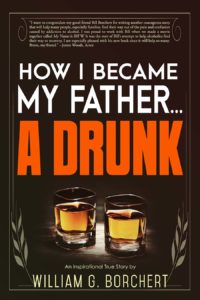
How I became my father…a drunk, A memoir by William G. Borchert (BOOK REVIEW)


purchase on Amazon.com

Alcoholism is often seen to run in families. In fact, research shows that a family history of alcoholism increases the risk of alcohol use disorder by 50%. While scientists may call it the “alcoholism gene” there is usually more to the story that just genetics.

The inspirational true story, “How I Became My Father…A Drunk” portrays a family impacted by the devastating disease of alcoholism for generations, but has a happy ending. Why is this book a honest and intimate must-read? How can it help anyone who reads it find hope, get in the shoes of an alcoholic, and understand the impact alcoholism has on families and loved ones?

We review this book here. At the end, we invite you to share your questions and comments as we try to provide personal and prompt responses to all legitimate inquiries.


6 truths about alcoholism and alcoholics


In How I Became My Father…A Drunk, Bill Brochert takes us on a journey that begins in his childhood living in a family impacted by his father’s alcoholism. It takes us through his youth when he starts drinking and into his adult years where he discovers 12 Step meetings and gets sober.

This story that evolves through a long stretch of time allows us to sneak a peak at some typical situations in the lives of active alcoholics and their close family and friends. Moreover, it shows how the effects of alcoholism are transgenerational and can influence anyone that finds him or herself in its path.
Here are some general truths I recognized in this book.


1. Alcoholism is a disease.

You know that there is something dysfunctional about the family portrayed in this book from the very start. Bill’s father can be constantly found in Moochie’s Bar and Grill. The family moves from place to place to be able to pay out debts and keep food on the table, yet Bill’s dad keeps on drinking every day.

One characteristic of alcoholism is continued drinking despite negative consequences. Eventually, the brain and body become dependent on alcohol for normal function. In the story, Bill’s father will continue drinking even as his brothers and drinking buddies pass away due to the same disease. This behavior will continue to inflict great pain to Bill, his mom, and his brother and sisters.

Later on, as Bill starts his relationships with alcohol, he will find himself moving his wife and children from one to another smaller house, owing large amounts of money to sharks, struggling to pay the bills, and even at a point living in his mother-in-law’s basement.

2. Alcoholics are not bad people.

We tend to view drunks as evil people. But the author manages to capture the other side. Bill’s dad will always try to compensate for his problem drinking. He tries to win the family’s affection in many ways: buying a new car, taking them to a carnival, organizing something special for Bill’s birthdays, etc. In fact, he will unsuccessfully attempt to quit drinking many times (right before he goes back to drinking), and in these sober times he is a very different and loving person.

3. Codependency is a real issue.

Out of shame and fear of losing face and the only income the family has, Bill’s mom will call the newspaper to lie and cover for his dad whenever he’s been drinking too much. She will also lie to relatives, try to keep the family’s image in front of neighbours, and for a long time act as if there is nothing wrong in front of the children. Many of these behaviors only enable the drinker.

4. Alcoholics are good liars and deceivers.

Although deep down they may be good, honest people, alcoholics will try to disguise their problems and would rather not talk about it. Bill will lie to his wife and to his employers. He will also deceive bar owners where he would frequent for several days just to get acquainted and then he’d say he lost his wallet or forgot he didn’t have any money. After such event, he would usually never show up there again.

5. Blaming fuels problem drinking.

As he starts drinking, Bill believes that the bad things that happen in his life are a result of bad luck. He places an external locus of control for what goes wrong. Progressively, everything is someone else’s fault. Moreover, everyone and everything becomes a reason to drink.

This is the vicious downward spiral that many people can relate to: your drinking causes problems in your life → you can’t deal with the pressure of those problems → you will drink because the horrible circumstances “force” you to.

6. Self-pity and a sense of entitlement are present during alcoholism.

As a spiraling alcoholic, Bill is a victim of what we now know as “stinking thinking”. Oftentimes, he will start to feel bad about the things that he does to his wife and children, but the only way he know how to soothe this pain is by grabbing a drink. He develops a bizarre sense of entitlement thinking that he’s not paid enough money at his job, so he starts to cover his private expenses with the newspaper’s money.


Sobriety: The power to turn your life around


As the disease of alcoholism gradually and insidiously strips everything away from Bill, he will find the strength needed to get help. In fact, it is his wife that will have the strength to stay with him and support him, and his mother-in-law that will have the faith to never give up on believing that he’s a good, but a sick man.

After one unsuccessful attempt to quit drinking, Bill will start to work the 12 Steps. Soon, things start going for the better. He can take his life back into his hands, pay out debts, and eventually save up to buy much better and bigger houses and progress in his career. The true blessings, however, come from the gifts that he is able to give others, like finally leading his father along into sobriety, making his mom happy by giving her the loving husband she always wanted, caring for their children and family, and helping out other people struggling with alcoholism.


Why we like this book?


William (Bill) G. Borchert is a great writer! This is a book that you will pick up and not be able to put down. His narrative is rich and simple, and you can feel he poured his heart and soul out into every sentence, page, described event.
Here is what I find to be the most important lessons from How I Became My Father…A Drunk:

1. Alcoholism is a disease with genetic predispositions. If you add up the environment that is the alcoholic household, as well as peer pressure, the road has been paved towards developing an alcoholic problem. Bill despised his father’s drinking and what it had done to the family, yet that wasn’t powerful enough to keep him from making the same mistakes.

2. The partners of addicts are extraordinary people. It is even incomprehensible where they find the strength to hold everything together as it all falls apart due to drinking. Bill’s mom and wife both are repeatedly loosing hope, feeling embarrassed and afraid, being lied to and disappointed. They tried to keep it all together, care for the kids, and pray for a miracle (a miracle which in their case eventually happens).


Becoming a drunk or getting sober: Do you have questions?


Do you have something that you’d like to ask or add? Have you read, “How I Became My Father…A Drunk?” Feel free to post your thoughts and questions in the comments section at the end of the page. We try to answer all legitimate inquiries personally and promptly.

About the Author

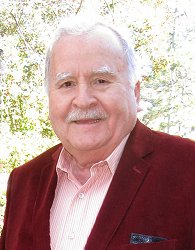
William G. Borchert is an Emmy nominated screenwriter for the movie “My name is Bill W.” a story about the founding of Alcoholics Anonymous that won three Emmy Awards. He also wrote the screenplay for the movie, “When Love Is Not Enough”. Bill is an entertaining and informative speaker, carrying his own message of recovery to medical groups, college campuses, large business organizations and recovery conventions across the country. He is also a Trustee of the non-profit Willingway Foundation in Statesboro, Georgia that sponsors and supports college students in recovery from alcoholism and drug addiction and also holds workshops to help educate and fight against the stigma of addiction.


Read more at Addiction Blog

Breaking the Cycles Features Guest Author William G. Borchert Shining the Light on Family Addiction

Shining the Sunlight on Family Addiction by Willam G. Borchert


Having been sober for many years now, it continues to frustrate me no end that despite all those in the recovery field striving gallantly to educate the world about the fact that alcoholism is a disease, the shame and stigma remain. Too many people still consider abusive drinking a moral weakness or the lack of will power.

Sadly, I’m convinced that’s why so many alcoholics and drug addicts deny their addiction and why this denial keeps them sick, makes them sicker and kills too many.

I have felt this stigma more than once in my own life and still do on occasion. Even though I have become a rather successful author and screenwriter, I can still see people pause and reflect when, should the situation call for it, I mention that I am a recovered alcoholic.
For a long time I prided myself on being one of those people who was totally open about his sobriety—that my recovery was an open book and I was only too happy to offer you chapter and verse should you be interested. I didn’t realize I was practicing halfway measures until about two years ago when I was forced to come face-to-face with all the skeletons in my “alcoholic closet.”

Openness Can Help Reduce the Stigma

I was speaking at a large convention in West Palm Beach, Florida and, since there were many gray heads in the hall, I happened to mention the terrible relationship I had with a drunken father when I was a child. I had never done this before. Then I went on to say that my father also found the miracle of sobriety and how his recovery and my own helped heal both of our families.

After my talk, the convention chairman and I struck up a conversation about how the disease of alcoholism creates so much pain, despair and disaster in families, that it is truly a family disease and that so many don’t know how to break the cycle of addiction.

The chairman then suggested that since I had written eight books and several movies on the subject of recovery—including the most watched television movie ever made, “My Name Is Bill W.” —that I write a book about my father and I and how alcoholism affected our families.

My initial reaction was negative. I didn’t want to face all those skeletons again, all that pain and shame, reliving a past I had put behind me. I had always thought that being open about my own disease was enough. But the more I thought about it, the more I came to realize it wasn’t—not if I was sincere about helping people, including families, find a way out as my dad and I did. And the more I talked with close friends including my wife, the more they helped convince me it was a book I should write. I finally did.

How I Became My Father…A Drunk – a Book to Help All Who Are Affected by Family Addiction


I didn’t realize until I completed my research and put pen to paper that this would be a book that would help me come completely out of the shadows of addiction and into the bright sunlight of personal and family sobriety. I found joy and gratitude in places I had never looked before.

howibecamemyfather-adrunkI came to realize that there are millions of families trapped in the malady of addiction. Faced with a husband or wife or a son or daughter getting sicker by the day from abusive drinking or taking drugs, the shame and stigma only makes things worse. They don’t know where to turn or what to do. Hopefully, the experience of my family and my father’s family will help show them the way.

So I keep writing about how recovery from addiction can lead to productive and fruitful lives, hoping that somehow it might reduce the shame and stigma and that more people will come out of the shadows and into the sunlight.

I would like to believe that the more the world comes to know “the sober alcoholic”, the more the stigma will gradually disappear. At least that is my hope.


Guest author, William (Bill) Borchert, sheds light on the family disease of addiction in this post and his new book, "How I Became My Father...A Drunk."Guest author, William G. Borchert, is shining the light on family addiction. As readers of BreakingThecycles.com well know, this disease affects not only the person who has the substance use disorder (aka addiction), but it affects their families. Together, they represent approximately 120 million Americans – that’s roughly one-third the American population! So it is with great respect and admiration that I share William’s (Bill) guest post on this devastating family disease and the life-fulfilling recoveries that all whom are affected can share.

William (Bill) is a multi-published author, national speaker, and Emmy award-nominated screenwriter. In addition to his long career as a book and screen writer and movie producer, Bill is the author of the movies, “My Name Is Bill W,” starring James Garner and James Woods, and “When Love Is Not Enough,” starring Winona Ryder and Barry Pepper. His film, “My Name Is Bill W.,” has become the most watched television movie ever made. Bill and his wife, Bernadette, live in Stratford, Ct. They have nine children and 24 grandchildren. His latest book, How I Became My Father…A Drunk is available at Amazon.com. To learn more about Bill and his work, visit his website, WilliamBorchert.com

Celebrities Toast to Sober Film Festival: Screening of Alcoholics Anonymous Classics Written by author William Borchert

Writers In Treatment is bringing its Los Angeles based REEL Recovery Film Festival & Symposium to CINEMA VILLAGE, 22 W. 12th St., NY, NY 10003, from Sept. 23 - Sept. 28.

All films $10.00

This 7-day film festival and recovery symposium is a celebration of film, the arts, creativity, recovery from substance abuse and alcohol addiction. Showcased are filmmakers who make honest films about addiction, alcoholism, behavioral disorders, treatment and living sober. Slated for screening is an eclectic lineup of contemporary and classic films, documentaries and shorts from first-time filmmakers and industry veterans.

Screening of Alcoholics Anonymous Classics Written by author William Borchert: My Name is Bill W. Starring James woods and James Gardener & When Love is not Enough- The Lois Wilson Story - Starring Winona Ryder and Barry Pepper 


LIVE IN PERSON: Q & A with William Borchert (between screenings) discussing the books behind the films and filming of "My Name is Bill W," and Bill will also be signing his newest book, "How I Became My Father...A Drunk

The REEL Recovery Film Festival & Symposium also plays in: LOS ANGELES, CA Oct. 20-27, FT. LAUDERDALE, FL NOV. 2-5, DENVER, tba, HOUSTON, tba.

Primary sponsors: Best Drug Rehabilitation, Tres Vista, Recovery Centers of America, and Betty Ford Center.

About Writers In Treatment

Writers In Treatment is an organization whose primary purpose is to save lives through free referrals guiding individuals towards 'treatment' as the best first step solution for addiction, alcoholism and other self-destructive behaviors. They also offer educational, prevention and awareness programs that help reduce the stigma of addictive disorders. Their REEL Recovery Film Festivals provide Entertainment, Education and Inspiration to men and women suffering from addictive disorders, those in recovery or those on the cusp.

For more information: Leonard Buschel 818-762-0461.

In The Rooms Book Club Recommends William G. Borchert's How I Became My Father ... A Drunk!


How I Became My Father…a Drunk


By William G. Borchert
William G. Borchert’s inspiring and courageous memoir probing the intimate details of a family devastated by the disease of alcoholism, and blessed by recovery. Borchert wrote the screenplay of My Name Is Bill W, the most-watched television movie ever made. “I am a fan of neither pain nor discomfort which is what this effort of disgorging the past entailed,” Borchert reports. “But some very good friends finally convinced me over a period of time that sharing my own experiences in addition to the generous input from those in my family closest to me could offer hope to other alcoholics and show families devastated by the disease that there is a way out. In an age when there are still more than 44,000,000 alcoholics affecting at least eight others around them, over 200,000,000 people are looking for help. That is a plague. My personal experience with this disease proves there is help available as well as a pathway to a new life beyond their wildest dreams.” The author of eight books and producer of other successful films, Borchert not only wrote the Bill W story about the founding of Alcoholics Anonymous, starring James Woods, James Garner and JoBeth Williams but also the highly acclaimed movie, When Love Is Not Enough, about the founding of Al-Anon, starring Winona Ryder and Barry Pepper. The author and screenwriter said his new book was by its very nature even more difficult to write.

Bill Borchert Wants to Chat With You!

WILLIAM G BORCHERT is an Emmy nominated screenwriter ("My Name Is Bill W.", "When Love is not Enough") and author of eight books. How I Became My Father is ... A Drunk! Available on Amazon: http://amzn.com/B016V6PFRE


Addiction to alcohol and/or drugs is a devastating and incomprehensible disease. It reaches down into the very core of the alcoholic and his or her family and destroys their most precious possessions--love, faith, trust, confidence and finally hope.

While intimate and painful at times this book tells the dramatic love story of one such family. It initially focuses on how the backlash of alcoholism foments anger and hatred between and father and son that eventually inundates the entire family. Every glitter of hope is seemingly drowned and growing despair leads to near devastation.

Interview with William G. Borchert – Author, National Speaker and Emmy Award Nominated Screenwriter.


purchase on Amazon.com

Even if you don’t recognize the name William (Bill) G. Borchert immediately, it is quite likely, if you’re in recovery from alcoholism, you will have watched one of his movies, and/or read one of his books, perhaps more than once. Bill is a multi-published author, national speaker and Emmy Award nominated screenwriter for the highly acclaimed Warner Brothers/Hallmark Hall of Fame movie, “My Name Is Bill W”. It won three Emmy Awards and has become the most watched television movie ever made. Bill also wrote the screenplay for the Entertainment One/Hallmark Hall of Fame movie, “When Love Is Not Enough” which was based on his book about Lois Wilson, Co-Founder of Al-Anon and wife of Bill Wilson.

Bill began his career as a journalist in New York City, working as a reporter and writer for one of Americas most prominent daily newspapers. After working as a feature writer for national magazines and creating syndicated radio shows, Bill became a partner at Artists Entertainment Complex, an independent film production company that went on to produce a number of box office hits including “Kansas City Bomber”, “Serpico” and “Dog Day Afternoon”.

I had the privilege of interviewing Bill Borchert recently, about his remarkable life and latest book, “How I became my Father, a Drunk”, which was published in October 2015 by Story Merchant Books, Los Angeles, California. The book gives an intimate and highly emotional account of his life growing up in an alcoholic home, his own journey through alcoholism and how he overcame his difficult past, to become one of the most proactive carriers of the Twelve Step Message in modern history.

Nicola:  Bill, it’s an honor to talk to you today. I appreciate you giving me your time. I’ve read many personal     accounts of recovery from addiction, but this one touched me on a whole other level. I think it’s because it’s so familiar to me and triggered some deep emotion. What were the emotional challenges for you writing your entire life story – or were there any?

Bill: It was a challenge in the beginning because it wasn’t something I was planning to write – ever. It was a gentleman that I met at a convention that suggested and encouraged me to do it. Then with further encouragement from my brother, sisters and my wife, I decided to go ahead and begin writing. It was around that same time I found a cigar box that I hadn’t opened in years, belonging to my Father. It was filled with notes he wrote from his days at twelve step meetings and when I started to read through them, I realized that this was a book that God wanted me to write. Halfway through writing the book all my pain went away and it became an exhilarating experience – and eventually turned out to be a wonderful experience.

Nicola:  You write in detail about very early years of your life. Was it difficult to recall those times?

Bill:What’s amazing is that sometimes I can’t remember what happened yesterday, but I can remember things from forty or fifty years ago. I also talked to my siblings if I needed clarification on anything, but mostly the memories were still vivid.

Nicola: You talk in the book about your writing as a young boy. Do you think it was a form of therapy or escape for you?

Bill: It was absolutely a form of escape. The holy sisters that taught me in school encouraged me to read and I became an avid reader. I loved to read stories about simple people who did heroic things and I could imagine myself doing them also. As I began to write it enabled me to get out of myself and be able to become other people and therefore escape the terrible things going on in my own home. It helped me a lot.

Nicola: You entered a seminary at fourteen years old with the intention of becoming an Ordained Catholic Priest. There was a comment your Uncle made to you about being able to change your mind about your decision anytime you want– and you held onto what he said and replayed that thought in your mind over the years. It suggests to me that you entered the seminary for other reasons than devotion to God. Would my assumption be right?

Bill: It turned out that when I began to get honest with myself and did an honest inventory of, I had to admit that a very large part of me going away to that seminary, was to get out of the house and get away from the situation. I loved being in the seminary. I had no home sickness. I was so happy and felt nurtured there. The trauma I experienced happened when I would come home on summer vacations. My mother noticed this and she would get very upset because I wanted to leave so soon after getting home.

Nicola: And of course that would bring up guilt feelings for you – being torn between your loyalty to your family and the need to feel safe at the seminary?

Bill: Oh yes – absolutely. But that’s how it is for children raised in alcoholic homes. There is a feeling of fear almost all the time.

Nicola: You managed to highlight the chronic co-dependency present in your entire family and how each member of the family interacted with the other. The high emotion was beautifully but painfully depicted – especially between your sister and mother.

Bill: Yes, my sister and I have talked a lot about this stuff since I wrote the book. She would constantly try to please my mother, but whatever she did it was never good enough and she could never understand why. Again in alcoholic families there is so much misdirected anger and confusion – it’s most definitely a family disease.

Nicola: It was interesting to me, that despite the discipline and praying at the seminary, you had a thought come to you that you couldn’t actually feel the presence of God – you believed He was there, but couldn’t feel Him. With the heavy reliance on a Higher Power being the central part of a twelve step path, do you think if you had felt that back then it would have steered you away from your alcoholism?

Bill: That’s a good question, but I don’t know. And the reason I don’t know – is because I’ve had a lot of friends who became priests and still wound up becoming alcoholics. When I talk to them they’ve said they didn’t really find a personal God until they entered a twelve step program. Even though they became ordained priests and served in parishes and went on missions to different parts of the world. But it wasn’t until they found twelve step that they felt connected.

Nicola: Do you think that’s because in twelve step it’s encouraged to find your own understanding of a God?

Bill: I think so, yes! Because the thing is, I didn’t find God, I was taught God. I was told this is the God I should believe in. And because of all the strictness of that God, to me everything became a sin. That’s what I became to believe. So It’s very tough to find a personal loving God when you’ve got that kind of, tsar like strictness.

Nicola:  That strictness comes from your Catholic upbringing?

Bill: Yes I believe so. I’ve got what I always call a 1950’s conscience, where everything I did was wrong. I remember one day in religion class, when the sister talked about moral sin – she would walk to the boys side of the classroom. She said, if you look at a girl and have an impure thought, you can go to hell for that. And I remember the guy, McDonald was his name, sitting behind me saying “well if you can go to hell for thinking about it, you may as well go the whole way and just do it”. So there was this huge confusion and fear in my life. Even wearing patent leather shoes was a sin. So I became very confused and fearful about religion and God. In the seminary I was disappointed that I couldn’t feel the presence of God – especially because the other boys there could. So my spiritual director saw that I wasn’t developing a spiritual life you need to be a Catholic priest.

Nicola: Where do you find and feel God now?

Bill: A lot of people have said it, but I feel Him a lot at meetings. I find Him a lot through interpersonal relationships with the people that I sponsor, and now that I’ve gone back to my faith and back to church I find that I can connect to him in a way I couldn’t earlier in my life. Twelve step has enabled me to have a clearer picture of who God is. God allowed me to go through all the stuff that you read in my book in order for me to really find Him and carry His message to other people. I don’t believe that there’s a different God for everyone. God was with me every time I got into trouble. I’d be sitting at the bar and the bar tender would say – “I don’t know how you’re still alive kid” – and I’d reply – “it’s because I’ve got the Holy Ghost on my tail”.

Nicola: You seemed to have been guided by a lot of good people also, like Art McClure, your boss at one of the newspapers you worked for.

Bill: Art McClure was also a terrible drunk. He was like a father to me. He loved me to death and thought I was a great writer. Despite the fact that he was a drunk himself and had blown a big part of his career – he didn’t want me to do the same. Art still believed that alcohol was his friend in some way. That it kept him going. Yet he wanted something different for me.

Nicola: And of course there’s that romantic and sometimes chaotic correlation between the roaring drunk and the great writer. So many great writers died from alcoholism. Do you think your creativity was helped or hindered by your alcoholism?

Bill: At the time I thought I was a better writer with a few drinks – but it got to the stage where I would write something and I’d get up and couldn’t even read it the next morning. The ability to take advantage of the talent that God had given me didn’t come into play until I got sober. And it was difficult. It was not easy to write sober at first. I remember sitting at the typewriter with a blank sheet of paper and trying to put words on it and I was sweating blood because I had never done much before without a drink. I mean, I did everything with a few drinks.

Nicola: I remember beginning to write again as a sober woman, after not putting pen to paper for over fifteen years. The emotion that came up was stifling. I couldn’t get the words to make sense – Is that familiar to you?

Bill: That is absolutely, totally, familiar to me and I can relate totally. Also added to that was my low self-esteem and my terrible doubt about myself. I had gotten to a point in my life that I believed that I would never have a good life again, or accomplish again. Never again could I get a good job in the media. And so when I got sober I carried all this with me and I really didn’t think I was capable of writing anything good anymore. Thank God for my sponsor. I write about my sponsor Benny in the book. He was an incredible human being in a very simple way. He was a simple man from Brooklyn New York. He would encourage me in very simple ways – and he helped me find God again. He told me that God would not have given me these talents if I was not capable and unable to do something useful with them. It was because of him I started all over again. He would tell me all the time and I believe it to this day, that whatever we dream, we can do. God is not a big tease and he wouldn’t give us the ability to dream if it wasn’t possible to achieve those dreams.

Nicola: We always really need people on our side, like a coach when we lose that belief in ourselves, and it sounds like Benny was yours?

Bill: Yes he was definitely mine.

Nicola: So you are now fifty four years in recovery is that correct?

Bill: Yes this month – I came into recovery in March 1962.

Nicola:  The miracles seem to have started for you immediately. The whole book is a real testament to the effectiveness of twelve step recovery.

Bill: Yes. There was a sequence of events that happened, that I wrote about early on in my recovery that left me in no doubt that I was being looked after by a Higher Power. I can’t find another explanation for it.

Nicola: The concept of anonymity always intrigues me, especially when it comes to people who write about their experience and share it publicly. How do you interpret anonymity and do you regard yourself as anonymous still?

Bill: I try the best I can to be anonymous at the level of press radio and film, but I’m not anonymous to people who ask me, that I’m a recovered alcoholic. I’m not at all ashamed anymore, and I know there’s still a stigma. The reason there is a stigma is because people don’t know the recovered drunks. They only know the active drunk. They see the guy falling down the street or beating his wife, but they don’t know enough sober alcoholics that have found a good life, that are successful, and getting on with things because we hold it too close to our chest. We don’t have to say we are members of Alcoholics Anonymous, or whatever twelve step group we belong to. All we have to do is say that we have recovered in a twelve step program. I can say that and it’s not breaking my anonymity.

Nicola: Right – and I feel that the misinterpretation of anonymity does hinder rather than help – would you agree?

Bill: Dr. Bob used to always say that anonymity was the most misunderstood concept of Alcoholics Anonymous. He would get very upset when people would only use their first names at meetings. He would say we shouldn’t be anonymous to each other, and we still do it. It’s nuts because people don’t understand the true concept. It’s just about not revealing the twelve step program you belong to. It’s that simple.

Nicola: So when writing the scripts for My Name Is Bill W. and Love is Not Enough, you actually met and built up a strong relationship with Lois Wilson?

Bill: Oh yes, Lois, my wife Bernadette and I were very close friends for fifteen years.

Nicola: What was she like?

Bill: Oh she was a doll. She was the most simple, humble lady you would ever want to meet and at the same time, very strong in her opinions about things. How I really got to know what she was about was this; every year she would have a picnic at her home up in Stepping Stone New York and hundreds of people would come. At the end of the picnic Lois would come back inside and people would come in and say goodbye. I was standing in the living room one time, watching this go on. They would kneel in front of her and they would kiss her and they’d be crying thanking her for saving their lives, and for the new found strength of their families. I thought to myself, even God would be pleased with this type of adulation you know? And I asked her, “Lois, how do you deal with this?” She smiled and said – “I’m gonna tell you but you still won’t understand – I am only a symbol of what they have found in Alanon”. She blew me away – she knew who she was – just a symbol.

Nicola: That’s real humility isn’t it? Reminds me of a Marianne Williamson quote where she asks “who are we not to shine?”

Bill: Yes and Lois knew you could shine as a symbol. You don’t have to pound your chest and tell the world how good you are, just shine naturally and the world will see it.

Nicola: With the array of treatment options in our modern society, do you still think that twelve step is the most effective for alcoholics?

Bill: That’s a very interesting question – and I’ll tell you why. I’m talking with a Physician right now in New York who specializes in addiction. We discussed how people have been critical of the twelve step model over the past ten or twelve years, saying it’s not science based and all that. I’m thinking about writing a book about it. We have discussed other types of treatments, and I’ve talked to others in the field also and they have come to the conclusion that the best treatment in the whole world is a twelve step program. The main reason for that is because this is a threefold disease. Mental, physical and spiritual. And while other treatments may treat the physical aspects and even the mental, there’s only one program that can treat the spiritual aspect and that’s the twelve step program. Because it is the only one that has the ability to help you find something greater than yourself.

Nicola: What do you think is the cause of alcoholism – is there a gene or is it mostly learned behavior and our environment?

Bill: I believe that it’s a combination. I have great faith in science and medical people, and especially those who are members of twelve step groups. It has been proven that there is a gene connected with alcoholism, but that’s not the whole story. The second part of the story is the environment that we grow up in. It’s a genetic link and then the environment enhances our chances of becoming alcoholic ourselves. It’s my understanding that if you have one parent who is alcoholic you have a fifty percent chance of becoming alcoholic also. If both parents are, then it rises to seventy five percent. It’s the same with drug addicts.

Nicola:  Well Bill, It’s been an absolute pleasure to connect with you as a fellow writer and recovered alcoholic. The world truly has so much to learn from you. You have made me think a little deeper about writing my own story in detail – although I’m not sure I’m brave enough just yet.

Bill: I’ve thoroughly enjoyed and am so grateful for our connection Nicola. I hope you do write that book. We should never waste the talents we have been give. We should always use them to enhance the world if we can.

My brief encounter with this gentle and soft spoken, native New Yorker left me feeling privileged to have connected, almost directly, with the founders of Alanon and Alcoholics Anonymous. Bill Borchert truly carries the spirit of the original twelve step message. If you have any doubts about the effectiveness of this eighty year old solution for alcoholism, Bills Borcherts story may help to dispel them. This book is a message for the entire world. It is totally possible to recover from addiction, and for alcoholics/addicts and their families to thrive and live in peace.

Bill Borchert“How I Became My Father – A Drunk”, is available on Amazon. Bill’s other books include “The Skyline Is a Promise,” “50 Quiet Miracles That Changed Lives,” “When Love Is Not Enough,” “Sought Through Prayer and Meditation,” “When Two Loves Collide,” and “1,000 Years of Sobriety”.

Reposted from I Love Recovery Cafe


WebbWeaver Books Proudly Presents: Author William G. Borchert


purchase on Amazon.com

Addiction to alcohol and/or drugs is a devastating and incomprehensible disease. It reaches down into the very core of the alcoholic and his or her family and destroys their most precious possessions--love, faith, trust, confidence and finally hope. While intimate and painful at times this book tells the dramatic love story of one such family. It initially focuses on how the backlash of alcoholism foments anger and hatred between and father and son that eventually inundates the entire family. Every glitter of hope is seemingly drowned and growing despair leads to near devastation. Then, when all seems lost, the miracle of recovery gradually restores torn relationships and emotional health. That is why this deeply personal story was written--to show alcoholics and their families touched by the painful disease of addictions that hope does spring eternal to encourage and guide them to reach out and seek the path to recovery.

There are more than forty million alcoholics and drug addicts in the United States alone according to the U.S. Department of Health and the American Medical Association. Each addict affects at least five to seven people in their lives--spouses, parents, siblings and other relatives, close friends and co-workers. That means more than two hundred million Americans are impacted by this terrible malady. This book shows them a way.

See more WebbWeaver Books


Why Would I Want To Read Another Book About Addiction? Larry Sagen Reviews Bill Borchert's How I Became My Father ... A Drunk!

purchase on Amazon.com

If there is one book on your recovery booklist for 2016, I’d recommend William (Bill) Borchert’s newest jewel, How I Became My Father…A DRUNK.  It’s a well-written, heartfelt story about the unfolding drama of generational addiction and recovery and the influential role of the family.  It’s a great read not just for students and young adults who are struggling with addiction, but also for their families and extended families who can support them in recovery.

The book is engaging, entertaining, and offers hope.  Borchert is an excellent writer. Through his personal stories he shares both the horrific tragedy and paradoxical humor of growing-up with his alcoholic father and enabling mother.

The unfolding drama provides many enlightening, ‘ahaa’ moments, as Borchert comes to grips with the fact that as much as he despised his parents for his painful childhood, he then went on to create the same horrific dilemmas for his wife and children.

If you don’t know about author Bill Borchert, he’s written a number of best-selling books and award winning movie screenplays including My Name is Bill W and Lois Wilson’s story about founding Al-Anon, When Love Is Not Enough. My Name is Bill W is the most watched TV movie ever made and was nominated for a number of Emmy’s and Golden Globes.  Renowned actor James Woods won the Emmy Award for his role as Bill W.

In reading How I Became My Father…A DRUNK, I got the sense that it was a very personal and touching venture for the seasoned Borchert.  I interviewed him for this review and he explained that the previous books he’s written were about other peoples’ lives.  This was his first writing journey into his own dark journey (and soul).

Borchert helps readers understand the generational impact of addiction.  He clearly articulates how addiction not only influences, but lives deep in the genes, beliefs, and behaviors of future generations.  It’s supportive and freeing to see and understand that although we are each personally responsible and accountable for our choices, there are also familial patterns that make each of us more vulnerable.

Although the book title alludes to issues between fathers and sons, I must say that after reading it the story is certainly not gender specific.  How I became My Father…A DRUNK speaks to all genders, family positions, and ages.  Borchert’s writing style and story are both engaging and illuminating.  I wish that it was required reading for all college students, whether they’re struggling with addiction or not.

Borchert’s book has gotten rave reviews from Award-winning actor James Woods, Emmy and Peabody Award-winning producer Norman Stephens, Oscar and Grammy Award-winning songwriter and actor Paul Williams and Andrew Pucher, President of the National Council on Alcoholism and Drug Dependence.

I give How I became My Father…A DRUNK a strong five stars.  The paperback and Kindle version are available at Amazon.com.  For more information about William (Bill) Borchert, please visit his website:  williamborchert.com/.


Reviewed by Larry Sagen, MSW (retired)

Larry Sagen was originally trained as a family therapist.  Over the last 20+ years he founded and directed two North American nonprofits.  In “retirement” Sagen has founded reFrame Entertainment, producing and publicizing films, books, music, and events that help people to overcome personal and systemic challenges.

Read more at Recovery Campus


AUTHOR INTERVIEW – BILL BORCHERT – HOW I BECAME MY FATHER ... A DRUNK!

There are a few times in life when you meet someone and you just know it’s an honor. You are not sure why you deserve the honor, all you know is that it’s here, you are presented with it and now you better use it. This is how it feels to interview someone called William G Borchert. Willian – or Bill as many know him was nominated for an Emmy in 1989 for Screenwriting the commendable Warner Bros/ Hallmark hall of fame movie, My name is Bill W. 

The film starred James Garner, James Wood and Jobeth Williams and was based on material gathered and personal interviews. Bill also wrote “When love is not enough,” starring Winona Ryder and Barry pepper. Over the years he has written a number of books, "The Lois Wilson Story: When Love Is Not Enough, Sought Through Prayer and Meditation, 50 Miracles That Changed Lives," and "1,000 Years of Sobriety." 

Bill, thanks so much for setting out some time to share your story with our readers. 

Your latest novel is a very intimate journey called, “How I Became My Father…A Drunk.” Can you tell our readers more about your journey and why you decided to share it with the world?

WB: There has been one primary goal of my journey over the last 50 years or so as a writer who has recovered from the disease of alcoholism.  That goal has been to share my experience, strength, and hope with others suffering from the same malady to show them from my own personal experience that there is a pathway to recovery and a life beyond their wildest dreams.

There was a time as a young man when drinking meant fun, parties and freedom.  It enabled me to do things I was too shy or too timid to do sober. I thought it made me a better dancer, a better writer, a better lover. It was my friend until it turned against me and began taking away everything that was near and dear to me in my life. Then it tried to kill me. That’s why I willingly share my story with others going through the same thing—so they can find what I have found, a new way of life.

However, my new book, “How I Became My Father…A Drunk” is one I never intended to write. I guess I didn’t want to re-live a rather painful and shameful past after years of making peace with it and with those that were involved. But when several very close and loving friends, including my wife, convinced me that my experience growing up with an alcoholic father and then becoming an alcoholic myself could help families better understand the disease and its solution, I put pen to paper.

Alcoholism, like many addictions, is a disease many humans can’t comprehend. How much of what you suffered was heredity?

WB: From my own personal experience as well as from sharing with other recovered alcoholics over some years now, I’m convinced that alcoholism is definitely a family disease.  First of all, science has discovered that it’s in the genes. They say that anyone with one parent who is alcoholic has a 40-50% chance of becoming addicted themselves.  If both parents are alcoholic, there’s an 80-90% chance that one or more of the children will follow suit.

Not only is alcoholism hereditary, it is also environmental. What I mean is, the shameful and harmful behavior of every alcoholic affect, at least, seven other people in their lives—parents, spouses, children, other relatives and friends and even co-workers. 

So, with more than 40 million alcoholics in the United States alone, that means more than 250 million people are impacted in some way by the disease of alcoholism and  most don’t know  what to do or where to go for help. That’s another reason I wrote my latest book—to show that there is a solution.

How have you dealt with the part of society that doesn’t understand what an addict goes through or how he sees the world?

WB: Despite the continued attempt by many in the recovery field to educate the world about the fact that alcoholism is a disease, there’s still a terrible stigma attached to it. Many people still consider abusive drinking a moral weakness or the lack of will power. That’s why so many addicts deny they are addicts and why this terrible denial keeps them sick, makes them sicker and sadly kills too many.

I have been through this myself more than once. Even though I have become a successful author and screenwriter, I can still see people pause and reflect when, should the occasion call for it, I tell them I am a recovered alcoholic.

So I keep on writing about recovery from addiction, hoping that someday it might help reduce the denial among alcoholics and lessen the stigma that surrounds them. The more people who come to know “the sober alcoholic,” the more the stigma will subside. At least, that is my hope.

Has this book had any effect on others who struggle with alcoholism?

WB; I am pleased to report that it has. Even though the book was only published three months ago, I am already getting emails and phone calls from people telling me how much they “identified” with my story, how much it helped them, their parents or siblings and how they are telling all their relatives and friends to get a copy.

Some admitted they had a similar problem with a drunken father, swearing never to be like him and then becoming the same or worse. Several women said it was a drunk and abusive mother that caused the problems in their homes. I really wasn’t that surprised to hear those kinds of stories since, as I said before, alcoholism is a family disease.

One lady told me very excitedly: “This book should be must reading in every home in America.” I should have been embarrassed by such a laudatory remark, but I wasn’t. Since I believe in what she said, I simply replied, “Thank you very much.”

As a world class writer, your success continued throughout your struggle, how did you manage to focus on your work while the balance of your family had to live in the wake of your own destruction?

WB: As we know today, alcoholism, like any other disease, only gets worse not better when left untreated. So as my disease progressed, my success digressed.

By the age of 22, I had become a by-line feature writer for the largest evening newspaper in the world, based in New York City. I was covering and writing some of the major stories of our time. By the age of 25, as a result of my abusive drinking and erratic behavior, I was on my way out the door. I began bouncing from one job to the next, writing for magazines, radio shows, and small public relations firms.

I tried focusing on my work. I knew I was a good writer when I was sober. I knew I was a young man who had been given tremendous opportunities to achieve significant success and financial reward in a career I loved. But I had no idea that my disease made me powerless over alcohol. I walked around with a mental obsession for booze that turned into a physical craving once I picked up the first drink. As a result, my whole life became unmanageable and my wife and children suffered the consequences.

By the age of 27, I was just about unemployable in the media world of New York City. I had developed a reputation as an unreliable drunk who turned in phony stories and cheated on his expense account. I was deeply in debt, drank up two lovely homes and was now living with my wife and four children in my mother-in-law’s basement.

Why my wife stayed with me I couldn’t understand. I would have been long gone. But she says she still loved me and prayed that the good Bill she knew was deep inside would one day come out. And I thank God every day that her mother was kind, generous and understanding enough to take care of my family when I couldn’t. I also thank God for being able to make amends to them all when I finally got sober.

If you grew up feeling the power of addiction, seeing the dark veil it had over yourself, your family—what made you fall into the same trap?

WB: That’s a question most addicts, if not all, find almost impossible to answer—at least in a way that non-addicts can understand.

You would think, for example, when an alcoholic reads in the newspaper or sees on TV that a drunk driver killed three small children as they were crossing the street that he would never again get behind the wheel when he’s drinking. But he does.

Alcoholism is a three-fold disease. It affects one physically, mentally and spiritually. It’s that mental part that triggers the kinds of decisions and actions that can lead to disaster—the kinds of decisions non-drinkers cannot understand. But neither can the addict.
I promised myself I would never be like my father. But one night in a crowded saloon, surrounded by the camaraderie of other newspaper reporters, I gave in to the peer pressure and had a few drinks.  Little did I know the exuberance I felt was from my alcoholic genes coming to life. Those damn genes told me I could handle few drinks now and then, particularly on special occasions.  They lied to me. Soon every day was a special occasion. 

Soon one drink was too many and a thousand weren’t enough.
As a result, there were many things that I began doing over and over again that I never wanted to do in the first place. But I was now powerless over alcohol. My body craved it. And once I took that first drink, all bets were off.

When did you know you wanted help?

WB: As I began to feel things slipping away and couldn’t understand why I was unable to stop drinking, I tried many different ways to help myself—taking pledges, pleading with God, going to church, trying harder to focus on my job and on my family.  But nothing worked. Things continued to get worse.

It wasn’t until thoughts of suicide started to invade my booze-soaked brain that I finally reached out beyond myself for help. I discuss that period of my life in some detail in my new book.

How has this mindset changed your life?

WB: Despite my thoughts of suicide, deep inside I knew I really didn’t want to die. The real problem was I didn’t know how to live. I had no goals, no direction, no guidance and no support. All I had was fear and a lack of hope.

Then I came into a Twelve Step recovery program.  I was now ready to admit I was powerless and willing to do whatever it took to get sober and stay sober.  At the suggestion of a sponsor, an older man who had nearly experienced his own demise from booze, I made a decision to turn my will and my life over to a God of my own understanding.  Gradually a whole new pathway opened up.

Through the Twelve Steps of recovery my thinking changed, my actions changed and I was able to once again use in a positive and productive way the talents I had been given.  Today I live an entirely different life, one that is truly beyond my wildest dreams.

Do you feel you have been given a final chance at life?

WB: I no longer think about fate or how much longer I might be around. Therefore I don’t see anything, be it life, work, relationships or even the lottery, as a final chance. I try to live my life one day at a time, not in the past or in the future but in the now. However, the one thing I am absolutely sure of is—to drink again is to die.

When you realized this is it, you want to live, what did you decide to do with your life?

WB: In early sobriety, my brain was very muddled. I just hung in there and tried to follow the suggestions of others who had much more sobriety such as the man I had asked to be my sponsor in recovery.  One of the most important things I was told was not to make any major decision during the first year of my sobriety.

As the mist cleared, I knew I wanted to write again. I did, and after a while became rather successful as an author and screenwriter. Then one day I came to realize what a great debt I owed for this great gift of sobriety I had been so freely given. That’s when I began to dedicate myself to writing books and movies about recovery from addiction, hoping that others might find the unbelievable life I have found as a sober man.  It has given me the kind of satisfaction that money can’t buy.

Has writing been a big healing point in your life?

WB: When you are able to do what you love to do in life, I believe it makes you happy, healthy and very grateful.  At least that’s what has happened to me. So yes, my writing has not only been healing but it has helped expand my horizons far beyond where they were when I was nothing but a selfish, centered alcoholic pounding on the bar in a sleazy saloon for another drink.

How much does sharing your journey as a well-known artist contribute to the sales of your books?

WB: That’s a difficult question to answer. I guess when people read one of your books and enjoy it that may prompt them to buy another. I have met people who told me they have read all my books and seen my movies. I also know that many well-known major authors have large followings. So I guess the answer is yes.

Are there any events where people can reach out to you?

WB: When I am asked to speak at business, professional or social meetings or conventions or hold book signings, these events are usually posted on Facebook or on my website, williamborchert.com.

What’s next in line for Bill?

WB: There’s a major film producer already interested in making a movie based on my new book, “How I Became My Father…A Drunk.”  In the meantime, I am finishing several magazine articles and meeting my commitments for a number of speaking engagements. Then I’ll take a deep breath and choose from four very interesting ideas what will be my next book.My wife, Bernadette, says I’d rather write than breathe. But we always manage to spend some fun and loving time together.

Where can readers go to buy your books?

WB: First, if readers would like to find the books and movies I have written, they can go to my website, williamborchert.com and click on “books and movies”

Should they like to purchase any of my books, they can do so directly from my website or they can find most of them in bookstores as well as on Amazon.com, Hazelden.com or Hallmark Hall of Fame.com. There is one exception however. My new book, “How I Became My Father…A Drunk” can only be purchased from Amazon.com or from my website, williamborchert.com.

Do you have any place where people could contact you or someone who may feel they need help?

Definitely. I can be reached by email at: williamgborchert@aol.com or on my cell phone: 843-855-9747. And I always answer or return messages since there was a time when I needed to reach out too.

Read more at My Addiction Books

Guest Post: The screenwriter of My Name is Bill W. on the genesis of his memoir about his father.

By William G Borchert 


Telling the Story of AA's Bill W. Was One Thing, But My Dad Was the Hardest Of All

How I Became My Father... A Drunk


Every author I have known or have studied over the years usually had a reason or purpose behind every book they wrote. I am no exception.
In fact, in my case I’ve had very specific reasons and purposes behind all the books and movies I have written over the last two decades: to shine the spotlight on why, how and where to find recovery from the deadly disease of alcoholism. And as a recovered alcoholic myself with 53 years of sobriety, this was especially true for my newest book, How I Became My Father…A Drunk.
How much better can it be than my mother finding in sobriety the husband she always wanted and a son finding a father he could love and respect.
When I wrote the movie My Name Is Bill W., starring James Woods, James Garner and JoBeth Williams, my goal was to let the world know how the program of Alcoholics Anonymous has and continues to save millions of lives all over the world. Now that the Bill W. film has become the most watched television movie ever made, it is certainly well on its way to achieving that aim.

When I wrote the book The Lois Wilson Story: When Love Is Not Enough, my goal was to bring the supportive program of Al-Anon Family Groups to the attention of suffering spouses and others affected by the disease of alcoholism. The movie I wrote based on that book When Love Is Not Enough, starring Winona Ryder and Barry Pepper and produced by The Hallmark Hall of Fame, further supported that aim.

Most of the other books and movies I have written, from 1,000 Years of Sobriety to 50 Quiet Miracles That Changed Lives, have also been focused primarily on how those addicted to alcohol or drugs can find or strengthen their recovery.

But my newest book, How I Became My Father…A Drunk, is one I never intended to write for two basic reasons. First, I had finally made peace with my dad and found great love and respect for him when he also got sober. Second, I don’t enjoy thinking about or dwelling upon uncomfortable situations. While I know our past can often be our greatest asset, it can also be our greatest source of pain if we wallow in it.
The reason I finally decided to tackle this difficult task and share openly and honestly about how alcoholism had painfully impacted my relationship with my father, as well as his family and mine, had little to do with me. It had to do mostly with a recovery counselor in Florida, my loving wife Bernadette, and three very close friends whom I trust and love dearly convincing me this story could help people. Like so many others who seek to do the same—help people—I get great joy from this pursuit.

So the purpose of this new book simply became my reaching out to families still trapped in the malady of addiction to show them through my own personal experience (and that of my father’s) that there is a way out—and a life for them beyond their wildest dreams.

Trying to recall things that happened many years ago, especially painful, life-changing incidents, is a significant challenge to say the least. But perhaps the so-called memory experts are correct when they say that the older you get, the easier it is to remember the long ago than it is to remember what happened yesterday. That was certainly true in my case.
I was able to recall many incidents from my early childhood, especially the terrible arguments, fights and drunken brawls that tore my family apart. My two sisters, my brother and I would be awakened in the middle of the night by loud yelling and screaming and various objects being thrown around the house, crashing into the walls and ceilings. Then, more often than not, our frustrated and usually hysterical mother would drag us out of bed, cover us in coats or blankets and cart us off to our grandmother’s place for a few days until my father sobered up, apologized and things calmed down—until the next time.
Add to all that my mother’s resulting anger and rage, which she often took out on her children, and you’re left with some very painful memories.

Let me share just one of many unforgettable incidents involving my father and me. I was around 11 or 12 at the time. I was playing stickball near my house one day with a bunch of young guys from the neighborhood. Suddenly, a taxicab pulls up and my father falls out into the street so slobbering drunk that the cab driver had to almost carry him into the house.

Most of the guys I was playing with knew my father but still couldn’t help but laugh, some louder than others. I was so filled with shame I just took off running. I didn’t know where I was headed but I just kept on running until I got totally exhausted. Then I sat down on some rocks in a barren field somewhere and cried. That’s why many times during my growing up years I swore I would never become anything like my father. But alcoholism is a cunning, baffling and powerful disease that runs in families. When I started to drink, I not only became like my father, I became even worse.

In writing How I Became My Father…A Drunk, I wanted to share not only the painful experiences alcoholism brought into both families—my father’s and then my own—but also the time period and the atmosphere in which we lived and the historic events, the colorful drama and funny anecdotes that surrounded the ups and downs of our lives. For example:
    • What it was like as America struggled its way out of The Great Depression when, despite the Prohibition law, people drank just to feel better.
    • The inside story of the derelict’s haven called "The Bowery” which was once one of the most fashionable neighborhoods in New York City.
    • The heyday of journalism in New York City when there were 18 daily newspapers and exciting, unbridled competition for exclusive stories.
    • Waking up in a smelly, flea-bag hotel on The Bowery where the room cost two bucks a night or three bucks if you wanted a sheet to cover the urine-stained mattress.
    • Some of the epic events of the time such as World War II; the Korean conflict; Martin Luther King Jr.'s fight for racial justice; the Soviet’s Sputnik rocket that launched the Space Race, and the last execution in Sing Sing Penitentiary’s electric chair.
    • The lowdown on once-famous celebrities like Las Vegas showgirl Zsa Zsa Gabor; actress Diana Barrymore; singer and movie star Dick Haymes; wealthy playboy Mickey Jelke who ran New York City’s biggest call-girl ring, and the shameless international gigolo Porfirio Rubirosa who married two of the world’s richest woman and was writer Ian Fleming’s model for James Bond.
    • The excitement of one of the greatest baseball World Series ever played when the Brooklyn Dodgers finally beat the New York Yankees in seven games in 1955.
When I finally finished the book and sent the manuscript around to a few friends for comment, I was almost embarrassed by the kinds of compliments I received. James Woods said: “Another courageous story that will help many people, especially families, find their way out of the pain and confusion caused by the addiction to alcohol. I was proud to work with Bill when we made My Name Is Bill W—it was the start of Bill’s attempt to help alcoholics find their way to recovery. I am especially pleased with his new book since it will help so many. Bravo my friend.”

Norman Stephens, Emmy and Peabody Award-winning producer commented, “This remarkable family drama will touch the minds and hearts of millions of readers whether or not their personal lives have been impacted, maimed or destroyed by alcohol, or they’ve been blessed by recovery.”

Oscar and Grammy Award-winning songwriter and actor Paul Williams added: “You need not be a member of the recovering community to be deeply touched by Bill Borchert’s writing. His new book will both entertain and enlighten many about the terrible disease of alcoholism.”

And Andrew Pucher, President of The National Council on Alcoholism and Drug Dependence, kindly remarked: “Bill Borchert’s dramatic and heart-wrenching new book deftly describes the often crazy, unpredictable and tragic lives of those growing up with an actively alcoholic parent, how the children are impacted and how some may unwittingly follow the same path. Happily in this case Bill also shares the joy of recovery for himself, his dad and their families. This is a great read for anyone impacted in any way by the disease of alcoholism or anyone who simply enjoys a dramatic, somewhat painful yet marvelous story.

While writing How I Became My Father…A Drunk was a difficult task, in the end it turned out to be one of the most satisfying experiences of my life. How much better can it be than my mother finding in sobriety the husband she always wanted and a son finding a father he could love and respect. Just another one of those miracles we see all the time in recovery.

Read more at The Fix