"The universe is made of stories, not of atoms."
—Muriel Rukeyser
____________________________
Showing posts with label publishing. Show all posts

The Power of How Stories Change The World with Ken Atchity

The Write Mindset | Thomas J. Bellezza


With fifty years’ experience in the publishing world and thirty-five years in entertainment, Dr. Ken Atchity is a self-labeled “Story Merchant” author, professor, producer, career coach, teacher, and literary manager, responsible for launching dozens of books and films.

Story Merchant Book Author Leo Daughtry's Author talk in Charlotte at The Sharon at Southpark!

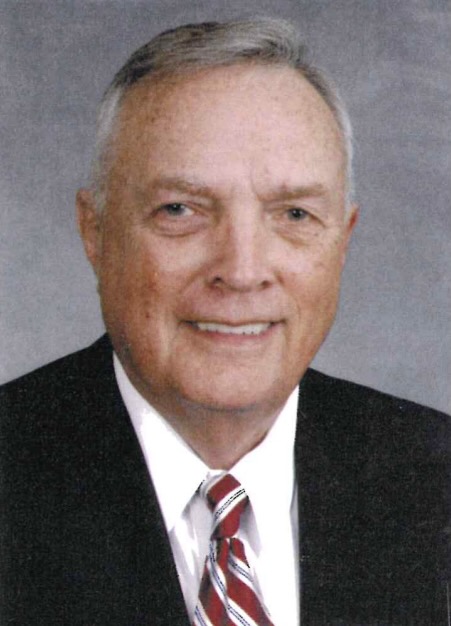
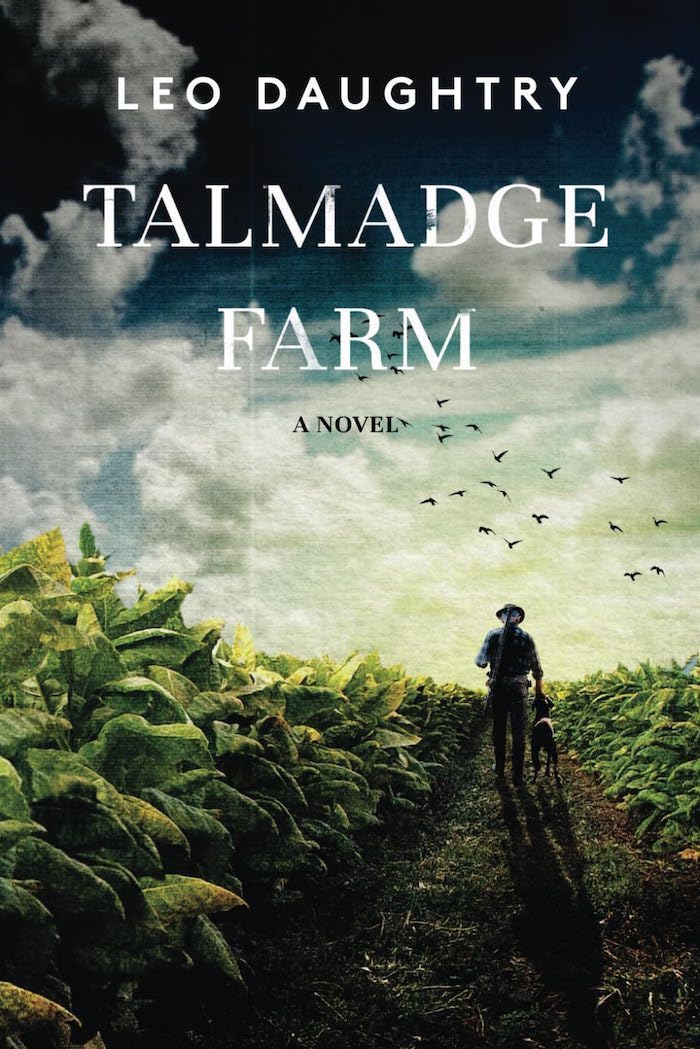
Former North Carolina political leader Leo Daughtry brings the rich stories of the South to life through his debut novel, Talmadge Farm.

Leo's thought-provoking discussion on heritage, politics, and storytelling rooted in the rural South brings the voice behind Talmadge Farm.


WRITE THE WORLD!

TAP-DANCING ON THE RAZOR’S EDGE


If you’re an authorpreneur, a writer, an artist trying to make it in today’s toughly competitive global market, you’re tapdancing on the narrowest bridge in the world—spanning the cactus fields of the UNKNOWN world and THE PROMISED LAND where the grass is greener, and the trees are tall and mighty.

It’s the smallest and most dynamic and most important bridge in human experience—one that everyone would like to be standing on, but few have the courage to attempt:

It’s the bridge of VISION--that links dream with reality.

It’s a very small bridge and very narrow and uncomfortable when you first step onto it. But the longer you’re on it, the more maneuvering room you realize you have. The more comfortable it becomes standing on what you recognize as the razor’s edge.

You learn to tap dance.

You learn to laugh and cry again.

You learn to enjoy the dance, to sing while you dance.

You learn perspective. You build character. You turn from butterfly to lioness.

Sooner or later, you should begin to feel, as I do, incredibly fortunate to be doing what we love the most—storytelling—and getting paid to do it. As a producer, editor, literary manager, author consultant, and brand launcher, I get to be an alchemist, turning stories into gold.

And as someone who tries hard to always think OUTSIDE THE BOX—especially since the boxes either are crumbling or have already crumbled--it has been thrilling to see my clients’ DRACULA THE UNDEAD on page one of cnn.com and on the New York Times extended list—after I added a brand name to the mix; and to be producing my clients’ Jerry Blaine and Lisa McCubbin’s THE KENNEDY DETAIL, which appears from Gallery Books/Simon & Schuster after we found a way to get Clint Hill to write the forward, and we managed to set up, with our reality partner Renegade83 a 2-hour Discovery Sunday special which garnered an Emmy nomination. These clients danced the danced successfully, and because they, like all storytellers, are inveterate masochists are already back on that bridge dancing that crazy dance again.

No one is forcing you to do this. Remind yourself of that when the going gets toughest. You’ve chosen this career, and you can only lose at it if you quit.

What you are doing, in business terms, is creating the most valuable commodity on earth, “intellectual property.” And today that is worth more than real property! 

You are entering an infinite profession, of unlimited potential. Not even the sky is the limit—my client Nik Halik’s The Thrillionaire has been in outer space! In this world of studios crashing, networks retrenching, publishers conglomerating, where everything is changing all the time—at least one thing is constant: the need for stories never ceases.

“Trackers” are highly paid by the major studios to find stories and bring them in.

No wonder storytellers were considered sacred among the ancient Greeks--because they were the channelers of STORIES, stories that described reality in terms humans can relate to.

Therefore don’t let your ego prematurely destroy your career, as I have seen it do for so many writers. “No ego” should be your mantra, as you take your WORK, not YOURSELF, seriously.

Eventually, on that razor’s edge, you’ll learn that though the Promised Land IS worth the promise it’s the struggle to get there that is the most valuable experience of your life.

As storytellers who are here this weekend because you actively pursue your vision, you know full well how narrow the bridge we stand on is, how fragile. But you should also know that we’re heroes for even attempting to cross this bridge. 

I’d like read a tribute to your work by the greatest Greek poet since Homer and Sappho. His name was Constantine P. Cavafy, and he lived in Alexandria, Egypt, and died less than a hundred years ago:

The First Step


The young poet Evmenis
complained one day to Theocritus:
"I've been writing for two years now
and I've composed only one idyll.
It's my single completed work.
I see, sadly, that the ladder
of Poetry is tall, extremely tall;
and from this first step I'm standing on now
I'll never climb any higher."
Theocritus retorted: "Words like that
are improper, blasphemous.
Just to be on the first step
should make you happy and proud.
To have reached this point is no small achievement:
what you've done already is a wonderful thing.
Even this first step
is a long way above the ordinary world.
To stand on this step
you must be in your own right
a member of the city of ideas.
And it's a hard, unusual thing
to be enrolled as a citizen of that city.
Its councils are full of Legislators
no charlatan can fool.
To have reached this point is no small achievement:
what you've done already is a wonderful thing."

So let’s pause to celebrate--and applaud ourselves right now--for even being here today, on this step—whether it is your first, or whether you’ve taken a few steps already. If you are among the latter, you’ll appreciate the words of the great playwright-poet Samuel Beckett: “Do not come down the ladder. I have taken it away.”

Let’s also face it: you’re in “show BUSINESS,” as my client and partner Michael A. Simpson constantly reminds me; and you must deal with it as the BUSINESS of SHOW. What years have taught me is how important it is, never more so than today, to understand the BUSINESS of being a visionary, a person others call “mad” or “insane.” Remind them of Salvador Dali’s response: “The difference between myself and a madman is that I am not mad.”

I always say that the difference between a visionary and a con man in the creative world is SUCCESS. No one believes you can really do it, because everyone has told them how hard it is—and they themselves are too fearful to try.

Yes, it is difficult. That’s why, though everyone in the world has a story, NOT everyone—only YOU—are doing something about it.

Your personal cutting edge difference will be dealing with your career as a business on all fronts. Business requires a plan, an investment, a marketing program, and unceasing determination to move the flag across the field, remembering, for consolation, that if you die in the midst of your own dream that, by definition, has to be a happy death!

As Muriel Rukeyser said, for us humans, “the universe is made of stories, not of atoms.” Whatever it’s really made of, all that matters is how we perceive it. And it’s through stories that we form our perception.

When you’re standing on the razor’s edge in fear, or complaining—as all of us constantly do--remind yourself:

No one is FORCING you to tell your stories to the world. No one is holding this gun to your head but yourself.

You’re here by your free choice, while they are behind their counters or their commuting dashboards or their tellers’ windows because they are afraid to take the chances you are getting used to.

Meanwhile, you are following your dream.

Welcome to the world of storytellers:

What is a storyteller? A storyteller is a simply a communicative dreamer—a person who dares to learn how to communicate her dreams to all of us.

Doing so is not only his privilege, it’s his responsibility. I always told my Occidental College students, “If you have a dream, and fail to express it, you have denied all of us a unique vision that only you can bring us.”

But Aristotle said, “Excellence is not a plan.” Dreamers need to plan. An authorpreneur who truly wishes to succeed in the commercial world of storytelling needs to analyze it from a business point of view. AMBITION and VISION are NOT ENOUGH. You must equal them with CRAFT, TECHNIQUE, AND SKILL.

In my book, A WRITER’S TIME, I wrote that four things are needed to succeed in Hollywood:

1) Persistence (endurance, determination)

2) Contacts (networking)

3) Being a fun person to work with (and its corollary, “Staying off everyone’s life is too short list”) and

4) TALENT

It’s sobering to realize that any one of the first three are sufficient in themselves. Bad movies can be made through sheer persistence; mediocre books can be published just through strong contacts. But the 4th, the one we’re all looking and hoping for, is NOT sufficient. Talent alone must be combined with the others.

And add LUCK or GOOD TIMING and, remembering what someone said that the “harder I work the luckier I get.”

You might also add ORIGINALITY—which Joe Roth defined as “being able to think of something that hasn’t been on TV!”

Recently, trying to maintain the business of show business, my company has evolved. We raise independent financing for films, and encourage writers to become filmmakers to move their projects forward. We consult with writers on their career strategies one on one. We launch brands. As literary managers, we look for the next Sue Grafton or Robert Ludlum whose vision CLEARLY extends into the future.

What we learn from the tap-dance on the razor’s edge is:


TOUGHEN UP.

KEEP MOVING FORWARD DESPITE YOUR PRESENT MOODS. A week from now, you won’t even remember how you feel today; so don’t let it stop you from working. My wife Kayoko is always reminding me that Gandhi said, “Full effort is full success.”

PERSIST. NEVER GIVE UP. Yes, you may be going through hell. But “if you’re going through hell,” Winston Churchill advised, “keep going!”

NEVER PUT DEADLINES ON YOUR CAREER.

TAKE YOUR CAREER, NOT YOURSELF, SERIOUSLY. Don’t go from saying “I just want to be better” to “I just want to write what I want to write.” I’ve repeatedly seen clients lose the humble perspective created before success hit them, and sabotage their careers.

NEVER PUT ASIDE YOUR VISION, BUT PERFECT IT, PERFECT IT, PERFECT IT and make allies of those who can help you do that to bring your craft and skills to the level of your talent and ambition. If you continue pursuing your dream no matter what until you achieve it—and then you’ll have bigger dreams, of course—by definition, YOU CAN’T FAIL. Carlyle put it this way: “Success is steady progress toward a worthy goal.”

Walt Disney was turned down 302 times before he got financing for Disneyland.

Frank Herbert’s DUNE was rejected 36 times. Don’t let your representative give up at 32!

George Lucas was forced to put up his own money to pay for “Star Wars” because NO ONE believed in his vision. By the time the film came out, he was bankrupt. He is now fabulously wealthy of course—PRECISELY BECAUSE HE WAS UNABLE TO SELL ANY OF THE RIGHTS TO THE FILM OR ITS SEQUELS. Shakespeare played politics to get the Globe Theater built for his own plays. Sophocles and Aeschylus had to do the same thing in the time of classical Greece. Jane Austen, Thomas Hardy, in fact most late nineteenth century novelists began their careers SELF-PUBLISHING.

Jerzy Kosinski’s STEPS won awards, but was rejected by publishers 34 times—once by its very own publisher, after it had already been published.

Remember what William Goldman observed, in his Adventures in the Screen Trade: NOBODY KNOWS ANYTHING.

In today’s tough world of authorpreneurship, be flexible and always THINK OUTSIDE THE BOX.

Yes, the business of becoming and being a professional writer is hard. The hard part is the great part. That’s why you’ve chosen to do it. The river is wide between where we are now and the success and attention we want is on the other side. The razor’s edge is thin and dangerous. You don’t NEED to do this. You’re DESTINED to do this.

What could be a happier mission in life?

How can you fail at being yourself?

And now you know what the bridge is—a razor’s edge--and how to dance on it, just promise me and yourself that you won’t fall off.


The Goethe Book Awards recognize Leo Daughtry's Talmadge Farm!

First Place Category Winner 

in Late Historical Fiction


AVAILABLE ON AMAZON


 Praise for “Talmadge Farm”


“Set in North Carolina in the 1950s and 60s, Leo Daughtry’s story gives readers a cast of flawed characters that elicit sympathy, anger, love and hate. 

The Talmadges, landed gentry, and their two sharecropper families try to adjust to the changing political, economic and social landscape of the decade. 

Gordon Talmadge commits one mistake after another, ultimately destroying the legacy handed to him, as his loyal wife Claire stands by his side while the sharecropper families – one black, one white – are ultimately driven off the farm for better and for worse. A page turner.” 

— George Kolber, author of Thrown Upon the World, and writer/producer of Miranda’s Victim


“In this stirring novel, Leo Daughtry creates a big, complicated portrait of family, place, race, class, and greed. Set in North Carolina, Talmadge Farm tells the story of three intertwined families. Daughtry delves deep into the heart of his characters. You’ll almost forget that you don’t know them personally; this story feels that real.” 


 Judy Goldman, author of Child: A Memoir and Together: A Memoir of a Marriage and a Medical Mishap


“Talmadge Farm is a classic. Through the lives of a farm owner’s family and their sharecropping tenants, Leo Daughtry weaves a story about the emerging South. This is a story of triumph and tragedy, of good and evil, and finally reconciliation. A true morality play.” 

— Gene Hoots, former tobacco executive and author of Going Down Tobacco Road

Narrator Justin Price tells AudioFile listeners about narrating Leo Daughtry's novel, TALMADGE FARM.


"Talmadge Farm has often been described as a love letter to the South. Daughtry says, “Despite what the South has done and is doing, everybody loves the South. The South has a charm about it, and this book talks about the good parts of the South, how good the people are, and what the South has meant to so many of us… It’s a love story in many respects.”


It’s 1957, and tobacco is king. Wealthy landowner Gordon Talmadge enjoys the lavish lifestyle he inherited but doesn’t like getting his hands dirty; he leaves that to the two sharecroppers – one white, one Black – who farm his tobacco but have bigger dreams for their own children. While Gordon takes no interest in the lives of his tenant farmers, a brutal attack between his son and the sharecropper children sets off a chain of events that leaves no one unscathed. Over the span of a decade, Gordon struggles to hold on to his family’s legacy as the old order makes way for a New South.


Publishers Weekly's Book Life Reviews Leo Daughtry's Talmadge Farm


Daughtry debuts with an expansive panorama of the 1950s and ‘60s American South, when tobacco ruled the land and desegregation was in its infancy. Gordon Talmadge, wealthy inheritor of his family’s Talmadge Farm, makes his money off the backs of others—including the two sharecroppers on his land, Will Craddock and Louis Sanders. But tobacco’s star is waning, and Gordon, reluctant to diversify in any way, is entrenched in the past, putting his fortune—and family-owned bank—at risk. When his intoxicated son, Junior, tries to rape Louis’s 15-year-old daughter Ella, it sends shockwaves that change their lives and Talmadge Farm forever.

Daughtry expertly contrasts the experiences of Gordon’s privileged family with that of his sharecroppers, particularly the grim realities that the Sanders endured as a Black family in the midcentury South. Both Will and Louis are up against impossible odds as they try to provide for their families, and when Louis’s son, Jake, is blamed for harming Junior when defending his sister, he’s forced to flee their small town for Philadelphia, desperate to make ends meet so he can study medicine. Meanwhile, Gordon’s tobacco crops can’t keep pace with his spending habits, and he rashly decides to bring on a crew of migrant workers from another state—a choice that results in disaster.

Gordon—and society’s—treatment of the sharecroppers is painful to read, but Daughtry capably evokes harsh historical truths of the era, particularly the generational abuse that wealthy landowners inflicted on the descendents of enslaved peoples. The reverberations of that shake through the Sanders’s family as the story builds to some dark consequences, though some of the most reliable women, Ella and Mary Grace, overcome obstacles as they strive toward happiness. Gordon eventually faces some justice, though he never truly makes amends for his harmful behaviors. Change, of course, comes in the end, but the cost for all involved is steep.

Celtic Lady Interviews Story Merchant Author Leo Daughtry

 “Talmadge Farm” is a sweeping drama that follows three unforgettable families navigating the changing culture of North Carolina at a pivotal moment in history. A love letter to the American South, the novel is a story of resilience, hope, and family – both lost and found.


What inspired you to write “Talmadge Farm?”


I lived through changing times, particularly the 1950s when there was nearly complete segregation in the South, especially in rural areas. Sharecropping was common, and women did not divorce in those times because it was considered demeaning, a failure. Then in the 1960s, everything began to change. Sharecropping disappeared, birth control entered the picture, and women could live life with more freedom and less dependence on men.


Can you tell us more about your family history and its connection to North Carolina and tobacco? 


How did this environment influence your writing? 

Beyond the direct associations with tobacco and North Carolina, are there more subtle aspects of your upbringing and family history that influenced your writing?


Tobacco was king in North Carolina. People practically worshiped it. Where I grew up, it put food on the table. Cotton was more up and down, but tobacco provided financial stability, not just for farmers but for the whole community. My family grew tobacco, sold fertilizer and seed, and managed a tobacco auction. It was our whole world. 


You have had a successful career as a lawyer and an Air Force Captain before that. What prompted you to pursue writing fiction?


I always had the idea for this particular story in my head. The 1950s and 1960s were two decades that changed the world, and a farm with sharecroppers is a bit of a pressure cooker environment. You have the farmowner’s family – in many cases people of wealth and entitlement – living just down the driveway from the sharecropping families. The sharecroppers were poor and had limited options, so they felt stuck living on a farm that didn’t belong to them doing backbreaking work with no way out. It’s a situation that lends itself to drama: families with major differences in class/race/socioeconomic status living in such close proximity to one another.


How has the landscape of tobacco farming changed, and how did you incorporate those changes into the plot of “Talmadge Farm?”


Probably the biggest change was the shift from sharecropping to migrant workers. Today, tobacco farmers are large corporations that use migrant workers as laborers. But in the 1950s, farming relied almost completely on sharecropping, which was a hard life. Tobacco farming is physically demanding work, and sharecroppers needed the help of all family members to complete the various steps – planting, seeding, suckering, priming, worming, and cropping – of harvesting the crop. 


Sharecroppers at one farm would help sharecroppers at the neighboring farm because they did not have the resources to hire extra people. In the 1950s, sharecroppers were unable to get credit anywhere but at the general store and maybe the feed store. They truly lived hand to mouth all the time, only able to pay their debts after the tobacco auction in the fall. Hence the phrase “sold my soul to the company store.” Sharecroppers often turned to moonshining as a way to make extra money.


As I describe in the novel, sharecropping began to disappear in the 1960s as children of sharecroppers started taking advantage of new opportunities that the changing society offered. Migrant workers took over the labor of farming. In addition to labor changes, new machinery improved the industry. N.C. State was instrumental in developing advances in the farming world. Legislation changed and farmers were allowed to have acreage allotments outside of the land they owned. I touch on all of these changes in the novel.


Are any of the characters in your book based on real people?


Not really. The closest characters to real people in my life are the characters of Jake and Bobby Lee. Jake is a Black teenager who wants to escape farm life and ends up running away to Philadelphia to become a success. Bobby Lee is a young Black soldier stationed at Fort Bragg. On the farm where I grew up, there was a Black sharecropping family with four sons, the youngest of whom was my age. We were very good friends.


All of the boys were bright and athletic, could fix anything, yet were limited in their opportunities. They didn’t have a school to go to or a job to look forward to. Their only options were to stay on the farm or join the army. The character of Gordon, while not based on any one person, reminds me of a lot of men I knew who did not treat women well, who were racist, who enjoyed the status quo and were resistant to anything that threatened their way of life.


In addition to the changing tobacco farming methodologies, the 1950s ushered in a period of profound social change, marked notably by the introduction of credit cards. How did these outside factors impact farming, and in what ways did they inform the development of the plot in “Talmadge Farm?”


In the novel, Gordon is the president of the local bank, yet he resists the advances in the banking industry, including credit cards and car loans and the incursion of national banks into rural communities. Gordon’s father, who founded the bank, was a brilliant man adept at navigating the bank through changing times, but Gordon simply doesn’t have the smarts to see what’s coming, and no one can get through to him. He’d rather play a round of golf than look at the balance sheet.  


Leo Daughtry is a life-long resident of North Carolina. He grew up among the tobacco fields of Sampson County which served as inspiration for his debut novel, “Talmadge Farm.” After graduating from Wake Forest University and its School of Law, he established a private law practice in Smithfield, N.C. 


He was a member of the N.C. House and Senate for 28 years, including serving as House Majority Leader and House Minority Leader. When not practicing law, Leo enjoys spending time in Atlantic Beach with his wife and daughters. 


Praise for “Talmadge Farm”


“Set in North Carolina in the 1950s and 60s, Leo Daughtry’s story gives readers a cast of flawed characters that elicit sympathy, anger, love and hate. 

The Talmadges, landed gentry, and their two sharecropper families try to adjust to the changing political, economic and social landscape of the decade. 

Gordon Talmadge commits one mistake after another, ultimately destroying the legacy handed to him, as his loyal wife Claire stands by his side while the sharecropper families – one black, one white – are ultimately driven off the farm for better and for worse. A page turner.” 

— George Kolber, author of Thrown Upon the World, and writer/producer of Miranda’s Victim


“In this stirring novel, Leo Daughtry creates a big, complicated portrait of family, place, race, class, and greed. Set in North Carolina, Talmadge Farm tells the story of three intertwined families. Daughtry delves deep into the heart of his characters. You’ll almost forget that you don’t know them personally; this story feels that real.” 


 Judy Goldman, author of Child: A Memoir and Together: A Memoir of a Marriage and a Medical Mishap


“Talmadge Farm is a classic. Through the lives of a farm owner’s family and their sharecropping tenants, Leo Daughtry weaves a story about the emerging South. This is a story of triumph and tragedy, of good and evil, and finally reconciliation. A true morality play.” 

— Gene Hoots, former tobacco executive and author of Going Down Tobacco Road


Via Celtic Lady Reviews

Southern Literary Review Book Review of Talmadge Farm

Talmadge Farm” by Leo Daughtry

In a sweeping story set in eastern North Carolina, Leo Daughtry takes readers from 1957 to 1970, a time of convulsive societal change in Talmadge Farm (Story Merchant 2024). As the Vietnam War intensifies, the civil rights movement spreads across the South, reaching even wealthy bank president and tobacco farmer, Gordon Talmadge. North Carolina’s Research Triangle has its birth, accelerating the industrial development of farms and the decline of tobacco. Another blow to the tobacco industry comes from the Surgeon General, who warns of health risks and mandates warnings on cigarette packs.

Buffeted by changes he resists, Gordon badly misplays his hand. Alternating between defiance and compliance, he treads a crooked path, using alcohol and denial to avoid the challenges he faces. While his wife Claire shows kindness to the farm’s two sharecroppers and their families, Gordon exhibits enough arrogance, disregard, and bigotry to earn readers’ distain.

With sensitivity and attention to detail, Daughtry tells the story of Gordon Talmadge, along with his family members. Interwoven are two other families, those of the sharecroppers who work the fields. Each family has its own demons and secrets. The sharecroppers live in poverty, toiling in ways that benefit the Talmadge family but not their own. One of the sharecroppers —the White one—bootlegs and drinks himself into trouble. The kindly Black sharecropper and his equally kind wife suffer from their inability to protect their three children from threats and influences beyond anyone’s control but that of Gordon and his near-clone of a son, Junior.

One of those sharecropper children, Jake, is forced to flee the farm:

 He “squeezed himself into the bed of Mr. Allen’s truck. He was completely surrounded by baskets of summer crops: tomatoes, beans, okra, watermelon, peaches. He couldn’t help feeling as if he, too, had been plucked from the earth, uprooted from everything he’d ever known.”

The circumstance of Jake’s ultimate return is one of the poignant comeuppances of Gordon Talmadge, whose power and wealth turn out to be a house of cards. As Gordon struggles to keep from losing the farm, his bank flounders. In crisis, as he “pulled out of the employee lot, he noticed the workmen had finished installing the new bank sign. Waiting at the stop sign for traffic to clear, he watched them hurl the old lettering from Farmers and Merchants into the back of their truck, probably headed for the town dump.”

Gordon mellows into a character who is more insecure than imperious, and far more vulnerable than powerful. Forced to watch underlings succeed as he fails, Gordon emerges as the most transformed figure in this engaging saga.

Talmadge Farm serves as a timely cautionary tale about prejudice, greed, and resistance to change. It also serves as a reminder that human kindness can transform and resurrect lives going off the rails. It is a rebuke of privilege and a testament to Southern grit.

Leo Daughtry

Leo Daughtry is a first-time novelist who grew up in the tobacco fields of Sampson County, North Carolina. A graduate of Wake Forest University and its law school, he established a private practice and also served as a member of the North Carolina House and Senate for twenty-eight years. Still practicing law, Daughtry especially enjoys time at Atlantic Beach with his wife and daughters.


AVAILABLE ON AMAZON


Wake Forest Magazine Interviews Leo Daughtry

Harvesting Home

Double Deac Leo Daughtry draws on memories of his childhood tobacco farm to write a historical novel about the South.


Leo Daughtry (’62, JD ’65) drew inspiration and many of the characters for his historical novel “Talmadge Farm” from his years growing up on a tobacco farm in eastern North Carolina in the 1950s.

Daughtry, 84, grew up in rural Sampson County, about an hour southeast of Raleigh, on a farm owned by his father. He weaves a story of the wealthy Talmadge family and two sharecropper families — one white, one Black — whose lives intertwine against the backdrop of socioeconomic and racial changes sweeping the South that upend their lives in different ways. He draws from boyhood memories of dove hunting, moonshiners, segregation, the backbreaking work of harvesting tobacco and sharecroppers scraping to survive at a time when tobacco was king in North Carolina.

One reviewer described “Talmadge Farm” as a “stirring novel” with a “big, complicated portrait of family, place, race, class and greed.” The novel won first place in historical fiction in the 2025 Feathered Quill Book Awards and was named a finalist for the 2024 Goethe Book Awards for late historical fiction.

Daughtry and his wife, Helen, live in Smithfield, North Carolina. His granddaughters, Katherine Riley (’20) and Hannah Riley (’24), are also alumni.

Daughtry was a Judge Advocate General in the U.S. Air Force before founding law firm Daughtry, Woodard, Lawrence & Starling in Smithfield in 1969. He served in the North Carolina House and Senate for 28 years, and was House majority and minority leader, until retiring in 2017. A past member of the Alumni Council and School of Law Board of Visitors, he has endowed scholarships in the college and law school. The law school named its North Carolina Business Court courtroom in his honor in 2018. The North Carolina Bar Association established the N. Leo Daughtry Justice Fund in 2022.

Kerry M. King (’85) of Wake Forest Magazine talked with Daughtry by Zoom at his office in Smithfield. Excerpts from their conversation have been edited for length and clarity.​

Kerry King: Before we talk about “Talmadge Farm,” I’m curious to know why you came to Wake Forest and what it was like when you were a student.

Leo Daughtry: My brother-in-law (Bill Peak ’48, MD ’51) went to Wake Forest, and I followed Wake Forest sports — Dickie Hemric (’55) and players like that. There was a tournament called the Dixie Classic (held in Raleigh from 1949 to 1960) where the Big Four (Wake Forest, Duke, NC State and UNC-Chapel Hill) would play four other schools, and we would go to at least one game to see Wake Forest play.

 Wake Forest had recently moved to Winston. Dr. (Harold) Tribble (LL.D. ’48, P ’55) was president. We had chapel on Tuesdays and Thursdays. There was no dancing on campus. If we had parties, we’d have them off campus. For football games, we all wore suits. If you were lucky enough to have a date, you always got her a mum or flower to wear.

Wake Forest was great for me. It allowed me to leave the tobacco farm and go to college and experience life in a different way than I had known before. And Wake Forest was very patient with me. I tried to be a good student, but I just didn’t have the background. It took me a while to get my bearings.

The Vietnam War was really becoming an issue. I went into the Air Force (after graduating from law school) and served in Turkey, assigned to NATO.

KK: Do you remember any particular professors, either in college or in law school?

LD: Dr. (John) Broderick in English, Dr. (Emmett Willard) Hamrick (P ’83) in religion, Dr. (David) Smiley (P ’74) in history and Dr. (Kenneth) Raynor (1914) in math. Dr. (Marcel) Delgado got me through Spanish. I didn’t have Dr. (Ed) Wilson (’43, P ’91, ’93) for a class, but I certainly knew and liked him. He was one of the finest guys and represented Wake Forest so well. I’ve gotten to  know his son (Ed Wilson Jr. JD ’93), who is a judge.

In law school, Dr. (James) Webster (’49, JD ’51, P ’81), Dr. (Hugh) Divine, Dr. (Robert) Lee (JD 1928, P ’55, ’68), Dr. (Norman) Wiggins (’50, JD ’52). They were all good teachers.

KK: You had a long career as a lawyer and in the General Assembly. What inspired you to write “Talmadge Farm”?

LD: It had been germinating a long time. I wrote it from an outline I did when I was in the General Assembly. We’d have some debates that I didn’t have to be involved in, so I had some free time. I knew the characters I wanted in the book. The reason I chose the name Talmadge is because I didn’t know anybody named Talmadge so I could make him the bad guy. (Gordon Talmadge, a banker and the owner of Talmadge farm, is the book’s central character.) I would write the outline and then change it, and then write it and change it. I knew where I wanted to start and where I wanted to end.

Leo Daughtry ('62, JD '65), author of "Talmadge Farm"

KK: What were the major themes you wanted to write about?

LD: Well, sharecropping for one thing, and the 1950s. My most impressionable years were the late ’50s and early ’60s because I was a teenager. I saw all the changes that were beginning to occur in the South. I went to a very small country school, where half of the students at least were children of sharecroppers. I had Black sharecropper friends and white sharecropper friends. They had one thing in common. They were poor as church mice, and they had very little hope of getting ahead. Most of the kids that I knew wanted to get off the farm. Farms had gotten bigger, tobacco allotments had changed, and migrant workers were replacing the sharecroppers. And automation enabled farmers to be more efficient, and that just eliminated the sharecroppers.

(I also wanted to write) about change, how people have to change, and some people can change better than others. Gordon could not figure out how to change. He got left behind because of his inability to accept change.

KK: How much of the book draws from your experiences and people you knew growing up?

LD: Almost all of it. Gordon was invented; I had to have a villain. Everybody knows someone like Gordon. He had everything going for him, but he wasn’t very smart (and wouldn’t adapt to the changing South). Black people lived in a completely segregated environment then. I wanted to make all the women really strong (characters) because there were no women doctors or lawyers then.

KK: Alumni are sure to enjoy the tidbits you sprinkle in the book about Wake Forest, Winston-Salem, Old Salem and R.J. Reynolds. The book ends soon after one of the characters, David, graduates from Wake Forest. Was he based on you?

LD: No, but I really wanted David (the good son in the novel) to go to Wake Forest. I didn’t want the bad son (to go to Wake Forest). (One of the other characters) went to Bowman Gray (School of Medicine). And, I remember Christmas at Old Salem and those Moravian cookies.


Via Wake Forest Magazine

Sampson’s Leo Daughtry Pens Debut Novel


 It’s been 10 years in the making, but former North Carolina state Representative and Senator Leo Daughtry has released his debut novel “Talmadge Farm.”

“My first and last, probably,” Daughtry joked over the phone about his book. “It’s a lot of work.”

Daughtry is a Sampson County native now living in Smithfield. His 320-page novel is available now for purchase at Amazon and Barnes & Noble.

He said last week that he’s spent years creating outlines for the book and then throwing them away before doing another one, all because they did not fit the story he wanted to tell.

“I probably started doing outlines 10 years ago. And I would do an outline, tear it up, and do another one. But I had in my head about what I wanted to do,” he said.

And that idea was to create a story based on events that he lived through growing up in Sampson County, namely sharecropping, the research into tobacco and how that affected the industry, and other societal changes taking place in the 1950s and 1960s.

“I wanted to have a book to sort of show the lives of the sharecroppers. And then show the changes that were taking place in the late 50s and 60s,” he admitted.

Daughtry went on to explain that his childhood of living in a rural town and going to a rural school where most of his classmates were the children of sharecroppers gave him the inspiration to write about their hardships and what happened to them as sharecropping started to die out.

“I went to a very rural school,” Daughtry explained of his years in the Hobbton district. “And in my class, I would say over half of the students, my classmates, were the children of sharecroppers. That was the way, in those days, that was the way farming was done.”

Making a living as a sharecropper, he said, was “a desperate and hard thing to do.” And that as the years went on, especially in the 1950s, it “became clear that sharecropping wasn’t really a good way to live.”

“Many of the children left the farm when they grew up,” Daughtry explained, “and some moved up north, particularly the African Americans. Many of them went into the army to get off the farm.”

He also mentioned woman getting clerical certificates to get an office job instead of working as a maid or in the fields, all of which were explored within the pages of “Talmadge Farm.”

But having children leave wasn’t the only change that happened to sharecropping families in this time.

Daughtry explained that the advances in technology and the growth of the farms led to sharecroppers leaving completely.

“You had the mechanization on the farms. Farms got larger, they consolidated, and so there was just no place for sharecroppers,” Daughtry said. “So, they left the farms. Some involuntary and some voluntary.”

Which then led to an influx of migrant workers, a subject that Daughtry also touched upon in his book. Other major events he talked about included segregation, the Vietnam War, and women’s rights.

And when talking about farming, Daughtry knew he would have to talk about the changes the tobacco industry and its farmers faced.

“Tobacco was king, but it was not going to be there forever. It was a contradiction. It was a way to make a living and support your family. And that’s a good thing. And then on the other hand, it was killing people who smoked and that’s a bad thing,” he explained.

Most of all, Daughtry wanted to tell a story through lenses of different characters, each with their own unique tie to the fictional Sampson County he had created in his book. They were characters, he said, that were easy to write and show the way that people in that time period could have adapted to all the changes happening around them.

“I think it was easier for the young people in the book to adapt and to change than it was for the older people. Their way of life was certainly, for the landowner, very satisfactory. They had someone going to work. They had someone looking after them. In other words, they had maids and cooks. They had a good life, and they didn’t particularly want to change,” Daughtry said about writing some of the characters.

A press release sent out by Books Forward gives “Talmadge Farm” the following synopsis:

“It’s 1957, and tobacco is king. Wealthy landowner Gordon Talmadge enjoys the lavish lifestyle he inherited but doesn’t like getting his hands dirty; he leaves that to the two sharecroppers – one white, one Black – who farm his tobacco but have bigger dreams for their own children. While Gordon takes no interest in the lives of his tenant farmers, a brutal attack between his son and the sharecropper children sets off a chain of events that leaves no one unscathed. Over the span of a decade, Gordon struggles to hold on to his family’s legacy as the old order makes way for a New South.”

via Sampson Independent 


AVAILABLE ON AMAZON