"The universe is made of stories, not of atoms."
—Muriel Rukeyser
____________________________
Showing posts with label The Story Merchant. Show all posts

Jeff Rivera Interviews Kenneth Atchity on Pursuing Your Dreams Later in Life!

“You are never too old to set another goal or to dream a new dream.” —C.S. Lewis


As the man who found everything he was looking for in his “retirement,” Dr. Atchity is a shining example of the never-ending potential of dreams and aspirations. In a HuffPost interview with Jeff Rivera Ken outlines many of the problems he encountered when shifting to a new career along with some useful advice for those looking to go down the same road.

Taking into account how the film industry has changed over the past couple of years, what advice would you give today that you wouldn’t have given two years ago?

I think it’s becoming harder to sell anything to big studios because they have become almost entirely married to producing big franchises and pre-sold concepts. Marketing has taken over the entertainment industry. Even in the publishing world, big publishers are only interested in how many copies of a certain book they can sell.

For new voices it can be extremely difficult to get published and this is very much the case in Hollywood. It’s often easier to get your work produced independently or through the MD method than it is to go to the studios. Keep in mind that the big studios used to produce hundreds of movies every year whereas now they produce dozens. Some studios are completing as little as three movies a year, but they’re making $400 million films from pre-established franchises like Spider-Man and Captain America.

There’s a global market for these movies and it’s a safer bet for them to spend a lot of money on one movie and earn it all back plus extra. This can make it even more difficult for new writers to sell their ideas, although I think writers can be proactive in finding ways to draw attention to their stories.

If someone, for example, lived in Nebraska and had a story about a family that lived in a cornfield, would they have any hope of having a studio make that film?

Always remember that if you don’t have hope then you shouldn’t be doing it, and hope is never something that can be analyzed statistically. It comes from within. In any industry, looking at the odds can be more than a little discouraging but if you believe them then you might as well go back to work as a bank teller. You have to think to yourself, what can I do? How can I think outside the box to draw attention to my story?

These days, the internet can be hugely beneficial if you’re looking to get your story out there as it provides millions, if not billions, of people access to you work. If you’re looking to generate interest then the internet is the best tool you can use. Studios have executives who do nothing but trawl through the internet looking for new stories. The Hunger Games is one of the biggest success stories of the last 10 years in this sense.

I think the gatekeepers are becoming predictable because they’re so enslaved to their corporate owners but what the true creative executives are looking for is someone who’s not saying the same thing as everyone else. Anyone who has a following as the result of their work is a potential line of interest. So, if I were in Nebraska facing that dilemma, I would focus on the thing that I have in front of me – that everyone has in front of them – the internet. You just have to find a way to pierce that golden shield.

What specific advice would you give to the person in Nebraska if they had access to the internet? How can they get noticed?

Well, honestly, if I had an answer to that I’d be a billionaire. This is where creativity comes in. If you were putting together a cartoon, for example, you might start putting it into a small book. Books are easier to get to people than anything else. I don’t recommend putting an entire screenplay on the internet but you could try generating interest by creating a website or blog and doing everything in your power to drive traffic to it.

On there you could maybe share stories, although I also like the idea of doing cartoons or animations because they can end up going viral. You can usually find someone to animate or do a cartoon for your story. Remember that social networks are a key part of using the internet, especially sites like Instagram, Facebook, and Twitter which are all vehicles that can reach millions of people. I boosted a post the other day from Naples and over 8,700 people saw it in the first hour. That’s how you get exposure.

Try not to be too shy or humble when promoting yourself. Shakespeare wasn’t shy when he talked the queen into building the Globe Theater and Sophocles and Aeschylus wouldn’t have been remembered today if they hadn’t gotten patrons to sponsor putting their tragedies in the Great Dionysian Festival every year. The most aggressive writers have always gotten their story told and it’s important to push your point across.

As for writers who think “I’m just a writer, I don’t really do marketing and all of that,” you have to snap out of that mindset. As Cher says in Moonstruck; “Snap out of it!” It’s not going to get you anywhere!” No one feels sorry for a poor writer who can’t sell their own work and if you really are that person then you need to find somebody else to sell your work for you.

What about the independent route? Is there a way for a really passionate writer to go out and make the film themselves? How does that work?


In theory, the indie route is always possible because anyone can buy all of the equipment needed to physically make a movie. You can enlist the help of friends, write the script yourself, or do it even without a script as many small pictures have been done. That is the ultimate indie route. 

That’s what Robert Rodriguez did with El Mariachi, which is a masterpiece of ingenuity. I heard that he didn’t even give lunch to his actors because he couldn’t afford it; so they had to knock off at noon. Rodriguez also shot all of his scenes so that nobody’s lips were ever facing the camera. He then dubbed all of the dialogue in post-production, completely diverting the chance that any sound problems would crop up during the shoot.

You can find somebody to work with you and to help produce your movie and raise enough money to develop it and so on. There are ways of doing it and every year movies breakthrough that are made unconventionally, but still in a really old-fashioned, pioneering style. If you follow in the footsteps of Robert Rodriguez then you’ve reached a point where you are doing it all yourself because nobody is doing it for you.

Is it true that your company has a division where they do this? They match people with money to producers such as yourself who help in making their films. How does that work exactly?

Yes, that’s correct. We work with writers who have access to resources as well as those who have a great story. Money makes things happen: If they have access then we help them prepare their movie. If you imagine a big conveyer belt with every project that has the potential to become a movie on it, you can see stories, treatments, and even books on the far end of it. These are naked ideas but by the time they reach the front of the belt they’re “fully-clothed” and ready to leap onto the screen.

These movies need to have a professionally prepared budget that shows exactly what the cost of the film is going to be. They need to have that budget bonded by a completion bond company. They will have the locations chosen, along with a director, cast, and start date. They should also have a distributor interested or attached, and so on and so forth.

If you already have the ability to put together some money then you can leapfrog over the other projects on the belt, which is what happens every day, but if you’re on the belt there’s no guarantee that you’ll get to the front of the line because you’ll always be leapfrogged over by another project with better casts, directors or financing. Our goal is to work with people who can find the money they need for their project. With writers have access to funds our goal is to turn them into producers so that they then have control over their project and don’t lose the rights before their movie is made.

If I’m an author that lives in Iowa, or Canada, how can the book that you just released help me turn my 70,000 word tome into a feature film?

Well, that is the exact purpose of the book - sell your story to Hollywood. It’s basically a little handbook that just shows you all the steps that have to happen in order to sell a story. This includes how to get an agent, how to get a manager, how to attract attention of producers, and even how to prepare sales materials that will help you in delivering a short pitch or contacting people via email. The purpose of the book is to provide you with an outline of all the things you have to overcome in order to get the story into the hands of the buyer.

My second aim with the book is to offer some alternative selling methods including some information on making a movie yourself. It gives examples of treatments and other materials that you need to build along the way.


SELLING THE STORY: SIZZLE REELS

What is a sizzle reel and how can someone use one to pitch a reality show or drama?

A sizzle reel is basically a teaser or sampler of a program that’s used as an outline by the creator. The term came out of reality programming because you need a sizzle reel to sell a reality TV show. A sizzle reel is usually three minutes at the most and it’s supposed to be an exciting, well-edited teaser that gives you a vision of what the program is and what it is intended to be. In theory, the reel gives you a strong inkling of how the program will continue and how it will go beyond its pilot episode. Sizzle reels can introduce characters as well as convey the excitement and points of interest within the show.

Knowing how to make a decent sizzle reel is extremely important but very, very difficult because if you’re not actually in show business you don’t know what companies are looking for. Learning how to put one together is an extremely beneficial way of getting into the industry and it’s a great way to show what you have to offer.

If someone had a sizzle reel, would they then upload it on Vimeo or YouTube? Would it also be included in a pitch to a producer?

Yes, it’s important to send it everywhere you can. You can come up with a log line, or short pitch, that would get producers to watch it. Do a short version for Instagram. YouTube is definitely a great tool. People scour YouTube all the time looking for ideas for movies. Facebook is also good. It’s important to send it it in whatever way you can. If you have an email list, send it to everyone. Ask people to share it, pass it on.

GETTING THE RIGHT ATTENTION

For those wanting to enlist your help in producing a project, what’s the best way for people to pursue you? Are you looking for work or simply developing your own projects?

I’ve been in the business for so long now that I’m not really looking for a whole bunch of things. I’m already involved in a lot of projects, but things that do often catch my eye are ideas that I’ve never seen before; new concepts that are truly exciting—and female-driven action, thrillers, and drama.

I recently read a piece on a boy who was born in the US but ended up being taken to Saudi Arabia at the age of seven or eight and raised over there as an outcast because he was half American. He spent his teen years trying to figure out a way to escape and when it finally happened he ended up joining the US marines where, to his amazement, he was treated like an outcast because he was half Saudi. What I loved about the story is that it’s something Americans really need to understand; it’s exactly what Saudis are taught as they’re growing up and what makes a person turn against his country. When I see something that unique and that unusual it captures my attention despite how many things I’m involved with.

If anyone is looking to speak with me then I’m contactable through referrals, emails, and phone calls. Email is the best way to approach people like me and I’d suggest keeping it brief. If an email is longer than five lines long, the chances of me jumping on it are very, very diminished. If it’s only two lines long and says something amazing about you and your story then it will be hard to resist. Use some examples from your work and write-up a short pitch, that’s the best and most respectful way to do it. atchity@storymerchant.com


Jeff Rivera

Writer | Producer

Jeff Rivera is a writer | producer. He began his career as an author, co-author and ghostwriter of nearly 100 books. He has appeared on national television, radio and print in such outlets as Forbes.com, The Boston Globe, Publishers Weekly, Right On! Magazine, Rotarian Magazine, TMZ, WABC, WNBC, WCBS, SITV, American Latino and NPR. He has written for Entertainment Weekly, Mediabistro, GalleyCat, Publishing Perspectives, Digital Book World, Examiner, American Chronicle, School Library Journal and the Huffington Post and has been invited to speak worldwide about his rise from American poverty and living in his car to fast-becoming one of the most sought after writer | producers in the nation. Rivera has been on panel discussions for The Library Journal, Authors Guild, the Harlem Book Fair and many others. Rivera has produced social media campaigns, Skype/Google Hangout tours and web content for many high profile people including Mark Cuban, Mark Victor Hansen, Jeff Kinney, Elmore Leonard, Mitch Albom, Stan Lee, Seth Godin, Nicholas Sparks, James Van Praagh, and cast members from from Disney Channel and Nickelodeon. Rivera now develops film, television and web content.

Talking Out of Turn: Revisiting the '80s with William Diehl An Interview with Kevin Courrier


Author William Diehl
(Sharky's Machine, Chameleon, Primal Fear), a writer who wrote luridly powerful pulp with a political tinge, became a fascinating exercise in self-examination. When I discovered that Diehl was a pacifist who once marched with Martin Luther King in the South during the demonstrations against segregation, I was compelled to find out how such a peaceful man reconciled his polar opposites. To both my surprise and satisfaction, he was more than happy to comply while providing a vivid examination (through his thriller Chameleon) of the growing political mercenary movements in the eighties that would ultimately lead to Waco and Oklahoma City. Diehl would die at Emory University Hospital in Atlanta on November 24, 2006, of an aortic aneurysm. At the time of his death, he was working on his tenth novel Seven Ways to Die.

******

kc: I get the impression that when you sit down to write there's quite a war going on in your head.

wd: That's quite true. I find that subconsciously things from my past keep getting in and coming out of the books. A lot of the critics in reviewing Chameleon have called it one of the most violent books ever written. Yet I'm basically a pacifist. I don't own weapons. I don't even have a gun in the house. I live alone on an island. No doubt that it's a throwback to World War II when I served as a ball-turret gunner. All of those latent aggressions and violence are surfacing now. It has to be that because I'm certainly not interested in becoming active in the things I write about. But I should say that there's nothing about the violence and the weaponry that I depict in Chameleon that isn't really happening today.

kc: In this book, you examine an assassination squad -- a secret terrorist organization that trains at "The Farm" -- What is that?

wd: I knew that "The Farm" existed. I've known about it for several years and I met the man who runs it. He's a guy named Mitch Warbell. One night, we started talking about the place and he told me that while a lot of mercenaries go through the training course, many of these people are bankers and folks going to countries where terrorism is prevalent. They take the course as a self-protective device. That's what triggered the idea. Then I went out and took the course. Over a period of six months, I spent time talking to the instructors. Their stories gave me the basis for the book.

kc: When you were describing a moment ago those latent aggressions and the violence, how does it manifest itself when you are writing a book like Chameleon?

wd: The first chapter of the book was triggered by the Doobie Brothers' song "What a Fool Believes," which I heard on the radio as I was driving home. The song started a lovely little romantic story going in my head. Suddenly, it turned very dangerous and it got very violent. I don't know where it came from. All of a sudden, as I'm working on this romantic idyll, it got very tough. It was then that the story took off.

kc: At the heart of this violent story is a particular code of honour. Where does this come from?

wd: Chameleon is a story about honorable people versus dishonorable people. And I've put at the heart of it the Oriental philosophy of honor. My belief is that the Oriental philosophy of honour is a very positive and uncompromising belief. Whereas in my country, you have to struggle just to be a little bit honest. That's why in my novel Sharky's Machine you have four cops who are basically losers who become winners in the end because they couldn't be corrupted. That's also the story of Chameleon where you have two or three people who are honourable. I'm dealing with knights on white horses slaying dragons. And I still believe that's possible.

kc: Does the writing of action fiction though become a safety valve for your own violent fantasies?

wd: It's indeed a great release. What it is, is playing out your fantasies on paper. For instance, in Chameleon, I developed my own brand of martial arts. What I did was draw stick figures where I could try out the moves -- sometimes in front of a video camera -- and describe them. I really got into it. Then I also got into the method of trying to remember things without taking notes which is what these people in the book could do. I never took it as far as them but I found that if I went into a restaurant and found it fascinating enough to use in a book, I can remember every little detail of it. Then I file it away in my word processor. Often I tell people that I'm a method writer because I actually act things out in the room because you deal with your psyche on paper.

kc: How do you act these things out?

wd: If I'm angry, I go in and write a violent passage for a book. When I come out, I don't even want to step on an ant. If I'm writing about a character that I really like, and I know that the character is going to be killed, I can get depressed for a couple of days. In Sharky's Machine, when Nosh, Sharky's best friend, gets killed, I got into a funk over that and I couldn't write for over three days. I was so upset over having to kill that character. When certain things happen, I react emotionally as it is really happening. It can be draining at times. It's a good thing that I live on an island where my house is a hundred feet from the Atlantic Ocean. A lot of times after writing a passage I'll go down to the beach just to calm myself down. What happens is that I get hysterical inside and I can't translate that on paper. How do you describe to anybody the feelings and thoughts that go through your head at times like that? The best thing to do is find a way to get rid of it, once you've used up the part you need to put on paper.

kc: I'd like to take that a step further. If you resolve certain conflicts within yourself, does it also mean that your writing will change?

wd: Absolutely. My writing changed radically from Sharky's Machine to Chameleon. And a lot of it is in the emotional content of the book. I think Chameleon is a better book than Sharky even though it feels colder. Maybe that's because of what some of the characters do in the story.

kc: Has living on the beach provided the sanctuary needed?

wd: Yeah. I remember when the film of Sharky's Machine had its world premiere in Atlanta. All of the movie stars came and it seemed like the biggest thing since Gone With the Wind. As a result of it, I started to get a celebrity status in Atlanta. I was expected to be places and doing things. This started to really disturb me because I started to lose the independence that I had gained by writing these books. One day, I got on this airplane and flew down to the coast of Georgia and told this real estate agent that I wanted an island. The agent found me one immediately. Now I don't even go to the mainland. I don't even want to leave this place. There's one place there that is like Cannery Row restaurant filled with expatriates and people who just go to escape like me. I go there in the morning, read the newspaper and chat, then I don't see them until the next day. Since I moved there my writing productivity just jumped.


kc: I guess the biggest distinction some would have to make meeting you -- or knowing you -- is to separate the man from the writer?

wd: Probably most writers become very involuted and difficult to deal with when they're working. And I feel that I'm difficult to deal with because I vague-out. I can hold a conversation without even knowing what I'm saying. I'm so used to doing it. When I'm through, I wake up one morning and the book is finished and I have nothing to do. It's a bit of a downer because I've been living with it for so long. Then I go and do crazy things like scuba diving for weeks at a time. It's a schizophrenic way to make a living, but I wouldn't have it any other way. I love the isolation. Nobody can invade it. What other occupation is there where you can be totally isolated and deal with yourself in whatever terms you want to deal with yourself in?

Talking Out of Turn #13: William Diehl (1982)


-- Kevin Courrier is a writer/broadcaster, film critic, teacher and author. His forthcoming book is Reflections in the Hall of Mirrors: American Movies and the Politics of Idealism. Courrier continues his lecture series on Film Noir (Roads to Perdition) at the Revue Cinema in Toronto in March. He's also facilitating a film series called Reel Politics at Ryerson University continuing February 27th.

Listen to Keeping Your Spirits up During COVID-19 Webinar with Kenneth Atchity and Alinka Rutkowska

Hollywood Producer Kenneth Atchity and USA Today best-selling author Alinka Rutkowska show you how to make the most of the lockdown.


As many of us move into month two of lockdown with no set "re-opening" date on the horizon, it's only natural that we feel overwhelmed.

After all, this is a big change from what we're used to and probably the biggest such change in our lifetime that we have little control over.

But there's something we can control...

...and that's our mood...

...and our response to what's going on.


Ken taught at UCLA and the NYC Yale Club classes such as as:

Keeping Your Spirits Up;
Dealing with Rejection;
How to Deal with the Waiting;

These classes have never been more timely, which is why we're bringing you the best of the three above to our online masterclass.

LISTEN HERE

Here's what they shared:


• How to deal with anxiety and use it get your creative juices flowing; • How to deal with procrastination and rejection; • The secret to happiness as a writer when nothing is certain; • Identifying the C-Type personality; • Calculating the odds of success in turbulent times; • Managing your attention span; • And much more!


New York Times on Kennedy Detail Secret Service Agent Winston Lawson

SSA Win Lawson, the advance man for the Texas trip, he rode ahead of Kennedy’s limo, helped lift the president onto a stretcher and then lived a half-century with regrets.

Mr. Lawson, left, was on duty during the burial of President Kennedy at Arlington National Cemetery on Nov. 25, 1963, three days after the assassination. Credit...Cecil Stoughton/John F. Kennedy Presidential Library and Museum

Winston Lawson had been a Secret Service agent for four years when, on Nov. 22, 1963, he was in an unmarked police car in Dallas just ahead of President John F. Kennedy’s open limousine.

Within an hour or so, Kennedy would be dead, leaving Mr. Lawson to wonder for the next half-century whether he had done everything possible to keep the president safe.

“At times I wish I had never been born,” he said in an interview in 2013 with WTVR, a television station in Richmond, Va., on the 50th anniversary of the Kennedy assassination.

Mr. Lawson, who died on Nov. 7 in Norfolk, Va., at 91, had not only been guarding Kennedy in Dallas; he had been the advance agent for the presidential trip to Texas. Known for his attention to detail, he had planned security and travel routes for the trip, as he had for Kennedy in other cities in both the United States and Europe.

In Dallas, he worked with the local police to choose the route the motorcade would take from Love Field, where Kennedy had landed that morning from Fort Worth, through downtown Dallas and on to the Dallas Trade Mart, where Kennedy was to speak.

“It allowed us to go downtown, which was wanted back in Washington, D.C.,” Mr. Lawson said in 1964 in testimony to the Warren Commission, which investigated the assassination and concluded that Lee Harvey Oswald was the lone gunman. “It afforded us wide streets most of the way, because of the buses that were in the motorcade.”

He calculated that the trip from the airport to the trade mart, about 10 miles, would take 45 minutes, given how slow the motorcade would proceed.

Credit...Robert Knudsen/John F. Kennedy Presidential Library and Museum

Mr. Lawson — who rode in the front passenger seat of the lead car, a light-colored sedan being driven by Jesse Curry, the Dallas police chief — scanned the thickening crowds for potential trouble and kept turning around to check on Kennedy through the rear window, he told the commission.

After the motorcade turned onto Elm Street along Dealey Plaza and passed the Texas School Book Depository, Mr. Lawson heard the first shot from behind. In his testimony he was asked by the commission member John J. McCloy, a banker and diplomat, if he had seen anyone in the windows of the building. (Oswald had shot the president from a sixth-floor window.)

“No, sir,” Mr. Lawson said. “Just as we started around that corner, I asked Chief Curry if it was not true that we were probably five minutes from the Trade Mart.”

When two more shots were fired, Mr. Lawson turned around to see another Secret Service agent standing in the car behind Kennedy’s limo holding an automatic weapon. Had the agent just fired?

A motorcycle officer then pulled up to the lead car, telling Mr. Lawson and Chief Curry that the president had been shot. An order immediately crackled over Mr. Lawson’s two-way radio: Rush to the nearest hospital.

When the lead car and the limousine arrived at Parkland Memorial Hospital, Mr. Lawson dashed into the emergency entrance and saw medical personnel pushing two stretchers toward him — one for Kennedy and one for Gov. John B. Connally of Texas, who had been in the president’s limousine and also wounded.

When he reached the stretchers, Mr. Lawson testified, he “put one hand on each one as they pushed and I pulled.”

Mr. Connally was placed on the first stretcher. Mr. Lawson and three others, including the Kennedy aide Dave Powers, lifted the mortally wounded president from the back seat of the limousine onto the second stretcher.

“They really couldn’t do much,” Mr. Lawson recalled in the WTVR interview. “He was quite gray.”

He waited outside Trauma Room 1 as doctors worked unsuccessfully on Kennedy’s neck and head wounds. At 1 p.m. they declared the president dead.

Mr. Lawson later rode in a police car that escorted the Kennedy hearse — carrying the first lady, Jacqueline Kennedy, as well — to Love Field for Air Force One’s flight back to Washington. He stood guard outside the plane until it took off.


Returning from Love Field, Mr. Lawson went to the Dallas Police Headquarters. By then Oswald had been arrested and interrogated by detectives there, but Mr. Lawson arrived in time to observe as Forrest Sorrels, the Secret Service agent in charge of the Dallas district, interviewed the suspect.

“What was the attitude of Oswald during this period?” Representative Gerald R. Ford of Michigan, a member of the Warren Commission and the future Republican president, asked Mr. Lawson.

“Oswald just answered the questions as asked to him,” Mr. Lawson testified. “He didn’t volunteer any information. He sat there stoically, not much of an expression on his face.”

Winston George Lawson (who was known as Win) was born on Oct. 15, 1928, in Dunkirk, N.Y., on Lake Erie, and raised in nearby Portland, N.Y. His father, Merle, was an accountant, and his mother, Cecile (Post) Lawson, was a schoolteacher who worked as a guard in a machine gun factory during World War II.

After graduating from the University of Buffalo (now part of the State University of New York) with a bachelor’s degree in history and government, Mr. Lawson worked as a carpet salesman and sales representative at the Carnation Milk Company before serving in Army counterintelligence.

After his discharge he returned to Carnation and had several other jobs before the Secret Service accepted him as an agent in 1959 in its field office in Syracuse, N.Y. He was assigned to the White House detail in 1961 and remained with the agency for the next 20 years.

He later worked for the Defense Department, doing background checks, and provided security for the evangelists Billy Graham and his son Franklin.

Mr. Lawson’s death, which was not widely reported at the time, was caused by coronary artery disease, his son, Jeff, said. Mr. Lawson is also survived by his wife, Barbara (Barrett) Lawson; a daughter, Andrea Lawson; four grandchildren; three step-grandchildren and his brother, Merlin.

Mr. Lawson said that his lingering anguish over Kennedy’s death had been assuaged by support from fellow agents.

“They would say to me — and it’s hard for me to say without breaking down or tears coming to my eyes,” he told The Dallas Morning News in 2003 — “‘Win, if it had to happen to anyone, we’re glad it happened to you.’

“Because I was known for doing the best, most thorough advance in the entire agency.”

Richard Sandomir is an obituaries writer. He previously wrote about sports media and sports business. He is also the author of several books, including “The Pride of the Yankees: Lou Gehrig, Gary Cooper and the Making of a Classic.” @RichSandomir

Reposted from The New York Times

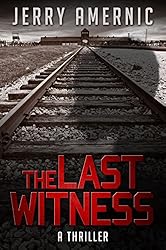
Guest post on ON WRITING by Jerry Amernic, Author of The Last Witness


Jerry Amernic writes about how he conducted his research for his latest book The Last Witness. It makes for an interesting read!


My novel The Last Witness is about the last living survivor of the Holocaust in the year 2039. The central character, Jack Fisher, is a 100-year-old man whose worst memories took place before he was 5, but he’s caught in a world that is abysmally ignorant and complacent about events of the last century.

Of course, a writer can research any historical event to his heart’s content and read everything about it. But for a subject like the Holocaust I thought it best to actually sit down with former child survivors. And I did.

A group meets regularly in Toronto where I live. I attended some of their meetings and also visited several of them in their homes.

Miriam, now 79, was one of only two dozen children who were found alive at Auschwitz when the place was liberated by the Red Army in 1945. She was nine. She told me about the trains that carried Jews to the death camp – with no windows or place to relieve yourself. She told me about old people who became corpses on the trip. She told me about seeing murders every day.
Gershon, who was only 3 at the time of liberation by U. S. troops, doesn’t remember much. Today he’s a grandfather and has been married to the same woman for decades. But he told me that throughout his whole life he has always been claustrophobic in tight quarters, and he also lives with this fear that those who are closest to him – even his wife – will leave him one day. Because everybody else did when he was little.

Imagine carrying a burden like that around with you.

So, through people like them, I learned something about what it was like to be a child survivor of the Holocaust.

I also made a point of meeting notable people. Like Sir Martin Gilbert. The official biographer of Winston Churchill, Mr. Gilbert is an eminent historian and author of some 70 books, including The Holocaust. He was most helpful and kind.

But most of my research involved finding specifics about what I needed, which meant reading. For example, my character Jack was born in the Jewish ghetto in the city of Lodz, Poland. He was a hidden child because if the Nazis found him, they would have taken him from his family. I learned how little children sneaked into the Aryan side of the city to steal food for their family. I learned about families living in the sewers below the streets to try and avoid detection. Indeed, I read  whatever I could find about that Jewish ghetto and about Auschwitz – where my flashbacks are based.

It was an experience and a journey, and I only hope this novel is the same for my readers.

About the book
The Last Witness
The year is 2039, and Jack Fisher is the last living survivor of the Holocaust. Set in a world that is abysmally ignorant and complacent about events of the last century, Jack is a 100-year-old man whose worst memories took place before he was 5. His story hearkens back to the Jewish ghetto of his birth and to Auschwitz where, as a little boy, he had to fend for himself to survive after losing all his family. Jack becomes the central figure in a missing-person investigation when his granddaughter suddenly disappears. While assisting police, he finds himself in danger and must reach into the darkest corners of his memory to come out alive. 
Note from the Author
My research included spending time with real-life, former child survivors. To illustrate the point of this novel, we produced a video and went around asking university students in Toronto where I live what they know about the Holocaust and World War II. The level of ignorance out there is incredible. Have a look here.


About The Story Merchant

branding entertainment media content consulting
The ancient Phoenicians were legendary merchants, often credited with the first evidence of advertising and branding east of the Indus - not to mention the invention of the alphabet! On their iconic ships, they delivered stories and culture from every port they visited, along with in-demand goods to distant consumer markets.

Ken Atchity inherited that marketing spirit from his father’s Lebanese ancestors, and his philosophy today is represented by its convergence with the Cajun tradition of creative ingenuity from his mother’s side.

With more than forty years experience in the publishing world, and twenty years in entertainment, Dr. Ken Atchity is a self-defined "story merchant" - writer, producer, career coach, teacher, and literary manager, responsible for launching dozens of books and films. His life's passion is finding great storytellers and turning them into bestselling authors and screenwriters.

Ken has produced 30 films, including "Hysteria" (Maggie Gyllenhaal, Hugh Dancy, Informant Media), "Expatriate" (Aaron Eckhart, Informant), the Emmy-nominated "The Kennedy Detail" (Discovery), "The Lost Valentine" (Betty White; Hallmark Hall of Fame), "Joe Somebody" (Tim Allen; Fox), "Life or Something Like It" (Angelina Jolie; Fox), "The Amityville Horror" (NBC), "Shadow of Obsession" (NBC), "The Madam's Family" (Ellen Burstyn; CBS), "Gospel Hill" (Danny Glover; Fox), and "14 Days with Alzheimer's" (with Story Merchant client Lisa Cerasoli).

Films in development include "Memories of 100," "Meg," "Boobytrap," "Demonkeeper," "Dr. Fuddle and the Golden Baton," and "Ripley's Believe-It-Or-Not!" (starring Jim Carrey; Paramount). Full film bio at imdb

His 14 books include books for writers at every stage of their careers.

Based on his own teaching and writing experience, Ken has successfully built bestselling careers for novelists, nonfiction writers, and screenwriters from the ground up. Clients include bestsellers Steve Alten, Jerry Blaine and Lisa McCubbin, Royce Buckingham, Alaya Johnson, Clint Hill, John Scott Shepherd, Noire, Shirley Palmer, Dennis Palumbo, James Michael Pratt, Larry Thompson, Tracy Price-Thompson, Ripley's Believe-It-Or-Not!, Cheryl Saban, and Governor Jesse Ventura.

Ken's Story Merchant companies, AEI, and The Writer's Lifeline have provided full-service development and management machine for commercial and literary writers who wish to launch their storytelling in all media--from publishing and film and television production, to Web presence and merchandising & licensing.


Lisa Cerasoli - Executive VP 

branding entertainment media content consulting
In 2003, Lisa Cerasoli and Dr. Atchity met for the first time about her script. He thought it read like a novel, tossed her a book and said, “Write it like this.” Two weeks and fifty pages later, Lisa was hooked. Recently, with Dr. Atchity in the executive producer seat, she directed and produced, “14 DAYS with Alzheimer’s.”

Originally a Michigan girl, Cerasoli moved to L.A. in ’95. She nabbed two series, Acapulco Bay and General Hospital, and recurring roles on The Pretender, Diagnosis Murder, Pensacola, Boomtown and more...Family matters drew her back home. Since then, Lisa’s received 25+ national/international awards including:

On the Brink of Bliss and Insanity (Five Star Publications, 2009)
Winner Best Romance: Los Angeles, London, Hollywood Book Festivals
Silver Medal - Foreword Magazine’s Book of the Year
As Nora Jo Fades Away: Confessions of a Caregiver (Five Star, 2010) 
Foreword by Leeza Gibbons
Winner - Paris and Hollywood Book Festivals
“14 DAYS with Alzheimer’s” A Documentary Short
WIN: Randy Becker TV Web Series Competition 2013
Women’s International Film Festival, Los Angeles
Detroit Windsor Film Festival
Grand Rapids Film Festival 

BEST OF FEST: Seattle Film Awards 

AUDIENCE CHOICE: Boulder, Life & Death Matters Festival
As Executive Vice president of Story Merchant, Lisa dedicates her immense energies, management and editorial skills, and visionary focus to helping writers move their careers forward. 

Guest Post On Laurence O'Bryan

A short guest post: Ken Atchity – master story merchant

I met Ken Atchity on a visit to a writer’s conference in San Francisco. Ken was one of the speakers. He is both a master storyteller and a great producer. Below you will find a brief biography of Ken, and below that his answer to this question, what is your number one piece of advice for storytellers, Ken?

Kenneth John Atchity or “Ken Atchity” is an American producer and author, who has worked in the world of letters as a literary manager, editor, speaker, writing and career coach, book reviewer, brand consultant, and professor of comparative literature.

Ken’s films include the Jim Carrey movie, Ripley’s Believe It or Not and Amityville 4 among others
  
He and his companies, The Story Merchant, Atchity Entertainment International, Inc. The Writers Lifeline, Inc, and The Louisiana Wave Studio, LLC, produce films and develop books for publication; and books, screenplays, and films for television and cinema. They also consult with writers about their career strategies and tactics.

So, Ken, what is your number one piece of advice for storytellers?

My advice to storytellers is to recognize that your stories can change the world, and that you can make that happen best by retaining control over your own career and getting your stories onto the Internet and into print without losing your publishing or other rights!
You are born under the lucky star of the Worldwide Web and it would be a crime for you not to take advantage of that piece of good fortune.

Ken is supremely positive about the impact of the web and about the opportunity it provides for writers. We are on the cusp of a new age. Thanks Ken.


http://lpobryan.com

Nadine Maritz of My Addiction Interviews Ken About The Story Merchant

Interview - Kenneth Atchity the American Story Merchant


Kenneth Atchity is an American producer and Author who has worked as a literary manager, editor, speaker, writing coach, brand consultant and professor of comparative literature. He’s been called the story merchant.


He is the captain of ships such as www.storymerchant.com ; Atchity Entertainment International, inc (www.aeionline.com ); The Writers Lifeline, Inc (www.thewriterslifeline.com ) and The Louisiana Wave Studio which together produce films and develop books for publication,  screenplays, and films for television and cinema--and consult with writers about their career strategies and tactics.

In this interview we are aiming to discover more about Kenneth himself and the world he lives in. As per the first interview http://ow.ly/dx211 which was based on the launching of the Messiah Matrix – we are enormously grateful for Kenneth to stand off his time for a written interview.


Kenneth, your entertainment career started in 1967 and is still flourishing can you tell our readers a bit more about your journey?

My journey has been a rollicking literary adventure, from my days as a professor at Occidental College and the University of Bologna, Italy, to the decision I made to leave the academic world and enter the commercial world of storytelling. There’s literally never been a dull moment—and the one thread that weaves through it all is my passion for stories of all kinds. I’ve been a first-hand witness to the world’s hunger for stories, and privileged to be able to bring them to their audiences.

You are known for producing filmography such as  “The Lost Valentine,” “Life or Something Like It,” “14 Days with Alzheimers,” “Hysteria,” “The Expatriate,” and “The Kennedy Detail,” which is but a few. What do you feel has been your best work in the filmography range?

Much as I love the movies I’ve been lucky enough to work on, I feel my best work is yet to come.


You founded Story Merchant for strategic coaching in writers in 2010. What inspired the idea behind these two new divisions?

I founded Story Merchant because the world of publishing and entertainment has changed so much in the last few years I found I was unable to spend time with individual writers in a way that made business sense—and Story Merchant allows me to do that through its (1) coaching services; (b) its publishing arm, Story Merchant Books; and its marketing arm, Story Merchant Book Marketing. We began (c), with my partner a former head of Fox Family Films, because the number one challenge of any author publishing a new book is how to make it VISIBLE in a world where thousands of books are published every single week. VISIBILITY is the published writer’s biggest challenge, so SMBM is focused on making writers visible.

Your academic career started in 1970 up to 1986 where you received the Faculty Achievement Award and the Distinguished Instructor at UCLA Writers program. How did you accomplish such awards within the same year?

You don’t really achieve awards—you just do your thing, and they either come or not. For people who love what they do, it’s not the awards that motivate it’s the privilege of getting to do what you love on a daily basis. It’s nice to be recognized, but an authorpreneur needs to be self-motivated because there’s a long wait between moments of recognition.


Your work has appeared in numerous journals and newspapers such as the American Quarterly, Classical Philology, Comparative Literature Studies, Contemporary Literature Criticism etc – how does it feel to be seen as such a popular and sought after writer?


It feels great to do the work of writing—the research, the composition, the revision. The more you publish the more you will publish. And it’s very satisfying to look back down a long road and see that many of my dreams—and those of my clients and partners--reached fruition.

You have written books such as : How to Publish Your Novel (SquareOne) (2005); How to Quit Your Day Job and Live Out Your Dreams (Skyhorse) (2012), plus Writing Treatments That Sell: How to Create and Market Your Story Ideas to the Motion Picture and TV Industry (Owl Books, 2003) and Write Time (2012, available through amazon.com).

How has exposure been on these books?
It grows over the years. It’s nice to know that several of the books have been through several editions and continue to resonate with writers year after year. It’s an extension of my years in the classroom to reach out and help people accelerate their progress along the success curve.           

Have readers ever given you input on how it    has assisted them with their career requirements and goals?

I couldn’t have written any of these books without constant input from students and clients along the way. It’s their experiences, in failure and success, that I describe in these books.

Your companies - Atchity Entertainment International, Story Merchant, and The Writer's Lifeline have been responsible for launching numerous books and films. I mean the list of stuff you have done is never ending, where to from here?

If I’m lucky enough to continue, I will continue pushing forward the projects I’m involved with—both my own personal projects like my first novel The Messiah Matrix which we talked about here earlier, and the many projects of my clients—wonderful books, screenplays, and stories that are just waiting their turn to see the light of day. And my honor and responsibility is to move them toward the light!

Have you ever thought about stretching your skills into countries that are not as skilled as America?

I did experiment a few years ago with reaching out to Brazil, at the request of a consultant from that country. I wish there were a way to do that at least in other English-speaking countries around the world because the world I work in, publishing and producing, is increasingly global so the principles I propound are universal.

In 1990 you founded the editorial and consulting company The Writer’s Lifeline, Inc. I am told that this company has been responsible for over a dozen best sellers. Can you tell our readers a bit more about what the company consists of? 


The Writers Lifeline, consisting of select editors I’ve chosen over the years to work with clients, is all about bringing “a writer’s skill and craft to the level of their vision and ambition.” On one hand, we ghost-write stories and information that the author needs put into the world; but on the other, our primary mission, is we make books and scripts ready for publication and production by giving them the conceptual, structural, style, and copy editing they need to stand out as professionally worthy of commercial acceptance.

You also do a lot of television, radio, web and television interviews and classes on contemporary literature, creativity, dreams, myth, writing, producing, publishing, time-management, business expansion, brand launching, and various other academic and entertainment-publishing subjects.


Where do you see yourself going with all of this within the future?

I am consolidating more and more of this into Story Merchant Book Marketing so that I can buy the time to help writers more. Writers need to remember the simple arithmetic, money buys time (that’s what the saying “Time is money” is all about). We all want unlimited freedom to create, so that means we need to achieve unlimited financial reward for the fruits of our creation. Anything I can do to concentrate and streamline my time helps me get more stories into the world.

In 2011 you were nominated for the Emmy for Outstanding Achievement in the Field of Documentary Programs on The Kennedy Detail – this was shown on Discovery Channel last year. And now you’ve turned the same book into a feature film, currently being written by director Stephen Gyllenhaal that will be released in 2013..


What do you expect to see from viewers on this release?

I know we will see respect for the amazing men who served President Kennedy even at the moment of this death—and had to endure the pain of it, and then go on with their work of attempting to protect the next president, and to move the country forward despite tragedy. I’ve seen that respect pouring out throughout the book tour for The Kennedy Detail and in the television audience’s reaction to the documentary—so I know the feature audience will express it as well.

How did it feel to be nominated for such an award?

It felt surreal to be in the room with the icons of television news and get to meet some of them at the pre- and after-party. There’s something so ‘arbitrary’ about awards and nominations—as I said earlier, you just do your work and focus on it, and sometimes it’s recognized. The recognition is time-consuming—I could be at my phone working on future deals. But it’s good to pause for them, take a breath, and put it all in perspective. There are SO MANY wonderful people working in publishing, television, and film that just being in the same room with them makes you realize that dreaming is the foundation for the reality we all live in. I got to be in the room with fellow dreamers. That’s like dying and going to heaven!

South Africa seems to be a country that holds a lot of promise in many things. Filmography and publishing are but some of its lesser opportunities.

How do you perceive these two factors to grow in the future?

As the world continues to shrink thanks to the technologies and the internet, film and publishing will grow in all parts of the world. I’ve been offered to amazing South African projects in the last two months, and there are many out there being dreamed at this very moment—persistence will turn them into realities.


For someone like me – Hollywood and big novel publishing brands seems to be something that is not easy to come by. It’s as if success is mostly concluded through the people you know and the money you could spend. Have you ever thought about branching out internationally? 


I’ve become all too aware of my limitations—primarily the limitation of the hours in the day. The only way I could conceive of branching out further is with the help of energetic partners who can build the infrastructure. Otherwise I’m happy with my present base, though I have clients in South Africa, Hong Kong, Germany, Belgium, France, England, Australia, Canada—and probably a few others I’ve forgotten at the moment.


If someone wanted to submit a manuscript or screenplay for your recommendation – what steps do they need to follow?

The best way to get my attention these days is to submit it to the ‘project launch analysis’ on www.thewriterslifeline.com
That way your project gets read, analysed, and reported back to me—for me to take a look at if it’s ready to move forward. If it’s not ready, you’ll be told why and we can help you do something about it.

What genres do you follow?
We have worked in every imaginable genre. I just love GOOD STORIES of all kinds.


Which age groups are you limited to?

­We aren’t limited to any age groups. We’ve found ways to work with them all.


Where can people follow your work and access your sites for possible submissions and enquiries?

My personal blog is a nexus that changes daily but gives you access to all the websites: its http://www.kenatchityblog.com/


 What do you prefer – reading, writing or screen?

I equally prefer reading and watching movies.

These days I find that the line between novel publishing and putting it to screen has become fairly narrow. There are very few books I have read that hasn’t made it to film or possible future filming.

I’m surprised because it’s my experience that the book that makes it to film is 1 in a hundred or more. Great books are the exception, but it still can take years to get to the screen.

What is your viewpoint on such a matter?

Persist. Do it right. Learn everything you can, especially from other people’s experience.


What are your views when it comes to online kindle reading and actual printed novels – do you feel that the market will always remain for physical publishing?

I’m sure it will remain for another 50 years, though I’m not sure it’ll be that long. When Gutenberg invented the printing press I’m sure folks still said, “I prefer my scroll.” But 50 years later I doubt that anyone was still making scrolls, and few still reading from them.

Final words for striving authors and producers around the world.

If you have a dream, you have a responsibility to yourself and to us to make it come true. That’s the most important thing in your life. Don’t let anything stand in its way. And let me know if we can help you get there!


Kenneth – thanks so much for granting me this interview.