"The universe is made of stories, not of atoms."
—Muriel Rukeyser
____________________________
Showing posts with label filmmakers. Show all posts

Tobe Roberts, Senior Associate Manager at Atchity Productions Joins Kevin Smith's Birthday Bash!

Tobe Roberts joins Kevin Smith's 55th Birthday Bash at his comic book store, Jay and Silent Bob's Secret Stash in Red Bank, New Jersey 


A comic book writer, author, comedian/raconteur, and internet radio personality, he is best known for his films "Clerks" (1994), "Jay and Silent Bob Strike Back" (2001), and "Clerks II" (2006) and his character Silent Bob. "Clerks: The Animated Series" (an adult sitcom) aired for a short time on ABC-TV starting in May 2000. (In 2019, "Clerks" was selected by the Library of Congress for preservation in the United States National Film Registry for being "culturally, historically, or aesthetically significant.")


What Stands in the Way of Achieving Your Dreams?

based on my own experience and that of others.


AVAILABLE ON AMAZON KINDLE


One of my favorite stories…I was on Dr. Joyce Brothers television show years ago with a couple of other people and one of them who was a man who was then in his 80’s and had just received his law degree from The University of Chicago. He told her that he was standing in line for registration four years earlier and one of the young people in line behind him said “Sir, are you sure you’re in the right line?” And he said “And I turned around and I said what line should I be in?”

And I thought “That is America. That’s the essence of America,” you are in whatever line you want to be in this country. And he fearlessly walked up and stood in the line and got his law degree at the age of 86 or whatever he was. And to me, what stands in people’s way is fear and their friends inflict it on them.One of the chapters in my book has to do with distinguishing between friends and friendly associates because when I left the academic world I had a few friends and I had lots of friendly associates. I learned the difference when I decided to leave because I retained a few friends. But most everybody I did not retain as friends because they thought I was absolutely crazy. They either thought that in kind of a benign way or they were just extremely angry that I was leaving a tenured position.

They thought that was completely ungrateful and crazy. I can also say that they were fearful about it and I knew them well enough to know that they were envious. They wished they could do it but they wouldn’t do it because they were set in their ways. 

Your Partner in Success with Denise Griffitts Interviews Matt Atchity

Your Partner In Success Radio Talks with Matt Atchity: Entertainment Industry Powerhouse

Listen Now


Matt Atchity, a multimedia powerhouse with over 20 years of experience shaping the entertainment industry, is celebrated for his transformative role as Editor-in-Chief of Rotten Tomatoes. During his tenure, he established the #Tomatometer rating system as the definitive metric for movie criticism. Beyond Rotten Tomatoes, Atchity has produced acclaimed content across platforms such as Moviefone and TYT Network. His deep understanding of audience dynamics and innovative drive has cemented his status as a leading authority in engaging viewers in the digital age, making his insights invaluable for creators, studios, and fans alike.

At #RottenTomatoes, Matt led a decade-long charge that elevated the site to household name status, pioneering TV reviews and expanding its industry influence. Additionally, he co-founded and co-hosted "What the Flick!?" with Ben Mankiewicz and Cenk Uygur, marking it as the inaugural spinoff show on the TYT network.

Now, Matt Atchity has transitioned to a new chapter in his career, joining forces with his uncle Ken Atchity at Story Merchant - a company that represents and assists storytellers (writers, authors) in getting their stories published or adapted for film and television. Drawing on his extensive background and industry expertise, Matt brings a wealth of knowledge to the company's ventures in Hollywood. His strategic insights, honed from years at Rotten Tomatoes and other prominent platforms, promise to enrich Story Merchant's creative endeavors and expand its footprint in the entertainment landscape. Matt's shift to collaborate with Ken Atchity reflects his ongoing commitment to innovation and storytelling, ensuring his contributions continue to resonate across the industry.

Download and listen wherever you consume your favorite podcasts.

Matt Atchity Joins Story Merchant As Associate Manager


In addition to representing current Story Merchant intellectual properties, Matt will in his new role introduce stories he discovers to the Story Merchant family of companies, which include Atchity Entertainment International (The Meg), Atchity Productions (Mr. Irrelevant), Story Merchant Management, and Story Merchant Books. He will be working closely with Senior Associate Manager Tobe Roberts, who is based out of New York.

“Sam Skelton and the whole gang and I are delighted to welcome Matt to our family of companies,” said Ken Atchity in a statement to Deadline. “His vast knowledge of the commercial story market and cheerful gregariousness and sense of humor will contribute greatly to our expanding presence in the Hollywood marketplace.”

Shared Sam Skelton, Creative Executive and Producer at Atchity Productions and the Story Merchant companies, “Ken and I have eagerly anticipated expanding our team, and Matt’s arrival marks a thrilling new chapter. With Matt’s passion for compelling narratives and his dedication to curating exceptional content for our film and television projects, I am confident that his presence will propel us to unprecedented heights of creativity and success.”

Added Matt Atchity, “I’m excited to be on the other side of the entertainment business. I’m looking forward to both discovering and shepherding great stories, and ones that will make exciting movies and TV series.”

Formerly, the younger Atchity spent ten years as the Editor in Chief of Rotten Tomatoes, leading the team that made the site a household name, as well as introducing TV reviews and expanding the site’s influence on the entertainment industry. A frequent reviewer and commentator for CNN, he also co-founded and co-hosted What the Flick!? alongside Ben Mankiewicz and Cenk Uygur, the first spin-off show on the TYT network.

Across its assortment of companies, Story Merchant comprises a publisher, a production company, and a rep of both writers and rights to stories for film and TV. As we were recently first to report, subsidiary Atchity Productions recently tapped veteran martial arts filmmaker Andy Cheng to direct Shadow Ghost, a feature adaptation of the comic book written and illustrated by Sifu Kurtis Fujita.


via Matt Grobar Deadline Hollywood

Queer Filmmaker Nicole Conn Delivers COMING OUT FOR LOVE First U.S. Dating Competition Show For Queer Women

Prolific queer filmmaker Nicole Conn (A Perfect Ending, Elena Undone, More Beautiful For Having Been Broken), through her Nicole Conn Films Global, presents Coming Out for Love ("COFL"), the new, 16-episode dating competition at www.comingoutforlove.com, the first episode and full season teaser became available free of charge with new episodes released weekly by subscription. Look for it!


The 16-episode series, from Nicole Conn Films Global in partnership with Just Jo Productions and Pelican Films, was filmed entirely on location at the Palm Palace in Palm Springs, CA and features a veritable Who's Who of queer celebrities as judges and guests, including Sedona Prince (Oregon Ducks basketball star), Stoney Michelli Love (CEO and founder of Stuzo Clothing), Caroline Rose Giuliani (filmmaker, political activist, writer), Whitney Mixter (Showtime's The Real L Word), Jill Osur (gender, racial and social activist, CEO Teneral Cellars wines), fashion designer Nik Kacy (founder of Equality Fashion Week ), Franco Stevens (Curve) and her wife, Jen Rainin (Ahead of the Curve), Tisha Floratos-Silano with Olivia Travel, singer/songwriter Tanerélle, and COUNTRY MUSIC singer, Brooke Eden.

ERASED⁠ Streaming on HBO Max!


In "The Expatriate aka Erased" Aaron Eckhart plays a former CIA agent who moves to Belgium, trying to make a fresh go of things as the relationship with his 15-year-old daughter (Liana Libreto) has crumbled. Working for a multinational corporation as a security head, he arrives to work one day to find that the corporation doesn’t actually exist and everyone he works with has vanished. He discovers his assistant is actually a trained operative trying to kill him. On the run with his daughter, the experience forces the two to trust and work with one another. Olga Kurylenko will play his former CIA partner and lover trying to track him down.⁠


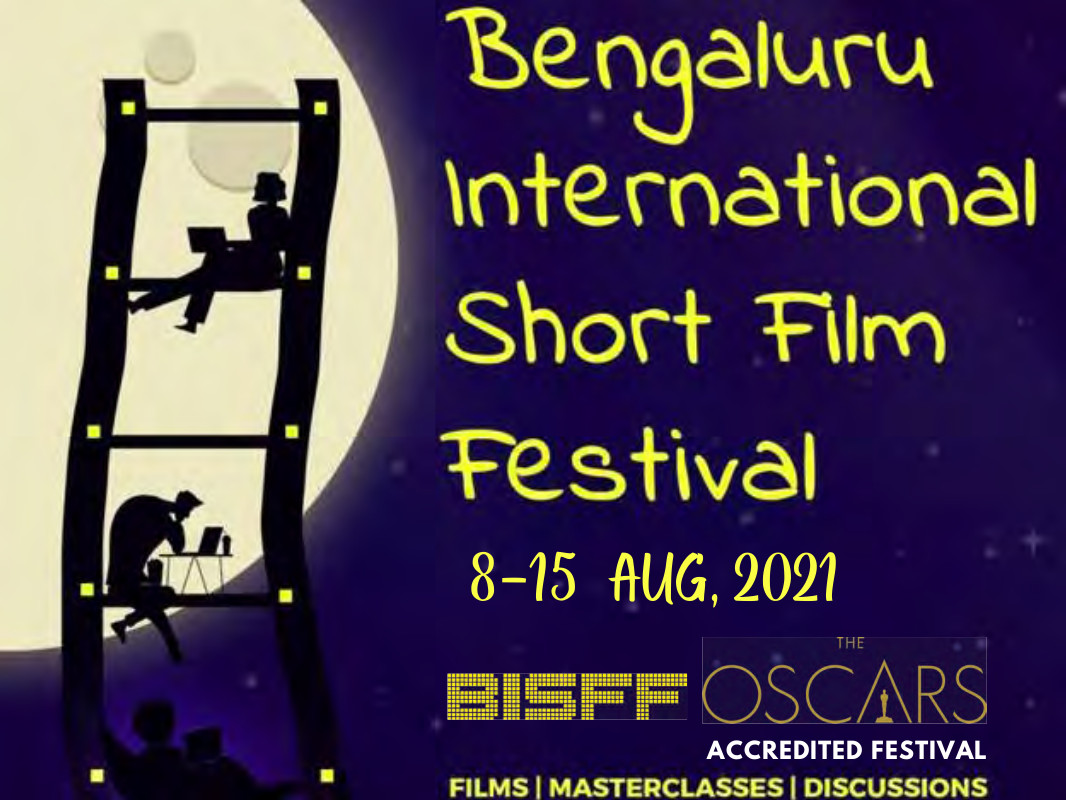
Ken Atchity Joins the Jury on the Bengaluru International Short Film Festival 2021 - International Competition Section

Ken will also be available for be available for a discussion during the festival onf creative writing. 


BISFF was conceived on an ambitious dream-fuelled evening, and the strength provided by multi-award winner Prakash Belawadi it came to fruition, Prakash who continues to be the festival mentor. 

The idea of BISFF was to create a platform for young and amateur filmmakers, where they could screen their shorts to discerning audiences and, more importantly, find constructive and critical feedback from experts in the field. In the very first edition of the festival in 2010, there were only a total of 40 short films submitted. This number rose to 3500+ shorts in 2019, where we saw an eclectic mix of Indian and foreign language films. The journey has been a struggle, but a very thrilling and fulfilling one. Today BISFF has the distinction of being one of the largest Short Film Festivals in India.

Alan Gibson's Rendezvous in Budapest!


With one of our Atchity Productions, Gibson Global and Vanishing Frame's The Seeding Budapest team, producer and award winning director Vandad Kashefi, waiting for our table at Menza.


Marsha Kinder on Ken Atchity's Dreamworks Quarterly


In the late 1970s, Kenneth J. Atchity and I decided to start a new interdisciplinary journal on dreams and their relation to the waking arts. Although we were both teaching at Occidental College in the Department of English and Comparative Literature, we had much broader interests that included—music, painting, sculpture, architecture, performance, and film. Together we composed a letter describing the journal and inviting artists to contribute a brief article describing how they used dreams in their own artistic practice, with concrete examples. We were interested in going beyond a codified dream style like surrealism and exploring a much broader set of relations across the arts.

Much to our astonishment we immediately received dream reports from an impressive array of filmmakers (including Federico Fellini, Orson Welles, Stan Brakhage, Dusan Makavejev, Paul Sharits, Ed Emshwiller, Pat O’Neill, Chick Strand, Bruce Connor), novelists (John Rechy, John Fowles, Ursula K. LeGuin, D.M. Thomas, William Burroughs, Paul Bowles, Alain Robbe-Grillet, Joyce Carol Oates,), and poets (Denise Levertov, W.S. Merwin, Lawrence Ferlinghetti, Howard Nemerov, Gary Snyder)—just to name a few. 


drawing by Fellini


We quickly assembled an impressive Advisory Board, which included not only artists like John Cage and many others listed above, but also critics, literary scholars, psychologists, anthropologists, and scientists, many of whom contributed ground-breaking essays. Our board also included dream experts like George Devereux and Ann Faraday and two of our nation’s leading neuroscientists working on dreams—William Dement of Stanford’s Sleep Research Center and J. Allan Hobson of Harvard Medical School.As co-editors, we took turns editing the journal. I edited our first issue, which appeared in Spring 1980 with the focus on Dream & Film, and Kenneth edited the second, on Dream & Poetry. 


Our journal soon won a Pushcart Prize, an American award that honors the best "poetry, short fiction, essays or literary whatnot" published in the small presses over the previous year. The journal continued for nine years, ending in 1988 with a final issue on Dreams & Adaptations. By then I was a film scholar at USC and we had both moved on to other fields. 

We called the journal DREAMWORKS, to put the emphasis on concrete works and to evoke Freud’s dreamwork theory, which helped explain the productive relations between dreams and the waking arts. Yet, we never trademarked the title, which meant there was nothing we could do when a new Hollywood studio later appropriated the name. They stole it from us, but we had also taken it from Freud. So we called the on-line version DREAMWAVES. 


Nicole Conn Launches 'Nicole Conn Films Global (Ncfg)' A Global Destination Hub Dedicated To Showcasing Content For, By And About … Queer Women


Award-winning filmmaker Nicole Conn is announcing the launch of NICOLE CONN FILMS GLOBAL (NCFG), the first ever global destination hub for all-things queer women media content. 
Kicking off on June NCFG’s mission is to provide a digital space where artists, creators and financial investors can come together to create, network and build partnerships to develop new entertainment projects.


Keeping women’s cinema alive, Nicole Conn Films Global is an international group dedicated to the funding and supporting of women’s narrative features as well as other queer content; documentaries, webisodes, etc.  in the 21st Century.

While Hollywood has successfully released more queer-centric films the lack of women/lesbian representation is still a problem. NCFG is committed to producing quality and entertaining Feature Films, Documentaries and TV/Web Series made By, For & About Women and their complex lives.

Through its unique funding model, NCGF aims to keep Women’s Lesbian Cinema alive and thriving, always building its library as well as inviting Membership Artists to be involved with films, specialized event & funding screenings or exhibitions.

“NCFG’s concept is about rallying leaders in our LGBTQ+ entertainment community to work and collaborate together, “says Nicole Conn.

The philosophy behind the unique Hybrid Funding model is about affordability. It’s designed so that queer women can look at their own particular circumstances and contribute something that is completely painless for them financially while also generating the opportunity to be involved in a real way that contributes to their own artistic dreams and visions.

Women from all over the globe will be able to submit their own scripts or other lesbian content so that NCFG can help pool resources as well as set up and connect projects to the right producing entities. There are only 3 criteria that must be met: 1) It’s made By, For & About Queer Women; 2) It’s quality & entertaining; and 3) It has not been seen before.

Further, we are looking for diversity. “Same Rights. Same Fight. NCGF is determined to support all marginalized groups that suffer from inequality, prejudice, and discrimination, and to raise and amplify all the colorful and diverse voices that make up our LGBTQ+ community. NCGF stands in solidarity with all who seek racial equality and justice, affirming that All Black Lives Matter.”

Putting passion into action, CONN is proud to be an active community collaborator teaming up with some of the top LGBTQ players in Arts & Entertainment including OML, Tello Films, LesFlicks, Outtake Voices, Sallyanne Monti and Nicole’s Creative Producing Partner, Lissa Forehan, to name a few.

These groundbreaking pioneers in the LGBTQ entertainment industry are dedicated to advancing professional achievement for lesbians working in all areas of film, video, and other screen-based media to help promote and raise queer women visibility in films/TV & on the web, whether in front and/or behind the camera.

“At OML collaboration has always been in our DNA,” comments Shirin Papillon – Owner/Founder OneMoreLesbian.com “We pride ourselves on having turned the majority of our competitors into collaborators and partners. We believe this is the spirit of Nicole Conn Films Global – that we; filmmakers, content creators, curators, distributors, publishers, etc., will be stronger together.”

Nicole Conn has been an inspiration and an example for all filmmakers to follow your passion and tell your stories. Her films were the entre for most of the community who was so hungry for films when there were few and far between. We are so excited to combine forces to grow this genre!”  says Christin Baker, TELLO FILMS, whom Nicole Conn Films is teaming up with to co-produce “The Lesbian Dating Show.”

A pioneering filmmaker and an iconic figure in the LGBTQ community, Nicole Conn is known not only for having paved the way for lesbian-themed cinema with her cult classic, “Claire of the Moon” but for her acclaimed features “Elena Undone” (which boasts the longest screen kiss in cinema history), “A Perfect Ending,” and “little man”, but also for opening the door for queer female filmmakers.

Read more


Shepherd University’s President’s Lecture Series Presents An Evening With Charlie Matthau April 22

SHEPHERDSTOWN, WV — Shepherd University’s President’s Lecture Series will present An Evening with Charlie Matthau on Monday, April 22, at 6:30 p.m. in the Robert C. Byrd Center for Congressional History and Education auditorium. The event is free and open to the public.

Matthau is a film and television director and actor and the son of actors Walter Matthau and Carol Grace. As a child, he appeared with his father in such films as Charley Varrick, The Bad News Bears, and House Calls. Matthau directed two movies that starred his father, The Grass Harp, based on a novella by Truman Capote, and the made-for-TV movie The Marriage Fool. He also directed Doin’ Time on Planet Earth, Her Minor Thing, Baby-O, and Freaky Deaky, which premiered at the Tribeca Film Festival. Matthau’s newest film, The Book of Leah, based on a true story about a young Jewish teenager in the 1980s who learned to defend herself after a violent sexual trauma.

Alan Gibson, adjunct professor of French and Spanish, will lead an on-stage discussion with Matthau about what it was like growing up as Hollywood royalty, what he learned from his dad, and who his mentors were. Gibson and Matthau will discuss the current state of the film industry and how it’s evolved from the early days of Matthau’s career.

Gibson, who is an executive producer of The Book of Leah, has written three novels under the name A. B. Gibson—The Dead of Winter, Leave No Trace, and his newest thriller High Voltage. Gibson is also producer of The Seeding, a feature-length horror film currently in development with Matthau and based on The Dead of Winter.

For more information, contact Karen Rice, director of Shepherd’s Lifelong Learning program, at 304-876-5135 or krice@shepherd.edu.

Ismael Martín Venegas Interviews Lila French. Promising auteur filmmaker.


Tell me a little about yourself, Lila. (Where do you get the taste for cinema, your cinematographic influences…).

I grew up in New Orleans, studied Computer Science at MIT, later studied acting in Los Angeles, and a few years ago moved to Spain. As a kid, I always liked performing (plays, dancing, reading aloud in class, whatever), so my initial interest in film came from a desire to perform and a curiosity about what the actors were doing. In my adult years, after having studied acting, my life took a more spiritual turn. Yoga, meditation, and my journey as a human became more important, so my taste in films kind of followed. I like stories about personal growth, and stories where the characters express humanity, and I admire actors who can do that in a genuine way (like Willem Dafoe in “The Florida Project”, for example). I don’t like movies that make me feel bad for no reason, but I can definitely appreciate good “feel bad” movies with a bottom line. “Loveless”, directed by Andrey Zvyagintsev, is one. That movie makes me sad every time I think about it, but it’s because it so unapologetically expressed how poisonous the inability to express love can be, which is a powerful point to make.

I’ve seen in your IMDb profile that you’ve done various film projects with a style of their own. It’s admirable. What experiences have your work given you?.

I think I’ve learned to trust my instincts more. When doing something for the first time, it’s natural to have doubts, but many times I second-guessed creative choices, only to realize later that yes, the thing that I thought I wanted, I did indeed want. I still listen to the experts and people I’m collaborating with, but now without downplaying my own vision or opinion.

What do you think of today’s film industry? Do you think it considers emerging talent?.

Well, it’s becoming easier and less expensive to make films, so it’s easier for emerging talent to create their own projects and get in the game without having to wait for an invitation. Any film project still takes an immense effort, but if you have a story to tell, there are fewer obstacles to telling it. I like that things are moving this way, because it allows for more variety, and it enriches us as humans to hear stories from a variety of perspectives.

Even the figure of the male director or screenwriter predominates in most films. Do you think there is a change in the professional role and is the woman being better considered or not?.

Yes, I see more women and more variety in general in all areas of life (film, business, politics, …). I wish it would happen more quickly, but at least it’s happening. I see a lot of great and varied work at film festivals, so I think, little by little, stories about and/or by women, people of color, LGBTQ, and other previously underrepresented groups are making their way into the mainstream. The more we see variety on and off the screen, the more we lose our misconceptions of who should be doing what.

Tell me about your next projects.

I’m currently finishing a narrative short that I shot in Conil last year. It’s called “Winter in a Beach Town”, and it’s about the changing of seasons, literal and metaphorical, of course. I’m editing, working with the composer on the score, and with the colorist on the color. I’ve also written a narrative film, which I’d like to shoot after finishing “Winter”. It explores solitude and the need for others, and I plan to act in that one as well.

What advice would you give to anyone who wants to be a screenwriter?.

I don’t feel qualified to give screenwriter-specific advice, but what I think is important in any creative endeavor is the following. When creating something, there always seems to be a pull to try to please an audience. I think if you do this, your work not only becomes inauthentic and watered down, it makes you care about the praise and criticism your work receives, which are really not important. The most important thing is to tell an authentic story in the precise way you know it to be. Make sure you’re communicating clearly, sure, but don’t aim to please. I find that if I create something that’s honest and authentic, and if I’ve done it to the best of my ability, I’m mostly immune to praise and criticism. I don’t care how it’s received, because I know what story I was trying to tell, and that that film/poem/painting/etc. tells it in the way I intended. It’s beautiful to see art that reveals the hidden depths and nuances of its creator(s). So, let’s do that.

Could you tell us a professional anecdote that was special to you?.

Before making the film “Birdbath”, I performed in the play, and at the end of the play’s run, something special happened. It was a Sunday afternoon in the aptly named Skylight Theatre in Los Angeles, and I was there in the theatre alone after the final performance, packing up my things. The skylights and doors were open, there was a nice breeze flowing through the room, and I took a moment to acknowledge having just completed a successful run of this play we had worked very hard to get done. I then left and began walking down the street to where my car was parked. I cut across the street at a random spot, and there at the base of a tree was a dead bird. And not just any bird, but a small bird with a bright orange and yellow body and black and white wings. “Birdbath” ends with a poem about a dead bird, written to my character as a gift by the male character, conveying the tragedy of her situation and beauty of her spirit. Seeing that particular dead bird—that particularly beautiful dead bird—that day, for me, was beyond coincidence and was a very special and unforgettable gift.

LINK: http://lilafrench.com/

Read more


Nicole Conn's New Film More Beautiful Coming Soon


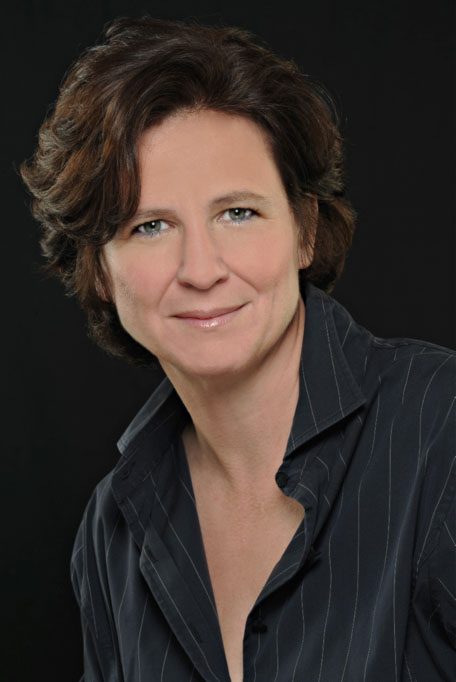
writer/director Nicole Conn
More Beautiful is thematically characterized by the Japanese term Kintsukuroi – which means More Beautiful for Having Been Broken –This title is perfect for what has become an exquisite mainstream family drama.


FEATURING

Cale Ferrin whose extraordinary breakout performance in this film will touch everyone’s heart.

eblast.Cale.toastin4 3
 Cale Ferrin 
eblast.CaleNKayla7 4
with and Kayla Radomski


Cale's portrayal of “Freddie” is not only brave and raw but will really help people to understand what a child with Special Needs goes through on a daily basis. And congrats to Cale who is currently working on a Hulu series in Toronto.

eblast.CalenZoe3 4
Cale Ferrin and Zoe Ventoura

eblast.zoe.10.use 7
Zoe Ventoura
eblast.kaylanCale.red
Kayla Radomski and Cale Ferrin


The entire cast is stellar – headed up by Zoe Ventoura and Kayla Radomski - both of their journeys’ are relatable on so many levels.           
And the supporting cast is pretty darn remarkable for a film this size: Bruce Davidson, French Stewart, Brooke Elliott, Harley Jane Kozak, Gaby Christian, Kay Lenz and my daughter Gabrielle Baba-Conn.

eblast.group to USE
It's a wrap!!!
                     
eblast.French.Cale.Bruce9 2
French Stewart, Cale Ferrin, Bruce Davidson    
                      
eblast.HarleyNGabby6
Harley Jane Kozak and Gaby Christian

eblast.brooke.Cale.Gabby
Brooke Elliott, Cale Ferrin and Gaby Christian


Female Filmmakers Dominated the Sundance Awards, But That Doesn’t Guarantee a Career Boost

 Maggie Gyllenhaal and Parker Sevak appear in The Kindergarten Teacher by Sara Colangelo, an official selection of the U.S. Dramatic Competition at the 2018 Sundance Film Festival. Courtesy of Sundance Institute.  All photos are copyrighted and may be used by press only for the purpose of news or editorial coverage of Sundance Institute programs. Photos must be accompanied by a credit to the photographer and/or 'Courtesy of Sundance Institute.' Unauthorized use, alteration, reproduction or sale of logos and/or photos is strictly prohibited.

At this year’s Sundance Film Festival, the annual event broke some of its own barriers, doling out each of its four directing awards to female filmmakers. For the first time in the festival’s 34-year history, directing prizes went only to women, spanning all four major categories — narrative and documentary, U.S. and world cinema: Sara Colangelo (“The Kindergarten Teacher”), Alexandria Bombach (“On Her Shoulders”), Sandi Tan (“Shirkers”), and Isold Uggadottir (“And Breathe Normally”). The festival’s juries also awarded Desiree Akhavan’s “The Miseducation of Cameron Post” the Grand Jury Prize, the festival’s highest honor; Sundance’s sole dedicated screenplay honor, the Waldo Salt Screenwriting Award, went to Christina Choe for “Nancy.”

In short, it was a big festival for women. But what does winning an award at Sundance actually mean for female filmmakers? How does it impact future projects? Does it guarantee further success in the industry? None of those questions have an easy answer.

The festival only started giving out dedicated directing awards in 1998 – before that, any prize that singled out a filmmaker fell under the banner of “special jury prize” – and even then, they were simply divided up into “dramatic” and “documentary” sections, with no differentiation between the world cinema and U.S. slates. Ten years later, the festival began giving out four directing prizes total, one for each competition section.

Prior to 2018, the best showing for women directors was way back in 2008, when they won three of the four prizes. While the U.S. dramatic directing award went to Lance Hammer for “Ballast,” Anna Melikyan and Nino Kirtadze dominated the world cinema front, and documentarian Nanette Burstein won for her U.S. documentary “American Teen.”

Mostly, though, directing prizes for female filmmakers have been limited to about one a year, with a slight uptick taking hold in 2012, when the prizes began to be more evenly split along gender lines. There were some lean years, though, including 2001, 2005, and 2006, when no women won a directing award.
Debra Granik on the set of "Leave No Trace"

In 2010, Debra Granik won both the Grand Jury Prize and the Waldo Salt for her lauded “Winter’s Bone,” even though the dramatic directing award ultimately went to Eric Mendelsohn for “3 Backyards.” Similarly, in 2016, female filmmakers picked up three of the four Grand Jury Prizes, though none of them earned a directing prize to match. Talk about mixed signals.

The female filmmakers who have been honored by Sundance’s jury run the gamut from household names like Ava DuVernay and Jill Soloway to anomalies like Barbara Sonneborn and Tinatin Gurchiani, who have yet to follow up their wins with new projects. There’s no guarantee that winning a Sundance award will catapult a career to new heights, and even for the most recognizable of filmmakers, it wasn’t their Sundance wins that pushed them over the top.

DuVernay and Soloway won directing awards in the U.S. dramatic section in 2012 and 2013, respectively. Both have gone on to huge successes: DuVernay is the first woman of color to direct a $100M+ live-action film, while Soloway’s beloved Amazon series “Transparent” has earned them two Emmys so far. However, it wasn’t their Sundance wins that immediately catapulted them into such huge projects.

DuVernay first made “Selma” before getting the chance to make “A Wrinkle in Time,” while Soloway has said that “Transparent” was partially spawned by audience backlash to “Afternoon Delight.” They didn’t benefit from what Akhavan herself has termed the “Colin Trevorrow moment,” i.e. being a white male director who gets a huge opportunity after screening a well-regarded film at the festival. (While Trevorrow’s Sundance breakout, “Safety Not Guaranteed,” did win a Sundance award, it was for screenwriting and went only to writer Derek Connolly; Trevorrow was later hired to direct “Jurassic World.”)

Another big name that scored her first batch of good buzz at Sundance? Catherine Hardwicke, who won the dramatic directing award for her debut “thirteen” in 2003. Even with that accolade under her belt, Hardwicke didn’t get her first arguably big film until “Twilight,” five years later (she directed a pair of other films before her YA vampire offering, but both had budgets under $30 million).

Karyn Kusama similarly won a directing award for her own debut, “Girlfight,” in 2000, though she didn’t direct another film for five years. Like DuVernay, her career is on a major upswing, but it wasn’t a result of some immediate response to her Sundance win. The same goes for Debra Granik, who won a directing award for her first film, “Down to the Bone,” at Sundance in 2004 and didn’t make another film for six years. That feature, “Winter’s Bone,” served as Jennifer Lawrence’s big breakout and earned a pair of nods for Granik. She returned to the festival this year with her latest, “Leave No Trace.”

Other Sundance winners have struggled to translate their very important wins into new work. The first winner of the documentary directing award, Julia Loktev, eventually turned to narrative films, but has only made two since her “Moment of Impact” won in 1998. Still other winners have yet to make another film, including 1999 doc winner Barbara Sonnenborn, 2013 doc winner Tinatin Gurchiani, and 2017 doc winner Pascale Lamche. And there’s also “Beach Rats” director Eliza Hittman, who won just last year and continues to top lists of female filmmakers to watch, but has not yet locked down an official next project. When she won her prize at Sundance, she said in her acceptance speech: “There is nothing more taboo in this country than a woman with ambition. Hollywood, I’m coming for you.”

It’s in the documentary section that many filmmakers have been able to move beyond their big Sundance wins. Heavy hitters like Lauren Greenfield (who just returned to the festival with her “Generation Wealth”) and Kim Longinotto (the 2015 winner for “Dreamcatcher”) are not only still working, but didn’t necessarily require the attention of the festival to break out. Longinotto, in fact, had made nearly 20 films before Sundance gave her an award.

Rebecca Cammisa – who co-directed the doc winner “Sister Helen” alongside Rob Fruchtman – has worked steadily since her 2002 win, including offerings in both film and television. Similarly, “American Teen” filmmaker Nanette Burstein continues to create in both film and television, narrative and documentary. Andrea Nix, who won for her 2007 doc “War Dance,” is still working in documentary realm. Nino Kirtadze has made three additional documentaries after her 2008 win for “Durakovo: Village of Fools.”


In 2009, both the U.S. and world cinema documentary awards went to women, and “Afghan Star” director Havana Marking has since made two films. Natalia Almada made one more documentary and moved to narrative filmmaking with “8” and “Everything Else.”

There are recent signs of life for narrative directors, too. “52 Tuesdays” director Sophie Hyde is prepping her first narrative after her 2014 win, a big screen take on Emma Jane Unsworth’s novel “Animals.” Another winner in 2014, “20,000 Days on Earth” co-director Sophie Hyde recently moved into narrative television with “Neil Gaiman’s Likely Stories.” Alanté Kavaïté, who wrote and directed 2015 winner “The Summer of Sangaile,” recently wrote the twisty sci-fi noir “Evolution.”

For now, however, there is much work to be done. Sundance may have lauded some of our finest filmmakers – gender notwithstanding – but even walking away from the country’s most important film festival with a shiny award doesn’t guarantee a huge career boost, greater name recognition, or even the ammo for the next project. For so many female filmmakers, that’s a story they already know.


Read more

Stanley Kubrick’s Unbelievable Answer to the Question, “Is Life Worth Living?”

"The very meaninglessness of life forces a man to create his own meaning.”

— Stanley Kubrick

 In 1968, 40-year-old Stanley Kubrick was interviewed by Playboy magazine.


Stanley Kubrick’s Unforgettable Answer


    Playboy: If life is so purposeless, do you feel its worth living?


    Kubrick: Yes, for those who manage somehow to cope with our mortality. The very meaninglessness of life forces a man to create his own meaning. Children, of course, begin life with an untarnished sense of wonder, a capacity to experience total joy at something as simple as the greenness of a leaf; but as they grow older, the awareness of death and decay begins to impinge on their consciousness and subtly erode their joie de vivre (a keen enjoyment of living), their idealism — and their assumption of immortality.

    As a child matures, he sees death and pain everywhere about him, and begins to lose faith in the ultimate goodness of man. But if he’s reasonably strong — and lucky — he can emerge from this twilight of the soul into a rebirth of life’s élan (enthusiastic and assured vigor and liveliness).

    Both because of and in spite of his awareness of the meaninglessness of life, he can forge a fresh sense of purpose and affirmation. He may not recapture the same pure sense of wonder he was born with, but he can shape something far more enduring and sustaining.

    The most terrifying fact about the universe is not that it is hostile but that it is indifferent; but if we can come to terms with this indifference and accept the challenges of life within the boundaries of death — however mutable man may be able to make them — our existence as a species can have genuine meaning and fulfillment. However vast the darkness, we must supply our own light.

— Stanley Kubrick, interview with Playboy, Stanley Kubrick: Interviews

Read more


Scorsese's Protégée and Her Daughter Are the Freest Women in Hollywood


Female filmmakers are rarely afforded the opportunity to have the kind of long, varied careers that are seemingly awarded to even their most mediocre male peers, but Allison Anders has defied the odds at every turn. She's been writing and directing independent films, studio pictures, and television episodes for more than 30 years, with credits including Mi Vida Loca, Grace of My Heart, the Peabody Award–winning Things Behind the Sun, and, most recently, a remake of the 1988 film Beaches.

In the 1980s and 1990s, in the midst of raising her three children as a single mother, Allison became one of the premiere voices in the American new wave of independent filmmakers. But since 2008, she's also been behind Don't Knock the Rock, a music documentary film festival in Los Angeles, which she created with her eldest daughter, musician and music supervisor Tiffany Anders. Together, they champion under-the-radar artists whose work you might not see anywhere else.

Like her mom, Tiffany Anders is a renaissance woman in the worlds of film and music. As a musician, Anders released two critically acclaimed albums, including 2001's Funny Happy Cry Gift, which was produced by singer-songwriter PJ Harvey. These days, you can hear Tiffany's song selections on shows like You're the Worst and Making History; she's also been director James Ponsoldt's go-to music supervisor since their first collaboration, on Smashed in 2012.

The mother-daughter duo occupies a unique position in the film and music industries. In bringing their passions to a wide range of audiences, each has managed never to lose sight of her voice as a female creator. The three of us sat down together to talk about inherent industry sexism, the lack of female heroines for young women, and the value of mentorship in the arts.

Kate Hagen: I saw you guys at the Cinefamily theater in L.A. presenting Border Radio a couple of years ago. Tiffany, you were talking about sleeping in the editing room as a kid during the making of that film. Allison, do you think it's easier to be a mother working in the film industry now, or when it was more independent and there were fewer rules about what was acceptable?

Allison Anders: I'd say it was easier to be a single mom back then, because nowadays, I think you really have to be more present and less selfish with your children than I was. We would do things that you would never dream of doing as parents now, like editing at night and going, "We'll take the sleeping bags and they'll just sleep on the editing-room floor and we'll take them out for breakfast in the morning and send them to school."

KH: For both of you, the sonic component of film, especially when it comes to soundtracking, is paramount. Allison, do you start with a song, or do you start with a script when you begin each new film project?

AA: I always make a playlist as I'm writing. Music is really important to me. I do get attached to certain songs. Tiffany can really speak to this with other directors, as well; this is one of the many reasons why she's such a great music supervisor — she knows that when a director is attached to a song, it's not bullshit. She's really able to respect that and pry that song out of your hands, replacing it without making you feel like you're being a ridiculous idiot.

Tiffany Anders: I very much approach being a music supervisor in the way that I do because of my mom — figuring out how to work with a director to enable their vision. Music is so subjective to different people. Nobody's going to be like, "Come on in and paint my movie with whatever you want!" So for me, what I like about the job is working with the director, starting with something that they had in mind. James Ponsoldt had a playlist when he sent me Smashed, and about two or three of those songs ended up in the movie. But, you can also introduce them to new things that they don't know about that they're amazed you're able to find.

KH: What were you guys listening to in your house growing up? How did you rebel against a mom who was into rock 'n' roll?

TA: I was listening to my mom's records — the ones she didn't need to sell. She had X and the Gun Club and soundtracks from Tess and The Ghost and Mrs. Muir. I also liked the pop bands of the day, like Duran Duran and Guns N' Roses and then started to discover bands like Redd Kross and Dinosaur Jr. on my own.
Advertisement - Continue Reading Below

AA: I grew up musically, too, with a young, single mom. One day, our babysitter told us that the Beatles were going to be on Ed Sullivan that weekend. My mom made me turn off Walt Disney and I was like, Ugh! But then I fell in love — that totally changed my life, my mom making me watch the Beatles.

KH: Tiffany, I wanted to ask you about being a singer-songwriter in the early 2000s during the peak of schoolgirl pop and how you flew in the face of all that. Your record Funny Cry Happy Gift was produced by PJ Harvey, which is amazing.

TA: Making that record was one of the high points of my life. I learned so much from her, and we developed such a good process while working on it. It was one of those creative things that, when you're doing it, you're not thinking about anything else. You're completely devoted to it.

Tiffany was educated by me, and I was educated by my mother. We didn't need any guys telling us what to listen to.

KH: What was it like working with men in the music industry at that time? How do they compare to men working in film now? Both industries are notorious for treating women poorly.

TA: It's funny, because after I did the record with Polly, I did a record here in LA. There were boys recording and producing it with me and I never had any issues with sexism. But in terms of the record-collecting world, boys are definitely threatened by girls coming in and knowing something. They just assume that you cannot possibly know. They tune you out.

AA: The movie-nerd thing is exactly the same, where they just assume that you don't know anything and you can't possibly be as nerdy about movies as they are. I think it goes to a deeper thing of like, We might invite you in, but you don't get to hold the knowledge that we have. It's just ludicrous. I mean, Tiffany was educated by me, and I was educated by my mother. We didn't need any guys telling us what to listen to.

KH: But to combat that, you created Don't Knock the Rock. Tell us a bit about how you created the festival.

AA: I'd been to a great festival in Sheffield, England, with a lot of music films. They showed a couple of my films there, and there was also this great rock-'n'-roll museum right across the street from the festival. I was like, This is so fun playing all these music films. I thought, I want to have a festival. I talked to Tiffany and I go, "Would you do this festival with me? I could get some movies and you could get some bands." We kicked it off like that. Now she curates the movies every bit as much as I do. It's a complete partnership.

KH: I imagine most of these films show at festivals and aren't getting distributors, so if you want to see it, you need to see it right now.

AA: It's unbelievable. Nobody ever makes a dime off of these movies. Those are the kinds of films that we go looking for — that the filmmaker foolishly, against everything everybody's told him or her, has decided, No, I'm doing this. I'm going to spend at least five years, if not ten years, of my life on this obsession. That's gold to us.

KH: You are both extremely focused on showcasing underappreciated female artists. Allison, you co-hosted Trailblazing Women in Film on TCM in 2015, and Tiffany, your blog, Jumble Queen, highlights lesser-known female musicians. We're at a point in time where there are more avenues to see films and hear music than ever before, but even with feminism having a moment, there's still so much lost art by women.

AA: During the Oscars, I'm seeing one guy after another talk about his little Walmart receipt that he's going to make a movie about. I was like, "Where is the woman director in here?" Last year, women got lost in the conversation in terms of diversity at the Oscars — the women were left out for the most part. I don't see anyone decrying it this year either.

When I first saw the website for Trailblazing Women in Film, I cried. To see all these women filmmakers throughout film history and to be able to talk about those films for weeks with Illeana Douglas was a blast.

KH: I read a great quote from you, Allison, where you said, "There are no girl wonders in film." That's so true, but there's certainly no shortage of boy wonders. You have these amazing intellectual-property ideas — like if Pippi Longstocking were a boy, there'd be ten Pippi Longstocking movies.

AA: With Pippi, what charmed me as a mother, what I'll never forget, was Tiffany crying after the movie. She looked at me and said, "She's funny." I loved that my daughter was connecting to such an anarchic energy. Pippi is her own boss and has magical powers that she uses however the hell she wants.

TA: I remember loving the fact that she didn't let any rules bind her. She was her own person.

KH: We don't get those kinds of characters for young girls. Young girls don't get to go on adventures.

Tiffany, I wanted to ask about James Ponsoldt because, to me, your relationship with him is a mirror of other relationships that women collaborators have had with male directors. You have Scorsese and his film editor Thelma Schoonmaker, and Quentin Tarantino and his editor, the late Sally Menke. How does that work for you and James?

TA: He and I have a really good working relationship because he's very knowledgeable about music and really knows what he wants, which makes my job easier. We can talk about how a song or a cue is working and we can overthink it until the cows come home. For me, that's great fun.

KH: Allison, I also wanted to ask about working with Scorsese on Grace of My Heart. How did that relationship shake out as you guys were making the movie?

AA: Needless to say, it was an amazing opportunity. I was telling Quentin Tarantino, who I was seeing at the time, that I was going to have lasagna at Martin's house. Quentin goes, "I wear this guy around my neck like a ball and chain and he's making you lasagna?"

It was amazing what a generous mentor he was. He took his ego out of everything to teach me what he knew.

KH: How do you inspire one another as mother and daughter, but also as creators?

AA: Nothing makes me happier than to know that each time I listen to her show or her perspective on something that nobody else will ever introduce it to me except for her. She reintroduced me to Dory Previn, who I knew as a feminist teenager, but I never knew "The Lady With the Braid." I listen to that song probably once a week now.

She inspires me with her true independence. There's a part of me that's still a little attached to the male perspective. But Tiffany has this unwillingness to take shit from other people.

TA: I beg to differ. I would say that I get my independence from you. I feel extremely fortunate that I was raised by such a strong woman. I didn't care about going to the prom, I didn't care about my hair being pink, or people thinking I was weird for listening to punk rock. I was always taught that being myself was completely OK.

This interview has been condensed and edited.

Kate Hagen is a writer living in Los Angeles. She's the creator of 31 Days of Feminist Horror Films, and the director of community for the Black List.


Read more