"The universe is made of stories, not of atoms."
—Muriel Rukeyser
____________________________
Showing posts with label Indie Films. Show all posts

The New York Times List of the Best Movieson HULU Handpicked Hysteria!


You’ve probably seen plenty of Victorian-era serio-comic dramas, many featuring much of this prestige cast, which includes Hugh Dancy, Rupert Everett, Felicity Jones, Gemma Jones and Jonathan Pryce. 

But this is no starchy tale of class conflict or simmering romance; no, this is the story of how Dr. Mortimer Granville (Dancy), while pursuing treatments for “hysteria” (a onetime catchall medical term for troubles that affected women), invented the vibrator.

The director Tanya Wexler and her stiff-upper-lip cast clearly get a kick out of their randy subject matter and adjust their playing accordingly, while Maggie Gyllenhaal delights as a proto-feminist who seizes on this development and the power it contains.

Read more at the New York Times

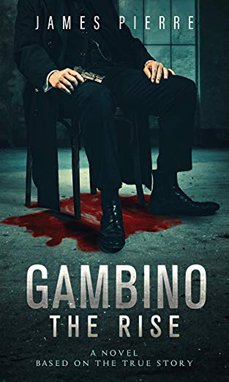
James Pierre’s novel GAMBINO: THE RISE signed as Italian film with George Gallo directing

James Pierre’s novel GAMBINO: THE RISE signed as Italian film with George Gallo directing


LOS ANGELES, CA—Story Merchant Books reports that an Italian film based on James Pierre’s Gambino: The Rise was announced by veteran producer Jules Nasso at the Cannes Film Festival. The film will be directed by George Gallo (Bad Boys, The Comeback Trail) who is scripting it with two-time Oscar winner Nick Vallelonga (Green Book).

Pierre’s novel dramatizes the history of the Cosa Nostra, beginning with its roots in Italy and the organizing role played by Carlo Gambino, its boss from 1957 until his death in bed in 1976 in his Long Island home. Gambino was reputed to be the inspiration for Mario Puzo’s The Godfather. In the novel, Gambino carries a copy of Nicolo Machiavelli’s The Prince with him on the boat from Italy.

Story Merchant/Atchity Productions Ken Atchity, who introduced the book to Nasso, will serve as executive producer. 

Vallelonga, speaking in Cannes, said that the approach he and Gallo are taking is not just that of a typical mob movie: “We’ve seen a lot of that. This is Shakespearean.” “Think Once Upon a Time in America,” said Nasso, whose start in the film business was as assistant to Sergio Leone. New York in the ‘50s and ‘70s will be reconstructed in Rome’s Cinecittà studios.

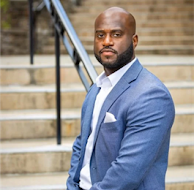
James commented: “What is every writer’s dream—to see their book turned into a movie validates the many years of research—and long hours in front of my keyboard—that went into bringing Gambino and his world to life. I listened to the characters, and they talked to me.”

Author James Pierre has also published How Did Warren Buffet Succeed, and is nearly finished with

Gambino: The Triumph, his sequel to the Gambino saga. He was born and raised in Brooklyn where he witnessed as a teenager a Mafia hit that led him to a lifetime fascination with the Gambino family. 

According to Variety, “the film is being produced by Nasso Productions (a Nasso-Zheng company) and fully financed by Edward Zeng and former Credit Suisse CEO Tidjane Thiam, with international sales handled by Minerva Pictures.”


Gambino: The Rise by James Pierre is available on Amazon


To request a review copy or inquire for an interview with the author, please email atchity@storymerchant.com


Hysteria - Streaming on Hulu


HYSTERIA, a mischievously inspired romantic comedy set in the late 19th century, is based on the surprising truth of how Mortimer Granville came up with the world's first electromechanical vibrator in the name of medical science.

ERASED⁠ Streaming on HBO Max!


In "The Expatriate aka Erased" Aaron Eckhart plays a former CIA agent who moves to Belgium, trying to make a fresh go of things as the relationship with his 15-year-old daughter (Liana Libreto) has crumbled. Working for a multinational corporation as a security head, he arrives to work one day to find that the corporation doesn’t actually exist and everyone he works with has vanished. He discovers his assistant is actually a trained operative trying to kill him. On the run with his daughter, the experience forces the two to trust and work with one another. Olga Kurylenko will play his former CIA partner and lover trying to track him down.⁠


George Gallo, Nick Vallelonga Team on High-End ‘Gambino’ Film Produced by Julius Nasso with Ken Atchity (EP)


Veteran Hollywood multi-hyphenate George Gallo (“Bad Boys,” “The Comeback Trail”) is attached to direct “Gambino,” a high-end biopic about organized crime boss Carlo Gambino that Gallo is co-writing with two-time Oscar winner Nick Vallelonga (“Green Book”).

The ambitious project, announced in Cannes, is being lead produced by Julius R. Nasso, also a Hollywood veteran, best known for his production partnership with Steven Seagal that went sour. Nasso more recently shepherded “Narc,” and is among producers of Susanne Rostock’s Harry Belafonte doc “Sing Your Song.” 

Nasso has acquired rights to the novel “Gambino: The Rise” by Pierre James which delves into the U.S. story of Cosa Nostra starting from its roots in Italy and the role played by Carlo Gambino, who was its boss from 1957 until his death in 1976 of natural causes in his Massapequa, Long Island, home.

“I have known this story all my life,” Gallo told Variety, speaking from Los Angeles.

Gallo added that Gambino’s world is very different from that of “The Sopranos,” noting that Carlo Gambino came from an educated background and was a quiet, soft‐spoken man with a courtly manner.

“He was a businessman in a darker universe,” Gallo said. “A tremendous Machiavellian money-maker; that’s why he got to the top and stayed there for decades.”

The “Gambino” film will be “a tale of money and power as the world changed around him,” and also, of course, of betrayals and violence. “But there won’t be a lot of people getting whacked,” the director went on to point out.

Gallo also noted that he’s been friends for decades with Vallelonga and Nasso. Nasso in turn has been pals for ages with U.S.-based Italian singer/songwriter and music producer Tony Renis, who is also among producers of the “Gambino” film. Renis is also set to play Gambino as an old man and is in charge of the film’s music score.

Vallelonga, speaking in Cannes, noted that the approach he and Gallo are taking is: “This is not just a mob movie. We’ve seen a lot of that. This is Shakespearean; it’s on that level. We have to elevate the material, and that’s what we are going to go for.”

“Think of ‘Once Upon a Time in America,’ said Nasso who started out in the film business as an assistant to Sergio Leone. “The book starts from when Gambino was a young boy, so there will be three characters playing the one [titular] role,” he added.

Nasso said he is looking to start pre-production on “Gambino” in Italy in January. The plan is for cameras to start rolling no later than July 15, 2023. The producer intends to reconstruct New York between the 1950s and the 70s at Rome’s Cinecittà Studios and shoot the entire film in Italy.

Nasso and his team have also been scouting locations in Italy’s southern Calabria, Puglia, and  Campania regions.

Casting, for which Nasso said he is seeking A-list Hollywood talent, will start as soon as the screenplay is ready. Meanwhile he is recruiting the film’s below-the-line crew in Italy and is in talks with triple-Oscar winner Dante Ferretti who is based at Cinecittà, to come on board as the film’s production designer he said.

“Gambino” is being produced by Julius R. Nasso, Tony Renis, China Bridge Capital founder and CEO Edward Zeng, and Santo Versace, who is an investor, and president of, Italy’s Minerva Pictures.

Minerva chief Gianluca Curti will serve as executive producer, as will Helena Zeng and Ken Atchity.

The film is being produced by Nasso Production, which is as Nasso-Zeng company. Pic is fully financed by Edward Zeng and former Credit Suisse CEO Tidjane Thiam, who were both present at the film’s Cannes announcement.

Minerva Pictures will be handling international sales, excluding U.S., on “Gambino.”

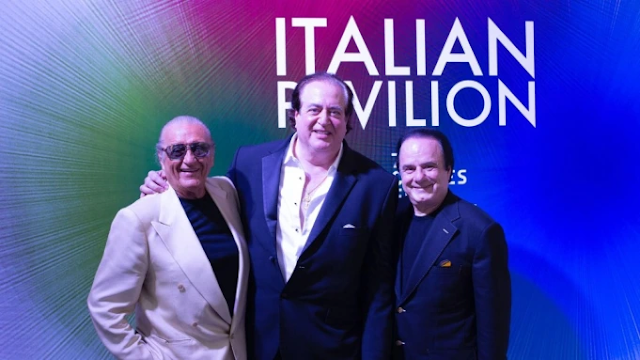
(Pictured above from left: Tony Renis; Nick Vallelonga; Julius R. Nasso in Cannes)

Read more


The Last Full Measure - Audience Reactions


THE LAST FULL MEASURE tells the true story of Vietnam War hero William H. Pitsenbarger (Jeremy Irvine), a U.S. Air Force Pararescuemen (also known as a PJ) medic who personally saved over sixty men.  

During a rescue mission on April 11, 1966, he was offered the chance to escape on the last helicopter out of a combat zone heavily under fire, but he stayed behind to save and defend the lives of his fellow soldiers of the U.S. Army's 1st Infantry Division, before making the ultimate sacrifice in the bloodiest battle of the war.  

Thirty-two years later, respected Pentagon staffer Scott Huffman (Sebastien Stan) on a career fast-track is tasked with investigating a Congressional Medal of Honor request for Pitsenbarger made by his best friend and PJ mission partner (William Hurt) and his parents (Christopher Plummer & Diane Ladd).   Huffman seeks out the testimony of Army veterans who witnessed Pitsenbarger’s extraordinary valor, including Takoda (Samuel L. Jackson), Burr (Peter Fonda) and Mott (Ed Harris). But as Huffman learns more about Pitsenbarger’s courageous acts, he uncovers a high-level conspiracy behind the decades-long denial of the medal, prompting him to put his own career on the line to seek justice for the fallen airman. 

With a superb all-star cast and an emotionally gripping story, The Last Full Measure is a film everyone should see. Get tickets: www.thelastfullmeasurefilm.com


Nicole Conn's More Beautiful For Having Been Broken International Independent Film Awards!!


Best Actor - Cale Ferrin
Best Actress - Zoe Ventoura
Best Supporting Actress - Kayla Radomski
Best Choreography - Kayla Radomski
Best Narration for a Feature - Henry J Carr
Best Original Score - Nami Melamud
Best Editing - Nicole Conn & Dave Eichhorn
Best Picture - Nicole Conn & Lissa Forehan
Best Directing - Nicole Conn

Katherine Klefffner, The Nerdy Girl Express Interviews Nicole Conn

Filmmaker Nicole Conn will be premiering her new feature film, More Beautiful for Having Been Broken, at Frameline 2019 on June 30th. Many may remember her from her previous work, Elena Undone and A Perfect Ending, both of which were crucial in the realm of lesbian media. This new work is focused on her own life and was inspired by her son Nicholas. More Beautiful for Having Been Broken is a piece that speaks to beauty that can come out of the broken. I spoke with her about this movie and her previous work in her interview and appreciate her candor in answering my questions.
Would you tell our readers a little about yourself?
I’ve been a filmmaker since 1991 when I made my first feature, “Claire of the Moon” – I moved to LA to forge my career and in the meantime ended up getting married and having two extraordinary children. My youngest son, Nicholas was born 100 days early at 1 pound. I ended up making a documentary, “little man” that won 12 Best Doc Awards. Because Nicholas is medically fragile, I wasn’t sure if I would continue filmmaking but when I partnered in my second marriage to Marina Rice Bader, we ended up creating Soul Kiss Films and I made “Elena Undone” and “A Perfect Ending” with Marina producing. With “More Beautiful for Having Been Broken” I’m debuting my 9th film.
Could you discuss your feature, More Beautiful for Having Been Broken?
This film project has been the absolute most challenging I’ve ever encountered. Not just because it is so personal to me, but because of a variety of problems with funders, producing partners, scheduling issues, Nicholas’s health, the tragedies in my family (lost my father, oldest sister and kid brother within 20 months of each other). But through it all, one thing was very clear to me. I had to make this film!
It’s a love letter to both my children, based so much on our lives, events, and dialogue we’ve shared. I had always wanted to put a character with special needs into my films but producers just weren’t into it they felt that having such a character was a “downer” and that “people don’t want to see it.” I know how much people don’t want to see it because I’ve been in places where my son simply becomes invisible. Everyone’s always talking about “inclusion” – but this is one community that has not been included. In many cases in studio features those with special needs are played by very competent and skilled actors who don’t have special needs. I became more and more committed. I want people to see my son through Cale Ferrin (who has special needs and plays “Freddie”) – as the extraordinary child that he is. And like Cale Ferrin, Nicholas is full of love and laughter and all good things. He lives completely in the moment and has the sweetest nature you can imagine. Why would we want that invisible?
What led you to create this film?
In 2013 my son became very ill and had to endure one hospitalization after another. I was a mess and became an even bigger mess when my sister passed in a violent suicide in 2014. I had started a film based on characters from a book Simon Schuster had published in 1996 called “Passion’s Shadow.” That became “Nesting Doll” which I tried to make on and off until 2017. Having been completely broken by my sister’s death and Nicholas almost passing twice in 2015, I finally got some help and through the love from my mother, son and daughter, Gabrielle (who makes her debut in the film) out of the ashes sprang sheer beauty in the most surprising places. In the little moments. And in the great loves. My “Silver Tribe” a group of women from around the world are my very dearest friends and they held me up during the shoot and have had my back every single day since! And my inner circle: Lissa Forehan (Producer), Chakinta Jones (EP), Jayne Goldstein (EP) and Fontessa De Ridder have helped me become the strongest I’ve ever been and the film that began as “Nesting Doll” evolved into “More Beautiful for Having Been Broken.”
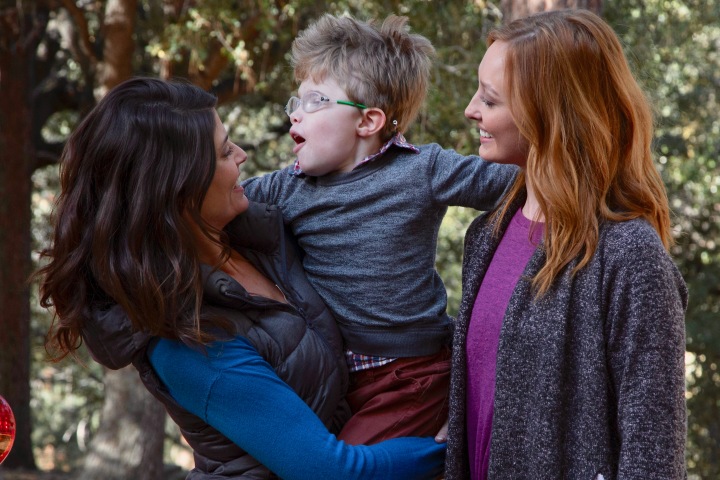
McKenzie Freddie Samantha
Was it challenging working on such an emotionally focused work?
Yes. Absolutely. And last year Nicholas ended up back in the hospital for 10 days so extremely ill and no one could figure out what was wrong with him. It was in the middle of my first rough cut and I remember sitting in the hospital staring at my unconscious son thinking – what the hell are you doing, Nicole? Nothing matters next to a loved one being so sick. It made me question everything. But Nicholas finally came home and while he was bed-ridden the next couple of months, I saw the film we had shot and that I was editing and realized I loved it. Plain and simply just loved its message and its beauty. And I really wanted Cale to experience his first big role, because like Nicholas his condition comes with medical fragility and any number of things that can become fatal before their time.
I read that inclusion is very important to you and your work, how did this impact the film?
Casting the role of Freddie was the most critical aspect of this film.  I would not cast anyone who did not have special needs. When we first read Cale in 2015 he was only 8. The minute he came into the room he owned it. His energy was palpably loving. When I picked him up at the end and hugged him, I felt like I was hugging God. No joke. And from that point on, I feel like Cale and I and his incredible mom, Britteny have been on a mission to make this film and get it out there – even through all the bumps along the way.
Could you share a bit about the festival More Beautiful for Having Been Broken is screening at?
Yes, Frameline International Film Festival is the largest and longest-running LGBTQ+ film festival in the world, with more than 60,000 attendees annually, making it one of the largest film festivals of any kind in the United States. As a filmmaker it’s impossible to beat screening at Frameline to give your film a really good start. We’re thrilled to be holding our World Premiere for the film at my single favorite theatre ever — the Castro Theatre.  An historic treasure, it was built in 1922 and has over 1,400. The theater’s ceiling is the last known leatherette ceiling in the United States and possibly the world. It’s magical!
What do you hope viewers take away from seeing the film?
That no matter how broken you’ve become, or how broken something may seem, that if you allow yourself to really feel it all and move through it at whatever pace you need, that you will be blessed by one treasure after another. Out of that brokenness comes beauty. And I for one feel like today more than ever we are all starving for beauty. And romance. I’m so proud to have this film be filled with both.
ADVERTISING SHOT FOR BAR BLUE
You are also well known for your work connected to lesbian cinema, could you discuss Claire of the Moon and Elena Undone?
Well, “Claire of the Moon” has been the gift that keeps on giving. Even after all these years I’m constantly hearing from people who say they came out to the film, that it’s their favorite film, etc. etc. Its Cult status makes me a little squeamish. The film is my least sophisticated work and the filmmaking as a first-time effort is a bit clunky. But where it works – it really works – exploring one woman’s journey to her sexual identity. But the thing I’m the very proudest of is that film was the first lesbian feature to have ancillary product – “MOMENTS-The Making of Claire of the Moon” is the best-selling doc of its kind (https://www.reelhouse.org/nicoleconn/moments-the-making-of-claire-of-the-moo)
I produced a soundtrack, T-shirts, artwork, sculptings – even Xmas ornaments one year. It had been the first film since “Desert Hearts” 7 years earlier that really spoke to our community.
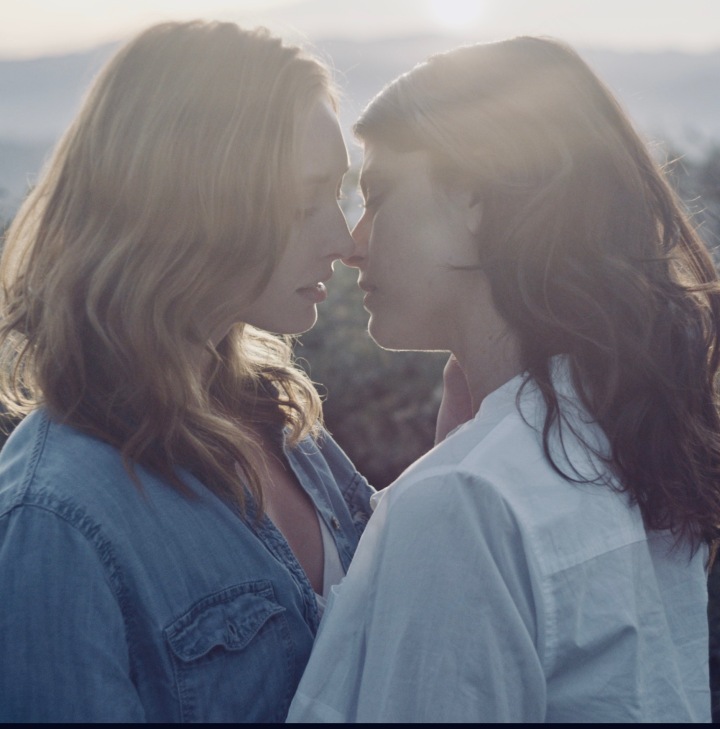
Elena Undone took me by surprise. Perhaps because it was based on my relationship with Marina Rice Bader – and was totally authentic – maybe that’s why it has such a rabid and avid following. I believe Traci DinWiddie and Necar Zadegan are absolutely breathtaking in this film. Their chemistry and talent is off the charts. And, we happen to hold the Longest Kiss in Cinema History record in this film.
Did you anticipate the impact these movies would have?
Not even remotely! Seriously!! But if I had to guess why – I would say it’s because I have a very distinct style and people know what they will get from me. My stock in trade is romance – all the nuance of romance and shades of romance and not in a cheesy Harlequin novel manner, but how real women feel the first time they fall in love, or what happens when a straight woman discovers she has fallen in love with another woman, or as in “More Beautiful for Having Been Broken” a “slow burn” romance when an over-burdened single mother finds solace from another woman. And how that woman falls in love with her son – and she sees him light up like he never has before. Those are emotions people want to feel. Over and over again. And for me all the thousands of fans who have written to tell me they watch my films over and over and OVER again – I believe it’s because as I said earlier we are all starving for that kind of yumminess in our lives.
Are there any additional projects you’d like to discuss?
I have two projects in development right now. One is a lesbian thriller and the other is a project that’s pretty damn heavy – but it’s calling out louder and louder to my soul every day and it is based on the experiences I had when my sister passed.
Where can our readers find updates about you and your work online?
Ohhh happy to give you my social media sites:
You can find KATHERINE KLEFFNER on Twitter, @kleffnotes, on my blog, kleffnotes.wordpress.com, and on my kleffnotes YouTube channel.

The Advocate: Mom to a Disabled Son Navigates Love in Nicole Conn's New Movie


See clip here

Filmmaker Nicole Conn has been making lesbian-themed movies for nearly 30 years. Her latest, very personal film, More Beautiful for Having Been Broken, will premiere at San Francisco’s Frameline film festival June 30.

An homage to her own children, particularly to her son Nicholas who was born premature and was the subject of her 2005 documentary Little Man, More Beautiful for Having Been Broken features the debut of 11-year-old Cale Ferrin, an actor who is otherly abled.

The film stars Kayla Radomski as Samantha, mom to Ferrin’s Freddie, and Zoe Ventoura as McKenzie, the woman she meets at a lakeside community. French Stewart, Kay Lenz, Bruce Davison, and Gaby Christian (South of Nowhere) costar.

"I believe inclusion means ALL OF US. That’s why it was so imperative to cast an actor with Special Needs. I watch people all the time pretend like we’re not in the frame. Watch the averted eyes and just the ease with which they make our kids invisible,” Conn said in a statement about the film. “Our kids need to be seen. Heard. Laughed with and Learned from! And Loved. Trust me, the love you get back is beyond what you could ever dream. And this world needs a whole lot of that kind of love to deal with the tragedy our nation is immersed in today.”

Conn’s movies include 1992’s Claire of the Moon, Elena Undone (2010), and A Perfect Ending (2012).

ANNOUNCING THE WORLD PREMIERE OF “More Beautiful for Having been Broken” — Frameline Int’l Film Festival San Francisco – The Castro, June 30th at 11:00 am.


Check out the “Sneak Peek” (Not a trailer) on OML (OneMoreLesbian.com). They have graciously posted “More Beautiful for Having Been Broken” which is specifically targeting the LGBTQ universe.  

Please hit the YouTube link, GIVE IT A THUMBS UP!!  and watch long enough for it to count as a view.

Written and  Directed by the iconic filmmaker, Nicole Conn (Claire of the Moon, Elena Undone and A Perfect Ending)

Starring Zoe Ventoura, Kayla Radomski, Cale Ferrin, Bruce Davison, French Stewart, Brooke Elliott and Gaby Christian – More Beautiful is the story of three women, whose lives intersect at a lakeside resort and are forever changed by the love of a special needs boy. www.morebeautifulmovie.com


What Types of $3M – $10M Films Break Out?

An investigative report from Film Industry Analyst Stephen Follows and Founder of The Numbers Bruce Nash

 
In recent articles, we’ve looked at what it takes for films to break out at different ends of the indie budget spectrum. We’ve looked at low-budget films (with budgets under $3 million), those costing $10 million and $20 million, and also movies made for between $20 million to $50 million. Now we will fill in the gap by looking at films budgeted between $3 million and $10 million.
 
This budget range makes up an important part of the independent film landscape. The budget is high enough to support hiring well-known actors and actresses, or to spend more on the “polish” of the film through (for example) acquiring rights to well-known music, building more elaborate sets, or filming in remote locations.
 
However, the budgets are also low enough that every penny has to be spent wisely for the investment to show up on the screen. The group of films that broke out at this budget level include some of the best indie films of the century so far, several of which earned Oscar glory.
 

Model One: Character Study Dramas


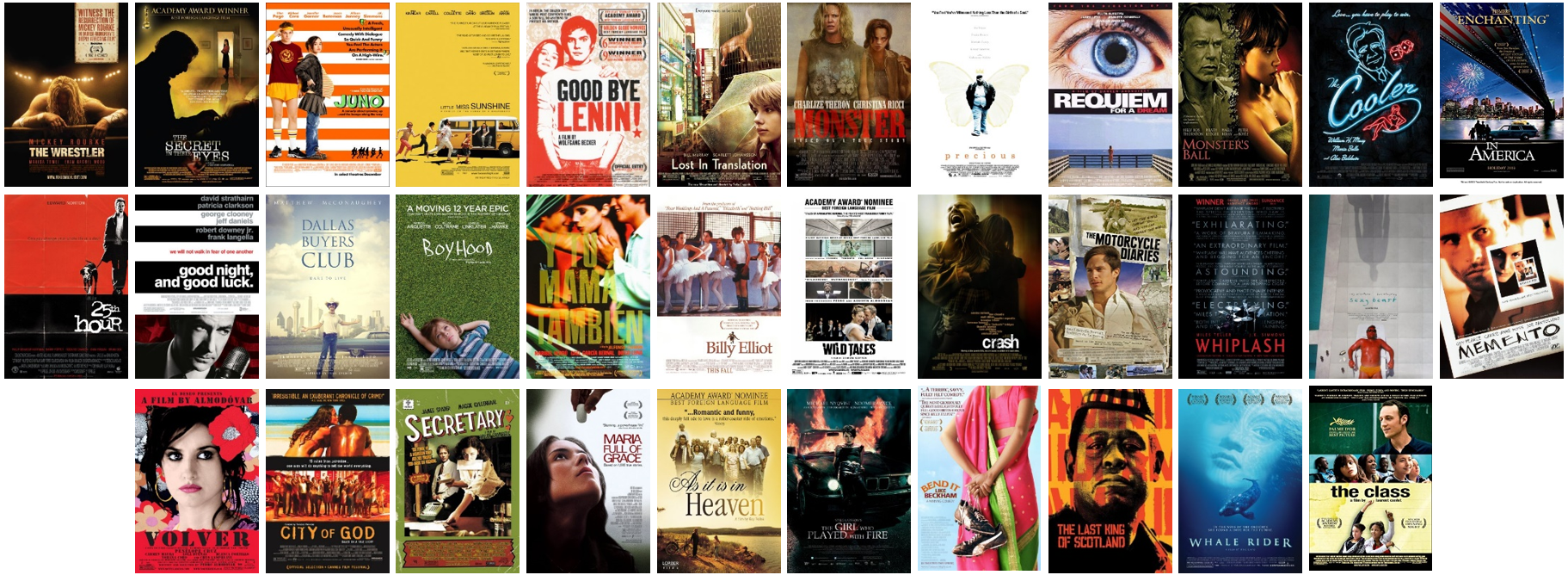
Almost 60% of the most profitable films budgeted between $3 million and $10 million are dramas that give an insight into the minds of interesting characters.
 
The majority of these films are dark in tone, complex in their plotting and eschew the traditional happy ending. However, this category is not completely devoid of sunshine – some films are uplifting despite their dark settings (such as Billy Elliot) and a handful are genuinely cheerful (such as Bend It Like Beckham). Many of them feature well-established actors or actresses who were drawn to the opportunity to stretch their skills on camera (and maybe snag an Oscar nomination).
 
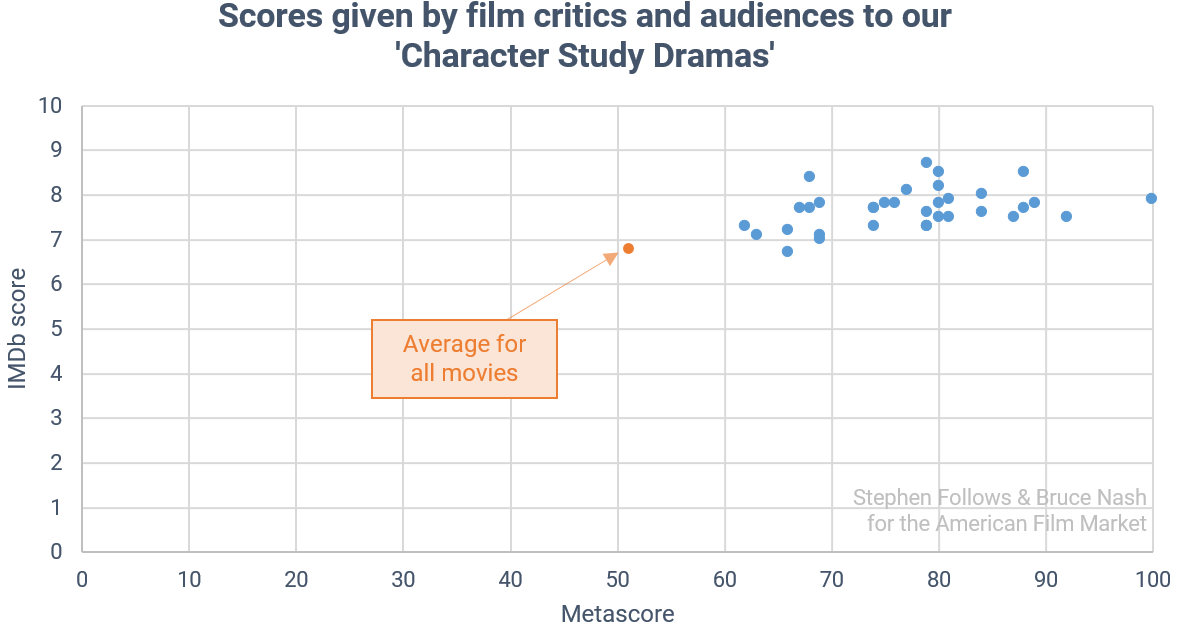
All of these films have been well reviewed, with an average Metascore of 77 out of 100, and an average audience rating of 7.7 on IMDb.


Model Two: High-Concept Horror

 
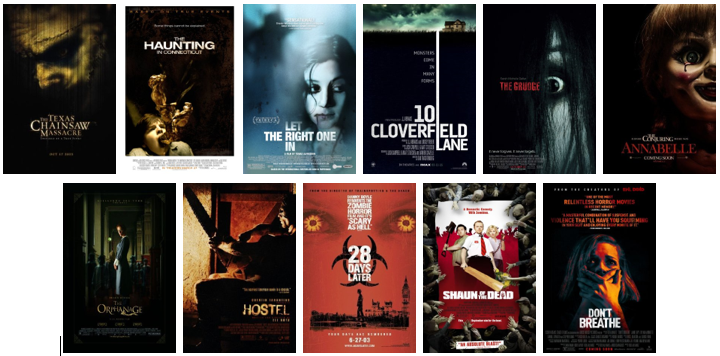
In a previous study, we found that horror films made up a large percentage of the most profitable films budgeted under $3 million, so it’s no surprise to see them also appearing on today’s list.
 
All have a very clear, simple premise that promises a dark, scary movie. Well, all except Shaun of the Dead, perhaps.
 

Model Three: Breakout Documentaries

 
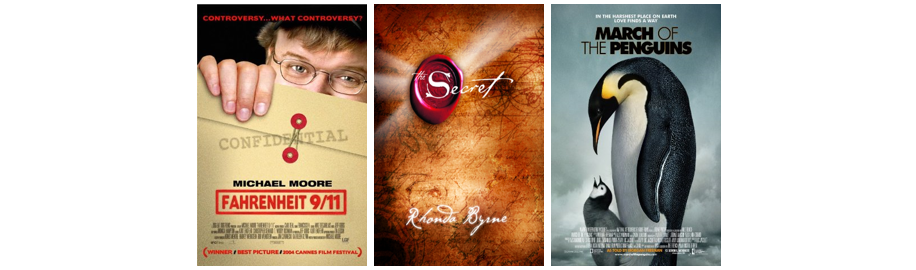
Only three documentaries make our list, partly because not many documentaries cost over $3 million to make. These three films share two characteristics: they cost quite a lot to make by documentary standards, and they became cultural phenomena.
 
Excluding some long-running IMAX films, Fahrenheit 9/11 and March of the Penguins are the two highest-grossing documentaries of all time in the US, and the second- and third-highest grossing documentaries worldwide (after Michael Jackson’s This Is It).
 

Model Four: Crowd Pleasers


The final collection is that of movies which promise to deliver a fun time for a very specific audience.
 
These movies are likely to be best enjoyed with a group of friends or family who can directly relate to the characters on-screen. Note that the key element with all of these films is that the filmmakers knew exactly who they were making the film for. But also note that there’s virtually no overlap between the audiences for these films—this isn’t a case of finding the right genre, it’s a case of understanding exactly what your audience will like, and making a film to fit. At this budget range, that can be enough to make a very profitable film.
 

Analysis

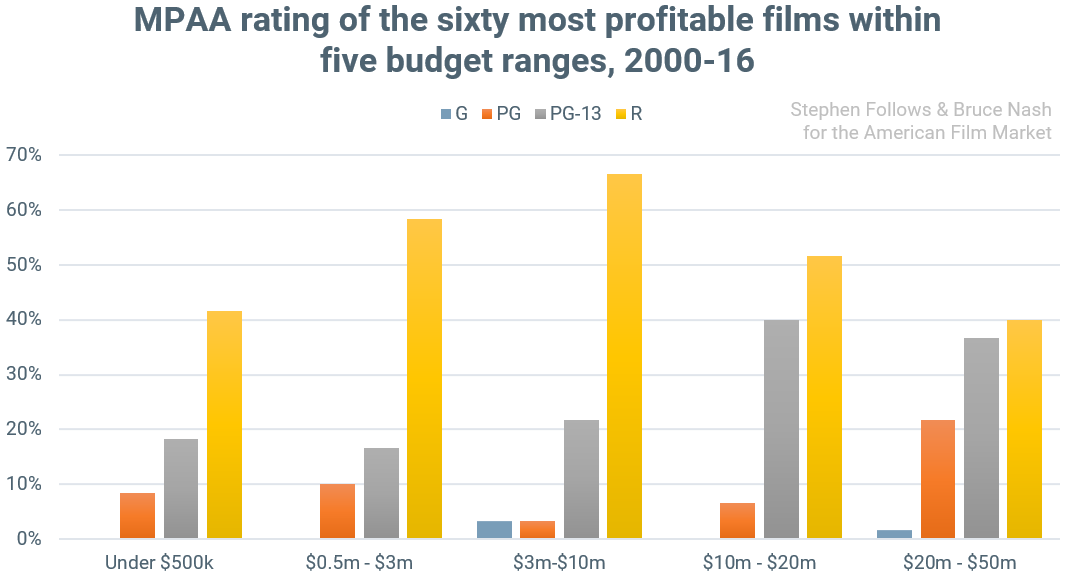
Today’s budget range has the highest percentage of films that stray outside the mainstream. 35% were not produced in the United States, compared to just 5% of the most profitable films made on between $20 million and $50 million. In addtion, these films are also much darker in tone than the most profitable films in other budget ranges. This is best illustrated by the MPAA rating, with 67% receiving an R rating.


We’ve now run analyses of indie films budgeted all the way from $500,000 up to $50 million. In each budget range, we’ve found interesting groups of films that seem to work well at that specific budget range: faith-based films at very low budgets, age-reversal family comedies at the high-budget range, music-based films at the higher mid-budget range, and now niche crowd-pleasers at the lower mid-budget range. There are also a couple of types of movie that can break out at any budget level: very high-quality dramas and (at least up to about a $20 million budget) horror films.
 
Taken as a whole, we think the analysis reveals two important lessons for the independent film-maker:
 
First, think about your budget in terms of the audience you’re trying to reach, and make sure that you focus on that audience when making the film. Studios spending $200 million plus to make and market a film need to worry about reaching all four “quadrants.” But the films that we have seen breaking out have almost all worked by their appeal to a specific audience.
 
Second, with few exceptions, quality counts. As budgets increase, we’ve seen more well-known actors and actresses starring in the films, but, in the main, the talent has been drawn to the quality of the film or the chance to do something new. Getting a great story and a great script is the first important step to creating financial movie magic.
 

Notes

  • In order to conduct this study, we began with a list of over 3,000 films from The Numbers’ financial database, investigating full financial details, including North American (i.e. “domestic”) and international box office, video sales and rentals, TV and ancillary revenue. We narrowed our focus to study feature films released between 2000 and 2016 and budgeted between $3 million and $10 million. Finally, we calculated the likely profit margin for the producers, after all revenue and expenses were taken into account.
  • The financial figures come from a variety of sources, including people directly connected to the films, verified third-party data and computation models based on partial data and industry norms. It is possible that one or two of the individual figures are different to our predictions, though en masse we are confident of the larger picture.
  • Sequels were excluded as their success could be attributed to their existing audience. This affected Saw II, Saw III, Saw IV, Paranormal Activity 3, Paranormal Activity 4, Insidious Chapter 2, High School Musical 2 and Clerks 2.


About the Authors

Stephen Follows is a writer, producer and film industry analyst. His film research has been featured in the New York Times, The Times, The Telegraph, The Guardian, The Daily Mail, The Mirror, The Evening Standard, Newsweek, The New Statesman, AV Club and Indiewire. He acted as an industry consultant and guest on the BBC Radio 4 series The Business of Film, which topped the iTunes podcast chart, and has consulted for a wide variety of clients, including the Smithsonian in Washington. In addition to film analytics, Stephen is an award-winning writer-producer and runs a production company based in Ealing Studios, London.
 
Bruce Nash is the founder and President of Nash Information Services, LLC, the premier provider of movie industry data and research services and operator of The Numbers, a website that provides box office and video sales tracking, and daily industry news. Mr. Nash founded the company in 1997 and it now serves approximately 1,000 clients, from the major studios to first-time independent filmmakers. Mr. Nash provides regular commentary and analysis for media outlets, including the L.A. Times, the New York Times, Variety, the Wall Street Journal, 60 Minutes, and CBS News. Mr. Nash is the official adjudicator of movie records for the Guinness Book of Records. To learn more about his company’s services, visit Nash Information Services.
 
Copyright © 2017 Stephen Follows and Bruce Nash. All rights reserved. Reproduced with permission.


Shaming My Red Lips: The Movie


“Shaming My Red Lips” tells the story of an Americanized Brooklyn teenager transported back to Iran at age sixteen because her father evaluated her cultural assimilation and decided she was becoming too white! Poppy was ripped away from her life in a liberal American environment and thrust into a new and unknown life in an Islamic country. 

Upon landing, the captain announced that all women aboard were required to put on their coats and scarves before stepping off the plane; but Poppy found herself glued to her seat. Fear was a mild word to describe what she was feeling! In Iran she was faced with culture shock but came to realize that in the cultural differences of every country there is something that can always be appreciated and cherished: remaining true to yourself. 

From going to regular school to becoming the evening news anchor in an Islamic country this is a true, hilarious and eye opening journey of how a young woman, during the most formative years of her life, desperately fought to maintain not only her freedom, but her identity. It’s a story of change, fear, hope, and ultimately, triumph. It’s a story to be shared for anyone undergoing tough circumstances no matter where in the world or faced with various challenges.


Sharon Farsijani's Shaming My Red Lips is currently being adapted into a movie with the help of Forbes top 10 speaker Dave Meltzer, Entrepreneur keynote speaker Scott Duffy and Emmy nominated producer Ken Atchity. 

 Join us in making this movie! Visit Shaming My Red Lips: The Movie on IndieGoGo

Deadline Hollywood: Charlie Matthau Readying ‘The Book Of Leah’ With Armand Assante


Filmmaker Charlie Matthau is close to finishing the independent feature The Book of Leah starring Armand Assante, which tells the story of a teenage rape victim who rebuilds herself as a karate fighter and seeks revenge on her attacker.

Brianna Joy Chomer plays Leah Gold, who after sneaking into a night
Getty Courtesy of Stan Rosenfield & Associates
club with her friends, is sexually assaulted in 1980s Chicago. The police do not take her case seriously, trying to blame Leah for being a minor, and the way she dressed. Her high-class family, embarrassed by the incident, sends Leah to a girls school, where she ultimately meets her uncle, played by four-time Golden Globe nominee Assante, who is a Holocaust survivor.

More than another female Karate Kid film, there are layers in The Book of Leah which echo a lot of what we’ve read lately about sexual assault; how alleged victims like Christine Blasey Ford and Patti Davis remained quiet about their incidents for several decades for many reasons. The Book of Leah puts a spotlight on the injustice that rape victim weather; the disbelief some face by those in authority after pointing a finger at their attackers.
In the film, Assante’s Adam Siegel forms a strong bond with Leah and builds her into a karate champ. Also starring in the pic is jazz singer and pianist Freddy Cole in his first feature role as a musical mentor to Leah, Kate Linder as Leah’s mother, Ty Olwin as the love interest, and Melanie Neilan as Leah’s friend.

Based on a true story, The Book of Leah was written by Leslie Neilan and Alan Roth. Neilan also produces with Kenneth Atchity. Matthau’s directorial credits include such pics as the 2012 feature take of Elmore Leonard’s Freaky Deaky starring Christian Slater, Billy Burke and Crispin Glover as well as 1995’s The Grass Harp based on the Truman Capote novel in which Matthau directed his Oscar-winning father Walter Matthau, Sissy Spacek and Piper Laurie. The Grass Harp won best English Language Film at the 1996 Palm Springs Film Festival.


Read More


Documentarian Alma Har’el is Making Super Bowl Ads and Breaking the Cycle That Kept Women Out


Alma Har'el on the set of P&G's "Thank You, Mom" Winter Olympics ad

The Super Bowl is the biggest advertising event of the year, as brands spend over $5 million for 30 seconds of air time, and even more to produce the year’s biggest commercials. It’s a world that, until recently, was closed to director Alma Har’el, whose new Coke ad will premiere during the Super Bowl this Sunday and whose “Thank You, Mom” campaign for Proctor & Gamble — which will air throughout the upcoming Winter Olympics — made her only the third woman to be a solo nominee for a DGA award.

There are few film artists who better represent the freedom and possibilities of the digital era than Har’el, the self-taught, one-person filmmaking crew behind unorthodox, cinematic nonfiction films like “Bombay Beach” and “LoveTrue.” Over the last few years Har’el discovered, like most independent filmmakers do, that critical acclaim and festival accolades didn’t pay the bills and, unlike her male counterparts, she didn’t see offers to direct bigger movies and television.

“I started to look at a lot of the filmmakers, the ones making independent films that I appreciate over a decade or more, and I saw they either were from rich families, or supporting themselves by directing commercials,” said Har’el. “That ability to sustain yourself while making something you really love, or doing rewrites on a script until it finds its way, or developing a TV show, those things take time. It doesn’t happen overnight and you need to pay rent. The financial element more than anything is why women filmmakers have to make compromises in their career paths as a directors.”

Har’el, who was born and raised in Israel, was working by age of 11 and never had family financial resources to lean on. She quickly discovered the commercial world — where women directed less than 7 percent of commercials and made up less than 3 percent of the creative directors at ad agencies — was in many ways even more closed than Hollywood. In looking at the advertising world, Har’el saw the same cultural problems that in exist in film and TV, politics, and the corporate world. The key difference being the way those problems manifested themselves in the ad world were far easier to both pinpoint and target.

On every commercial made, from the smaller ones to the multi-million dollar Super Bowl ads, all are legally required to go through a “triple bid” process of hiring their production teams. The ad agency hired by the brands to come up with the campaign goes out to three directors who interpret the outline of the campaign and pitch their approaches, while their production companies put together a budget. The agency recommends one bid to the brand (which is legally required to look at all three) and pick who will make the ad.

“Because of years of bias, and the fact that when women do get offered jobs in advertising it’s usually for hygiene, beauty, or laundry products — women never get to direct car commercials or things that have action in it — so the male directors’ reels were always much more impressive, more rich, and they had more experience,” said Har’el. “As a result, they end up with three men bidding against each other, and of course that 90 percent of the time they were three white men — so the advertising world was stuck in a loop that kept reinforcing itself with the proof of these reels.”

Har’el started Free the Bid with the idea that if she could get agencies and brands to pledge that one of every three bids come from a women director, there was a chance of eventually breaking the cycle. “They aren’t pledging to hire anybody; all they are doing is pledging that one of three bids come from a women, which I think is a really good offer because we are half of the population,” said Har’el. “It’s always a lot easier to reach out to the three directors you’ve worked with and trust and love their production company, and that’s understandable. But I always believed if producers of these commercials became acquainted with women directors — which we built an expensive and searchable database of over 400 directing reels to help them find — they would see their passion and vision and want to work with us.”

What Har’el wasn’t expecting was how many women in positions of power at agencies and brands were anxious to break free of the disturbing and embarrassing numbers in regards to diversity, especially when publications like the Harvard Business Review estimate that women make 85 percent of the product purchase decisions for a household. In just a year, 12 major brands — including Visa, HP, Levi’s and Coca-Cola — and over 50 major ad agencies signed the pledge. Of the close to 70 companies that signed the pledge, there was a 400 percent increase in the number of women directors they hired.

While Har’el first went into commercials for financial stability, then as an advocate for women directors, what she soon learned is how vital commercial work can be to a filmmaker’s growth. “You can’t take away the huge value of what you learn on a commercial set,” said Har’el. “Being trusted with millions of dollars to produce a one-minute spot and have the time constraints that you have, the confidence you gain, the equipment you get to play with, and the filmmakers you get to work with – even though what you are making is not art, still you are using so many of the same tools and you are developing so much. In many cases, working with brands is the equivalent of negotiating your ideas with a studio.”

Har’el is used to being enraged when male directors more easily transition to commercial films, but what she didn’t understand until this past year was how vital the technical training gained on a commercial set would be to her being able to take the next step in her own career. Har’el — whose breakout was winning the 2011 Tribeca Film Festival with “Bombay Beach,” which she shot on a $800 camera from Best Buy — got to shot “Thank You, Mom” on 35mm, the first time she ever shot on film.

“It’s unmeasurable, you can’t even start to quantify that amount of experience that men get on commercial sets,” said Har’el. “Good luck knowing how to shoot a chase scene on a freeway when you never even been on a moving truck with a Russian arm. But if you’ve done it even once on a commercial, and you saw the footage you created and you heard the technical limitations you are going to face and dealt with them creatively, you are going to be a better filmmaker for life.”

As for her own film and TV projects, Har’el is deep in rehearsals on a yet to be announced scripted narrative feature that will start shooting in a couple months. She also sold a pilot script she’s developing with a production company, which she hopes to start pitching to studios this year.

Reflecting on how radically her career had changed as a result of Free the Bid and her commercial work, Har’el said, “I’m telling you, man, the dirty little secret male directors keep is how they build filmmaking skills and financially sustain themselves making commercials. That’s what women filmmakers need to know more than anything.”

Chalamet said the famous peach scene "serves as a metamorphosis of some of the strongest ideas in the movie."

Read More