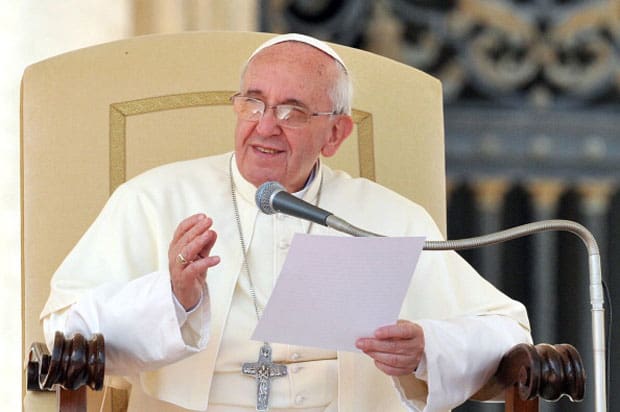
Literature is not just a means of entertainment but a vehicle for exploring and understanding the depths of the human soul, fostering a fruitful dialogue with contemporary culture, and enhancing the empathetic and pastoral capacity of ecclesial workers. Pope Francis calls for a radical shift in the formation of priests, valuing literature as an essential component of their educational journey:
“With this writing, I wish to propose a radical shift concerning the great attention that, in the context of the formation of candidates for the priesthood, must be paid to literature.”
Summary and Commentary of the Chapters
Pope Francis begins by emphasizing how the reading of novels and poetry is crucial in the personal maturation journey of every Christian, including priests and pastoral agents. He notes that finding a good book can offer relief during moments of solitude and difficulty, opening new inner spaces and preventing entrenchment in obsessive ideas. In an era dominated by digital media, this practice retains its irreplaceable value.
The Pope reflects on the active role of the reader in enjoying a literary work. Unlike audiovisual media, reading stimulates the imagination and creativity, allowing the reader to rewrite and expand the text with their personal experience. This process enriches both the reader and the work itself, creating a unique and personal synthesis with each new reading.
Pope Francis criticizes the scant attention paid to literature in the training paths of future priests. He argues that neglecting literature leads to intellectual and spiritual impoverishment, depriving seminarians of privileged access to the heart of human culture. He thus proposes a radical change that integrates literature as an essential part of priestly formation.
The Holy Father highlights how literature allows for an authentic dialogue with contemporary culture. Quoting the Second Vatican Council, the Pope states that literature expresses the human condition, illustrating its joys and sufferings. Ignoring literature means losing the opportunity to understand and interact with various cultures and their deepest expressions. Sharing his experience as a literature teacher, Pope Francis recounts how he encouraged his students to read authors they were interested in, then guided them towards a broader passion for literature. This method has shown that approaching literature through what one loves can lead to a deeper and more lasting discovery of the love of reading.
Faith and culture
For a believer, literature becomes an indispensable means of entering into dialogue with the lives of people and the culture of their time. The Pope reiterates that literature, by expressing real life events, allows one to speak to the hearts of men and grasp the presence of the Spirit in human events.
“Contact with different literary and grammatical styles will always allow for deepening the polyphony of Revelation without reducing or impoverishing it to one’s historical requirements or mental structures.”
Never a Christ without flesh
Pope Francis draws attention to the current religious context, characterized by a return to the sacred and a spiritual quest that can be ambiguous. He emphasizes the importance of not offering a “Christ without flesh” but of proclaiming an incarnate Jesus Christ, made human and historical. This is essential to adequately respond to people’s thirst for God. According to the Pope, literature helps future priests develop a sensitivity to the full humanity of the Lord Jesus, allowing them to proclaim the Gospel in a way that truly touches the concrete lives of people.
“an assiduous frequentation of literature can make future priests and all pastoral agents even more sensitive to the full humanity of the Lord Jesus, in which His divinity is fully poured out, and to proclaim the Gospel.”
A great good
In this chapter, Pope Francis illustrates the multiple practical benefits of reading. Reading improves vocabulary, stimulates imagination and creativity, helps to express oneself better, improves concentration, and reduces stress and anxiety. Moreover, reading prepares people to understand and face various life situations. Quoting famous authors, the Pope highlights how reading allows one to live intense and diversified experiences in a short time, broadening our understanding of the world and of ourselves.
“In reading, we dive into the characters, the concerns, the dramas, the dangers, the fears of the people who have ultimately overcome the challenges of life.”
Listening to someone’s voice
Pope Francis cites Argentine writer Jorge Luis Borges, highlighting the importance of direct contact with literature and “listening to someone’s voice.” Reading sensitizes one to the mystery of others and helps to touch their hearts. This process is essential for believers and particularly for priests whose task is to touch the hearts of contemporary human beings. Literature and poetry, with their ability to move, offer an unparalleled contribution to this effort.
“Here is a definition of literature that I like very much: listening to someone’s voice. And do not forget how dangerous it is to stop listening to the voice of the other who calls out to us!”
A sort of gym of discernment
Literature is described as a “gym of discernment” that refines the inner and outer scrutiny capacities of future priests. By reading, seminarians learn to navigate between salvation and perdition, living the act of reading as a process of discernment. Literature stimulates the reader to explore their own inner truths, offering a safe space to confront anxieties and spiritual crises. This exercise is compared to the Ignatian experience of “desolation,” where inner turmoil can lead to greater awareness and growth.
“The act of reading is then like an act of “discernment,” thanks to which the reader is personally involved as a “subject” of reading and at the same time as an “object” of what he reads.”
Attention and digestion
According to Pope Francis, reading is like a “telescope” that focuses on the complexity of human experience. Literature helps to slow down, contemplate, and listen, counterbalancing the tendency towards efficiency and superficiality. The reading process is compared to “digestion,” an action that allows one to assimilate and interpret life in depth. This hospitable approach to reality fosters a more complete and sensitive understanding of people and situations.
“literature helps us to say our presence in the world, to “digest” and assimilate it, capturing what goes beyond the surface of life; it serves, therefore, to interpret life, discerning its fundamental meanings and tensions.”
Seeing through the eyes of others
By reading, one acquires the ability to “see through the eyes of others,” expanding our humanity and developing empathy. Literature allows us to identify with the experiences of others, fostering solidarity, compassion, and mercy. This process makes us more sensitive to the sufferings and joys of others and helps us better understand their lives and desires. Reading thus becomes an experience of personal growth and human sharing.
“When one reads a story, thanks to the author’s vision, everyone imagines in their own way the tears of an abandoned girl, the elderly woman covering her sleeping grandson’s body, the passion of a small entrepreneur trying to move forward despite difficulties, the humiliation of one who feels criticized by everyone, the boy who dreams as the only way out of the pain of a miserable and violent life.”
The spiritual power of literature
Pope Francis concludes by highlighting the crucial role of literature in the education of the heart and mind of future priests. Literature frees language from static conventions, allowing for greater spiritual openness. Furthermore, it recalls the primary task entrusted by God to man: to “name” beings and things, giving them meaning and creating communion. This affinity between priest and poet manifests in a ministry of listening and compassion, where the literary word becomes a vehicle for the divine Word.
“The spiritual power of literature finally recalls the primary task entrusted by God to man: the task of “naming” beings and things (cf. Gn 2:19-20). The mission of guardian of creation assigned by God to Adam passes first and foremost through the recognition of the reality and meaning of the existence of other beings. The priest is also invested with this original task of “naming,” of giving meaning, of becoming an instrument of communion between creation and the Word made flesh and of its power to illuminate every aspect of the human condition.”
Literature as an access route to the mysteries of man
The Pope concludes by affirming that literature uncovers the abysses of the human soul and helps pastors engage in fruitful dialogue with contemporary culture. Literature is an “access route” that makes future priests more sensitive to the full humanity of the Lord Jesus, promoting a proclamation of the Gospel that authentically resonates in the hearts of people.
Pope Francis’s letter is an invitation to rediscover the spiritual power of literature in priestly formation. For the missionaries of the Congregation of the Mission, this means embracing reading as a tool for personal and pastoral growth, to better understand and accompany humanity in its search for meaning and redemption. Literature thus becomes an indispensable traveling companion for every missionary, capable of enriching their vocation and service. Especially for confreres engaged in Vocational Pastoral Ministry, literature can be the means to help in discerning those young people who wish to approach the Vincentian charism to clothe themselves in Christ and to serve the poor in the best possible way!
Girolamo Grammatico
Communication Office