"The universe is made of stories, not of atoms."
—Muriel Rukeyser
____________________________
Showing posts with label director. Show all posts

Filmmaker Lila French's Birdbath and Da Parish are on the Louisiana Film Channel!


Birdbath

The film adaptation of Leonard Melfi´s 1965 play

A young, unsuccessful poet meets a young girl while they are both working at an all night cafeteria in Manhattan. It is obvious that she does not want to return home to the Bronx where she lives with her mother, so he convinces her to come to his place. He gets drunk and entices her to drink a little. He tries to seduce her in the mildest manner possible. She resists in the most devastating way imaginable, turning the evening into a nightmare for both of them. It is a boy meets girl love story unlike any other.


Da Parish

In 2005, St. Bernard Parish, a community on the Gulf Coast of Louisiana, was devastated by Hurricane Katrina. Through the personal stories of four long-time residents, we witness their loss, healing and rebuilding, their resilience, and what it is that connects people to the place they call home.


If you'd like to see them along w/ a smorgasbord of other shorts, features, docs, & podcasts in categories like "Louisiana Historicals", "Who do the Voodoo?", and "Films as Scary as The Myrtles Plantation Ghosts", you can sign up for FREE for 6 MONTHS at louisianafilmchannel.com w/ code FRENCHTIKTOK through May 31st.


Lila French Interview for the Louisiana Film Channel.

Empathy, Anger, & Hate: A talk with Vincent DiPersio, Documentary Filmmaker

It was our pleasure to work with Vince as Director on our Emmy-Nominated "The Kennedy Detail."


Vincent DiPersio (RUP ‘76) is a three-time Academy Award nominee for Documentary Feature. He has three Emmys. Last month he debuted a new film called Killed By Hate on the Oxygen Channel called Uncovered: Killed by Hate. It’s an examination of how the back-to-back murders of James Byrd and Mathew Sheppard led to Barack Obama’s enactment of Hate legislation and then examines how in the last two years hate has been on the rise in America.


From oxygen.com:

On June 7th, 1998, James Byrd Jr, an African American was murdered by three white supremacists in Jasper, Texas.  He had been beaten, tied to the back of a car and dragged for three miles. Four months later, on October 6th, 1998, Matthew Shepard, an openly gay student at the University of Wyoming was beaten, tortured, set on fire and hung from a fence and left to die near Laramie, Wyoming. Both James Byrd Jr. and Matthew Shepard succumbed to brutal injuries, but it was a far greater force that took their lives: Hate. Nearly a decade after their murders, President Barack Obama signed into Law the Hate Crimes Prevention Act. With one swift signature America sent a message to the world; that we would not tolerate crimes committed against people based on their gender, sexual orientation, race, religion or disability. Now, ten years later, the real question is, has it worked?

Interviewer: I was hoping to talk to you briefly about the process in making Uncovered: Killed by Hate. You are playing to two very strong emotions: deep empathy and anger. As a director, I’d like to get your take on this. How do you tell the story in this setting? Obviously the interviews are very important. Could you say a few words about the role of empathy as you enter the process of making a film like this?

Vincent DiPersio: Empathy. That’s a big one.

I’ve done so many projects where emotions run high.

Martin Luther King and Bobby Kennedy’s assassinations. The absurdity of the so-called war on drugs. The madness of gun violence. The lie that led African Americans out of the Delta up north during the war only to pull the rug out from under them once the white boys came home from the war. The horrors that police officers see every day.

I’ve had to shine light into a lot of dark corners. It could make you cold and cynical. Or by some mysterious gift of grace it could lead you by the hand to empathy. Somewhere along the line, I really don’t even know how, this rough neck kid from Philly acquired that grace.

I know this. I know that it starts with listening.

It begins with arming yourself with enough knowledge of a story that you feel confident about loosing that knowledge in the face of someone who actually lived it.

What I’ve come to understand over the years is that when people are in crisis, most of us rush in to help. To make it better. But in the process, intent on achieving some positive effect, we don’t really listen. We don’t let the other person fully express their grief. I’ve talked about it endlessly with my crews over late night beers. But collectively, we’ve come to understand that our job is to listen. To let the person we’re sitting with channel their voice through us. That’s the secret really. That simple act of listening, having the courage to understand that no matter how much you’ve prepared, you don’t know as much as the person you’re interviewing, sitting there listening, really listening, that’s what builds empathy.

Interviewer: What about anger? 

Vincent: Anger? Man, that’s a whole other issue.

The kinds of stories I try to seek out, something that needs serious illumination, those kinds of stories can surely raise your hackles. But again, and this happened over years, I’ve come to realize that anger can sometimes be just another pair of blinders. Anger can slant your vision, push you to infuse the story with too much of you and not enough of them.

I’ve also learned that yeah, you can make a dynamite film from that angry point of view. And that everyone who agrees with you will go along for the ride. But is that really your purpose? To preach to the converted? Or is it maybe more important to be expansive with your voice. To let in enough points of view so that maybe someone who didn’t agree with you going in, comes out the other side having the scales gently removed from their eyes.

So while I may throw an occasional shoe at the T.V. set, I’ve learned to temper my anger when I put on guy director’s hat and instead zero in on the larger, often very complicated truth.

The biggest part of all this though is your fellow travelers. The people riding around in that van with you from location to location, interview to interview. Over time you learn to read people quickly and to use that to surround you with people who not only share your approach, understand the empathy needed and the ability to be open, but that will also lift you up when you flag.

I always equate it being in a jazzer’s band, say like Miles. Miles always said that he wanted guys in his band that, if he were having an off night, would just play right over him. Guys who were going to make the night magic whether he was up to it or not. I”ve been lucky to find men and women to ride with me who are just like that.

Interviewer: And Goddard College? In what way did your education at Goddard prepare you for this work?

Vincent:  None of this, and I’m not being ingenuous, none of this would have been possible had I not come across a Goddard catalogue in my Community College back in Philly.

 At the time I was an angry young kid. From a broken household and a dirt-poor neighborhood.

Fresh from a stint in the Army that just made the chip on my shoulder bigger. The men in my life up to that point were ravaged by drink and working class torpor. I’d been told so many times that I was worthless or wouldn’t amount to anything that I almost believed it.

Almost.

The G.I. bill gave me the freedom to do what my broken household couldn’t- consider college.

Over the years however, I’d become awfully suspicious of rules, of authority, of the “accepted” way to go through your life. That Goddard catalogue, I remember it had a beautiful young woman in a peasant dress on the cover, promised something else. Promised the freedom and space I’d never had to explore, to figure out with some guidance exactly how to release this voice in my head that said things needed to be done about the world.

From the time I got off the Montrealer on that crisp fall morning and loaded into the back of a pick-up truck my life began to change. In those north woods, on that glorious campus I found men and women willing to reach out to me and ask me where I was headed, what I was trying to say.

For the first time in my life I was encouraged to not only find but also to have the courage to follow my own path. They did it with love, with compassion, with understanding. And with listening!

I mean this with all my heart, if it weren’t for Goddard, I wouldn’t be here today.

I was lost and those remarkable men and women who ran the joint and taught helped me find myself.

Interviewer: What’s next?

Vincent: Currently I’m working on a prison reform program with Kim Kardashian West, chronicling Kim’s efforts to get legislation passed to enact prison reform and to get the prison sentences of people who’ve proved themselves rehabilitated overturned, all in an effort to fight mass incarceration.


Read more


Katherine Klefffner, The Nerdy Girl Express Interviews Nicole Conn

Filmmaker Nicole Conn will be premiering her new feature film, More Beautiful for Having Been Broken, at Frameline 2019 on June 30th. Many may remember her from her previous work, Elena Undone and A Perfect Ending, both of which were crucial in the realm of lesbian media. This new work is focused on her own life and was inspired by her son Nicholas. More Beautiful for Having Been Broken is a piece that speaks to beauty that can come out of the broken. I spoke with her about this movie and her previous work in her interview and appreciate her candor in answering my questions.
Would you tell our readers a little about yourself?
I’ve been a filmmaker since 1991 when I made my first feature, “Claire of the Moon” – I moved to LA to forge my career and in the meantime ended up getting married and having two extraordinary children. My youngest son, Nicholas was born 100 days early at 1 pound. I ended up making a documentary, “little man” that won 12 Best Doc Awards. Because Nicholas is medically fragile, I wasn’t sure if I would continue filmmaking but when I partnered in my second marriage to Marina Rice Bader, we ended up creating Soul Kiss Films and I made “Elena Undone” and “A Perfect Ending” with Marina producing. With “More Beautiful for Having Been Broken” I’m debuting my 9th film.
Could you discuss your feature, More Beautiful for Having Been Broken?
This film project has been the absolute most challenging I’ve ever encountered. Not just because it is so personal to me, but because of a variety of problems with funders, producing partners, scheduling issues, Nicholas’s health, the tragedies in my family (lost my father, oldest sister and kid brother within 20 months of each other). But through it all, one thing was very clear to me. I had to make this film!
It’s a love letter to both my children, based so much on our lives, events, and dialogue we’ve shared. I had always wanted to put a character with special needs into my films but producers just weren’t into it they felt that having such a character was a “downer” and that “people don’t want to see it.” I know how much people don’t want to see it because I’ve been in places where my son simply becomes invisible. Everyone’s always talking about “inclusion” – but this is one community that has not been included. In many cases in studio features those with special needs are played by very competent and skilled actors who don’t have special needs. I became more and more committed. I want people to see my son through Cale Ferrin (who has special needs and plays “Freddie”) – as the extraordinary child that he is. And like Cale Ferrin, Nicholas is full of love and laughter and all good things. He lives completely in the moment and has the sweetest nature you can imagine. Why would we want that invisible?
What led you to create this film?
In 2013 my son became very ill and had to endure one hospitalization after another. I was a mess and became an even bigger mess when my sister passed in a violent suicide in 2014. I had started a film based on characters from a book Simon Schuster had published in 1996 called “Passion’s Shadow.” That became “Nesting Doll” which I tried to make on and off until 2017. Having been completely broken by my sister’s death and Nicholas almost passing twice in 2015, I finally got some help and through the love from my mother, son and daughter, Gabrielle (who makes her debut in the film) out of the ashes sprang sheer beauty in the most surprising places. In the little moments. And in the great loves. My “Silver Tribe” a group of women from around the world are my very dearest friends and they held me up during the shoot and have had my back every single day since! And my inner circle: Lissa Forehan (Producer), Chakinta Jones (EP), Jayne Goldstein (EP) and Fontessa De Ridder have helped me become the strongest I’ve ever been and the film that began as “Nesting Doll” evolved into “More Beautiful for Having Been Broken.”
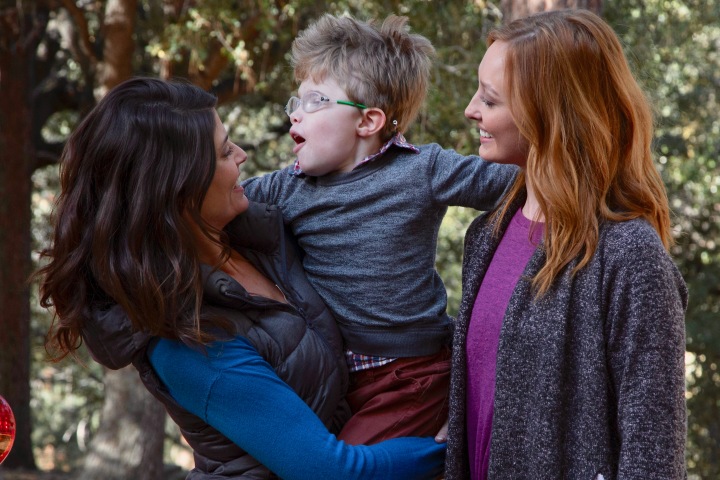
McKenzie Freddie Samantha
Was it challenging working on such an emotionally focused work?
Yes. Absolutely. And last year Nicholas ended up back in the hospital for 10 days so extremely ill and no one could figure out what was wrong with him. It was in the middle of my first rough cut and I remember sitting in the hospital staring at my unconscious son thinking – what the hell are you doing, Nicole? Nothing matters next to a loved one being so sick. It made me question everything. But Nicholas finally came home and while he was bed-ridden the next couple of months, I saw the film we had shot and that I was editing and realized I loved it. Plain and simply just loved its message and its beauty. And I really wanted Cale to experience his first big role, because like Nicholas his condition comes with medical fragility and any number of things that can become fatal before their time.
I read that inclusion is very important to you and your work, how did this impact the film?
Casting the role of Freddie was the most critical aspect of this film.  I would not cast anyone who did not have special needs. When we first read Cale in 2015 he was only 8. The minute he came into the room he owned it. His energy was palpably loving. When I picked him up at the end and hugged him, I felt like I was hugging God. No joke. And from that point on, I feel like Cale and I and his incredible mom, Britteny have been on a mission to make this film and get it out there – even through all the bumps along the way.
Could you share a bit about the festival More Beautiful for Having Been Broken is screening at?
Yes, Frameline International Film Festival is the largest and longest-running LGBTQ+ film festival in the world, with more than 60,000 attendees annually, making it one of the largest film festivals of any kind in the United States. As a filmmaker it’s impossible to beat screening at Frameline to give your film a really good start. We’re thrilled to be holding our World Premiere for the film at my single favorite theatre ever — the Castro Theatre.  An historic treasure, it was built in 1922 and has over 1,400. The theater’s ceiling is the last known leatherette ceiling in the United States and possibly the world. It’s magical!
What do you hope viewers take away from seeing the film?
That no matter how broken you’ve become, or how broken something may seem, that if you allow yourself to really feel it all and move through it at whatever pace you need, that you will be blessed by one treasure after another. Out of that brokenness comes beauty. And I for one feel like today more than ever we are all starving for beauty. And romance. I’m so proud to have this film be filled with both.
ADVERTISING SHOT FOR BAR BLUE
You are also well known for your work connected to lesbian cinema, could you discuss Claire of the Moon and Elena Undone?
Well, “Claire of the Moon” has been the gift that keeps on giving. Even after all these years I’m constantly hearing from people who say they came out to the film, that it’s their favorite film, etc. etc. Its Cult status makes me a little squeamish. The film is my least sophisticated work and the filmmaking as a first-time effort is a bit clunky. But where it works – it really works – exploring one woman’s journey to her sexual identity. But the thing I’m the very proudest of is that film was the first lesbian feature to have ancillary product – “MOMENTS-The Making of Claire of the Moon” is the best-selling doc of its kind (https://www.reelhouse.org/nicoleconn/moments-the-making-of-claire-of-the-moo)
I produced a soundtrack, T-shirts, artwork, sculptings – even Xmas ornaments one year. It had been the first film since “Desert Hearts” 7 years earlier that really spoke to our community.
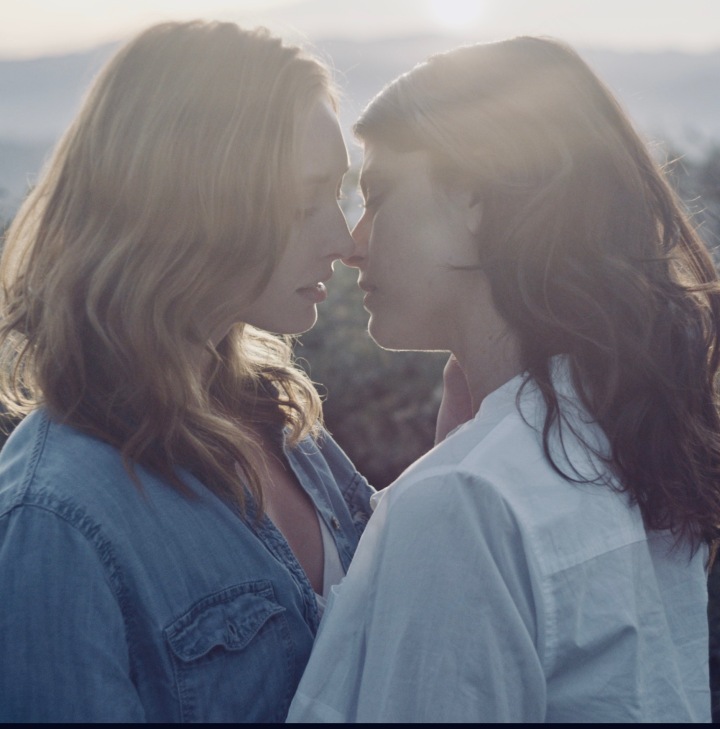
Elena Undone took me by surprise. Perhaps because it was based on my relationship with Marina Rice Bader – and was totally authentic – maybe that’s why it has such a rabid and avid following. I believe Traci DinWiddie and Necar Zadegan are absolutely breathtaking in this film. Their chemistry and talent is off the charts. And, we happen to hold the Longest Kiss in Cinema History record in this film.
Did you anticipate the impact these movies would have?
Not even remotely! Seriously!! But if I had to guess why – I would say it’s because I have a very distinct style and people know what they will get from me. My stock in trade is romance – all the nuance of romance and shades of romance and not in a cheesy Harlequin novel manner, but how real women feel the first time they fall in love, or what happens when a straight woman discovers she has fallen in love with another woman, or as in “More Beautiful for Having Been Broken” a “slow burn” romance when an over-burdened single mother finds solace from another woman. And how that woman falls in love with her son – and she sees him light up like he never has before. Those are emotions people want to feel. Over and over again. And for me all the thousands of fans who have written to tell me they watch my films over and over and OVER again – I believe it’s because as I said earlier we are all starving for that kind of yumminess in our lives.
Are there any additional projects you’d like to discuss?
I have two projects in development right now. One is a lesbian thriller and the other is a project that’s pretty damn heavy – but it’s calling out louder and louder to my soul every day and it is based on the experiences I had when my sister passed.
Where can our readers find updates about you and your work online?
Ohhh happy to give you my social media sites:
You can find KATHERINE KLEFFNER on Twitter, @kleffnotes, on my blog, kleffnotes.wordpress.com, and on my kleffnotes YouTube channel.

The Advocate: Mom to a Disabled Son Navigates Love in Nicole Conn's New Movie


See clip here

Filmmaker Nicole Conn has been making lesbian-themed movies for nearly 30 years. Her latest, very personal film, More Beautiful for Having Been Broken, will premiere at San Francisco’s Frameline film festival June 30.

An homage to her own children, particularly to her son Nicholas who was born premature and was the subject of her 2005 documentary Little Man, More Beautiful for Having Been Broken features the debut of 11-year-old Cale Ferrin, an actor who is otherly abled.

The film stars Kayla Radomski as Samantha, mom to Ferrin’s Freddie, and Zoe Ventoura as McKenzie, the woman she meets at a lakeside community. French Stewart, Kay Lenz, Bruce Davison, and Gaby Christian (South of Nowhere) costar.

"I believe inclusion means ALL OF US. That’s why it was so imperative to cast an actor with Special Needs. I watch people all the time pretend like we’re not in the frame. Watch the averted eyes and just the ease with which they make our kids invisible,” Conn said in a statement about the film. “Our kids need to be seen. Heard. Laughed with and Learned from! And Loved. Trust me, the love you get back is beyond what you could ever dream. And this world needs a whole lot of that kind of love to deal with the tragedy our nation is immersed in today.”

Conn’s movies include 1992’s Claire of the Moon, Elena Undone (2010), and A Perfect Ending (2012).

Shepherd University’s President’s Lecture Series Presents An Evening With Charlie Matthau April 22

SHEPHERDSTOWN, WV — Shepherd University’s President’s Lecture Series will present An Evening with Charlie Matthau on Monday, April 22, at 6:30 p.m. in the Robert C. Byrd Center for Congressional History and Education auditorium. The event is free and open to the public.

Matthau is a film and television director and actor and the son of actors Walter Matthau and Carol Grace. As a child, he appeared with his father in such films as Charley Varrick, The Bad News Bears, and House Calls. Matthau directed two movies that starred his father, The Grass Harp, based on a novella by Truman Capote, and the made-for-TV movie The Marriage Fool. He also directed Doin’ Time on Planet Earth, Her Minor Thing, Baby-O, and Freaky Deaky, which premiered at the Tribeca Film Festival. Matthau’s newest film, The Book of Leah, based on a true story about a young Jewish teenager in the 1980s who learned to defend herself after a violent sexual trauma.

Alan Gibson, adjunct professor of French and Spanish, will lead an on-stage discussion with Matthau about what it was like growing up as Hollywood royalty, what he learned from his dad, and who his mentors were. Gibson and Matthau will discuss the current state of the film industry and how it’s evolved from the early days of Matthau’s career.

Gibson, who is an executive producer of The Book of Leah, has written three novels under the name A. B. Gibson—The Dead of Winter, Leave No Trace, and his newest thriller High Voltage. Gibson is also producer of The Seeding, a feature-length horror film currently in development with Matthau and based on The Dead of Winter.

For more information, contact Karen Rice, director of Shepherd’s Lifelong Learning program, at 304-876-5135 or krice@shepherd.edu.

An Interview with Charlie Matthau

2012 Tribeca Film Festival - Tribeca Talks: Freaky Deaky
Charlie Matthau has directed successful feature films in various genres and has also directed several network television projects. In addition to the critically acclaimed The Grass Harp, he has also directed Doin’ Time on Planet, Her Minor ThingBaby-OFreaky Deaky, and is in post-production on The Book of Leah which stars Armand Assante. A graduate of USC Film School, he has also produced and written several films. He has won several awards for directing including Best Director of the Year from The Academy of Family Films, and the AFI Platinum Circle award. He is currently developing Bodyguard of Lies, a World War Two thriller, and several other film and television projects including the limited series 1920: The Year of the Six Presidents based on the book by top historian David Pietrusza.
charliefolks
What are some of your earliest and most fond memories growing up with encouraging parents in such a creative atmosphere?
I was blessed to be raised by older and more mature parents. My father was 42 when I was born and he did not become really famous until I was about 4 years old. I think I benefited greatly from being raised by folks who were not overly consumed with their careers, or their success. My father enjoyed being a film star, but he also could see through the baloney of Hollywood.
What was it like to have Charlie Chaplin as your godfather? What was he like?
Charlie was very quiet and sensitive, and modest considering he was the greatest movie star in the world for many years, and practically invented motion pictures.
As a shy child what was the most difficult thing about being in front of the camera? How exactly did your father make acting more fun for you?
I never really enjoyed acting as I don’t enjoy being vulnerable and open emotionally. But when I acted with my father, he taught me that acting is listening. That helped me not be focused upon myself but instead be in the moment, and hopefully be more natural.
You have said he taught you that acting is about listening. Can you elaborate a little more on that? Do you think in today’s world people tend to listen less than they should in most circumstances?
What?…I absolutely do. When you are talking you are not learning.
charliedad
How has being shy changed for you now as an adult vs as a child? Do you still sometimes struggle with that shyness?
I am still naturally shy, but as one gets older and gets life experience, you realize that engaging with others is not so scary and very little of what we do or say will matter in 100 years or even 100 minutes.
How did it feel to have the chance to work with your father and Carol Burnett on The Marriage Fool?
It was a joy. I am in awe of their talent, their chemistry and of what beautiful human beings they are, or in the case of my father, were.
charliefreakydeakycast
How was it to work with Crispin Glover on Freaky Deaky? What is he like as an individual?
I’ve had the pleasure of knowing Crispin since we both attended The Mirman School for Gifted Children in Bel Air California. We were both there for many years and even acted in the school play together. He is extremely smart, uncynical, collaborative and funny. I wish I could work with him on every project.
Who have been some of your favorite actors to have worked with so far? Have any been more challenging than the others?
There have been so many. Getting to work with my father and Jack Lemmon, Piper Laurie, Sissy Spacek, Mary Steenburgen, Joe Don Baker, Charlie Durning and all those wonderful actors on Grass Harp was a priceless experience I will always treasure. I’m glad the film turned out so well so that I did not embarrass them or waste their time. I recently worked with Armand Assante, and he is a world class talent and gentleman.
Version 2
What do you think it takes create a piece of work that everyone involved in can be proud of?
It takes a good script, creating a safe, collaborative and fun environment, and a lot of luck.
Are you still planning to bring about The 1920 Electiontelevision series? Can you tell us a little more about that?
The election of 1920, the first modern election, is surprisingly similar to 2020. The main issues were isolationism, anti-intellectualism, terrorism, immigration, a presidential sex scandal, women’s rights, and the manipulation of new media to sway voters. In 1920, it was radio and in 2020 it is social media like Facebook. It was also the year we had our first woman president, Mrs Woodrow Wilson who ran the country for a year and a half when her husband had a stroke.
Jerome Lynch - IMG_9101.jpg
I understand The Book of Leah is almost finished as well. Why did you decide to work on that particular film at this time?
I was blessed to be hired to direct the film by its Producer and Writer Leslie Neilan. She wrote a beautiful story about a young woman’s coming of age that is extraordinarily sensitive and intelligent. Usually, the assignments that I get offered as a director are not of a high standard, but this was truly a gift and I am grateful to have had the opportunity. I got to work with amazing actors like Armand, Brianna Chomer, Kate Linder, Melanie Neilan, Morgan Lindholm, Gigi Freedman,  Ornella Thelmudottir, Ty Olowin, Jimmy Van Patten and Freddie Cole, who is a jazz legend. I could listen to that man sing all day.
I also got to work with many nice crew people including the producers Ken Achity, Alan Gibson, Ellison Miller, Mark and Arlene Fromer and, for the 5th time, with my favorite DP and mentor John Connor.
Do you still work with the Maria Gruber Foundation? Can you tell us more about what it is they do there?
The Maria Gruber Foundation was started by my friend Simona Fusco. I was Simona’s first boyfriend and I’ve been bragging about it ever since. She named it after her beautiful mother who passed away from cancer but whose beautiful spirit lives on in Simona and her daughter Amber. Our government really needs to spend more on cancer research, because it kills a lot of its citizens.
cm1
Do you think it is important that those in a position to help others who are in need do so whatever way they can?
I sure do. Otherwise, really, what is the point of it all? I know certain people have really helped me through the years, and I’d be a disaster without them.
What projects do you hope to bring into existence in the years ahead?
My favorite project is Bodyguard of Lies which is the most amazing true story you have never heard of. It is about Juan Pujol, a failed chicken farmer who saved at least 14 million lives in the Second World War. You know, a good chicken farmer will do that for you.
Is there anything you’d like to say before you go?
Just that it is a pleasure to re-connect with you after several years. Thank you for remembering me and for your kindness and graciousness.


Camille Paglia: Sexism and the 'Star Is Born' Films


The academic, author and cultural critic analyzes the four versions of the tragic love story and finds one a "feminist landmark" and Bradley Cooper’s to be "a misogynous disgrace."

A Star Is Born, with its symmetrical plotline of rising and falling stars, is Hollywood's canonical myth-saga, capturing both the glory and cruelty of the modern entertainment industry.

The fourth version of A Star Is Born, directed by Bradley Cooper and starring himself and Lady Gaga, has been nominated for eight Oscars at this year's Academy Awards. How does this movie treat our red-hot theme of women's aspirations and achievement? Surprisingly, despite its progressive gestures toward masculine sensitivity and transgender inclusiveness, this A Star Is Born is the most sexist film of the entire series.

In Cooper's film, the epic Hollywood story has been hijacked by camera-hogging male vanity, curtailing the magnificent classic role of the ascending woman star who painfully eclipses her self-destructive, alcoholic husband. What the script has stingily left to Gaga to play is not leading lady material. Her performance has never belonged in the best actress category because Cooper demoted her to supporting actress from the start.

Particularly outrageous amid the overpraise of Cooper's film has been denigration of the previous, 1976 version, with Barbra Streisand and Kris Kristofferson, from whose performance Cooper heavily borrowed. Except, that is, for Kristofferson's robust sexy allure: With his greasy hair, hobo beard and chronic slump, Cooper scarcely manages more than two facial expressions (dull and duller) throughout.

The dynasty of A Star Is Born began with What Price Hollywood? (1932), in which a waitress (Constance Bennett) is discovered by an alcoholic movie director, who steers her to Tinseltown fame at a time when the phenomenon of movie stardom was barely two decades old.

Janet Gaynor, the heroine of the first A Star Is Born (1937), had won the very first Oscar for best actress for 1927. The girliest of the four, she was already 30 when the movie was shot, which explains why we sometimes feel a strain in her miming of fragile innocence. However, Gaynor's Esther Blodgett is gritty with ambition, inspired by the movie magazines she devours in her North Dakota farmhouse.

In the wake of American women winning the vote after World War I, the film foregrounds the then-new theme of female careerism. Esther rejects marriage and motherhood as her only choice: "I'm going to be somebody!" Overarching the film is her outspoken grandmother, a formidable dowager played by May Robson, who supports her drive to succeed and identifies it with her own generation of pioneer women who braved immense hardships. At the end, the grandmother, stronger than the heroine's dead spouse, reappears and plants her female flag in Hollywood, forcing Esther (now Vicki Lester) to embrace her professional dominance.

The film explores the unresolved conflicts still experienced by many women in balancing home and work. Most studio-era movies showed women eagerly surrendering their job for a wedding ring. A trace of this remains in the first A Star Is Born in Vicki's decision to abandon her career to care for her husband (Fredric March), who is struggling with substance abuse. But in a heroic gender reversal, he frees her by sacrificing himself, walking into the sea at Malibu.

Oscars: How Did 'A Star Is Born' Become a Longshot for Best Picture?
From its opening panorama of the glittering lights of Los Angeles, the 1937 film exhilaratingly documents the sights, rituals and churning mechanism of the movie industry, from clapper boards, screen tests and Central Casting to premieres, awards shows and mobs of ruthless fans (who tear off Vicki's veil at her husband's funeral).

Clinically inspected and processed by the brusquely efficient makeup and publicity departments, Vicki emerges with a new name and life story. She has become that supreme artifact, the movie star. All this sweeping expansiveness — the wilderness through which the fairy-tale heroine apprehensively makes her way — is missing from the disjointed Cooper film, which claustrophobically contracts to Jackson Maine's stalled relationships with other men. The ravenous industry in which Ally (Gaga) rises is hardly glimpsed.

The Judy Garland version (1954), like the Gaynor film, has a tremendous sense of place. It begins with the thrilling magnitude of spotlights, clogged streets and surging crowds at Los Angeles' Shrine Auditorium, palpably vibrating with the excitement of old Hollywood. Compare this riveting specificity to the fogginess of the Cooper film, where we're never sure where we are. (Does Jackson live in Laurel Canyon or Santa Barbara? Does Ally live in New York or the San Fernando Valley? If the latter, why is she taking a jet plane to see Jackson's show, which is presumably in L.A.?)

The Shrine event is shockingly disrupted by drunken, belligerent Norman Maine (James Mason), who lurches through a backstage bevy of ballerinas and showgirls. Unsparingly presenting Maine as arrogant with male privilege, the script prepares the way for the tragic intensity of the love story. In contrast, Cooper upgrades himself to lovable stumbling klutz, merely drawing a few hard glances from fellow musicians. He thus defeats the entire redemptive pattern of the three earlier films.

What astonishes about the Garland version is how often she appears in daringly half-male clothing with a butch haircut. This film's Norman Maine, whose predatory womanizing is seen at the Coconut Grove club, zeroes in on Garland's Esther in androgynous mode — a man's bow tie and long tuxedo jacket flashing pert legs and high heels. Directed by openly gay George Cukor, the movie suggests a hidden sexual fluidity in Norman, also shown when he enthusiastically subs as Esther's makeup and hairstylist.

In the Cooper film, in contrast, Jackson fails to recognize a false eyebrow and ickily peels it off Ally's forehead like a parasitic slug. Inexplicably, Cooper sets the scene in a glossily sanitized drag bar while missing a huge opportunity to showcase Lady Gaga in drag — as in Marlene Dietrich's swaggering cabaret style.

The tour de force of the Garland Star is her epochal performance of "The Man That Got Away," a torch song that became an anthem for gay men in the pre-Stonewall era. Here we see the supranormal power of the true star: Garland's petite body literally throbs with profound passion, repeatedly arcing from soft to loud and back. A gifted performer operating at this level of near-mystical inspiration has entered an abstract realm beyond gender.

In the third A Star Is Born (1976), John Norman Howard (Kristofferson) is a rock star, while Esther Hoffman (Streisand) fronts a biracial trio, the Oreos. One of the greatest romantic scenes in film history is achieved by Streisand and Kristofferson when he charismatically improvises lyrics to her exquisite piano riff ("Lost Inside of You"). Two minds and bodies meld, as the locale shifts to a candlelit bathtub, where Esther flips sex roles by rouging John Norman's cheeks and tenderly tagging his eyebrow with transgender glitter.

Cooper's Jackson generates credibly hard-edged guitar rock in scenes filmed at several music festivals, but they are less well photographed than those at Arizona's Sun Devil Stadium in the Streisand film. Furthermore, the overall soundtrack of the new A Star Is Born is bland and forced. Gaga's pop singing still lacks subtlety and finesse. She and her hard-core fans mistake applause-milking bellowing for emotional authenticity. Truly great singers, from Aretha Franklin to Adele, know how to express and temper emotion at high volume.

A harrowing highlight of the series is the ritual humiliation of the leading man. The Gaynor and Garland films are gut-wrenching in showing the cold contempt of other men for a wounded alpha male as he tumbles down to become a mere adjunct to a more successful woman. The public scenes at Santa Anita racetrack, where Norman is shunned, derided and slugged to the floor are unforgettable, as are the private scenes where he is idly housebound and painfully called "Mr. Lester" by a delivery man.

Barging drunk into the Academy Awards banquet, Norman ruins Vicki's supreme moment with his bitter rant against Hollywood. In the first two films, he inadvertently slaps her, drawing gasps from the crowd — a fiasco that starts his slide toward suicide. In the Streisand film, a decade after the birth of second-wave feminism, the venue switches to the Grammy Awards and, significantly, there is no physical blow.

At the Grammys in Cooper's film, the tipsy Jackson simply slips en route to the stage with Ally. And it all ends in infantile passivity: Jackson pisses his pants in full view of the audience. This ugly scene, which reduces a triumphant career woman to a gal pal awkwardly hiding a urine spill with a flap of her gown, is a misogynous disgrace.

In retrospect, we can now fully recognize Streisand's A Star Is Born as a feminist landmark. Wandering into a low-rent club, rowdy John Norman is instantly attracted to her Esther when she sticks a mic under his nose and sternly rebukes him, "You're blowing my act." Garland's androgynous costumes are revamped by Streisand's gender-bending outfits ("from her closet," say the credits), including a belted Cossack shirt with high boots.

Finding John Norman in bed with a groupie, Esther says in white-hot fury, "You can trash your life, but you're not going to trash mine," then speeds to the game room to smash his liquor bottles with a pool cue, in spectacular close-up. After his death in a James Dean-like car crash, Esther (introduced as "Esther Hoffman Howard," rejecting the previous films' female erasure of "Mrs. Norman Maine") reappears for an operatic solo of grief, defiance and transcendence.

Streisand takes the audience prisoner in this almost unendurably protracted single take, a raw assertion of female ego and power. Then the credits flash with her multiple roles, starting with executive producer. Streisand was setting the terms for the new frontier: women in Hollywood seizing control of their own creative universe.

Camille Paglia's most recent book is Provocations: Collected Essays on Art, Feminism, Politics, Sex, and Education.  Read more 

Nicole Conn's New Film More Beautiful Coming Soon


writer/director Nicole Conn
More Beautiful is thematically characterized by the Japanese term Kintsukuroi – which means More Beautiful for Having Been Broken –This title is perfect for what has become an exquisite mainstream family drama.


FEATURING

Cale Ferrin whose extraordinary breakout performance in this film will touch everyone’s heart.

eblast.Cale.toastin4 3
 Cale Ferrin 
eblast.CaleNKayla7 4
with and Kayla Radomski


Cale's portrayal of “Freddie” is not only brave and raw but will really help people to understand what a child with Special Needs goes through on a daily basis. And congrats to Cale who is currently working on a Hulu series in Toronto.

eblast.CalenZoe3 4
Cale Ferrin and Zoe Ventoura

eblast.zoe.10.use 7
Zoe Ventoura
eblast.kaylanCale.red
Kayla Radomski and Cale Ferrin


The entire cast is stellar – headed up by Zoe Ventoura and Kayla Radomski - both of their journeys’ are relatable on so many levels.           
And the supporting cast is pretty darn remarkable for a film this size: Bruce Davidson, French Stewart, Brooke Elliott, Harley Jane Kozak, Gaby Christian, Kay Lenz and my daughter Gabrielle Baba-Conn.

eblast.group to USE
It's a wrap!!!
                     
eblast.French.Cale.Bruce9 2
French Stewart, Cale Ferrin, Bruce Davidson    
                      
eblast.HarleyNGabby6
Harley Jane Kozak and Gaby Christian

eblast.brooke.Cale.Gabby
Brooke Elliott, Cale Ferrin and Gaby Christian