"The universe is made of stories, not of atoms."
—Muriel Rukeyser
____________________________
Showing posts with label self-help. Show all posts

Congratulations to Frances Angelina! Bobble Pops Series Winner of the International Impact Book Awards!

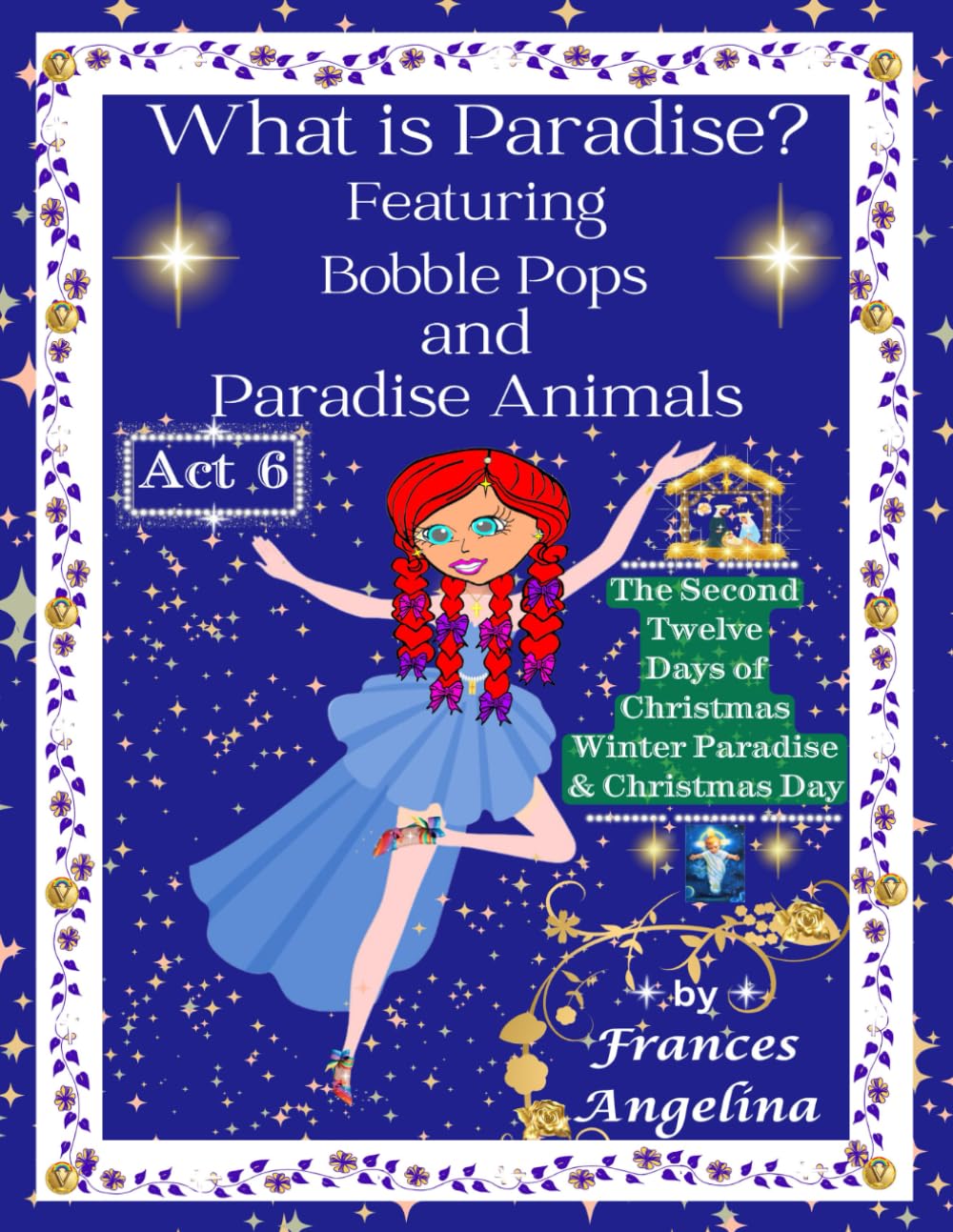
Frances' winning title is: What is Paradise? Act 6 – The Second Twelve Days of Christmas Winter Paradise and Christmas Day. Category: Spirituality/Religion – Series Sequel


This book is part of her beloved Bobble Pops series, which celebrates faith, virtue, and joyful family learning. In Act 6, readers unwrap the radiant wonder of Christmas and behold the most precious gift of all—the majestic birth of King Jesus. Through heartwarming stories and vibrant illustrations, children explore the lasting beauty of virtues that shine like stars on a winter’s night. The adventure continues with cherished Paradise Animal friends who each bring a virtue to life—from Unity and Wisdom to Victory and Zeal. It’s a celebration of Christmas with heavenly purpose and paradise joy!


Where you can find Frances Angelina:

Website:  https://virtuepopsineducationandmore.study/

Facebook:  https://www.facebook.com/VirtuePopsinEducationVirtueBooks/

Twitter:   https://x.com/VirtuepopsnEdu

LinkedIN: https://www.linkedin.com/in/virtuepopsineducationvirtuebooks/

Instagram:  https://www.instagram.com/virtuepopsineducation/

YOUTUBE:  https://www.youtube.com/@virtuepopsineducationandmore/channels


Under Consideration for International Impact Award Author of the Year - Frances Angelina!

Featuring Act 6 of Frances Angelina's Virtue Pops in Education and More series of children's books!


In Frances Angelina's Bobble Pops Series, you learn that virtues are simply good feelings and emotions that we all need to have inner peace and happy hope. The Virtues of Acceptance, Blessings, Cleanliness, Discipline, and Empathy come to life in fun, positive, and educational manners, by the Bobble Pops and Paradise Animals. Through daily learning, teaching, and modeling this book’s valuable virtues, you help your child/student gain values that benefit them in all stages of their life.         

The combined results from public voting and the judging panel will determine the finalists and the winner. CAST YOUR VOTE HERE:   https://internationalimpactbookawards.com/public-voting-form/

Finalists will be announced by May 15, 2025, and invited to attend the Grand Gala in Hollywood in person, where the Author of the Year 2025 will be revealed and celebrated.


Where you can find Frances Angelina:

Website:  https://virtuepopsineducationandmore.study/

Facebook:  https://www.facebook.com/VirtuePopsinEducationVirtueBooks/

Twitter:   https://x.com/VirtuepopsnEdu

LinkedIN: https://www.linkedin.com/in/virtuepopsineducationvirtuebooks/

Instagram:  https://www.instagram.com/virtuepopsineducation/

YOUTUBE:  https://www.youtube.com/@virtuepopsineducationandmore/channels


NEW FROM STORY MERCHANT BOOKS!


Frances Angelina's Virtuepops Series of Children's Books

EMOTIONAL LEARNING BOOKS ABOUT HAVING GOOD-FOR-YOU FEELINGS.


In this first bountiful book, you learn that virtues are simply good feelings and emotions that we all need to have inner peace and happy hope. Angelina's educational virtues book is a life skills book that can open locked doors for self-help, and helping others, by exercising the victorious virtues.     


In Frances Angelina's Bobble Pops Series, you learn that virtues are simply good feelings and emotions that we all need to have inner peace and happy hope. The Virtues of Acceptance, Blessings, Cleanliness, Discipline, and Empathy come to life in fun, positive, and educational manners, by the Bobble Pops and Paradise Animals. Through daily learning, teaching, and modeling this book’s valuable virtues, you help your child/student gain values that benefit them in all stages of their life.                 


Are you looking for a book that helps you and your children acquire good feelings and peaceful emotions? If so, here is a happy gift wrapped in love to feel your best. The Virtue of Faith, exercise, and sports are highlighted in this first book of my “Thank you for Rainbow Adventures 8 Book Series” educational virtues books. Be excited to learn that faith is an important emotional learning life skill to be used as a daily happy healthy habit. 


About the author

My self-help and educational virtue books teach healthy happy habits that I call victorious virtues like faith, charity (sharing), perseverance, patience, love, respect, being humble, and being truthful. Please be a happy POP and join our #ValueVirtue movement. www.virtuepopsineducationandmore.study


How to Affect Change Through Agency by Dr. Meg Van Deusen Author of Stressed in the U.S.

 How to affect change through agency

As 2020 comes to a close, some of you may find yourselves feeling weary, wary and downright impatient. You may feel weary from the months of mask-wearing, zooming, and social distancing. You may feel wary that the new administration, despite hope, will solve our 2020 problems. You may feel impatient about money, political divide and how long it will take to get vaccinated.


It’s been a long haul, my friends, and while there may be a visible light or two, we are still in the tunnel. So, what keeps us going when weariness, wariness and impatience are present? Agency. Agency is the art of picking yourself up when you feel kicked down. It is the ability to move forward when life feels like it has moved backward. It entails tuning into what’s bothering you, providing yourself with encouragement and taking action. It requires that you honor your emotions without getting stuck in them. Agency comes from a grounded, parental voice within that reminds you of your value and your ability to make a difference.

Three Steps to Recruiting Agency


1. Define a Problem You Want to Address

This step may be the easiest as our negativity bias has us more aware of what is wrong with our lives than what is right with them. Don’t make this overly complicated or get mired in the details of a situation. Simply list the things you want to make better in your life. Be careful not to dismiss any problems you think are too big or too small.

Take them seriously and take yourself seriously. For example, systemic racism may be a problem that makes you sad, a problem you wish you could impact. Instead of getting lost in the sadness, allowing yourself to feel flattened by the depth of it, put it on the list. Other possible situations that beg attention may be your financial situation, emotional distance in your romantic relationship or better physical fitness. List the problems without judgment so that, later, you can pick where to start.

2. Improve Your Self-Talk

We all talk to ourselves. Some of us are more aware of our internal dialogues than others and some of us are more critical of ourselves than others. Research has shown the way in which you talk to yourself is crucial to your well-being, including your motivation to do something about a problem. If you’ve found yourself repeatedly telling yourself things like, “You’ll never find a good-paying job,” or “You’ve done nothing with all this time alone,” you won’t feel inspired to get off the couch and make positive change in your life.

If, however, you speak to yourself with compassion and encouragement (and when I say compassion, I don’t mean condoning complacency), you will be more likely to apply for that job, study for that exam or volunteer for that organization.  Here is an example: Judy is lonely and depressed and worries about climate change. She’s unhappy with herself and the world. So, she decides to improve her relationship to herself by speaking to herself supportively. “It’s been a rough year, Judy, but you deserve better care. Let’s start by walking around the block every day to get you exercise and fresh air. You can do it, even if you feel tired.”

Another technique Judy can use to talk to herself is “self-distancing” or talking about herself.  “If Judy spends one hour a week volunteering for that tree-planting organization, she will help reduce the effects of climate change. Judy can make a difference.” Just changing how we talk to ourselves from a critical or cynical voice to a hopeful and encouraging one or from first-person language to third-person language can help us recruit agency.

3. Take Action, One Thing At A Time

In order to follow through on the behaviors that can positively impact a situation, it is vital that you learn self-discipline. Taking action works best when you are consistent. Set reminders in your phone. Time block your schedule for exercise, talking with friends, looking for a job or whatever you decided to affect.

Try not to get into a debate or discussion in your mind about whether or not it’s worth it to follow through on the action, just respond to the reminder bell or time block in a matter-of-fact manner. The phone dings to remind you to work on your resume for ten minutes, bring yourself to the task. Taking action is not about kicking yourself or threatening yourself—that creates stress in the mind and body. Instead, it is about putting an arm around yourself and guiding yourself to the task you set out to do.

When the action is repeated (for example, daily ten-minute meditations to tackle stress), it is more likely to become habit and, therefore, affect permanent change. But please don’t take on too much. One thing at a time will feel less overwhelming and more doable.

How to Affect Change Through Agency: Conclusion

I know we are all tired. We’ve had to navigate perpetually scary and painful circumstances this past year. Some of us had to find stamina when the previous three years had already been challenging. As humans, we have the capacity to be more resilient than we realize. Agency is key to developing resilience. But if you threaten yourself with pessimism and doubt your ability to make change, you’re likely to fall into complacency. Now is the time to offer yourself compassion, pick yourself up with encouragement and take action to improve your life.

References

Hanson, Rick and Hanson, Forrest. (2018). Resilient: How To Grow An Unshakable Core of Calm, Strength, and Happiness. New York: Harmony Books.

Kross, E., Bruehlman-Senecal, E., Park, J., Burson, A., Dougherty, A., Shablack, H., Bremner, R., Moser, J., & Ayduk, O. (2014). Self-talk as a regulatory mechanism: How you do it matters. Journal of Personality and Social Psychology, 106(2), 304–324.

How to Decrease Stress When the World Seems to be Falling Apart by Dr. Meg Van Deusen

There’s no question that we’re living in turbulent times, especially if you reside in the U.S. Protests, to combat systemic racism, have been raging for two months now, the White House has allowed a deadly virus to sweep across our country like a giant tornado, and the unemployment rate is the worst since the Great Depression. I won’t even talk about global warming….
If these facts, along with a half-hearted, watered-down version of summer have you brooding, consider widening the lens, changing your expectations and offering self-compassion. While we have become understandably consumed with the instability of our world, we tend to anxiously look for soothing in places that aren’t helpful.
Take the coronavirus for example. People often try to soothe their worries by looking at the latest news. Some may look for soothing by tracking vaccine trials. Others may look for soothing by studying the daily infection rate, hoping for dips. And many will look for soothing in the presidential election polls. But all this incessant future thinking can have you simply waiting, still helpless to affect your circumstances, and more bombarded than if you had spent time not doing those things.

Decrease Stress by Widening the Lens

Widening the lens not only gives you a better perspective on life, it can help you see opportunity and goodness where the darkness of our times has clouded your view. Widening the lens gets you to think about positive, present-moment experiences and helps you think beyond the immediate future of the pandemic.
Let’s look at the first scenario. When you become aware of your present moment, instead of ruminating about what is going to happen, you have the opportunity to notice what is alive and well, what is beautiful and comforting.  Take for example, the warm cup of coffee in your hand, the fact that your heart is beating, the awareness that the sun is out and the sky is breath-taking. These are lovely truths that you may not get to enjoy if you were obsessively reading the news or mindlessly hoping for a regime change.  
The second way to widen the lens is to think about life in its totality. That this pandemic is a moment in history. That things will eventually change and that we have endured many hard times in human history. Will you be wearing a mask five years from now? Likely not. Think about the bigger picture of your existence.

Decrease Stress: Adjust Expectations

Sometimes we experience stress because we are trying to reach unrealistic goals. Take, for example, parents who have been home with their children for six months, trying to keep them educated and entertained.
While parenting children is a vitally important job, maybe it is time to change what you expect yourself to do given these unusual times. Instead of making sure your children get daily exercise and learning in, allow yourself (and them) some down time in which they can play in their rooms or make a mess without your worrying about it.
Perhaps just stroking their hair or putting an arm around them when they’re bored lets them know you care without pressuring yourself (or them) to be idea geniuses. If you’re hell-bent on getting those house projects done or losing twenty pounds during the pandemic, recognize that just enduring the pandemic is hard enough, let alone taking on bigger goals. Pair those goals down to daily steps, such as, “today, I will buy the paint for my project” or “today I will try to eat mindfully.” Changing expectations can reduce stress by setting you up for success instead of failure.

Decrease Stress: Self-Compassion

Be compassionate with yourself. We often don’t realize how much negativity we lay on ourselves. This may be in the form of self-criticism, “what’s wrong with you, you’re not getting anything done.” It may be in anger at political decisions being made, “How stupid is that? Now we’re really doomed.” These often semi-conscious internal statements can have us feeling perpetually threatened by all that seems to  be going poorly.
Taking the time to pause and intentionally offer self-compassion can instantly change your stress level and your mood. If instead of a self-criticism about my difficulty accomplishing tasks, I say to myself, “it’s tough to always produce when you’re weary,” or “It’s okay, we’ll try again tomorrow.” When we endure chronic stress, a simple caring voice from within can ease it. Instead of swearing at the driver who cut you off or yelling at an infuriating tweet, take a deep breath and remind yourself you are there for you. You can literally say, “I’m here for you.” It’s hard to feel threatened when someone is comforting or encouraging you. Let that someone be yourself.

Decrease Stress: Conclusion

These are tough times, my friends. It may feel like wherever you turn there is something threatening your personal wellbeing or freedom. To worry and ruminate about all of those threats only serves to increase your stress. Widening the lens, changing your expectations and learning how to be self-compassionate eases stress. Try it and begin to move through these challenges more slowly and mindfully, one breath at a time.
If you enjoyed reading How to Decrease Stress When the World Seems to be Falling Apart you might also be interested to read:

San Francisco Review of Books: 'Your VIP Biography: How to Write Your Autobiography to Land a Hollywood Deal' by Alinka Rutkowska and Kenneth Atchity


‘You oughta be in pictures!’ – and making it happen

Co-authors Alinka Rutkowska and Kenneth Atchity are both significant personas and writers in their own right, and their joining forces has resulted in publishing that special book every writer wants to find – how to write important character biographies, including (inhale, breathe) our own autobiography! Alinka is not only a best selling author but also a coach to many writers, ably sharing her experience and skills with writers around the world, as well as being CEO of Leaders Press. Kenneth is a producer and author, a “story merchant,” editor, speaker, career coach, columnist and professor of comparative literature. Strong combo, very strong results.

In the flavorful Foreword, Kenneth states, “A life is a story when it has a compelling beginning, a conclusive and satisfying ending, and a middle filled with unexpected twists and turns, highs and lows, happy breaks and dismal setbacks. If you’ve led a life like that, if you’ve taken an extraordinary path we would like all to know about, then this book is for you.’ A fine invitation and what follows in this book is a key to the door of opportunity.

Alinka and Kenneth share examples of successful memoirs that have become both best sellers and successful movies, and in outlining the aspects of these winners, they instruct us how to get there, from basic information about what constitutes a ‘memoir’ – the definition (and meaning) of Character, Conflict, Structure, Theme, Secondary story elements, and all aspects of the ingredients necessary in creating a memoir. Once defined, and supplemented with outstanding examples of successful memoirs we all know (Angela’s Ashes, The Wolf of Wall Street, The Glass Castle, The Pursuit of Happyness), they then guide us as to how to make it all happen in book form – and getting that book form cinematically friendly.

This is not only a fun read, a journey of its own to read, including the impressive and substantial ‘Entertainment Business and Story Market Glossary of Term,’ but it also is a very practical course in writing by two highly respected authors. Highly Recommended.


Editor's note: This review has been published with the permission of Grady Harp. Like what you read? Subscribe to the SFRB's free daily email notice so you can be up-to-date on our latest articles. 
Read more

Dr. Meg Van Deusen: Coping With The Stress of COVID-19


Available on Amazon
In a special one-off episode, Karen Doyle Buckwalter welcomes Dr. Meg Van Deusen to discuss how to cope with the stress surrounding the current COVID-19 pandemic. Dr. Van Deusen will also be Karen's guest in the next two weeks of Attachment Theory in Action as they discuss her book Stressed In The U.S.

LISTEN TO PODCAST HERE 


After spending a few years as a teacher, Dr. Van Deusen chose to return to school to study psychology. Her studies took her all the way up the Pacific Coast, starting at the California School of Professional Psychology in Los Angeles and finishing her post-doctoral hours in Seattle's Family Services, and then entering private practice in Seattle in 1994. Since then, Dr. Van Deusen has cultivated an approach to treatment that encompasses years of hard work and dedication to continuing education. She has consulted on external projects and has a blog on a topics she’s passionate about, stress, loneliness, sleep and anxiety. Her new book Stressed in the U.S. Twelve Tools to Tackle Anxiety, Loneliness, Tech-Addiction and More was released December, 2019. She is a member of the American Psychological Association and the Washington State Psychological Association.


Marisa Ignacio Hormel and Melinda Lerner's Bodies on Raw


"Bodies on Raw is an adventure in empowerment through food!" - Lois Barber Co-creator and Executive Director of EarthAction, Founder of 20/20 Vision

"Bodies on Raw is a celebration of the healing that can happen when people make healthy food choices. But more than that, it's a celebration of beauty and a celebration of life itself." - John Robbins, Author of Diet For A New America, Co-founder of The Food Revolution Network.

"Marisa Ignacio Hormel and Melinda Lerner's Bodies on Raw is the creative and magical fusion of food, art, and health. This book is a beautiful inspiration to those wanting to explore plant-based food as a gateway to mind-body health and vitality." - Allen "Buddy" Green, M.D. Founder and Medical Director of The Center for Optimum Health.

"Marisa Ignacio Hormel and Melinda Lerner's Bodies on Raw clearly demonstrates that our strength comes from our fuel, whether that is food or thought." - Greg Cope White Food Network Host, Food Writer of Eat Greg Eat, and Author of The Pink Marine.

"Marisa Ignacio Hormel & Melinda Lerner's Bodies On Raw encourages, guides, and stands by our side as we examine steps that we can take to help create a more sustainable, regenerative, just food system, healthy body, and healthy planet." - Dr. Brent Blackwelder, President Emeritus of Friends of the Earth.

Bodies on Raw is an inspiring compilation of testimonials from pioneering individuals who with the help of raw food, vegan, or plant-based choices have either survived cancer or conquered high blood pressure, high cholesterol, Crohn's disease, irritable bowel syndrome, depression, an enlarged prostate, as well as acne, constipation, migraines, and allergies. Their words take you on a journey through the scientific realities of the power of food to discover simple tips which guide you gently towards healing, health, and fitness. This unique book is born from Marisa Ignacio Hormel's passion captured by Melinda Lerner's prowess. Witness the results.