"The universe is made of stories, not of atoms."
—Muriel Rukeyser
____________________________

Denise Griffitts Interviews Robert Rivenbark - AI Avatar Book Reviews


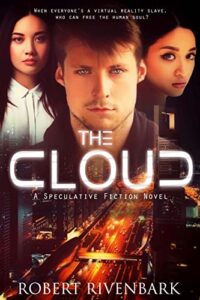
The Cloud: Pioneering AI Avatar-Reviewed Novel Sets New Literary Milestone

Robert Rivenbark's "The Cloud" introduces AI avatars as literary reviewers, blurring the boundary between human imagination and machine intelligence. As technology continues to reshape literature, this novel endeavor prompts questions about avatar creation, liner note utilization, and software prompts. "The Cloud" stands as a testament to the evolving relationship between human creativity and AI's limitless potential.

AI-generated book reviews spark several intriguing inquiries:

How are the AI avatars brought to life?


Do book liner notes serve as a foundation for the avatars' insights?


What prompts the software to craft these reviews?

This literary first is opening the door to AI avatar book reviews. This mixes human creativity with AI's abilities in an exciting way. With questions about making avatars, using summaries, and guiding AI, this achievement shows how AI and human imagination are shaping the future of literature.

Find Robert Rivenbark's "The Cloud" on Amazon

Of Course, The Meg 2 Director Learned From Jaws While Making The Shark Flick, And His Description Of Steven Spielberg’s Age When He Did It Is Sticking With Me


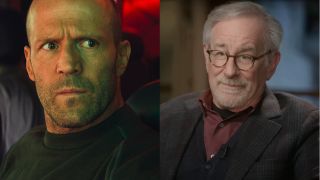
Jason Statham in Meg 2: The Trench and Steven Spielberg on The Late Show with Stephen Colbert, pictured side by side.
(Image credit: Warner Bros/CBS)

When drawing inspiration for a movie like Meg 2: The Trench, it helps to seek out the classics. So naturally, director Ben Wheatley considered the entertainments of the classic summer blockbuster Jaws as he looked for lessons on what to do with his own entry into the aquatic horror-comedy canon. What’s even more interesting to read is how Wheatley described director Steven Spielberg when he made the 1975 movie, which is undoubtedly an explanation that’s going to stick with me for a while. 

During an interview with Slashfilm promoting the Jason Statham-fronted sequel, the High Rise director put a lot of influences on the table. That led to this rundown of where his inspirations came from, including a portrait of Spielberg that most people probably forgot.

Yeah, I mean, obviously I’m a fan of the Kaiju stuff and a fan of Gojira and then the later cycle of Godzilla movies like the ’70s stuff as well, and Harryhausen, Jason and the Argonauts, all that stuff. Obviously Jaws, which is not just a shark film, but one of the greatest films ever made for me. And a film I revisit a lot and re-watch, it’s a film that is a film school in itself. And to see that [Steven Spielberg] did it when he was 26 or whatever disgustingly young age he made that movie at, which is basically inventing it and so much stuff. I definitely looked at that.

At this point in his career, we see Steven Spielberg as the classic hit-maker who dances between dramas and blockbusters. However, people may forget the stories of how a young Spielberg bluffed his way onto the Universal lot, eventually paving the way to direct Jaws at the tender age of 26.

I’ll give you all a moment to sink into a rabbit hole dissecting what you were doing at that point in life, as that’s clearly what Ben Wheatley did during his Meg 2 prep. Also, I’m totally falling into that trap myself at the moment. 

While I might not agree with the words “disgustingly young,” I do co-sign the fact that Spielberg invented the modern summer blockbuster. At the same time, try not coming with your own shocked nickname when watching the trailer for Jaws and remembering that it was directed by a 26-year-old.

Reading the various behind-the-scenes facts on Jaws that have been revealed over time backs that claim, as well as the fact that Mr. Wheatley’s claim that the Indiana Jones helmer was pretty much making it up with his crew as they went along. Not to mention, he was sinking ships with his actors on board long before it was cool... or totally intentional and safe.

Making a movie like Meg 2: The Trench isn’t as risky in this age, as directors like Ben Wheatley now have all the practical models and CGI effects their budget will allow. Reading how much Wheatley was looking to Jaws for inspiration, it totally explains the kickass jet ski scene with Jason Statham, and how it too involved some practical magic itself.

It just goes to show that no matter what age you are, you can be inspired to pull some stunts that even the masters themselves would be proud of. You can see such delights pretty easily, as Meg 2: The Trench is still in theaters, but you can also rent it on PVOD if you’d rather enjoy it in the comfort of your own home. Meanwhile, if you have got the urge to revisit Jaws and/or its handful of sequels, those of you with a Netflix subscription can do just that.


via Cinemablend

Robert Rivenbark's The Cloud is an Amazon Bestseller in Three Categories


The Cloud is the first novel in The Cloud trilogy.  It’s also in development as a film or series with producer/literary manager Kenneth Atchity of Atchity Productions and Story Merchant. “When Everyone’s a Virtual Reality Slave, Who can Free the Human Soul?”

“The Cloud” is a terrifying vision of a possible future I hope we can avoid. It’s a cautionary tale with sexy, suspenseful thriller elements that will keep you turning pages, hoping for the hard-won redemption of the male and female protagonists, who face near-impossible odds.”


USA Today - November 2022 

New York Times Review: ‘Meg 2: The Trench’ Review: Gleefully Jumping the Shark

This lively sequel to 2018’s somewhat tepid killer-shark blockbuster greatly improves upon its predecessor by getting gorier, funnier and more stylish.The shak-hunting, ocean-protecting hero Jonas Taylor (Jason Statham) now has a stepdaughter to protect in “Meg 2: The Trench.”
Credit...
A man speeds on a jet ski, two shark fins trailing behind him.
Warner Bros. Pictures/CMC Pictures
Meg 2: The Trench
Directed by Ben Wheatley
Action, Adventure, Horror, Sci-Fi, Thriller
PG-13
1h 56m
A cute dog, an 8-year-old girl and countless sunbathing beachgoers survived “The Meg” (2018) miraculously unharmed. The British filmmaker Ben Wheatley, who steps into the director’s chair for “Meg 2: The Trench,” has racked up stomach-turning body counts (including dogs) in his darkly comic thrillers like “Down Terrace,” “Kill List” and “Free Fire,” so it seems only fair that his take on a killer-shark movie would lean a bit more vicious.

But “Meg 2,” like the first, maintains a box office-friendly PG-13 rating, so Wheatley is necessarily limited in how much carnage he is permitted to depict. Nevertheless, he finds many creative ways to butcher bad guys and side characters that hit the same horror-adjacent pleasure centers. There’s a shot from the point of view of a shark’s mouth as it’s eating people. I call that good directing.

The first “Meg,” with its story of a long-extinct carnivore re-emerging to wreak havoc among scientists, was reminiscent of “Jurassic Park.” “Meg 2” takes the natural next step and borrows from “The Lost World.” The shark-hunting, ocean-protecting hero Jonas Taylor (Jason Statham) now has a stepdaughter (Sophia Cai) to protect, while the repertoire of prehistoric predators on the hunt has been richly expanded to include several land-roaming dinosaurs and (why not?) a giant squid. Of course, any shark movie will inevitably live in the shadow of “Jaws.” Wheatley has fun with it by nodding playfully to “Jaws 2.”

The director having fun is the presiding feeling here — which may account for why the movie is so frequently amusing, and occasionally delightful. It has a light, irreverent tone that sometimes verges on parodic, as when a villain’s archly confident victory speech is disrupted by a shark appearance straight out of “Deep Blue Sea,” or when a splashy pink title card cheerfully informs us that the populated area about to be descended upon by a trio of sharks is called “Fun Island.” Just how close does the movie get to full-blown parody? At one point, Statham literally jumps a shark.

It’s not that the first “Meg” was particularly serious: It contained comic relief, but the humor felt more studio-mandated. “Meg 2” has a spark of wit that feels looser and more appropriate to the material. The supporting cast — especially Page Kennedy and Cliff Curtis as scientists forced to join the action — are offered much more freedom to cut loose and get silly, while certain sight gags have a verve that really pops (including an escalating bit that has more and more of our heroes wandering into the same armed holdup). No dogs come to harm in this one either, it should be said. There’s enough madcap mayhem elsewhere that any more would have been overkill.

Meg 2: The Trench
Rated PG-13 for intense action, mild language and excessive shark violence. Running time: 1 hour 56 minutes. In theaters.


via New York Times 

Nobody Ever Read American Literature Like This Guy Did

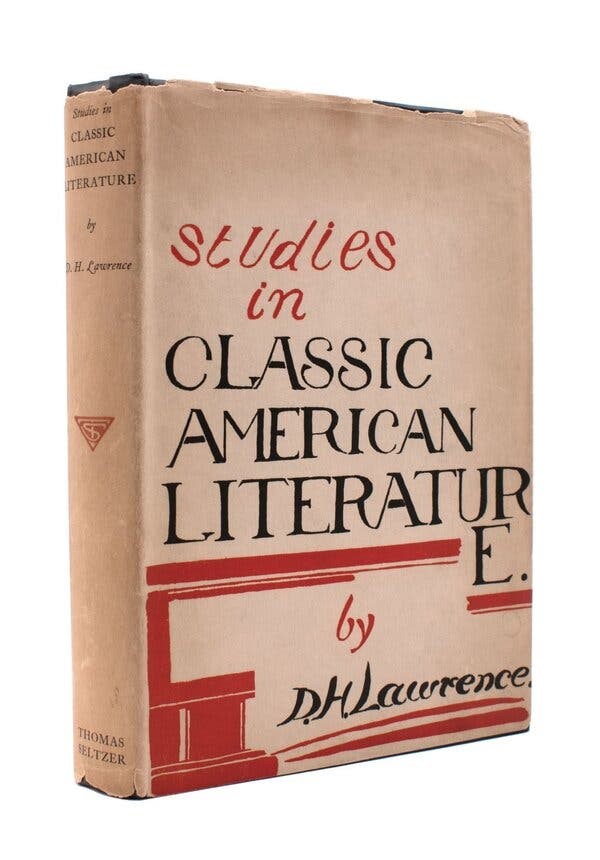
 Inflamed, impertinent and deeply insightful, D.H. Lawrence’s “Studies in Classic American Literature” remains startlingly relevant 100 years after it was originally published.
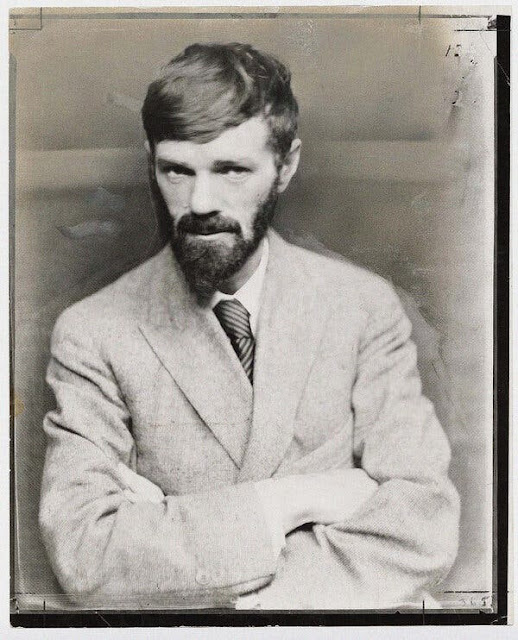
Every American is “a torn divided monster,” D.H. Lawrence wrote, in a book that saw in the nation’s literature a key to its soul.Credit...Fine Art Images/Heritage Images, via Getty Images


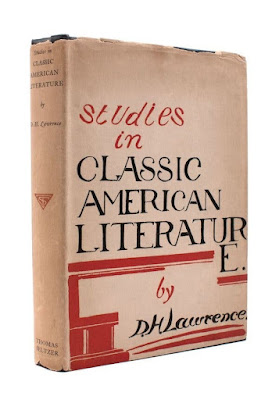
It has been a hundred years since D.H. Lawrence published “Studies in Classic American Literature,” and in the annals of literary criticism the book may still claim the widest discrepancy between title and content.

Not with respect to subject matter: As advertised, this compact volume consists of essays on canonical American authors of the 18th and 19th centuries — a familiar gathering of dead white men. Some (Nathaniel Hawthorne, Herman Melville, Walt Whitman) are still household names more than a century later, while others (Hector St. John de Crèvecoeur, Richard Henry Dana Jr.) have faded into relative obscurity. By the 1950s, when American literature was fully established as a respectable field of academic study, Melville’s “Moby-Dick,” Hawthorne’s “The Scarlet Letter,” Whitman’s “Leaves of Grass” and Crèvecoeur’s “Letters From an American Farmer” had become staples of the college and grad school syllabus, which is where I and many others found them in the later decades of the 20th century. Thank goodness Lawrence got there first.

This is not going to be one of those laments about how nobody reads the great old books anymore. Not many people read them when they first appeared, either. My point is that nobody ever read them like Lawrence did — as madly, as wildly or as insightfully.

That’s what I mean about the gap between the book and its title. “Studies in Classic American Literature” is as dull a phrase as any committee of professors could devise. Just try to say those five words without yawning. But look inside and you will be jolted awake.

Lawrence’s deep reading and idiosyncratic learning are abundantly evident — he tosses off snippets of French, German, Italian and Latin, sprinkling his pages with allusions to ancient poetry and modern philosophy — but his tone is the opposite of scholarly. With its one-sentence paragraphs (“Flop goes spiritual love.”), jabbing exclamations (“Freedom!”), semi-rhetorical questions (“But what of Walt Whitman?”) and heavy use of italics and all-caps, the book can read like a scroll of social-media rants. Its manner is neither respectable nor respectful. Lawrence harangues his subjects in the second person (“Nathaniel!”), and subjects them to parodic paraphrase and withering, ad hominem judgment. “I do not like him,” he says of Benjamin Franklin. Benjamin Franklin!

The irreverence is refreshing, but these studies are far from frivolous. Lawrence’s bristling, inflamed, impertinent language provides a reminder that criticism is not just the work of the brain, but of the gut and the spleen as well. The intellectual refinement of his argument — fine-grained evaluations of style and form that still startle with their incisiveness; breathtaking conceptual leaps from history to myth and back again — is unthinkable without the churn of instinct and feeling beneath it. This is the work of a writer whose fiction — including his briefly banned masterpiece “The Rainbow” and his long-suppressed “Lady Chatterley’s Lover” — makes much of the conflict between decorum and desire. 


In that respect, the book is the mirror of its subject. Each of the writers under scrutiny, like the culture that spawned them, is a divided soul, pulled between contrary impulses. On one side, there is a moralizing, do-gooding, civilizing imperative, a force that Lawrence variously identifies with idealism, “saviorism” and democracy, none of which he much cares for. Franklin is one avatar of this tendency — “the pattern American, this dry, moral, utilitarian little democrat” — which explains Lawrence’s dislike:

Here am I now in tatters and scratched to ribbons, sitting in the middle of Benjamin’s America looking at the barbed wire, and the fat sheep crawling under the fence to get fat outside, and the watchdogs yelling at the gate lest by chance anyone should get out by the proper exit. Oh America! Oh Benjamin! And I utter a long loud curse against Benjamin and the American corral.

But Franklin is not the only American writer bound by the constraints of careful morality. Even the wildest of Lawrence’s specimens — the feverish Edgar Allan Poe, the restless Melville, the ecstatic Whitman — are corralled by various forms of propriety and high-minded sentiment.

The thorniest part of Lawrence’s argument — the strain in the book that feels scandalous, even dangerous, at present — is that he identifies those sentiments with what many Americans would consider the positive substance of our national identity. His hostility to the idea of democracy and the ideal of equality partly reflects a general philosophical bias. “Damn all ideas and all ideals,” he rails, seeing such abstraction as an impediment to authentic human connection: “If only people would meet in their very selves.” But this idea of authenticity is bound up with a mystical ideology of race, sex, blood and destiny that is apt to trouble 21st-century sensibilities.

Or maybe not. Like some other modernist writers — W.B. Yeats, Ezra Pound, Wyndham Lewis — Lawrence, who died in 1930, dabbled in a mode of aesthetic anti-liberalism that may be making a comeback. His critique of America, where he had traveled in the early 1920s, living for a time in Taos, N.M., was a broadside against the nation’s progressive traditions. Its writers were both his antagonists and his allies. Or rather, their expressed beliefs were anathema, while their work revealed what to him was a more congenial truth.

“The artist,” he writes in one of the most frequently quoted passages, “usually sets out — or used to — to point a moral and adorn a tale. The tale, however, points the other way, as a rule. Two blankly opposing morals, the artist’s and the tale’s. Never trust the artist. Trust the tale.”

The tale that classic American literature tells, in the aggregate, is largely one of violence, conflict and cruelty, whether it unfolds on Cooper’s frontier, in Hawthorne’s Salem, in Poe’s fantastical mansions or on Melville’s South Seas. There is a remorseless clarity to Lawrence’s perception of this bloody tapestry, summed up in his description of Cooper’s Natty Bumppo:

But you have there the myth of the essential white America. All the other stuff, the love, the democracy, the floundering into lust, is a sort of by-play. The essential American soul is hard, isolate, stoic and a killer. It has never yet melted.

This is a hard formulation to accept, but it is also not an easy one to dismiss. Much as we may wish to deny it, racial violence is a central fact of our history. And as distasteful as it may be to imagine this country defined by Cooper’s “essential American” on one hand and Franklin’s industrious, positive-thinking “pattern American” on the other, the tension between them might be more than just a literary conceit. Without it, American literature might not exist at all.

What Lawrence saw in his eccentric, passionate reading of that literature was division, polarization and contradiction. Not so much among factions, parties, regions or races — ordinary politics doesn’t really enter his field of vision — as within individual hearts and the collective soul. Every American is “a torn divided monster,” he writes at one point.

And elsewhere, a century ago that might as well have been last week: “America has never been easy, and is not easy today.”

via A.O. Scott 

Critic at large for the Book Review. He joined The Times in 2000 and was a film critic until early 2023. He is also the author of “Better Living Through Criticism."More about A.O. Scott"


The Meg 2: The Trench Extended Preview!

 Watch ten minutes of the opening of Meg 2: In The Trench with Jason Statham.


Get ready for the ultimate adrenaline rush in “Meg 2: The Trench,” a literally larger-than-life thrill ride that supersizes the 2018 blockbuster and takes the action to higher heights and even greater depths with multiple massive Megs and so much more!

Warners’ “Meg 2: The Trench” is the dominant title on this week’s VOD charts.


Warner Bros. isn’t happy with industry consensus appointing “Gran Turismo” as the weekend’s top-grossing film, beating “Barbie.” (Sony’s total included all advance shows including sneaks over two weekends. My verdict: Aggressive, yes; outside accepted standards, no). It will be small solace, but Warners’ “Meg 2: The Trench” is the dominant title on this week’s VOD charts.

“Meg 2” moved to PVOD after 21 days — a quick turnaround previously reserved for Max exclusives and/or lower-budget titles like “Magic Mike’s Last Dance” and “House Party.” However, “Meg 2” is the $130 million sequel to a film that grossed over $500 million worldwide.

It dropped Friday and quickly reached #1 at iTunes. It also is #1 at Vudu, more impressive since its chart covers seven days and “it “Meg 2” was available for only three of them. Google Play, as always lagging a few days behind, has it at #3 and rising.

Meg 2: The Trench Arrives on Digital August 25 The film also hits 4K and Blu-ray on October 24.


 Meg 2: The Trench is coming to digital TODAY!


The Ben Wheatley-directed thriller will be available to buy at home for $24.99 and for 48-hour rental via PVOD for $19.99 SRP on participating digital platforms, including Amazon Prime Video, AppleTV, Google Play, and Vudu, among others.

Meg 2: The Trench will also be available on 4K UHD, Blu-ray, and DVD on October 24.

The premium digital ownership, 4K UHD, and Blu-ray releases will contain the following special features:
The Making of Meg 2: The Trench – Cast and crew revisit the making of the film and working with new and returning cast members, then highlight the beauty and challenges of working with a Meg they can't see!​

Up From the Depths: Even More Beasts - Director Ben Wheatley, cast, and producers guide fans through the creation and design of the new creatures seen in Meg 2: The Trench.

Watch an exclusive sneak peek at “The Making of Meg 2: The Trench” via IGN


'Meg 2: The Trench' Delivers Monster Returns at the Global Box Office


If anyone was ever in doubt about how important the overseas box office is for certain films, look no further than Meg 2: The Trench, the sequel to 2018's surprise hit The Meg, which starred Jason Statham as Jonas Taylor. The Meg was a fun, if slightly too serious film given the subject matter—enormous prehistoric shark terrorising panicking undersea fodder—but the film ended up making $529 million worldwide.

The sequel brought Ben Wheatley aboard, the director behind the harrowing and bleak movies like In The Earth, High Rise, Kill List and Sightseers. However, Wheatley's movies all have a streak of very dark humour in them, and that humour's been brought out tenfold in Meg 2, which sees Statham return to punch three megalodons instead of just one. Despite what was considered an underwhelming opening weekend of $30 million domestic, the movie has absolutely exploded overseas, reaching a total of $316 million in just 16 days. More importantly, $250 million of this has come from the international box office.

That's vitally important, for a number of reasons. Firstly, it marks 79% of the film's total gross but also underlines how crucial the international co-operation on the film is. As with The Meg, Meg 2 was a co-production between the United States and China, as CMC Pictures (China Media Capital) was a heavy contributor in the funding of the film. It also features Chinese megastar Wu Jing in a starring, and heroic, role in the movie. Jing, coincidentally, starred in The Battle of Lake Changjin, an enormous box office sensation that holds the distinction of being both the highest grossing Chinese movie of all time, the highest grossing film in worldwide history to never top the domestic box office, a distinction it may lose soon.

Fine China


The film never bashes this co-operation over the audience's head, and is all the better for it. And it's been rewarded with that worldwide haul of money, as the film continues to play very strongly overseas. Almost a third of the global takings ($94.8 million) have come from China, while the film carried a budget of $129 million. So once again, if you ever underestimated the importance of foreign markets, look no further than Statham and his shark-punching friends. Meg 3 seems all but assured at this point.

The Meg’s Author Approved Of Jason Statham’s Casting, But Had Another Fast Saga Vet In Mind For The Lead In The Past

There was a time a different Fast & Furious alum might have played Jonas Taylor.


Blockbusters like Meg 2: The Trench live and die by the decisions made behind the scenes. With decades of development paving the way for the Ben Wheatley-directed return of Jason Statham’s Jonas Taylor, the hero created by author Steve Alten has waged war with prehistoric beasties yet again. Yet in earlier phases of development, another Fast Saga vet had Alten’s imagination held captive in the casting department.

This was something I had learned from my recent interview with Steve Alten, as we were gathered to honor not only the recent release of the sequel to 2018’s The Meg, but also the new collected edition of Alten novels named Meg: Legacy. As such, the past, present and future was on the table for the taking; which led Steve to reveal the most ridiculous Meg change from an earlier iteration

However, if we saw The Meg adapted in its 1997, or perhaps even with its 2005 attempts, Steve Alten admitted to CinemaBlend that he had the following actor in mind: 

I would say…Snake Plisken. Yes, a younger Kurt Russell. I thought he’d be perfect for it at the time. Jason Statham was my choice in 2016/2017.


Read more at Cinemablend