"The universe is made of stories, not of atoms."
—Muriel Rukeyser
____________________________

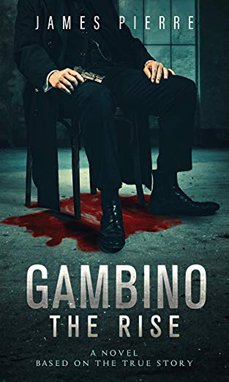
James Pierre’s novel GAMBINO: THE RISE signed as Italian film with George Gallo directing

James Pierre’s novel GAMBINO: THE RISE signed as Italian film with George Gallo directing


LOS ANGELES, CA—Story Merchant Books reports that an Italian film based on James Pierre’s Gambino: The Rise was announced by veteran producer Jules Nasso at the Cannes Film Festival. The film will be directed by George Gallo (Bad Boys, The Comeback Trail) who is scripting it with two-time Oscar winner Nick Vallelonga (Green Book).

Pierre’s novel dramatizes the history of the Cosa Nostra, beginning with its roots in Italy and the organizing role played by Carlo Gambino, its boss from 1957 until his death in bed in 1976 in his Long Island home. Gambino was reputed to be the inspiration for Mario Puzo’s The Godfather. In the novel, Gambino carries a copy of Nicolo Machiavelli’s The Prince with him on the boat from Italy.

Story Merchant/Atchity Productions Ken Atchity, who introduced the book to Nasso, will serve as executive producer. 

Vallelonga, speaking in Cannes, said that the approach he and Gallo are taking is not just that of a typical mob movie: “We’ve seen a lot of that. This is Shakespearean.” “Think Once Upon a Time in America,” said Nasso, whose start in the film business was as assistant to Sergio Leone. New York in the ‘50s and ‘70s will be reconstructed in Rome’s Cinecittà studios.

James commented: “What is every writer’s dream—to see their book turned into a movie validates the many years of research—and long hours in front of my keyboard—that went into bringing Gambino and his world to life. I listened to the characters, and they talked to me.”

Author James Pierre has also published How Did Warren Buffet Succeed, and is nearly finished with

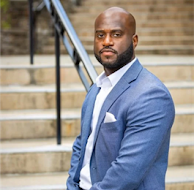
Gambino: The Triumph, his sequel to the Gambino saga. He was born and raised in Brooklyn where he witnessed as a teenager a Mafia hit that led him to a lifetime fascination with the Gambino family. 

According to Variety, “the film is being produced by Nasso Productions (a Nasso-Zheng company) and fully financed by Edward Zeng and former Credit Suisse CEO Tidjane Thiam, with international sales handled by Minerva Pictures.”


Gambino: The Rise by James Pierre is available on Amazon


To request a review copy or inquire for an interview with the author, please email atchity@storymerchant.com


Deborah Kobylt LIVE: James Pierre and Ken Atchity


Growing up in NJ, stories about the mob often led the news. It was terrifying, but peaked one’s curiosity at the same time. And being of Italian decent, it was the topic of many conversations.

Little Italy Podcast and Deborah Kobylt LIVE, speaks with James Pierre, author, “GAMBINO: The Rise,” and Ken Atchity, film producer and literary manager who’s turned many best sellers into successful films.

Pierre got the idea for the book when he witnessed something as a child - a mob hit - and told no one until he decided to write about it as an adult. He talks about growing up in NY, and calls himself “a student of all things mafia,” and his knowledge past and present is astounding, as is his story. 

Ken has been behind some of the Hollywood’s most successful films, and says this story has “Godfather” potential with its rich history and cultural perspective. James and Ken both join us for our interview.


 Available on Amazon

My Obit: Daddy Holding Me by Kenneth Atchity


 On Amazon 


My Obit: Daddy Holding Me a page-turner filled with poignant family experiences, explosive sibling rivalry, literary adventures, ethnic cooking, wide-ranging storytelling, the workings of the brain itself--and what can be learned about life from playing tennis for decades. 


"I’ve lived a lifetime of literary adventures by refusing to be relegated to a niche. In My Obit: Daddy Holding Me, my storytelling passion and family and professional anecdotes provide humor and insight into my hugely self-determined life."

~ Ken Atchity


Advanced Praise for My Obit: Daddy Holding Me:

“Powerful. Honest. Heartwarming. A courageous examination of the secret nooks in the soul that expose to the self who we truly are… and why. Atchity’s memoir is riveting, reflective, and revealing. A MUST read!” – Tracy Price-Thompson, bestselling novelist

 “My Obit: Daddy Holding Me by Kenneth Atchity is a compelling autobiography worthy of the analogy of Sisyphus discovering the burdens and pleasures of each push of the rock up the hill of his extraordinary life.” – Norman Stephens, producer, former head of Warner Brothers television.

The extinct superpredator megalodon was big enough to eat orcas


This illustration depicts a 52-foot Otodus megalodon shark predating on a 26-foot Balaenoptera whale in the Pliocene epoch, between 5.4 to 2.4 million years ago.


Faster than any shark alive today and big enough to eat an orca in just five bites: A new study suggests the extinct shark known as a megalodon was an even more impressive superpredator than scientists realized before.

The Otodus megalodon, the inspiration behind the 2018 film “The Meg,” lived more than 23 million years ago. Fossils of the extinct giant are hard to come by: While there are plenty of fossilized shark teeth, their bodies mainly consist of cartilage rather than bones, and are rarely preserved.

A research team led by Jack Cooper, a paleobiologist at Swansea University, set out to use 3D modeling from a rare and exceptionally well-preserved megalodon spinal column to extrapolate information about the shark’s movement and behavior. Their research was published in Science Advances.

“We estimate that an adult O. megalodon could cruise at faster absolute speeds than any shark species today and fully consume prey the size of modern apex predators,” wrote the researchers.

Most of what we know about megalodons come 65 feet through a comparison with great white sharks, thought of as their “best available ecological analog,” since they both occupy the top rung in the food chain, according to the article.

The researchers used a megalodon vertebral column from Belgium, a tooth from the United States, and the chondrocranium – the cartilaginous equivalent of a skull – from a great white shark to build their 3D skeleton. Then they used a full-body scan of a great white shark to estimate how flesh would sit on the megalodon’s skeleton.

With a complete 3D rendering, they came up with estimates for the volume and body mass of the shark’s whole body. By comparing the figures to the size of modern sharks, they estimated the shark’s swimming speed, stomach value, calorie needs, and prey encounter rates.

The megalodon they modeled would have been almost 16 meters, or 52 feet, long. It weighed around 61,560 kilograms, or 135,717 pounds, according to their estimates.

They estimated the megalodon would have been able to devour prey the size of orca whales – which can be up to 26 feet long and weigh over 8,000 pounds – in just five bites.

Prey the size of a modern humpback whale would have been too big for a megalodon to eat in full, according to the researchers. Eating large prey may have given the megalodon a competitive edge over other predators. Eating large amounts at a time would have also allowed them to travel great distances without eating again, much like modern great white sharks.

An adult megalodon would have needed to eat a whopping 98,175 calories per day, 20 times higher than an adult great white shark. They could have met their energetic needs by eating around 31.9 kilograms of shark muscle, according to the researchers’ estimates.

The megalodon was also faster than any shark alive, with a theoretical average cruising speed of around 3.1 mph. This speed would have allowed it to encounter more prey, helping it meet its massive caloric demands.

Overall, the data extrapolated from the 3D model paints the portrait of a “transoceanic superpredator,” say the researchers.

Luckily, today’s orcas don’t have to worry about running into the massive shark. The megalodon went extinct around 3.6 million years ago, according to the United Kingdom’s Natural History Museum, for reasons scientists are still trying to understand.


Read more

How to Write Your Screenplay in 24 Hours - Advice From Kenneth Atchity

Norman Mailer once said that “writer’s block is a failure of the ego.”
I’d rather say it’s a failure of motivation, preparation, and discipline—a failure, in other words, of time-management.

The method I describe here, based on nearly thirty years’ experience in film and television, is all about motivation, preparation, and discipline.

If you follow this system, you will be able to write a professional screenplay in 24 hours.

writing a screenplay image

Sitting in front of your computer agonizing over the next word is always counterproductive.

Start by taking a solemn oath that you’ll never again sit at your computer without knowing what you’re going to write before you sit down.

By simply preparing your thoughts and ideas ahead of time, you can ensure that when you do sit down to write, you’ll have something dramatic to say. This simple change in your writing habits can help you write more and stress less.
But first, let’s analyze what you’re trying to construct when you write a screenplay. It’s not a nebulous, monumental, or overwhelming task.
It’s just producing 115 written pages—with not that much writing on each page, at that.


Outlining Your Screenplay


Let’s start by mapping that simple and unintimidating reality out on a single page, starting with your screenplay’s page 1 (an opening that hooks the audience) and ending with its page 115 (that satisfies their expectations of good storytelling):


Page 1


Act 1: Compelling beginning (Hook), dragging your audience into the midst of action.


Page 5


End of introduction of the protagonist.

Note: Make him relatable to the audience. A protagonist is convincing when all of the following four dimensions of his or her makeup are clearly focused:
  1. His motivation
  2. His mission in the story
  3. The obstacles he faces in pursuing his mission
  4. The change he undergoes from the beginning the story to the end.
Introduction of your story’s theme (emotional mood and viewpoint of the film).


Page 20


End of introduction of antagonist.

Note: Make the antagonist worthy of your protagonist. The stronger the antagonist, the stronger your protagonist will look.

Major event launches your character into action, (inciting incident also called the inciting event) into Act 2.

Act 2: Rising and falling action (not just action, dramatic action), plot twists and turns, obstacles to his mission—constantly keeping the audience in suspense, and surprising them.

It helps to break up your dramatic action into three acts within Act 2.


Page 35


First meaningful encounter between protagonist and antagonist. The protagonist succeeds or fails to advance his or her cause.


Page 50


Turning point:  New information, or the triumph over a major obstacle, turns everything 180 degrees.


Page 70


Twist & turn: Build to a climax. Darkest moment for hero. At the crossroads. Will he win or lose?


Page 85


Act 3: Protagonist at lowest point. Begin resolution as character breaks through with a final decision.


Page 95


The story draws to a dramatic close, underlying its theme or moral impact.


Page 115


Mission accomplished, Change occurs. Conclusive ending that satisfies the audience and sharpens their mood as they leave the movie. Answering the question, what was this story about?


Using Final Draft to Write Your Screenplay


It helps to have an idea of how many pages you type an hour in Final Draft. That way you can budget time accordingly.

For example, if you can type five pages an hour and can allocate two hours a day on weekdays (take weekends off to recharge your batteries and let the story build up pressure in your mind), that means you’ll be able to produce 10 pages per day or 50 pages per week. At that rate, it will take you exactly 12 work days (allowing 2 days for those last 15 pages). A total of 24 hours of actual writing.
My advice is to schedule the same time to write each morning or evening, and stick to it religiously, not stopping until you’ve spent the time you’ve allocated—let’s say two hours on the stopwatch.


7 Steps to Prepare Your Story for Writing


Before you sit down to “fill in the blanks,” prepare yourself by making sure you’re ready with the following items:
  1. You’ll need to start with a story that’s well-worked out in your mind already, so I’m assuming you’re writing a screenplay based on your own book or unpublished story.
  2. Read five of your favorite screenplays based on movies that did well at the box office. Consult www.boxofficemojo.com to make sure the ones you choose did well; and consult www.script-o-rama.com to download the screenplays free. Studying screenplays from successful movies can help you see what to do, and what not to do, when you write your screenplay.
  3. You’ll need to create your screenplay in Final Draft, the professional standard of the Hollywood entertainment marketplace. So don’t set your start-clock until you’ve mastered the program; which shouldn’t take more than a few hours.
  4. Unlike a novel or nonfiction book, a screenplay is nearly all action,and action consists of either physical action (she slams the door behind her; when she turns around he’s holding a gun) or active dialogue. The missing “nearly” part is narrative, simple and direct transitions from one action to another, setting the stage and clarifying the movement of the actors who are doing the action.
  5. This means all you need for your screenplay is action, and you start by asking yourself what are the obligatory actions of your story, the actions without which the story makes no sense. Those are the ones you use to fill in the blanks, above, estimating where they should come in the story.
  6. If you need help deciding what goes where in the story, reduce all the most important actions, whether they’re physical or verbal, to a single 3×5 card for each.  Make all the cards you’ll need for your screenplay, and I can tell you from experience that you’ll rarely need more than 100. When you’ve finished the cards, sort them in terms of where in the story they should go. Then re-sort them with the power of hindsight (gained from doing the first sorting). Now you should be ready to list the obligatory actions in the page outline, above.
  7. Spend as much time as you need to fill in the page spread until it has a clearly visible through-line. That’s another way of saying “the story flows.” Here’s a tip from one of my books that helps you assess the intensity-level of the various moments in your story so you can rearrange them to make sure you’ve built a rollercoaster of rising and falling action:
How to write a screenplay image

This chart is easily constructed:
  1. Summarize action in a few words.
  2. With a single hyphen for each degree of intensity, rate each action, ending with an arrow after each action’s line.
  3. Draw a line from one arrowhead to another. That gives you a graph of rising and falling action.
  4. Turn the graph on its side to see whether the rollercoaster is dramatically effective enough. In this example, the story could use more dramatic variation between Act 1 and Act 2, and especially in Act 3 where falling action needs to be enhanced to make the rising action more compelling to the audience.
  5. Now’s your chance to vary the scenes to make for a more satisfactory rollercoaster ride.
Once you’ve done all that, you should be ready to finish filling out the page spread, if you haven’t done it already.


When You Sit Down to Write, Everything Should be Prepared


Once your page spread is filled out, you’re ready to start your clock on the actual “writing.” But note that you now already know what you’re going to write, so it’s time to sit down and just do it.

At this point you should have such a clear idea of where your story is going it should be a lot easier to write your screenplay than if you were simply sitting down and writing a brand new story from a blank page.

One more practical tip: get a ream of paper ready for use. Five hundred blank pages are way more than enough to write a screenplay with plenty of waste allowed along the way. But at least you know as you stare at your ream that it’s not an insuperable, monumental, mountainous task. It’s just filling out as much of that ream as your story needs.

Time to sit down at the computer and type, following your page spread outline and aided by the cards on which you’ve recorded the details of each action required to tell the story.

Don’t worry about transitions between one action and another, and definitely don’t worry about “CUT TO,” “FADE OUT,” etc. Directors reading your script will only be annoyed by your attempt to dictate to them how to use the camera.
Just tell your story without telling us about it—just showing it.

No stopping to worry about research, spelling, or even grammar—that can all be checked automatically by Final Draft when you’ve gotten the draft down. You do that checking on Work Day #12.

Now all you have to do is revise (including checking your research). Give yourself at least as much time for that as you did for your first draft. Then send it out for a “friendly read,” and revise accordingly.

Good luck.

Read more 


Dr. Kennet Atchity's Film Courage Interviews

In these Film Courage videos, Dr. Ken Atchity (Author, Publisher, Producer), shares how his own pursuit of living his dreams and what blocks most people's road to success.


FILM COURAGE TITLE

VIEWS

LIKES


Quit Your Day Job and Live Out Your Dreams

1,459,474

40 K

How To Be Productive: Understanding Time, Work and Creativity

184,637

7.9 K

A Writer's Time: Making The Time To Write – Full Interview

128,809

4 K

Sell Your Story To Hollywood: Writer's Guide To Show Business

65,955

1.7 K

How To Guarantee Success In Show Business

46,006

1.5 K

Starting A Career In The Movie Business At Age 43

38,360

1 K

Trump Is The Most Creative Producer In The World

4,332

121

Advice I Wished I Received

12,939

427

Being A Professional Screenwriter Is Not A Magic Trick

16,424

525

There Are 3 Ways To Break Into Hollywood And I Didn’t Use Any Of Them

29,521

840


15 Screenwriting Lessons People Learn TOO LATE

93,039

2.5 K

3 Biggest Screenwriting Mistakes Beginners Make

33,798

1 K

Most Important Lesson Every Screenwriter Should Learn

24,160

843

Truth Is That A Screenplay Can Be Written In One Week

12,253

500

Top 10 Rules For Editing A Screenplay

6,768

180

Writing Treatments That Sell

41,829

1K

3 Rules Beginning Screenwriters Need To Know

81,756

3K

Here’s Why Writing A Screenplay Is Harder Than Writing A Novel

34,407

1K

It’s Easy For A Great Script To Go Nowhere In Hollywood

20,837

605

Can Any Book Be Made Into A Movie?

2,149

117


3 Things Every Great Story Has To Have

15,071

498

The Assumption That Most Writers Get Wrong

29,662

1.1K

A Formula For Writing A Great Story

8,551

429

Character Development Is About These 3 Things

8,134

266

How Writers Can See The Shape Of Their Story: Intensity Graph

5,165

158


Being An Artist Is Lonely

396,833

15 K

Every Artist Has A Calling

184,161

7.8 K

Power Of A Work Of Art

37,651

1.1 K

Common For An Artist To Be Depressed After Finishing Their Work

9,148

451

The Drama Of The Gifted Writer

8,280

270

Every Artist Has A Dream For A Reason

12,435

1.4K


View videos here! 

BUY THE BOOK - HOW TO QUIT YOUR DAY JOB AND LIVE OUT YOUR DREAMS: Do What You Love for Money BUY THE BOOK - SELL YOUR STORY TO HOLLYWOOD: Writer’s Pocket Guide To The Business Of Show Business BUY THE BOOK - WRITING TREATMENTS THAT SELL: How To Create And Market Your Story Ideas To The Motion Picture and TV Industry

In Conversation with Hollywood Film producer, Author, Literary Agent & Screenwriter — Ken Atchity


The Entertainment Engine weekly podcast is providing helpful tips and information on navigating the entertainment industry across; Music, Film & TV for new bands, artists, actors, songwriters, and creatives.


With more than fifty years’ experience in the publishing world and over thirty years in entertainment, Dr. Ken Atchity (PhD Yale) has been called a “story merchant”—writer, professor, editor, producer, and literary manager. He’s launched hundreds of books and films, including New York Times bestsellers and Emmy-nominated documentaries, making over 200 films and television deals-with every broadcaster and every studio in Hollywood, and many independent film companies as well, including; HBO, Universal, CBS, Walt Disney, Warner Brothers, Paramount, NBC, Discovery, Regency, and Fox 2000 Pictures.

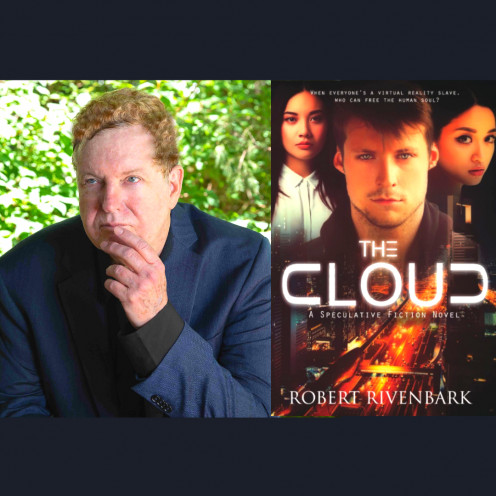
The Cloud: Interview With Author Robert Rivenbark


1. When did you realize you wanted to be a writer?

I made this startling discovery in the sixth grade, when my homeroom and English teacher, Mrs. Lee, a recent graduate of Agnes Scott College, had me elected Program Chairman in our class elections. This was at Sagamore Hills Grammar School in DeKalb County, in the Atlanta metro area. The school practiced an experimental program that allowed teachers to try special activities with gifted students; and Mrs. Lee saw that I was a natural writer. As a result, I became the class playwright and wrote, cast, and directed a couple of plays—bad knockoffs of science fiction and horror novels and movies I loved. I also read my horror short stories aloud to the class. Mrs. Lee (I never knew her first name) changed my life. I’ve been searching for her for decades, and hope that my recent success as a novelist will help me find and thank her.

2. What is your latest book? Please tell us something about it.

I’ve recently published The Cloud, a speculative fiction novel set in a future society where 24/7 neural surveillance and virtual reality addiction are mandated by a corrupt ruling corporate regime, The Cloud, headquartered in Hong Kong. In this future world, China and North America are a single empire fighting endless wars against the Caliphate. The male protagonist is a VR programmer named Blaise Pascal VII. He has a horrendous past as a lieutenant in the Cloud army who committed atrocities while fighting against the Caliphate in Nigeria. Blaise tries to escape his guilt and PTSD by using his brilliance as a VR programmer to create award-winning VR series that attract the attention of his psychopathic boss, Minsheng. Minsheng offers Blaise a big promotion and eternal life in exchange for Blaise coding a new VR series that will drive the Slag underclass—considered expendable—to commit mass suicide. Blaise finds himself caught in a romantic triangle with Mitsuko, Minsheng’s cunning and seductive daughter, and Kristina, a psychic hacker who recruits Blaise in a conspiracy to bring down The Cloud with a computer worm Blaise has the security clearance to upload. Blaise’s struggle between his hunger for eternal life and his moral horror at participating in mass murder are the novel’s central dramatic thrust.

3. How long does it take for you to write a book?

I spent 4 ½ years writing and editing The Cloud, because I was working full-time as an advertising copywriter for several Fortune 500 companies. I had the good fortune to work with Elizabeth Lyon, one of America’s greatest book editors, on the novel’s first draft. Then, after The Cloud won First Place in the Science Fiction category in the 27th Annual San Antonio Writers Guild Writing Contest in 2019, Hollywood literary manager/producer Ken Atchity signed me to an exclusive contract for representation. Under Ken’s guidance and feedback from his script doctors and fellow film and TV producer colleagues, I slogged through seven thoroughgoing rewrites of The Cloud over the next three years. It was published in August 2022.

4. What do you think makes a good story?

As my literary manager Ken Atchity told me early on in our working relationship, what captivates readers in all literary genres is, first of all, great characters. The most dazzling plot imaginable will fall flat on its face without compelling, fully rounded, identifiable, and sympathetic characters. Second, the story must have the highest stakes conceivable. The characters must be thrust into circumstances that threaten their survival again and again, so that readers are on the edge of their seats page after page, chapter after chapter, in suspense about whether the protagonists can beat such incredible odds—right through to the end. Third, a good story should teach readers something about life that they can put to use in their own struggle to survive. Good stories are the only human activity that can occupy a person’s mind for hours on end. That’s because stories are how we make sense of life and search for ways to win at it.

5. What inspires you to keep writing?

I’d sooner stop breathing than stop writing. Writing is in my blood. I’ve always had a vivid imagination and dream life, and excessive energy and passion. When I was a boy, I used to play Beethoven’s Fifth Symphony of my parents’ stereo and spin around like a dervish until I went into ecstasy. Beethoven’s music is what it feels like to be in my head. If I weren’t a writer, I’d be a composer. And if I couldn’t write, I’d probably go crazy. At the moment, what’s keeping me writing is the fact that The Cloud is in development as a TV series, and I’ve written the pilot script. And at the urging of my literary manager and book editor, I’ve outlined two sequels to The Cloud, which will make it a trilogy—or at the very least, a sequel of 600 to 800 pages. In the 40-page outline I recently finished, I’ve blown out the original concept for The Cloud and figured out—through painstaking effort, a lot of false starts and mistakes, and collaboration with my book editor and literary manager—how to turn my initial concept into an epic.

6. What would you say is your most interesting writer’s quirk?

My most interesting writer’s quirk is that I can’t stop editing; I revise everything compulsively, hundreds of times, and I’m never satisfied with the results. I acquired this quirk when I worked as a journalist and had to write 16-18 articles a week for a daily newspaper, a monthly business journal, and a university alumni magazine. The quirk deepened later, after I got into advertising, and had to work under enormous pressure to meet short deadlines and revise the ads, websites, and commercial scripts I wrote many, many times. That taught me never to get married to the way I expressed anything. There’s always a better way to say something.

7. Have you ever experienced writer’s block? If yes, how do you overcome it?

I’ve never had writer’s block because I’ve always worked as a professional writer in one capacity or another—as a journalist, advertising copywriter, screenwriter, blogger, and novelist.

8. Do you have any suggestions to help new writers become better at what they do?

New writers carry the heavy burden of creating the stories and myths that speak to their age. To become a master of what you are born to do—and writing is a calling, like the priesthood— you must first read incessantly, compulsively, and broadly; not just literature but also history, philosophy, theology, journalism, and current events; and you must watch lots of movies and TV series in all genres. Second, you must write incessantly, obsessively, hopelessly, and let yourself screw up and make false starts. Third, you must discover a writing genre that most closely fits your sensibility, personality, and interests, and read the masters in that genre. Fourth, read every book you can get your hands on about how to become an effective storyteller. There are hundreds if not thousands of books on the subject. Read reviews of them and buy the ones that make sense to you. One of my favorites is A Writer’s Time by Ken Atchity. Finally, write what you’re passionate about. I disagree with Hemingway that you should write about what you know. What you know may be tedious and uninteresting. Write instead about what sets you on fire with passion, even if you know little about it. Joseph Conrad wrote a stunning novel about 19th century South America, a continent he had never visited. It’s called Nostromo. I recommend it.

9. Does your family support your writing? If so, how do they support your books?

I’m the only artist/intellectual in my immediate family; my biological relations don’t really understand what it means to be an artist, and they’re not inclined to support me emotionally or financially—except for my mom, who loaned me money during the Great Recession of 2007-2015, when I was struggling to survive in Southern California, working hit or miss as an advertising copywriter and failed screenwriter. Aside from that, my wife, who has an artistic temperament, has always been emotionally supportive. She’s the one who convinced me to write in the science fiction/speculative fiction literary genre.

10. What is the most difficult part of your writing process?

I have the most difficulty at the beginning of a project. It’s extremely hard to crystallize an idea into a story. Every story originates as a tsunami of emotions, thoughts, half-baked ideas, and obsessions based on traumatic experiences and/or something I’ve read or seen on TV or in a film. The only way I can plow through that mess is to write as full-fledged, detailed outline. Then the project starts to make sense.

11. How do you develop your plot and characters?

The story originates in a feeling, an emotion, a dream, or a half-baked idea—like a musical theme that begins as a spray of notes. Gradually, as I outline the idea, the plot distills itself into clearly identifiable characters. The characters may begin as actual people I’ve known or composites of several people I’ve known; but as I write, the characters develop a life of their own and take control of the narrative, so that I’m following them as opposed to directing their actions.

12. Which of your characters can you relate with and why?

I relate with all my characters on some level—even the “villain” is a human being and commands my respect in some measure. Because the fact is, we’re all struggling to do the best we can to survive on a hostile planet; so even the “bad guys” deserve a little sympathy.

13. How did you come up with the title for your book?

The Cloud was the natural title for my novel, since it’s speculative, futuristic fiction. Our present age is largely the age of the Internet, which is linked through high-performance, satellite-linked computer servers collectively called the cloud. It just made sense to call the malevolent empire I invented The Cloud, since that empire dedicates itself to clouding over anything spiritual and free in humanity, with the intent of turning humanity into a race of mind slaves.

14. What inspired the idea for your book?

The Cloud came from three sources: 1) My 8 ½ years living in Los Angeles, which changed my life and introduced me, through my advertising clients, to the intricacies of global computer networks and biotechnology breakthroughs. Los Angeles also introduced me to Asian culture, which had a profound impact on my worldview. 2) My failed relationship with a beautiful Asian lady, an electric violinist and operatic vocalist whom I met in Los Angeles. I split her up into the female protagonist and the femme fatale in my novel; it was very healing. 3) My three years working for a Fortune 500 commercial real estate company in Atlanta. There I learned about how companies like the one I worked for are building cities of the future in 75 countries—but cities that will be for the top 10% only. My rage against that spurred me to write about a potential future I hope we can avoid.

15. How would you describe your book’s ideal reader?

My ideal reader is anyone, male or female (of mature age), race, nationality, or creed who is fascinated by our rapidly transforming world and concerned about what the future might look like—particularly in the face of global warming, the coming of AI and virtual reality technology, and the recrudescence of authoritarian political movements.