
Be The First To Sign Up For This Brand New Online Course From Author And Hollywood Producer Ken Atchity Designed to Improve Your Storytelling.


My first encounter with Asgard and its inhabitants was as a small boy, no more than seven, reading the adventures of the Mighty Thor as depicted by American comics artist Jack Kirby, in stories plotted by Kirby and Stan Lee and dialogued by Stan Lee’s brother Larry Lieber.
That was the thing about Loki. You resented him even when you were at your most grateful, and you were grateful to him even when you hated him the most.
Like Johnny Cash going into the studio with Rick Rubin, there seems to be an effort to get back to the basics, to find what’s essential in a familiar story without too many additional trappings.

Most of the stories of these warriors we find so remarkable that recalling them once more is certainly worth our time and attention, and thus we have spent long hours compiling into one narrative their achievements as related in numerous books. Foremost among these, we would be remiss not to name, is the Great Saga of the Sworn Brothers.
Whether straightforward or revisionist, these stories can be adapted into countless forms, and experienced in a host of ways.

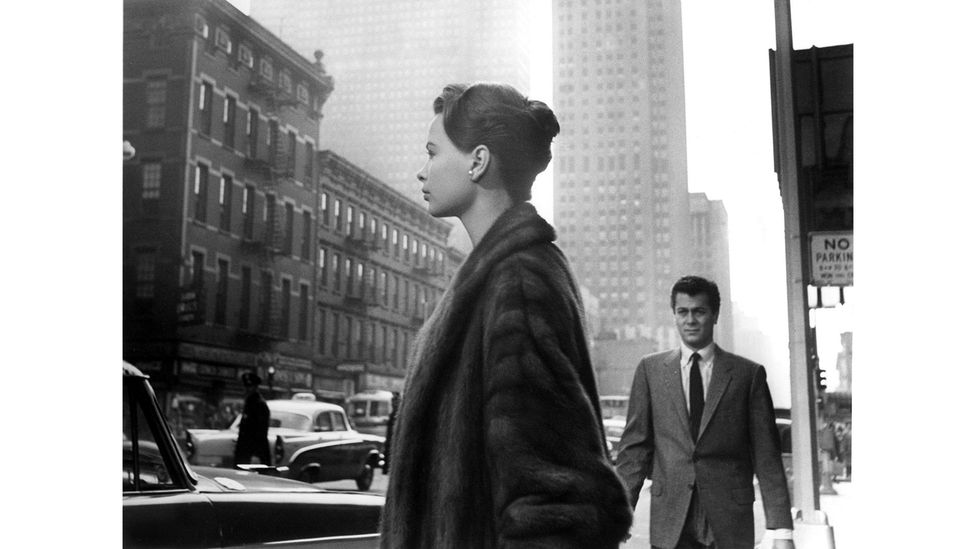
The Sweet Smell of Success (Credit: Alamy1. The Sweet Smell of Success (1957)
If one film cries out New York, it's this classic, with Tony Curtis as the wily, ethically challenged publicist Sidney Falco and Burt Lancaster as the unscrupulous, powerful gossip columnist JJ Hunsecker. Set against what are literally the bright lights of Broadway and Times Square – gloriously shot by the great cinematographer James Wong Howe – Hunsecker lives in a sumptuous apartment, holds court at a nightclub, and makes and breaks careers. With a jazz soundtrack, The Sweet Smell of Success has it all: fame, ambition, backbiting – the very qualities that make the city so alive. Hunsecker's attempts at wielding political power give the story a timely resonance, and the chiselled dialogue includes the classic line from Hunsecker to Falco: "I'd hate to take a bite out of you. You're a cookie full of arsenic".
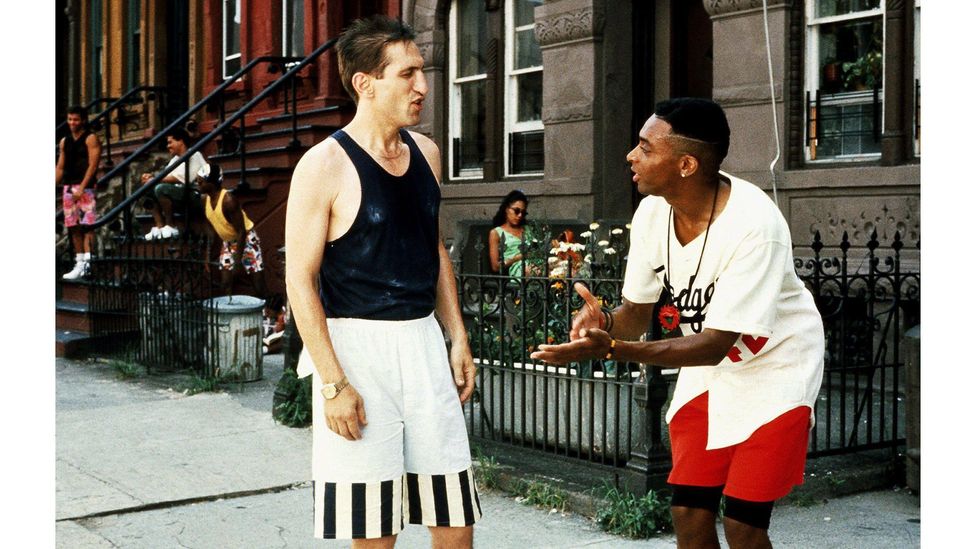
Do The Right Thing (Credit: Alamy)
2. Do the Right Thing (1989)
Spike Lee may be the quintessential New York director. His brilliant depiction of an ordinary Brooklyn neighbourhood on a blistering summer day remains a galvanising immersion into everyday New York with all its problems. Sadly, it is even more relevant as it depicts the racial tension that erupts between the black residents – including Giancarlo Esposito as Buggin Out and Lee as Mookie the pizza delivery guy – and Danny Aiello as Sal, the Italian-American pizzeria owner. The scene in which police choke Radio Raheem (Bill Nunn) to death is terrible to watch because it seems so real. Jessica Green, curator of the New York museum's series, calls it "the definitive New York film because it's contesting with transforming neighbourhoods and questions of class and race".
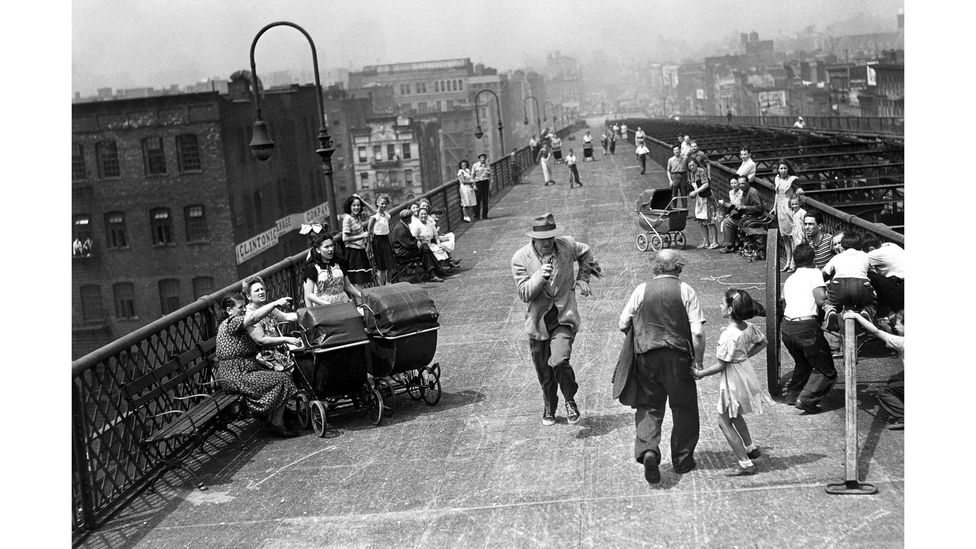
The Naked City (Credit: Alamy)
3. The Naked City (1948)
Jules Dassin's crime noir, which follows two detectives trying to solve a young woman's murder, starts with an overhead shot of the city, and never loses it connection to the pavement those detectives pound and the neighbourhoods they traipse around, right through to a spectacular chase scene on the Williamsburg Bridge, connecting Manhattan and Brooklyn. The hokey voiceover is hilarious today, ending with the line, "There are eight million stories in the naked city. This has been one of them," but the film is a delight to watch. Goldstein, Film Forum's curator, has made a fascinating short, Uncovering the Naked City, following Dassin's authentic locations, and points to the texture of the film as its essential New York quality. "If you take those vignettes [of the setting] out, all you have left is a pot boiler," he tells BBC Culture. "You put them in, and it becomes this beautiful love letter to the city."
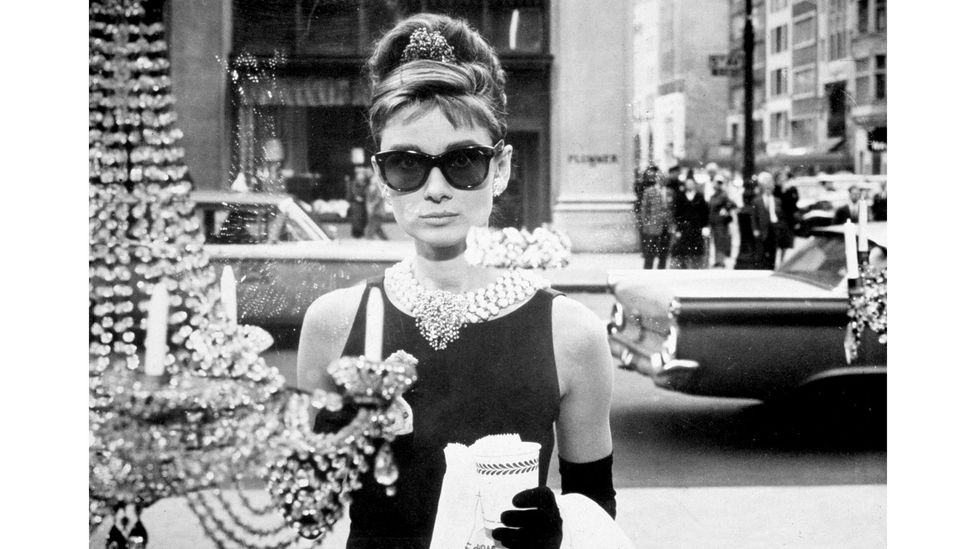
Breakfast at Tiffany's (Credit: Getty Images)
4. Breakfast at Tiffany's (1961)
The image of Audrey Hepburn in pearls, sunglasses and Givenchy, sipping coffee outside the window of Tiffany's after a long night out, is as iconic as the Statue of Liberty. But while the statue stands for freedom, Hepburn's Holly Golightly is New York glamour itself. The dark side of her life as a woman to whom men give $50, supposedly to tip the ladies' room attendant but really for more, is glossed over of course, as the film makes her life of parties, champagne and fabulous clothes seem carefree and tantalising. Mickey Rooney's role as Holly's neighbour Mr Yunioshi now lands as an unforgivable ethnic stereotype, a blight on the movie. But Hepburn's performance as the backwoods Lula Mae, who came to New York and reinvented herself as Holly, is enduring. There may be no film that has attracted more people to New York, shown here as a glittering city of transformation and possibilities.
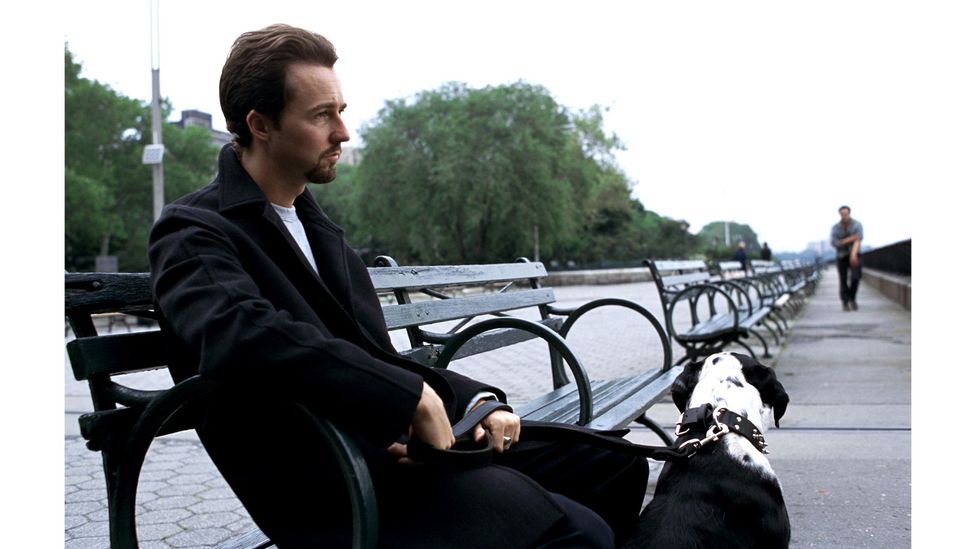
25th Hour (Credit: Alamy)
5. 25th Hour (2002)
This may be one of Spike Lee's least personal films, based on a 2000 novel by David Benioff (later co-creator of the television adaptation of Game of Thrones) but Lee transformed the story into one of the most eloquent yet subtle evocations of New York in the aftermath of 9/11 ever put on screen. The story follows Edward Norton as Monty, a convicted drug dealer on his last day before reporting to prison, but his regrets and fears play out in the shadow of a mournful post-9/11 moment that Lee establishes throughout. From the haunting blue lights of the Twin Towers memorial tribute rising in the sky to a Wanted poster of Osama Bin Laden, the background touches are uncommented on but part of the city's fabric, along with the simmering ethnic tension that is a constant in New York's history. Monty's and the city's sense of loss become inseparable. One of Lee's most underrated films, 25th Hour is evidence that he really is the best of New York directors.
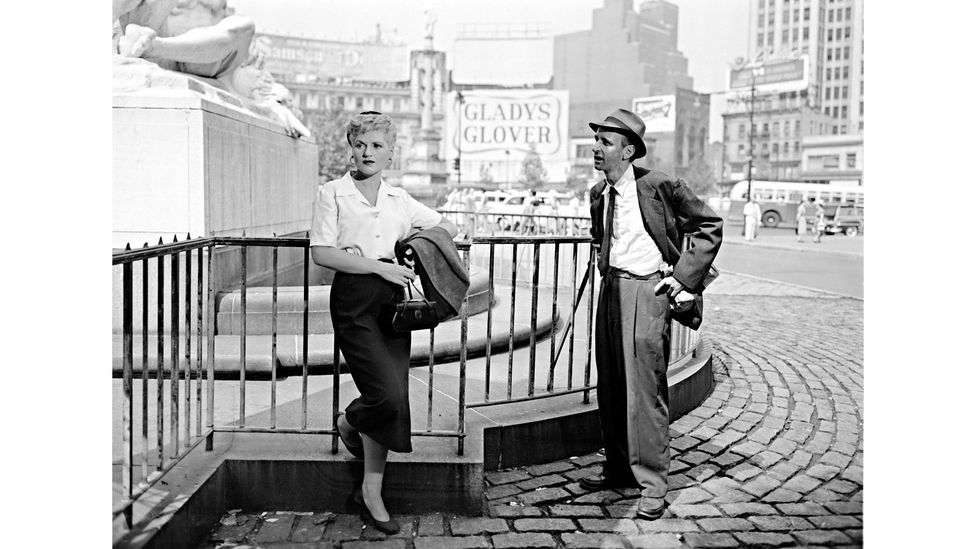
It Should Happen to You (Credit: Alamy)
6. It Should Happen to You (1954)
Movies are filled with young women who come to New York to make their names, but none as effervescent or funny as Judy Holliday in this classic. Decades before the concept of "famous for being famous", Holliday played Gladys Glover, a model who wanted people to know her name, and rented a billboard in the heart of the city to do just that. Without explanation, it just said Gladys Glover, a sight that tickled her, confused the pubic and annoyed her romantic interest, whose on-screen credits read "Introducing Jack Lemmon". Goldstein says that when the film was shot, "They actually had a billboard in Columbus Circle that said 'Gladys Glover'. And people wondered, 'what the hell is Gladys Glover?'" The film offers a sly, sophisticated take on the hunger for fame, even if it ends with Gladys's unsettling – and today unlikely – choice to go back to being an ordinary person.
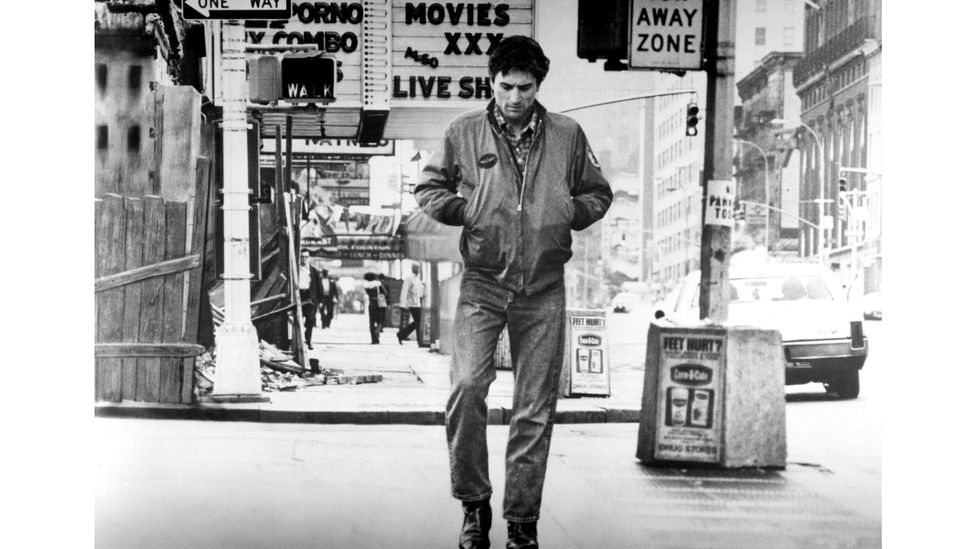
Taxi Driver (Credit: Alamy)
7. Taxi Driver (1976)
Sure, Travis Bickle could have driven a cab in some other city, but it wouldn't have been the same. Robert De Niro is seared into our memories as Bickle standing in front of his mirror saying "You lookin' at me?" But don't forget the atmospheric city he drives through in Martin Scorsese's dark vision of New York in the crime-filled 1970s. The night streets are full of bright lights piercing ominous shadows, a place where Jodie Foster plays a child prostitute whom Bickle decides to save, and Cybill Shepherd is the wholesome campaign worker he takes on a date to a sleazy 42nd Street porn cinema. Scorsese's direction and Paul Schrader's screenplay create the precise gritty landscape where Bickle's past in the Vietnam war and his disturbed present, haunted by PTSD, can flourish and grow, until his disgust with the city turns into violence.
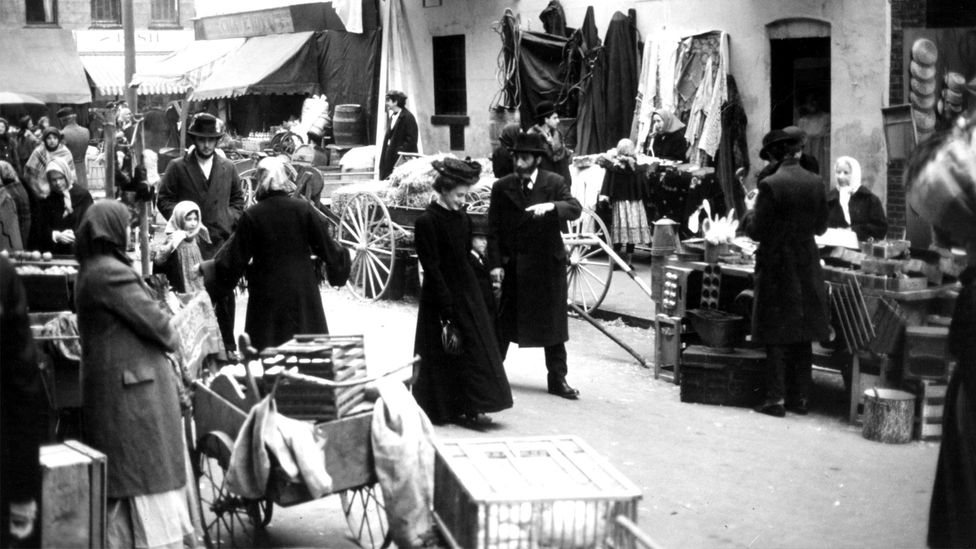
Hester Street (Credit: Alamy)
8. Hester Street (1975)
The late 19th-Century neighbourhood of Jewish immigrants on New York's Lower East Side might stand in for all immigrants coming to the city over the centuries. Carol Kane was nominated for an Oscar as Gitl, a traditional young mother who arrives in the US from Eastern Europe with her young son to join her husband, only to find that he has changed his name from Yankel to Jake, and is having an affair with a more modern woman. Through Kane's eloquent portrayal, director Joan Micklin Silver's sepia-tinged period piece, much of it in Yiddish, raises a question that goes to the heart of immigration, then and now: "how can you retain your identity yet fit into this new world?" And in its own quiet way, it is a feminist work, as Gitl comes to determine her own future, a trope that plays into the bedrock idea of New York as a city of possibilities.
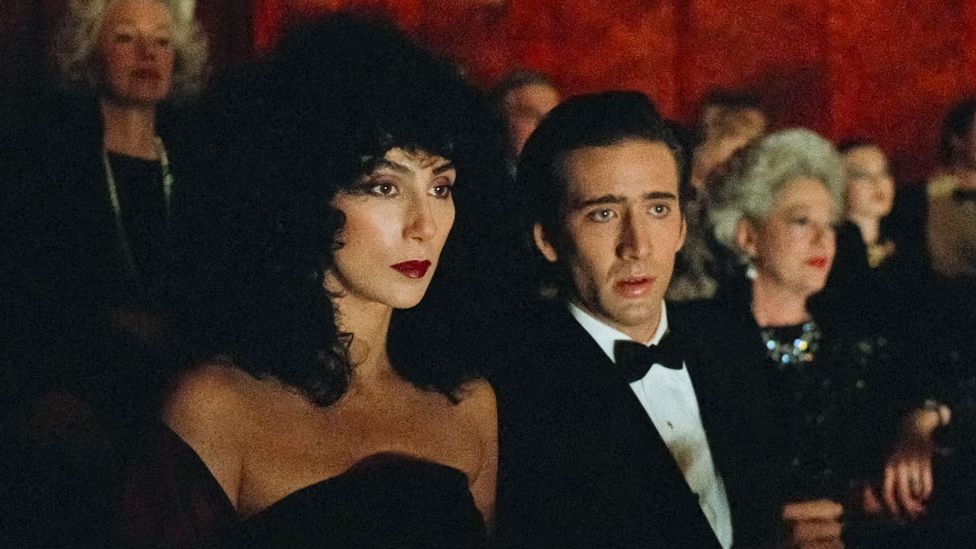
Moonstruck (Credit: Alamy)
9. Moonstruck (1987)
When Cher, in her Oscar-winning role as the widowed Loretta Castorini, tells Nicolas Cage, hopelessly in love with her as Ronny Cammareri, to "Snap out of it!" it is just one of those iconic moments in a romantic comedy that is as funny and charming as ever. The film takes full advantage of its authentic New York locations, including Loretta's Brooklyn neighbourhood, with the hair salon that transforms her from ordinary to glamorous, and the corner restaurant where she and her close-knit family are regulars. A date with Ronny takes her to Manhattan and Lincoln Center, where they meet at the fountain outside and where, inside at the Metropolitan Opera, she discovers the wonders of the building's grandeur and of La bohème. Moonstruck embraces the city's small corners, family feeling, unexpected romance and its internationally famous sites close to home.
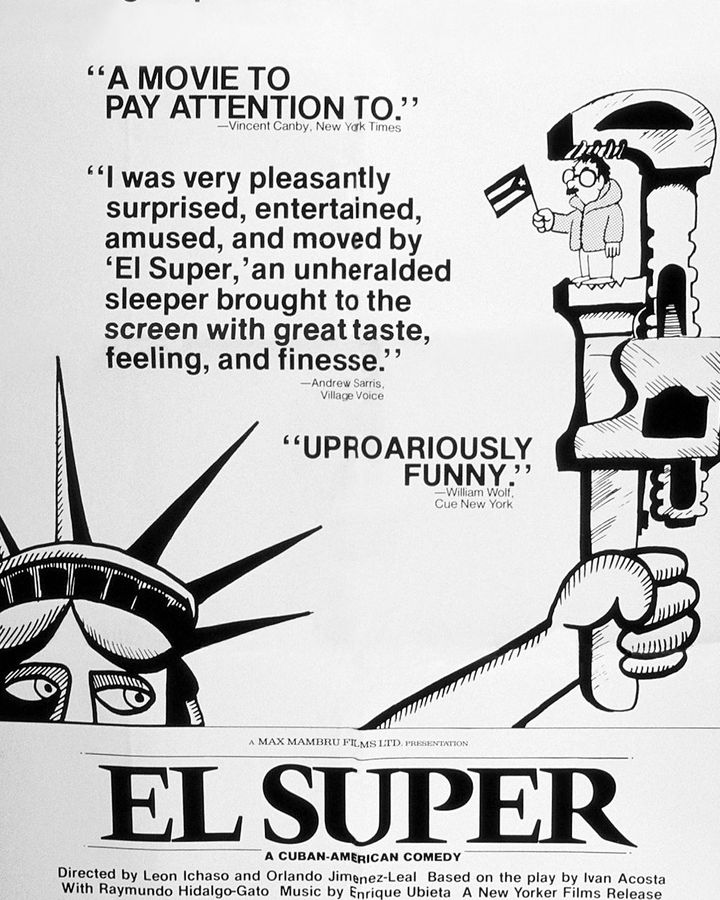
El Super (Credit: Alamy)
10. El Super (1979)
There are dozens of under-the-radar gems about New York. This small and frankly hard-to-find indie about a Cuban immigrant family adjusting to a new life is among the best, a drama with a light touch, vivid characters and the feel of detailed reality. Roberto (Raimundo Hidalgo-Gato) is the superintendent of a large building, whose working class residents' lives are similar to his. He, his wife and their Americanised daughter left Castro's Cuba a decade before, a fact that shapes their desire for freedom as well as their inability to go back. But their story is also timeless as it reflects the ups and downs of living in a different, unsettling world. Exhausted and tired of the snowy streets, Roberto calls New York "the land of work and cold". He says, "This city is killing me, little by little," a potent reminder that even when New York is a dream, it is not always easy.
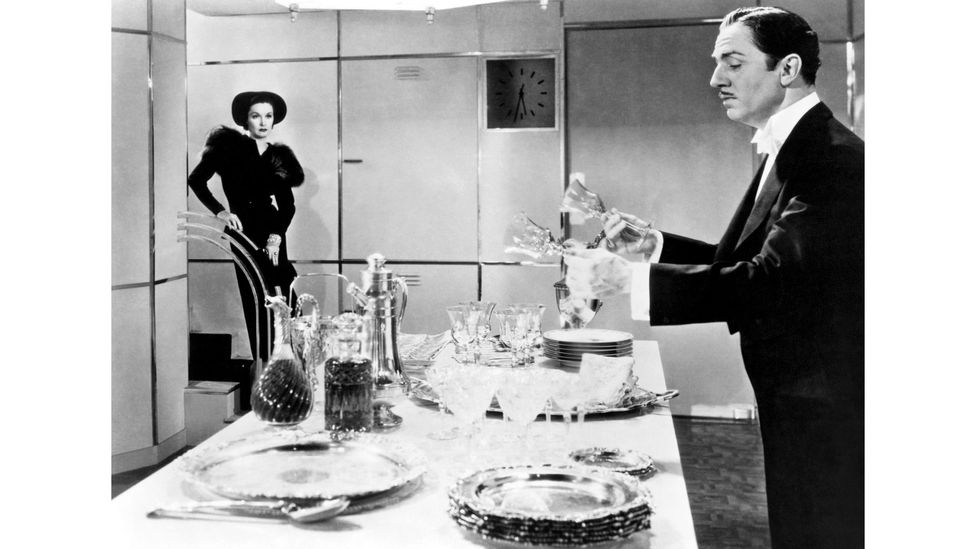
My Man Godfrey (Credit: Alamy)
11. My Man Godfrey (1936)
Nothing could be less authentic than this madcap Depression-era comedy, in which an indulged Fifth Avenue heiress named Irene Bullock, played by Carole Lombard at her most antic, falls for Godfrey, played by William Powell at his most urbane. She discovers him in a homeless encampment while looking for a "forgotten man" during a scavenger hunt, hires him as the family butler, and the film drops us into the reckless, thoughtless, comically disorganised lives of the empty-headed rich. The film's touch of social commentary about the underclass is diminished when it turns out Godfrey is highly educated and also from a wealthy family, but the Bullocks in their grand apartment, dressing for dinner, capture the cosmopolitan, aspirational image of New York that the movies did so much to foster. In reality, the Bullocks' fictional address would have put them on the steps of the Metropolitan Museum of Art, where the costume institute's annual gala proves that the frothy rich are still a captivating part of the city's story.
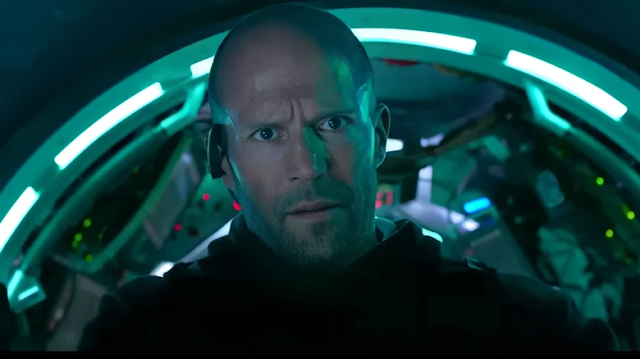
In an interview with Bloody Disgusting, he revealed that, in the original script, the 75-foot-long prehistoric shark enjoyed a number of brutal kills — including the decapitation of a leading character — that aren't seen in the final cut. Ultimately, the reason for this is simple: the watered-down version allows "The Meg" to be accessible to more audiences.
Turteltaub said, "We realized there's no way we're keeping this PG-13 if we show this. It's too fun a movie to not let people who don't like blood and people who are under, say, 14 years old into the theater." He added, "My wife is glad about it and I'm glad my kids can see the movie, but the number of really horrifying, disgusting and bloody deaths we had lined up that we didn't get to do is tragic."
Those hoping to see the discarded death scenes in an extended DVD or Blu-ray cut will be disappointed. Jon Turteltaub told Bloody Disgusting that the visual effects needed to bring such scenes to life are too costly to only serve as bonus footage.
As for "Meg 2: The Trench," which follows Jonas Taylor (Jason Statham) as he and his research team are faced with fresh undersea predators, the sequel follows suit with a PG-13 rating. In an interview with Total Film, director Ben Wheatley stressed that, although he's the man behind the R-rated horror flick "In the Earth," the new "Meg" installment is once again geared toward a wider audience.
"The thrill side of it is important. But it's summer thrills, rather than gory thrills," he said. "Things can still be edge-of-your-seat without them having to be what happens in 'In the Earth.' That's what we've been concentrating on — the handling of tension, of action and looking at a lot of ... well, basically [Steven] Spielberg."

Chinese action star Wu Jing and British action star Jason Statham made an appearance at the Shanghai International Film Festival and gave audiences a sneak peek of the upcoming China-U.S. co-produced sci-fi monster blockbuster "Meg 2: The Trench" at several press events.

Chinese action star Wu Jing and U.K. action star Jason Statham share insights into the making of "Meg 2: The Trench" at a press conference in Shanghai, June 6, 2023. [Photo courtesy of Dark Horse]
Statham explained that the "trench" in the film's title refers to the Mariana Trench, the deepest part of the Earth's ocean. He elaborated on how the trench and its breached thermocline contribute to the ominous nature of the movie. As the movie characters go deeper into the ocean, the situation becomes creepier and more sinister.
Statham also shared his experience of shooting the film underwater, saying, "I think the whole thing is just being able to remain calm while you're underwater and running out of air, which intuitively is not an easy thing to do."
Wu talked about the jaw-dropping helicopter action scenes in the movie. He explained that under normal circumstances, safety protocols must be followed when riding a helicopter. Therefore, during filming, he can let loose and play around more as strict safety measures are in place and insurance coverage is provided. He tried to perform some riskier stunts, but the producer prohibited him from doing so. Despite this, he still expressed his desire to try even more thrilling and exciting helicopter stunts.
Director Ben Wheatley said, "Wu Jing is relentless with his ideas and creativity on set. That's the hardest thing about working with him – trying to keep up with what he's telling me and what he wants to do, and then hopefully trying to get it on the screen."

Chinese action star Wu Jing and U.K. action star Jason Statham pose for a photo on the red carpet at the 25th Shanghai International Film Festival (SIFF), which opened on June 9, 2023. [Photo courtesy of SIFF Organizing Committee]
Catherine Ying, the president of CMC Pictures, shared that "Meg 2" will upgrade with new marvel scenes, including an underwater walk and a wonder of the sea at a depth of 7,600 meters, which has never been seen before on screen. The movie also features a world of giant creatures –not only megalodon sharks but also prehistoric monsters such as a giant octopus, amphibians, and other ancient animals from the Cretaceous period.
Ying added that the ocean is as mysterious as outer space, with many unknowns. The original aspiration of this franchise is to explore the ocean and its mysteries, aiming to inspire the curiosity of young people to discover the ocean.
Director Frant Gwo made a surprise appearance at the press conference and revealed a hidden tribute to "Meg 2" in his sci-fi blockbuster "The Wandering Earth 2." He also noted that Wu, who is also the leading actor in "The Wandering Earth 2," had shared his experience of making "Meg 2" with him. Gwo expressed hope that the experience gained could be used to further improve the industrialization of Chinese films in the future.

The cast and crew of "Meg 2: The Trench" pose for a group photo at a press conference in Shanghai, June 6, 2023. [Photo courtesy of Dark Horse]
At the recent Weibo Movie Awards Ceremony and Douyin Movie Wonder Night, which were side events at the film festival, "Meg 2" won "Specially Recommended Film of the Year" and "Most-anticipated Film of the Year," respectively. Directed by Ben Wheatley and produced by China's CMC Pictures and the U.S. media and entertainment conglomerate Warner Bros. Discovery, the film has generated significant buzz among movie fans and promises to be a blockbuster hit when it debuts on Aug. 4.
James Gibbons, president and managing director for the Western Pacific region of Warner Bros. Discovery, praised "Meg 2" as the best demonstration of U.S.-China collaboration. "We are also very excited about working with Chinese talent, Chinese producers, and Chinese partners to take these stories to the world, and there's no greater example."


